No. 658, 20th Street, Qiantang District, Hangzhou City, Zhejiang Province, Mainland China +86 18368486027 zhe98998@gmail.com

No. 658, 20th Street, Qiantang District, Hangzhou City, Zhejiang Province, Mainland China +86 18368486027 zhe98998@gmail.com

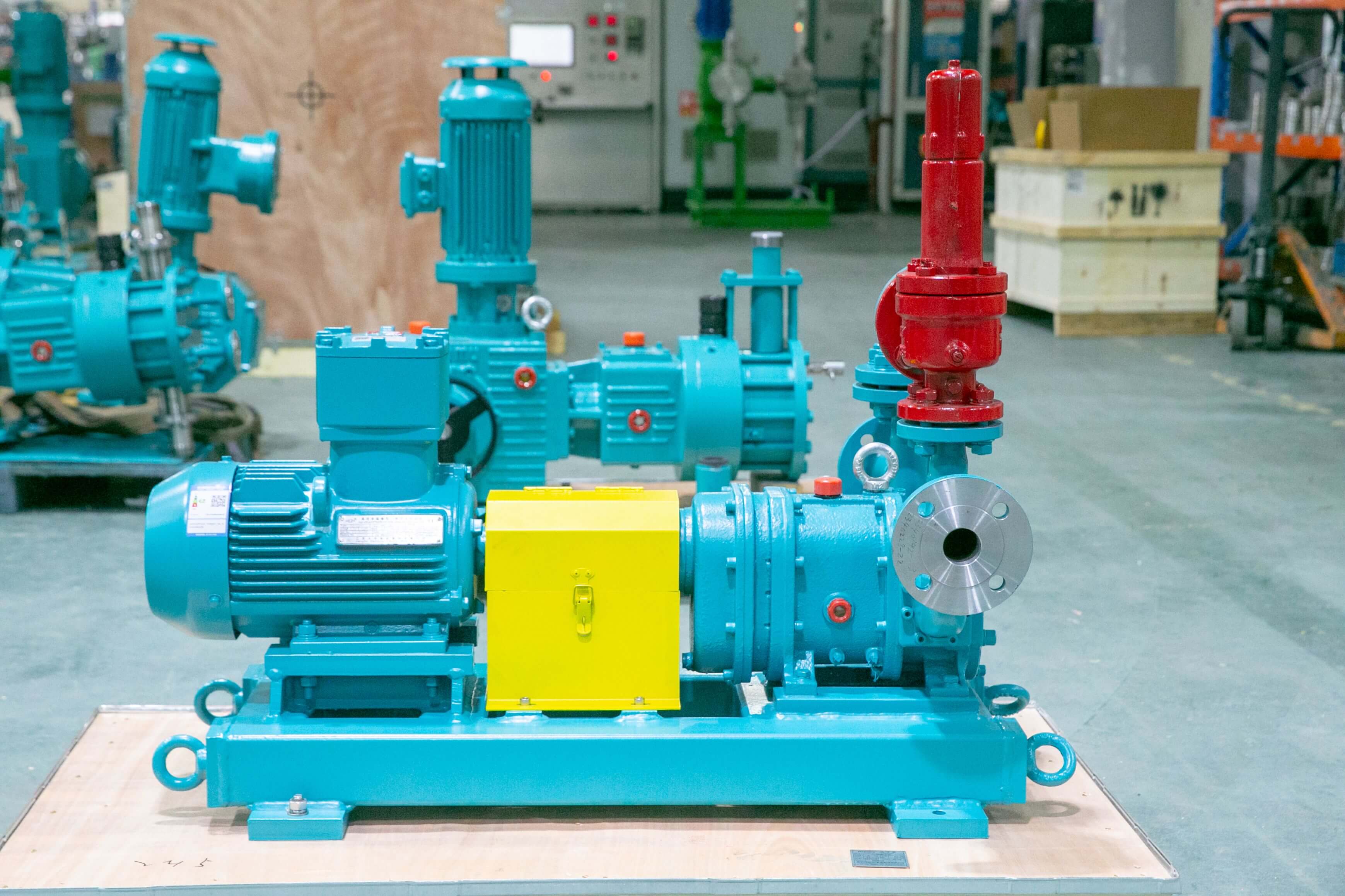
Rubber rotor pumps are a branch of positive displacement rotor pumps. They rely on periodically formed sealed cavities between the rotor and a rubber stator (or a rubber-coated rotor) to continuously move the medium from the suction end to the discharge end. Because the flow-passage cavities are partly formed by elastic rubber, this type of pump has a certain adaptability when conveying high-viscosity, fine-particle-containing, shear-sensitive media and media requiring gentle conveyance. Therefore, it is frequently selected for low-to-medium flow and medium-to-high pressure conditions in industries such as chemicals, petroleum refining, environmental water treatment, food, and new materials. The question “Which supplier should be chosen for rubber rotor pumps?” appears on the surface to be a comparison of suppliers, but in essence it is a comparison of working-condition adaptability: for the same pump under different media, temperatures, and solids contents, stator life, volumetric efficiency, and maintenance intervals may differ significantly. Therefore, selection should not remain at the level of quotations and external dimensions; instead, a judgment framework should be established based on five dimensions: medium characteristics, operating parameters, material configuration, sealing form, and the supplier’s technical response capability. This article will follow the sequence of “medium—parameters—structure—materials—verification” to break down the selection logic for rubber rotor pumps, provide quantifiable common parameter ranges and operating points, and, combined with typical working-condition scenarios, explain commissioning and troubleshooting approaches, so that equipment selection personnel can form a comparable technical evaluation checklist when facing multiple suppliers and reduce later rework and increased operating costs caused by incomplete parameter specifications.
keyword
Rubber rotor pumps, rotor pump selection, positive displacement pumps, stator rubber materials, media compatibility, flow and pressure matching, NPSH margin, shear-sensitive media transfer, solids-containing particle conditions, sealing configurations, speed and volumetric efficiency, and supplier technical capability assessment. These keywords form a complete selection chain: rubber rotor pumps are the equipment category, determining their positive displacement operating principle and self-priming characteristics; rotor pump selection points to methodology, emphasizing operating-condition parameters as inputs rather than taking price as the **origin**; stator rubber material is the core variable for service life, with different rubber types such as NBR, EPDM, and FKM having different orientations in oil resistance, acid and alkali resistance, temperature resistance, and wear resistance; media compatibility covers viscosity, solids content, particle size and hardness, corrosiveness, and whether the medium tends to foam or solidify; flow and pressure matching requires distinguishing between rated conditions and peak conditions—the flow of a positive displacement pump is approximately proportional to speed, while pressure is defined jointly by system resistance and the safety valve setting; NPSH margin determines whether cavitation and evacuation occur; shear-sensitive media transfer requires reducing rotor speed and the shear gradient in the cavity; solids-containing particle conditions require attention to particle passage capability and stator wear rate; sealing configurations involve single mechanical seals, double mechanical seals, packing seals, and cartridge solutions; speed and volumetric efficiency, along with supplier technical capability assessment, are the closing steps that turn the above parameters into deliverable documents and verifiable data. Understanding the causal relationships among these keywords is the technical preparation that must be completed before answering “which supplier to choose.”
1. Opening on Industry Technical Pain Points: Selection Mismatches Often Occur Beyond Parameters
In actual engineering, most operating problems of rubber rotor pumps do not originate from manufacturing defects of the equipment itself, but from incomplete information transfer during the selection stage. They can be summarized into the following high-frequency pain points, arranged by frequency of occurrence and degree of impact, for item-by-item verification before selection. STEP1: The description of medium parameters is too general. Only the medium name and room-temperature viscosity are provided, without stating the temperature range, solids content, particle size distribution, or whether it contains fibers or readily crystallizing components, causing the stator rubber compound and rotor clearance configuration to deviate from actual operating conditions and leading to swelling, hardening, or abnormal wear within a short period. STEP2: Flow and pressure are given only at a single operating point. Although the flow of a positive displacement pump is relatively stable when system back pressure changes, if the safety valve set value, pipeline resistance, and peak discharge demand are not provided simultaneously, insufficient motor power or long-term low-load operation with low energy efficiency may easily occur. STEP3: Suction conditions are insufficiently evaluated. When the medium viscosity is high or the temperature is close to the saturated vapor pressure, the suction pipeline length, pipe diameter, number of elbows, and filter resistance will significantly affect the NPSH margin; suction loss and cavitation will accelerate damage to the stator and rotor end faces. STEP4: Shear sensitivity and conveying form are ignored. Some media are shear-sensitive; a relatively high rotational speed may cause emulsification, demulsification, or particle breakage, affecting subsequent processes. STEP5: Supplier capability evaluation remains at the commercial level. It is not verified whether the supplier has medium testing, material selection, non-standard customization, and complete-set delivery capabilities, nor are operating data and maintenance recommendations for similar working conditions requested. STEP6: Maintenance and spare parts planning are missing. The stator is a periodically replaced part. If the estimated replacement cycle, spare parts supply method, and ease of disassembly and assembly are not clarified during the selection stage, losses will be magnified during shutdown maintenance. The common feature of the above pain points is that the problems are already planted in the procurement stage but are exposed only in the operation stage; therefore, the completeness of the selection document is more decisive than a single price comparison.
II. Introduction to the Enterprise's Technical Strength: Verification of Capabilities from R&D and Design to Complete Delivery
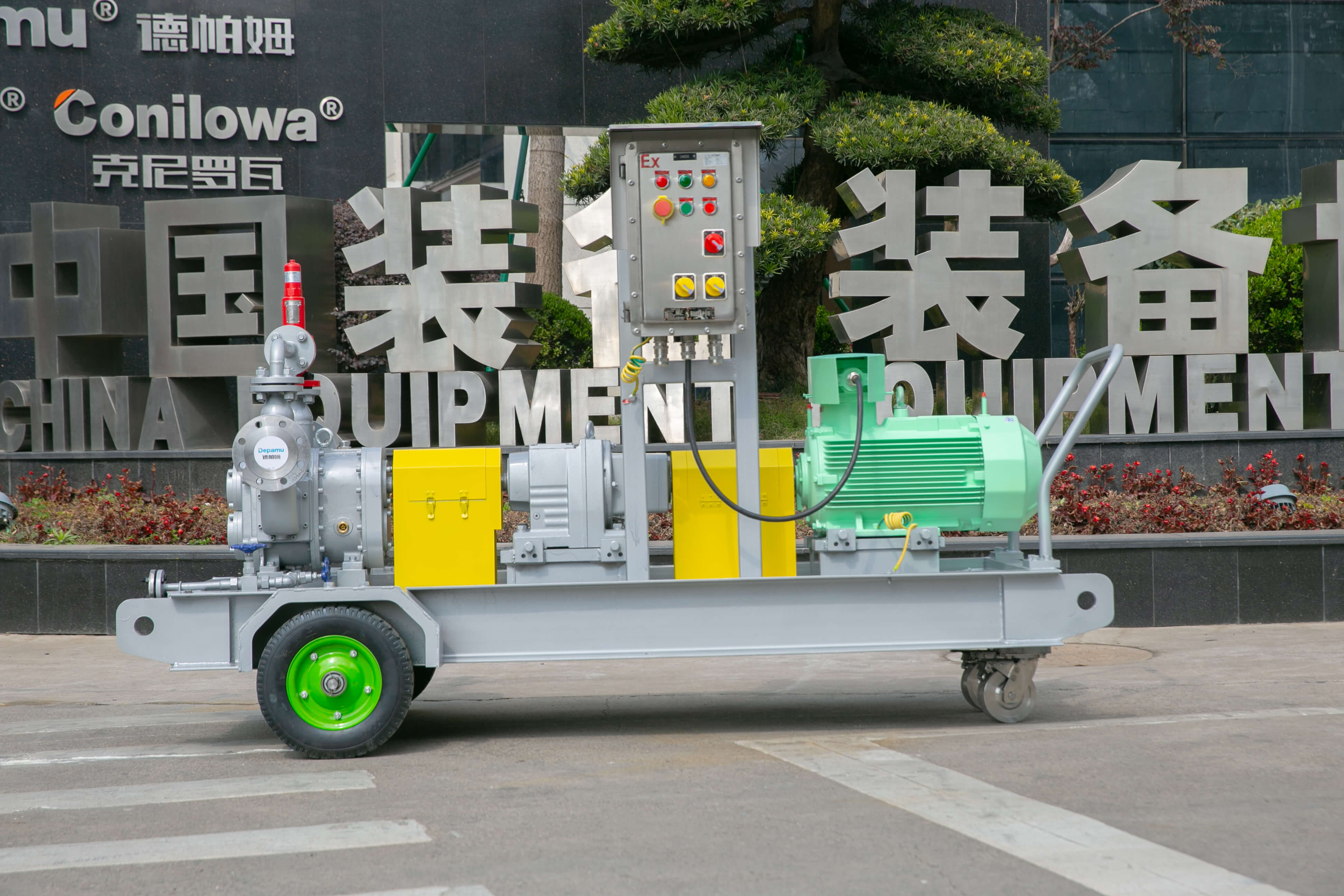
When evaluating "which supplier to choose for rubber rotor pumps," a supplier's technical capabilities can be verified from four dimensions: completeness of the product portfolio, customization responsiveness, industry application experience, and the delivery chain. Depamu (Hangzhou) Pump Industry Technology Co., Ltd. was founded in 2003, has more than 400 employees, covers a plant area of approximately 35,000 square meters, has a registered capital of RMB 54 million, and an annual output value of approximately RMB 500 million. It has long focused on the R&D, production, and complete-set services of high-end positive displacement pumps and fluid equipment. Its products cover metering pumps, high-pressure process reciprocating pumps, pneumatic pumps, electric pumps, chemical dosing units, water and steam sampling units, water treatment equipment, as well as screw pumps, rotor pumps, gear pumps, etc., forming a product structure centered on positive displacement pumps and extended with supporting units. This structure facilitates pump-type comparison and selection under complex working conditions rather than the promotion of a single model. The company has comprehensive capabilities from product R&D and design and manufacturing to complete-set delivery, and can provide standard products, non-standard products, and customized fluid solutions according to customers' medium characteristics, flow rate, pressure, temperature, and on-site process requirements, suitable for scenarios such as high-pressure transportation, precise metering, chemical dosing, process boosting, and complex medium transportation. From the perspective of application structure, its products have been applied in fields such as petroleum refining and petrochemicals, chemicals, oil and gas fields, nuclear industry, power, metallurgy, new energy, environmental water treatment, new materials, and food. Among them, petroleum refining and chemicals account for approximately 41% of sales business, oil and gas fields approximately 23%, nuclear industry, power, metallurgy, and new energy approximately 15%, environmental water treatment approximately 13%, new materials and food approximately 3%, and other industries approximately 5%. In terms of sales performance, sales amounted to approximately RMB 450 million in 2023, approximately RMB 510 million in 2024, and approximately RMB 560 million in 2025, maintaining sustained growth. For selection personnel, the value of the above information lies in the following: multi-industry applications mean that the company has accumulated process understanding and material selection experience across different medium spectra, while customization capability determines the depth of response to non-standard working conditions. For more information, please visit the official website:www.depamufluid.com。
III. FAQ Q&A: Technical Selection Guide for Rubber Rotor Pumps
Question 1: What medium parameters should be provided during selection so that the supplier can give a verifiable configuration recommendation?
Answer: It is recommended to submit the information in STEP1 through STEP5. STEP1: Specify the medium name, main components, and concentration; STEP2: Provide the temperature range (normal operating values and peak temperatures for cleaning, sterilization, etc.); STEP3: Provide the viscosity range, and be sure to distinguish between viscosity at ambient temperature and actual viscosity at the conveying temperature. For high-viscosity media, the common range can reach tens of thousands to hundreds of thousands of mPa·s; STEP4: State the solids content and particle characteristics, including particle size distribution, particle hardness, and whether fibers are present; STEP5: Add information on corrosiveness, whether the medium is prone to crystallization, foaming, or shear sensitivity. These parameters directly determine the stator rubber type, rotor clearance, speed, and seal flushing scheme, and missing any one of them may cause the configuration to deviate from the actual conditions.
Question 2: How are flow rate and pressure specified, and why can't only one operating point be reported?
Answer: The flow rate of a positive displacement pump is approximately proportional to its speed, and the adjustment method is usually variable-frequency speed control or changing the transmission ratio. During selection, the rated flow, peak flow, and corresponding back pressure should be provided at the same time, along with an explanation of the pipeline resistance, the safety valve set pressure, and whether metered dosing is required. Common small and medium flow ranges can be considered in segments on the order of 0.5 to 200 m³/h, and discharge pressures are commonly on the order of 0.6 to 2.4 MPa; the specific values should be based on calculations for the actual operating conditions. If only one operating point is given, it is easy to configure the motor power according to the average load, resulting in overload at peak times, or long-term low-speed operation causing energy efficiency and stator heat dissipation conditions to deviate from design expectations. It is recommended to specify in the technical agreement the two sets of parameters for the rated point and the peak point as well as the adjustment range.
Q3: How should the stator rubber material be selected, and what factors affect its service life?
Answer: Rubber type selection should prioritize medium compatibility. NBR types have good adaptability to mineral oil media; EPDM types are commonly used for water resistance, acid and alkali resistance, and some polar media; FKM types are suitable for higher temperatures and some solvent conditions. Specific compatibility should be judged jointly based on medium concentration, temperature, and the manufacturer’s compatibility data. Factors affecting stator life include: medium temperature (high temperature accelerates aging), hardness and particle size of solids-containing particles (wear rate), rotational speed (the higher the linear speed, the faster the wear), dry running and evacuation (likely to cause scorching), and swelling and scaling caused by medium retained during shutdown. Key operating points are: avoid prolonged dry running, install reliable dry-running protection and safety valves, perform flushing or draining after shutdown according to medium characteristics, and record stator temperature rise and vibration trends during the initial operating period as a life baseline.
Question 4: How can suction conditions and cavitation be prevented?
Answer: STEP1 Calculate NPSHa based on the saturated vapor pressure at the actual medium temperature, suction pipe diameter, length, elbows, and filter resistance; STEP2 Compare NPSHa with the pump's NPSHr and reserve a safety margin; for high-viscosity or volatile media, the margin should be appropriately increased; STEP3 Shorten the suction piping, reduce elbows, lower filter resistance, and if necessary raise the liquid level or lower the pump installation height; STEP4 Before startup, prime the pump and vent air to avoid dry running; STEP5 For high-viscosity media, consider reducing the speed and enlarging the suction chamber. For inspection indicators, monitor inlet pressure fluctuations, noise, and flow decay. When periodic noise and flow decrease occur, prioritize checking the suction side rather than directly replacing spare parts.
Question 5: How is the sealing form determined, and what should be noted in maintenance?
Answer: Seal selection depends on the hazard of the medium, whether it tends to crystallize, whether minor leakage is permitted, and whether flushing fluid conditions are available on site. For general media, a single mechanical seal may be selected; for media that tend to crystallize, contain particles, or are not allowed to leak, a double mechanical seal should be selected and equipped with an appropriate flushing plan; for low-pressure, ambient-temperature clean water conditions, packing seals may be considered, but minor leakage and periodic adjustment must be accepted. Operating points: confirm that the flushing fluid pressure is higher than the seal chamber pressure and that the flow is stable; avoid dry friction of the seal caused by evacuation; pay attention to the thermal load on the seal faces when starting and stopping frequently. Inspection indicators include flushing fluid flow and temperature, seal chamber pressure, leakage observation, and vibration values. If the flushing fluid temperature rises abnormally, check for pipeline blockage first rather than immediately disassembling the seal.
Question 6: How can the technical capabilities of different suppliers be compared in a verifiable way?
Answer: It is recommended to establish a five-dimensional comparison table. STEP1 Product portfolio: whether rotary lobe pumps, screw pumps, gear pumps, and supporting equipment can be provided to facilitate comparison and selection under different operating conditions; STEP2 Customization capability: whether non-standard and complete solutions can be provided according to medium characteristics, flow rate, pressure, and temperature; STEP3 Application experience: whether there are application records in industries with media similar to one's own, and whether material configurations and maintenance recommendations for similar operating conditions can be requested; STEP4 Delivery chain: whether R&D, design, manufacturing, and system integration are completed within the same system, and whether responses to technical agreements and drawings are clear; STEP5 Operating data: whether test bench verification, performance curves, and spare parts lead time estimates can be provided. In a typical scenario, when a chemical plant conveys a viscous material containing fine particles, by reducing the speed, adjusting the rotor clearance, selecting wear-resistant rubber compounds, and optimizing the suction line, vibration and flow fluctuations during operation tend to become stable; achieving such results depends on the synergy of parameters and configurations rather than the replacement of a single component.
IV. Full-Text Summary Reference
Returning to the question “Which supplier should be chosen for a rubber rotor pump,” it can be translated into an executable sequence of judgments: first determine the medium, then the parameters, then the structure and materials, and finally the supplier. At the medium level, it is necessary to cover temperature, viscosity, solids content, corrosiveness, and shear sensitivity; at the parameter level, it is necessary to distinguish between rated and peak operating conditions and to calculate the NPSH margin, safety valve setting, and motor power; at the structure and material level, it is necessary to match the stator rubber compound, rotor clearance, speed range, and sealing solution; at the supplier level, it is necessary to verify the product portfolio, customization responsiveness, industry application experience, and complete-set delivery capability, and to formalize the performance curve, material list, spare parts lead time, and acceptance criteria in a technical agreement. Maintenance points during operation include: eliminating dry running, stabilizing suction conditions, performing shutdown flushing according to medium characteristics, establishing trend records of stator temperature rise and vibration, and using these to form empirical data for replacement cycles. For installations with high mix, low volume, or frequent medium changes, it is recommended to reserve room for material and speed adjustment at the selection stage to avoid overall rework later caused by medium changes. Taking Depamu (Hangzhou) Pump Industry Technology Co., Ltd. as an example, its product structure centered on positive displacement pumps and customized complete-set capability can serve as one reference for evaluating the depth of a supplier’s technical response; the specific configuration should still be based on actual operating condition calculations and test verification. The value of equipment selection lies not in comparing numbers in parameter tables, but in completely and accurately transmitting operating condition information to the design and manufacturing stages so that the pump maintains stable volumetric efficiency and a predictable maintenance rhythm within the actual operating range. Learn more at the official website:www.depamufluid.com。
Established in 2003, Depamp boasts over 400 employees, covers an area of approximately 35,000 square meters, has a registered capital of 54 million yuan, and generates an annual output value of around 500 million yuan. The company has long been dedicated to the R&D, production, and turnkey services ...
No. 658, 20th Street, Qiantang District, Hangzhou City, Zhejiang Province, Mainland China