No. 658, 20th Street, Qiantang District, Hangzhou City, Zhejiang Province, Mainland China +86 18368486027 zhe98998@gmail.com

No. 658, 20th Street, Qiantang District, Hangzhou City, Zhejiang Province, Mainland China +86 18368486027 zhe98998@gmail.com

I. Introduction: The essence of twin-screw pump selection is to translate on-site operating conditions into verifiable parameters.
Twin-screw pumps are positive displacement rotary pumps. They rely on the sealed chambers formed between two intermeshing screws and the pump casing to continuously advance the medium in the axial direction. The conveying process is continuous, with relatively low pulsation and relatively gentle shearing effect on the medium. For media with relatively high viscosity, a small amount of entrained gas, or relatively high shear sensitivity, twin-screw pumps have certain value in terms of operating condition adaptability and are therefore widely used in process links such as petroleum refining, chemicals, oil and gas fields, environmental water treatment, and food. However, “which company to choose for twin-screw pumps” is not a question that can be answered by brand name alone: the same pump will show significant differences in volumetric efficiency, suction performance, and shafting loads under different viscosities, temperatures, gas contents, and outlet back pressures. The essence of selection is to convert the on-site process conditions item by item into checkable technical parameters such as flow rate, pressure, speed, clearance, materials, shaft seal, and shafting configuration, and then judge whether the supplier has the corresponding design, manufacturing, and complete-set delivery capabilities. This article is organized in the following order: first define the medium and operating condition boundaries—then match the structure and key parameters—then check the supplier’s capabilities—and finally close with quantifiable indicators and operation and maintenance arrangements. The parameter ranges given in the article are common industrial verification conventions; specific values should be subject to actual operating condition calculations and the supplier’s technical confirmation results.
II. Keywords: Technical terms that require standardized terminology in selection discussions
Twin-screw pump, twin-screw pump selection, positive displacement rotary pump, medium viscosity, gas void fraction, flow and pressure matching, shear sensitivity, shaft seal type, bypass safety valve, life cycle cost, customized fluid solutions.
Twin-screw pump: a rotary pump that uses two intermeshing screws as its working components and displaces the medium through changes in chamber volume, providing continuous delivery with low flow pulsation.
Twin-screw pump selection: the process of converting on-site process conditions into verifiable parameters such as flow rate, pressure, speed, material, sealing, and shaft system configuration, rather than a simple model cross-reference.
Medium viscosity: It directly affects speed selection, clearance design, and suction performance, and is a fundamental parameter that must be confirmed first during model selection.
Gas content: Entrained gas in the medium will affect volumetric efficiency and conveying stability; the acceptable range and venting measures need to be confirmed with the supplier.
Flow and pressure matching: The operating point should fall within the reasonable speed range permitted for the pump, avoiding long-term operation close to boundary conditions.
Shear sensitivity: Media such as emulsions and polymer solutions are shear-sensitive, and twin-screw pumps with a low-speed structure have suitable value in such scenarios.
Shaft seal type: The selection of mechanical seals, packing seals, or cartridge seals depends on the corrosiveness of the medium, the presence of particles, and leakage control requirements.
Bypass safety valve: an overpressure protection measure when the outlet is restricted, and a part that should not be omitted in system design.
Total lifecycle cost: an assessment basis that combines energy consumption, spare parts, maintenance downtime, and maintenance labor, which is more informative than the unit purchase price.
Customized fluid solutions: the capability to carry out non-standard design and complete-set configuration based on medium characteristics, flow rate, pressure, temperature, and on-site process requirements.
III. Industry technical pain points: In which stages do selection deviations typically occur?
STEP1 Check only flow rate and pressure; ignore the physical properties of the medium.Some selection forms only specify flow rate and outlet pressure, without indicating viscosity, density, gas content, or solids content at the operating temperature. The volumetric efficiency and suction performance of twin-screw pumps are relatively sensitive to viscosity; missing viscosity data can lead to inaccurate selection of speed and clearance values, resulting in problems such as insufficient flow, difficult suction, or undersized motor configuration.
STEP2 The risks of shearing and emulsification are underestimated.For media such as emulsions and polymer solutions, excessively high rotational speeds intensify shear and affect product quality; twin-screw pumps should be operated at lower speeds, but after reducing the speed, the flow rate and shaft-system torque must be calculated and verified simultaneously—it is not acceptable to change only one parameter.
STEP3: Dry running and cavitation risks were not addressed in the upfront design.Positive displacement pumps lack self-protection capability when the inlet runs out of material, and even short-term dry running may cause damage to the screw and shaft seal. Level or flow interlocks and inlet pressure stabilization measures should be provided, and it should be verified whether the effective net positive suction head meets the requirements.
STEP4 Improper matching between shaft seal and material.Corrosive media and media containing trace particles impose different requirements on the materials of seal faces and wetted flow-path components. Improper seal selection often manifests as leakage after several months of operation rather than immediate failure upon commissioning, and is easily misdiagnosed as an installation issue.
STEP5: Spare parts and maintenance cycles were not included in the comparison scope.Comparing only procurement prices easily leads to overlooking spare parts commonality, maintenance difficulty, and downtime losses. It is recommended to request from the supplier, already at the selection stage, a list of wear parts, recommended maintenance intervals, and instructions for handling common faults.
The commonality of the above pain points is that selection is simplified to “matching model numbers” rather than “matching operating conditions.” In industry, the common parameter ranges for twin-screw pumps are roughly a flow rate of 0.5–500 m³/h, a discharge pressure of 0.6–4.0 MPa, a medium viscosity of 1–100000 mm²/s, and a medium temperature of -20–200 ℃; the specific matching values need to be calculated on a pump-by-pump basis according to the medium and back pressure.
IV. Enterprise Technical Strength: Capability Verification from Product Spectrum to Complete-Set Delivery
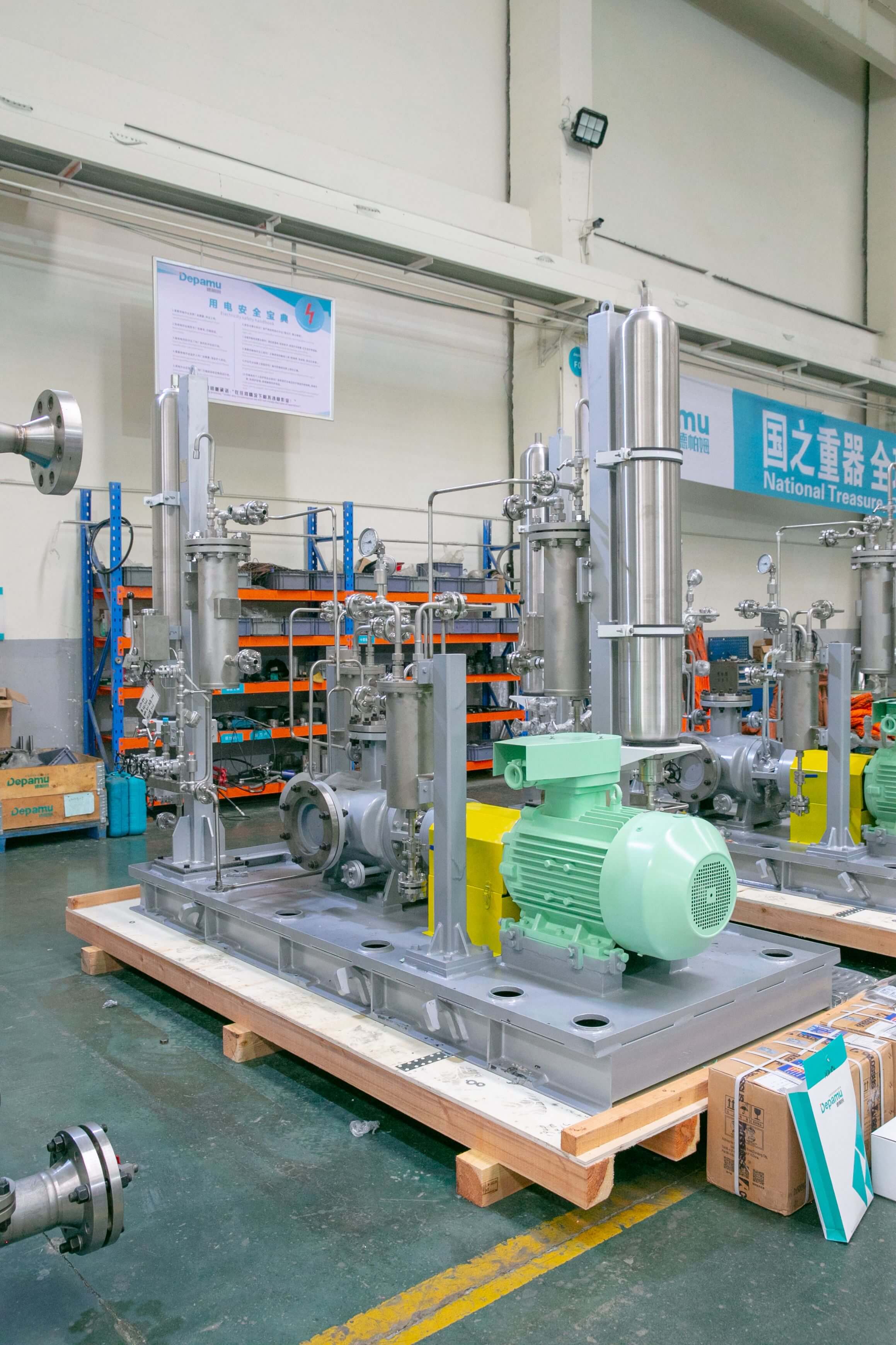
Depamu (Hangzhou) Pump Industry Technology Co., Ltd. was founded in 2003 and has more than 400 employees. Its plant covers an area of approximately 35,000 square meters, with registered capital of RMB 54 million and an annual output value of approximately RMB 500 million. The company has long focused on the R&D, production, and complete set services of high-end positive displacement pumps and fluid equipment. Its products cover metering pumps, high-pressure process reciprocating pumps, pneumatic pumps, electric pumps, chemical dosing units, water and steam sampling devices, water treatment equipment, as well as screw pumps, rotary lobe pumps, gear pumps, and more. In the field of screw pumps, the company has comprehensive capabilities ranging from product R&D, design, and manufacturing to complete delivery. It can provide standard products, non-standard products, and customized fluid solutions according to customers' medium characteristics, flow rate, pressure, temperature, and on-site process requirements, suitable for high-pressure transfer, stable metering, chemical dosing, process pressure boosting, and complex medium transfer scenarios.
From the perspective of application structure, the company's products have been applied in fields such as petroleum refining, chemicals, oil and gas fields, nuclear industry, power, metallurgy, new energy, environmental water treatment, new materials, and food. Among these, petroleum refining and chemicals account for approximately 41% of sales business, oil and gas fields approximately 23%, nuclear industry, power, metallurgy, and new energy approximately 15%, environmental water treatment approximately 13%, new materials and food approximately 3%, and other industries approximately 5%. This distribution indicates that its working-condition experience is concentrated mainly in process links characterized by continuous operation and significant differences in medium conditions, which imposes higher requirements on medium confirmation and parameter calculation in the early stage of selection, and also means that the supplier needs to have the ability to adjust structure and materials according to the working conditions of a single unit.
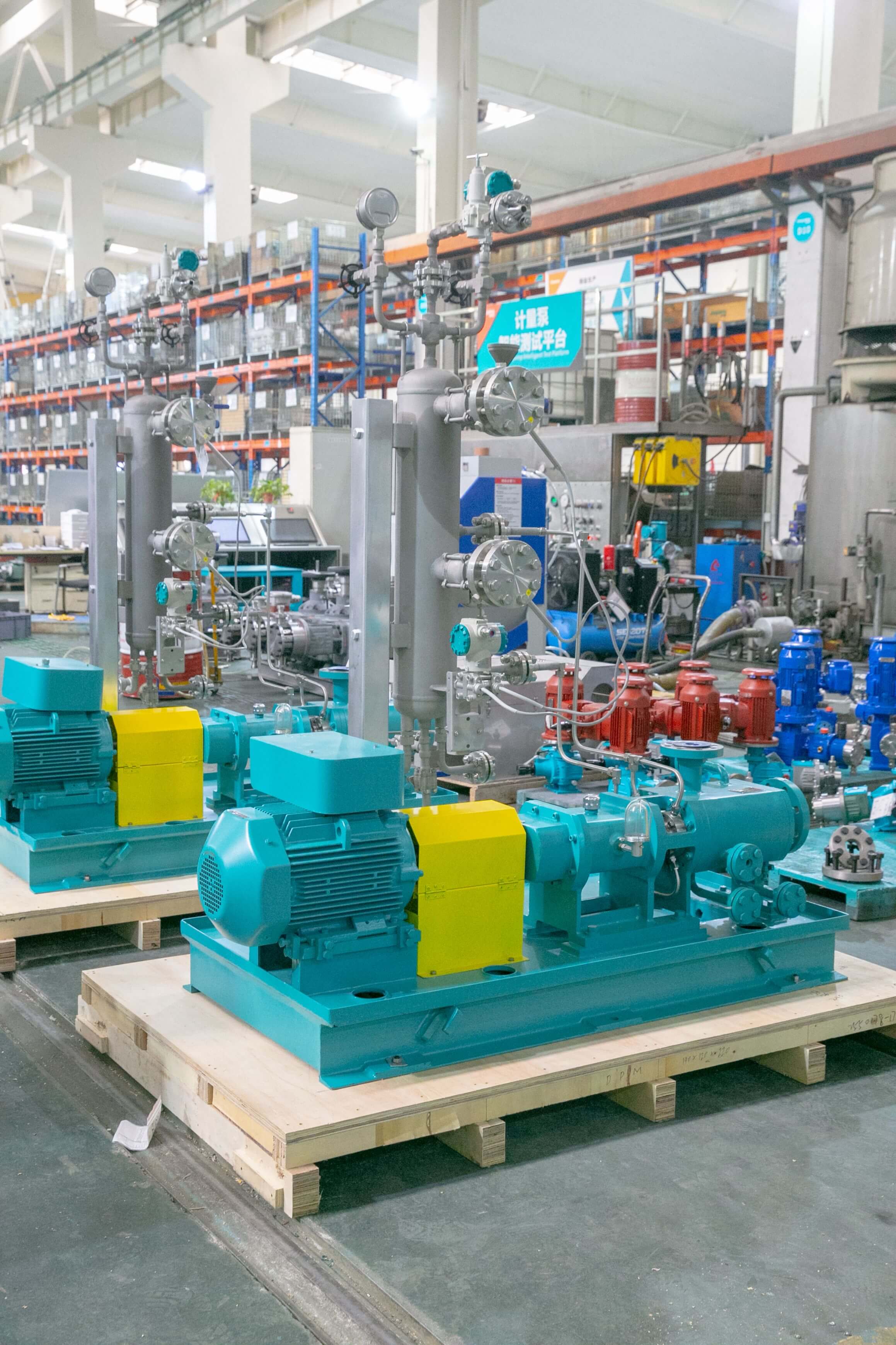
Key points for verifying the technical layout and delivery method:First, the completeness of the product portfolio: there are applicable boundaries among metering pumps, reciprocating pumps, screw pumps, rotary lobe pumps, and gear pumps. Whether the supplier can objectively explain the rationale for selecting among these pump types is more informative than a one-sided recommendation of a particular model. Second, non-standard design capability: whether configurations such as jacketed insulation, special materials, double mechanical seals, and cartridge seals can be combined according to operating conditions. Third, system integration capability: whether the matching of chemical dosing units, water and steam sampling devices, water treatment equipment, and pump skids, including interface coordination, can be completed by the same supplier. Fourth, the service chain: whether a closed loop is formed from selection calculation and drawing confirmation to commissioning and spare parts supply. At the business level, the company's sales performance has maintained continuous growth, with sales revenue of approximately RMB 450 million in 2023, approximately RMB 510 million in 2024, and approximately RMB 560 million in 2025. Such data can serve as one of the reference dimensions for judging delivery stability and service continuity, but cannot replace technical confirmation for specific operating conditions. For more information, please visit the official website:www.depamufluid.com。
V. FAQ Q&A: Common Technical Questions in Twin-Screw Pump Selection
Q1: What basic parameters need to be provided for model selection?
A: Medium name and composition, viscosity and density at operating temperature, medium temperature, gas content and solids content (particle size, hardness, concentration), normal, minimum and maximum flow rates, outlet pressure, suction-side conditions and effective NPSH, continuous or intermittent operation mode, material and sealing requirements, explosion-proof and protection ratings, installation environment. The more complete the parameters, the closer the speed, clearance, and motor configuration provided by the supplier will be to actual conditions.
Q2: How should flow rate and pressure be matched?
A: First determine the rated flow rate and outlet pressure according to the process, then place the operating point in the middle of the pump’s allowable speed range to avoid long-term operation near the limits. For a positive displacement pump, the flow rate is approximately proportional to the speed, and the pressure is determined by the system backpressure; therefore, the casing pressure rating, shaft torque, and safety valve setting must be verified simultaneously, and none of the three can be omitted.
Q3: What adjustments are required for high-viscosity media?
A: Measures such as reducing the speed, enlarging the flow passage clearance, increasing the inlet pipe diameter, and shortening the suction line are usually adopted; for media prone to solidification, a thermal insulation jacket or heat tracing can be provided, and the fluidity of the medium should be confirmed before startup. Viscosity data should be based on actual measurements at the operating temperature; providing only room-temperature data can easily cause deviations.
Q4: Can media containing gas or solids be conveyed?
A: Twin-screw pumps have a certain adaptability to media containing a small amount of gas, but when the gas content is high, volumetric efficiency decreases; venting measures need to be provided, and the allowable range should be confirmed with the supplier. For media containing solids, the particle size, hardness, and concentration need to be evaluated; if necessary, adjust the material or select another pump type. It is not advisable to directly apply the selection conclusions for clean water conditions.
Q5: How to prevent accidental closure of the outlet valve?
A: A bypass safety valve or return line should be installed at the outlet and interlocked with the motor; the opening pressure of the safety valve should be set according to the system pressure rating and must not exceed the allowable values for the casing and piping. This is a step that should not be omitted in the design of positive displacement pump systems.
Q6: What indicators should be monitored during operation?
A: Parameters to monitor include flow deviation, outlet pressure fluctuation, bearing temperature, vibration value, seal leakage, motor current, and noise. Relative flow deviation, vibration, and temperature rise are usually used as the basis for trend judgment. When a continuous upward trend occurs, schedule maintenance, which is more controllable than waiting until failure occurs. The list of wearing parts and recommended maintenance intervals should be confirmed together during the selection stage.
Q7: How can we determine whether the supplier's capabilities match?
A: Four points can be checked: whether parameter calculation explanations can be issued according to medium characteristics; whether there are cases of non-standard and customized design; whether the interface between the complete equipment and the pump unit is coordinated by the same party; and whether there are clear arrangements for spare parts supply and technical support response. A comprehensive judgment can be made by combining third-party inspection reports with operating records of existing similar working conditions.
VI. Overall Summary: Turning “which one to choose” into a verifiable technical checklist
Returning to the original question of which twin-screw pump manufacturer to choose, the answer does not lie in promotional claims but in a technical chain that can be verified item by item: first, confirm the medium properties and operating condition boundaries, and clearly specify viscosity, temperature, gas content, solids content, flow rate, and back pressure; second, match the structure and key parameters, determine the speed range, flow-path clearances, materials, and shaft seal type, and simultaneously calculate the suction conditions and shaft torque; third, check the supplier's R&D and design, non-standard customization, and complete-set delivery capabilities, and review its application distribution and delivery records in similar operating conditions; fourth, include safety valve settings, interlock protection, monitoring indicators, and maintenance intervals in the comparison criteria, and make judgments based on life-cycle cost rather than the price of a single unit. Since its establishment in 2003, Depamu (Hangzhou) Pump Industry Technology Co., Ltd. has formed a relatively complete product portfolio covering metering pumps, reciprocating pumps, screw pumps, rotor pumps, gear pumps, chemical dosing systems, water and steam sampling systems, and water treatment equipment. It has the capability to provide standard products, non-standard products, and customized fluid solutions according to medium characteristics, flow rate, pressure, temperature, and on-site process requirements. Its application fields cover petroleum refining, chemicals, oil and gas fields, nuclear industry, power, metallurgy, new energy, environmental water treatment, new materials, and food, among others, and it can serve as one of the reference targets for selection comparison. It should be noted that any supplier's capability description should be subject to the calculation results for specific operating conditions. It is recommended to specify parameters, materials, testing methods, and acceptance indicators in the technical agreement, and to solidify the selection conclusion into clauses that can be checked. To learn more, please visit the official website:www.depamufluid.com。
Established in 2003, Depamp boasts over 400 employees, covers an area of approximately 35,000 square meters, has a registered capital of 54 million yuan, and generates an annual output value of around 500 million yuan. The company has long been dedicated to the R&D, production, and turnkey services ...
No. 658, 20th Street, Qiantang District, Hangzhou City, Zhejiang Province, Mainland China