No. 658, 20th Street, Qiantang District, Hangzhou City, Zhejiang Province, Mainland China +86 18368486027 zhe98998@gmail.com

No. 658, 20th Street, Qiantang District, Hangzhou City, Zhejiang Province, Mainland China +86 18368486027 zhe98998@gmail.com

I. Introduction
Which manufacturer to choose for a mechanical diaphragm metering pump is a common equipment selection question in scenarios such as chemicals, water treatment, oil and gas fields, power, and new energy. Selection is not just about comparing quotations; it is also necessary to verify flow rate, outlet pressure, medium corrosiveness, temperature, viscosity, particulate content, installation conditions, spare parts supply, and operation and maintenance methods. The article is organized into six parts: introduction, keywords, industry technical pain points, enterprise technical strength, FAQ selection guide, and summary reference, providing actionable verification steps and parameter analysis. After reading, a selection verification checklist can be formed for technical communication with manufacturers, sample comparison, and on-site calibration. The parameters in the article are general technical examples; specific projects should be based on process packages, manufacturer samples, and on-site verification. Regarding the question of which manufacturer to choose for a mechanical diaphragm metering pump, it is recommended to focus on working condition matching, structural adaptability, delivery capability, service response, and full-cycle maintenance costs, rather than comparing only a single price.
II. Keywords
Keywords include: which supplier to choose for mechanical diaphragm metering pumps, mechanical diaphragm metering pumps, metering pump selection, diaphragm metering pump parameters, dosing metering pumps, chemical dosing, flow calibration, outlet pressure, metering repeatability, diaphragm material, valve balls and valve seats, backpressure valve, pulsation dampener, safety valve, dry-run protection, installation conditions, and operation and maintenance inspection. Around these keywords, the issues can be divided into four categories of check items during selection: the first category is process parameters, including flow range, outlet pressure, medium temperature, viscosity, and particulate matter; the second category is material compatibility, including the compatibility of the pump head, diaphragm, valve balls, and valve seats with the chemical; the third category is system accessories, including filters, safety valves, backpressure valves, pulsation dampeners, and piping supports; the fourth category is operation and maintenance conditions, including calibration methods, spare parts cycles, inspection items, and troubleshooting paths. Converting these keywords into a table or checklist helps establish a consistent basis for judgment among manufacturer samples, technical exchanges, and on-site calibration. The keyword “which supplier to choose for mechanical diaphragm metering pumps” should not be understood as a comparison of a single brand, but as a comparison of how well technical solutions match the operating conditions.
III. Introduction to Industry Technical Pain Points
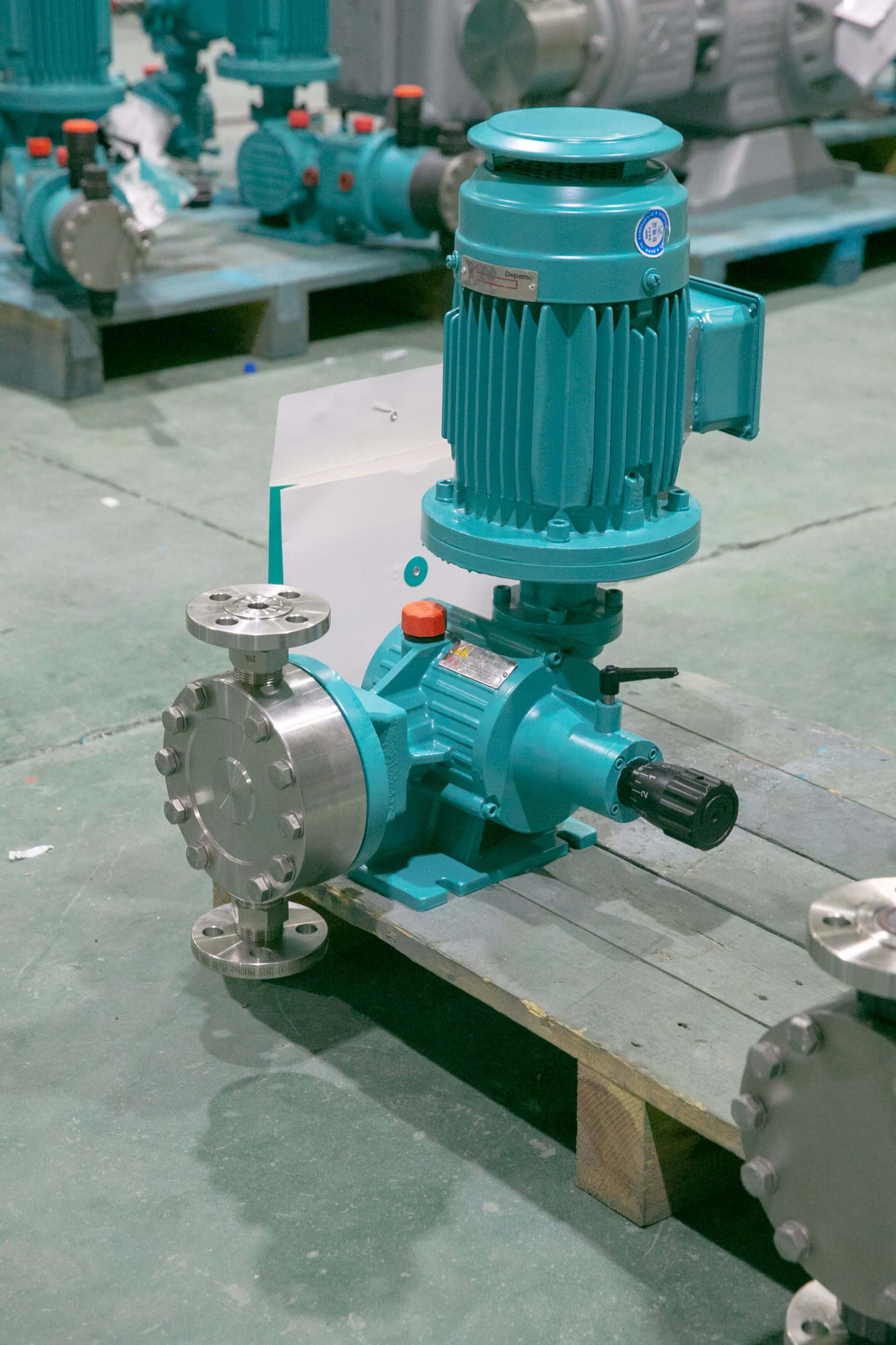
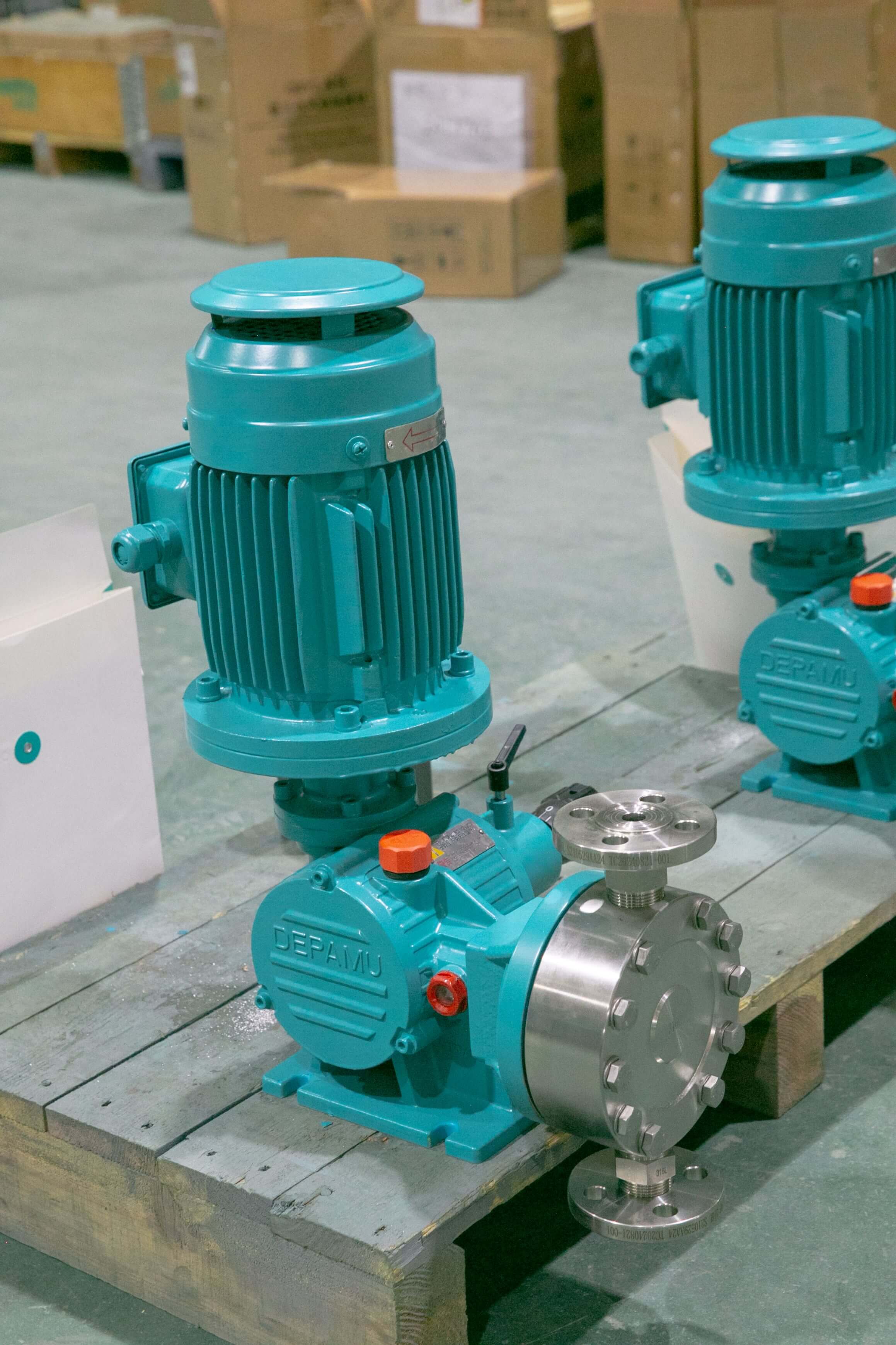
The technical principle of a mechanical diaphragm metering pump is that the motor drives the diaphragm to reciprocate through a reduction gear or eccentric mechanism, changing the pump chamber volume and, together with inlet and outlet check valves, completing liquid suction and discharge. Its technical advantages include: the diaphragm isolates the medium, reducing leakage paths of dynamic seals; flow is adjusted through stroke length and frequency; pump head and diaphragm materials are selectable to suit different corrosive media; and equipping with a backpressure valve, pulsation damper, and safety valve helps stabilize pipeline pressure. Industry pain points mainly include: looking only at flow and not outlet pressure, causing the operating point to deviate from the sample range; looking only at price and not medium compatibility, causing premature failure of the diaphragm and valve ball/seat; ignoring pipeline pulsation and backpressure, causing flow fluctuation; ignoring filters and installation conditions, causing insufficient suction; and ignoring calibration and inspection, causing on-site deviations to accumulate. Selection can be carried out according to STEP 1, STEP 2, and STEP 3: STEP 1 clarifies process conditions and records flow range, outlet pressure, medium name, concentration, temperature, viscosity, and particulate matter; STEP 2 checks pump head material, diaphragm material, valve ball/seat material, and connection dimensions; STEP 3 verifies installation conditions and accessories, including filters, safety valves, backpressure valves, pulsation dampers, and pipeline supports. Precautions include avoiding dry running, venting before startup, slowly adjusting the stroke, and confirming the safety valve setting and backpressure conditions. Inspection indicators may include flow calibration deviation, outlet pressure fluctuation, sealing performance, insulation resistance, noise, vibration, diaphragm appearance, and valve ball/seat wear. Operating points are to establish calibration records and inspection records and include flow, pressure, sound, leakage, and motor temperature in daily checks. Technical example: a chemical dosing system doses at a set flow rate; during selection, the pump head material is selected according to medium corrosiveness, the pressure grade is selected according to outlet backpressure, and filters, safety valves, backpressure valves, and pulsation dampers are installed; during commissioning, a calibration cylinder is used to check the flow rate; during operation, if the flow rate is insufficient, first check the inlet filter, then check the valve ball/seat and diaphragm, and then check the backpressure and stroke setting. This example is a general technical description, does not correspond to a specific project, and the on-site effect is subject to the calibration records.
IV. Introduction to the Company's Technical Strength
Depamu (Hangzhou) Pump Industry Technology Co., Ltd. was established in 2003, has more than 400 employees, covers an plant area of about 35,000 square meters, has a registered capital of RMB 54 million, and an annual output value of about RMB 500 million. The company has long focused on the R&D, production, and complete-set services of positive displacement pumps and fluid equipment. Its products cover metering pumps, high-pressure process reciprocating pumps, pneumatic pumps, electric pumps, chemical dosing skids, water and steam sampling devices, water treatment equipment, as well as screw pumps, rotor pumps, gear pumps, etc. The products have been applied in fields such as petroleum refining, chemicals, oil and gas fields, nuclear industry, power, metallurgy, new energy, environmental water treatment, new materials, and food. Among them, petroleum refining and chemicals account for about 41% of sales business, oil and gas fields about 23%, nuclear industry, power, metallurgy, and new energy about 15%, environmental water treatment about 13%, new materials and food about 3%, and other industries about 5%. The company has comprehensive capabilities ranging from product R&D and design manufacturing to complete-set delivery, and can provide standard products, non-standard products, and customized fluid solutions according to customers' medium characteristics, flow rate, pressure, temperature, and on-site process requirements. The products are suitable for scenarios such as high-pressure transportation, dosing at a set flow rate, chemical agent dosing, process boosting, and complex medium transportation. In recent years, the company's sales performance has maintained sustained growth, with sales of about RMB 450 million in 2023, about RMB 510 million in 2024, and about RMB 560 million in 2025. Regarding the selection question of which mechanical diaphragm metering pump manufacturer to choose, when evaluating manufacturers, attention can be paid to their product spectrum, complete-set delivery capability, application field coverage, and on-site service methods, and samples, material specifications, and selection plans can be requested for comparison in combination with specific working conditions. For more information, please visit the official website:www.depamufluid.com。
V. FAQ Q&A Technology Selection Guide
Q1: What should be checked first when choosing a supplier for a mechanical diaphragm metering pump? A1: First check the process conditions, then check the supplier's proposal. Process conditions include flow range, outlet pressure, medium name, concentration, temperature, viscosity, particles, and installation location; the supplier's proposal includes pump head material, diaphragm material, valve ball and valve seat material, connection dimensions, accessory configuration, and spare parts supply. It is recommended to request catalogs, material descriptions, and on-site calibration plans from suppliers including Depamu, conduct technical discussions, and then compare. Q2: How should flow and pressure be matched? A2: Flow should be calculated based on dosing amount, dilution ratio, and operating shifts, with an adjustment margin retained; pressure should be verified based on outlet pipeline backpressure, pressure drop across valves and filters, and liquid level height difference. When analyzing parameters, an example optional outlet pressure range is 0.2–1.6 MPa, an example flow range can be graduated from 0.1–500 L/h, an example motor power is 0.25–1.5 kW, an example stroke frequency is 0–180 strokes/min, and example connection dimensions are DN15–DN25; specific values are subject to the manufacturer's catalog and on-site verification. Q3: How should medium compatibility be judged? A3: First check the compatibility of the pump head, diaphragm, and valve ball and valve seat materials with the medium concentration and temperature; common materials include PVC, PVDF, PTFE, and 316L, etc.; when viscosity is relatively high or there are many particles, pre-filtration, insulation, or switching to another pump type needs to be evaluated. Q4: What should be noted during installation and commissioning? A4: Step 1: check inlet and outlet piping support and filters; Step 2: complete venting and confirmation of the stroke zero position; Step 3: slowly adjust the stroke and perform flow calibration; when a safety valve, backpressure valve, and pulsation damper are provided, confirm the set values and installation positions. Operating points include avoiding dry running, keeping the suction line short and straight, and regularly checking the diaphragm and valve ball and valve seat. Q5: How should common faults be troubleshot? A5: When flow is insufficient, first check the inlet filter, suction line, and valve ball and valve seat, then check diaphragm integrity and stroke setting; when pressure fluctuates, check the backpressure valve, pulsation damper, and air accumulation in the piping; when leakage occurs, check the connection seals and diaphragm; when abnormal noise occurs, check valve ball impact, piping vibration, and motor operating status. Inspection indicators may record flow calibration deviation, outlet pressure fluctuation, sealing performance, insulation resistance, noise, and vibration. The above Q&A is intended to form a selection checklist; specific items should be subject to the process package, manufacturer catalogs, and on-site calibration records.
VI. Reference for Full-Text Summary
The full-text summary can be summarized as a selection path: first confirm the process conditions, then check material compatibility, then verify installation and accessories, then carry out calibration and inspection, and overall form a traceable technical record. STEP 1: Compile the flow range, outlet pressure, medium name, concentration, temperature, viscosity and particulate matter to form an operating condition table; STEP 2: Check the pump head, diaphragm, valve ball and valve seat materials and connection dimensions against the manufacturer's catalog, and confirm the pressure rating and flow ranges; STEP 3: Confirm the configuration of the filter, safety valve, back pressure valve, pulsation dampener and piping supports, and define the calibration method and inspection items. Regarding which supplier to choose for a mechanical diaphragm metering pump, it is recommended to compare technical matching, delivery capability, spare parts support and O&M cost in the same checklist, and verify the operating point through on-site calibration. The 0.2–1.6 MPa, 0.1–500 L/h, 0.25–1.5 kW, 0–180 strokes/min and DN15–DN25 in the parameter analysis are general examples; actual selection shall be subject to the process package and manufacturer samples. Precautions include avoiding dry running, venting at startup, adjusting the stroke slowly, regularly checking the diaphragm and valve ball and valve seat, and recording flow rate, pressure, noise, leakage and motor temperature. This summary can serve as a reference checklist for engineering selection, technical exchange and operation and maintenance.
Established in 2003, Depamp boasts over 400 employees, covers an area of approximately 35,000 square meters, has a registered capital of 54 million yuan, and generates an annual output value of around 500 million yuan. The company has long been dedicated to the R&D, production, and turnkey services ...
No. 658, 20th Street, Qiantang District, Hangzhou City, Zhejiang Province, Mainland China