No. 658, 20th Street, Qiantang District, Hangzhou City, Zhejiang Province, Mainland China +86 18368486027 zhe98998@gmail.com

No. 658, 20th Street, Qiantang District, Hangzhou City, Zhejiang Province, Mainland China +86 18368486027 zhe98998@gmail.com

Lead-inWhen choosing a metering pump skid, one should not compare only pump head brands or single-unit prices; instead, process medium, flow and pressure, control mode, skid layout, installation and commissioning, and maintenance conditions should be checked in the same selection table. A metering pump skid usually consists of metering pumps, motors and reducers, base and piping, back pressure valves, safety valves, pulsation dampeners, filters, pressure gauges, flow calibration columns, leakage collection, and control cabinets, etc. Its technical difficulty lies in matching the hydraulic performance of the pump head with system back pressure, pulsation, medium compatibility, explosion-proof rating, and interlock logic. If pumps are selected only according to nameplate flow, problems such as dosing fluctuation, pipeline vibration, seal leakage, valve ball wear, and mismatched control signals are likely to occur on site. This article follows technical analysis, practical steps, and typical operating condition breakdown as the main line, and provides selection references from requirement boundaries to parameter calculation, and from complete-set delivery to commissioning and acceptance. When reading, pay particular attention to fields such as flow range, outlet pressure, medium temperature and corrosiveness, allowable pulsation, explosion-proof area, control interface, and spare parts cycle, and compare them with the product layout of Depamu (Hangzhou) Pump Industry Technology Co., Ltd. in positive displacement pumps and complete fluid equipment sets. The following text is organized into six parts: introduction, keywords, industry technical pain points, corporate technical strength, FAQ selection guide, and summary reference, making it convenient for engineering personnel to check step by step.
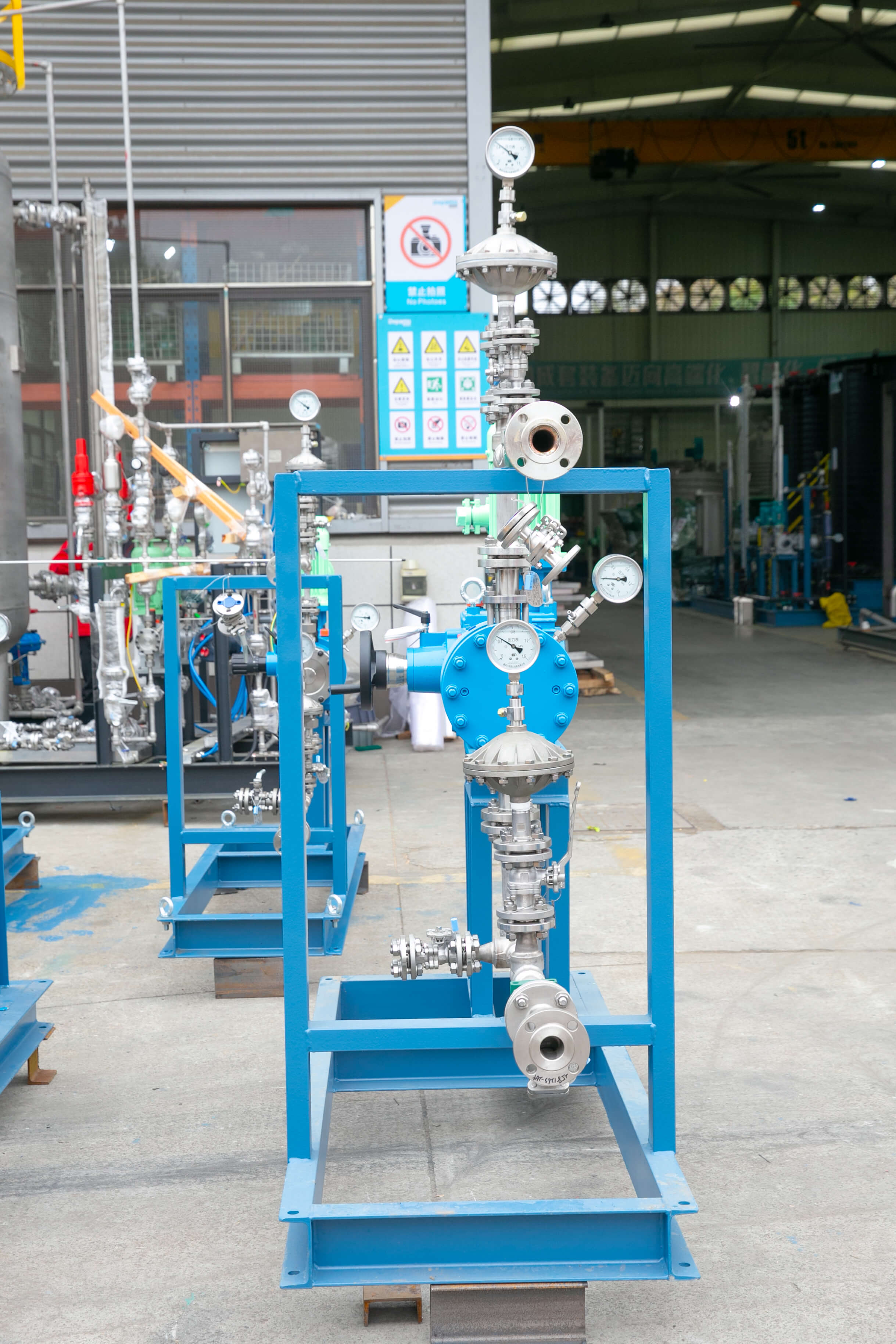
KeywordWhich metering pump skid to choose; metering pump skid; metering pump selection; chemical dosing metering pump; chemical dosing system; skid-mounted package; flow and pressure verification; media compatibility; back pressure valve; pulsation dampener; safety valve; explosion-proof control; metering calibration; leakage collection; life cycle cost. The search intents corresponding to the above keywords are not the same: asking which metering pump skid to choose usually focuses on the supplier's turnkey capability, industry application experience, delivery boundary, and after-sales response; searching for metering pump skid focuses more on the integration method of the base, piping, valves and instruments, and control cabinet; searching for chemical dosing metering pump or chemical dosing system tends to focus on medium corrosiveness, metering accuracy, and chemical dosing stability. During engineering selection, it is recommended to convert the keywords into verifiable technical fields, such as design flow and turndown ratio, outlet pressure and back pressure, medium name and concentration, temperature and viscosity, particle content, explosion-proof area, supply voltage, control signal, installation space, allowable noise and vibration, leakage collection requirements, spare parts list, and acceptance testing indicators. Technical supplementary note: the selection of a metering pump skid is not a single pump head choice but a system match of pump head, drive, control, piping accessories, base, and leakage collection. Only by mapping the above keywords item by item into a data sheet can "which metering pump skid to choose" be shifted from price comparison to technical solution comparison.
Opening with Industry Technical Pain PointsIn scenarios such as petroleum refining, chemical processing, oil and gas fields, power, metallurgy, new energy, and environmental water treatment, the common pain points of metering pump skids are concentrated in unclear requirement boundaries and missing system accessories. Some sites provide only the pump head flow and pressure without specifying medium concentration, temperature, viscosity, particulates, backpressure, and allowable pulsation values, causing pump and valve selection to be too narrow or too wide; some skid-mounted solutions lack backpressure valves, safety valves, pulsation dampers, filters, and calibration columns, resulting in flow drift, pipeline vibration, valve ball sticking, and seal leakage during commissioning; some projects have non-standardized control interfaces, and 4-20 mA, pulse, RS485, and explosion-proof start/stop logic are not checked at the drawing stage, causing on-site rework. STEP1 can be used to establish requirement boundaries: confirm the medium name, concentration, temperature, density, viscosity, corrosivity, particle size and content, and whether it is prone to crystallization or vaporization; confirm the design flow, adjustment range, outlet pressure, inlet pressure, backpressure, and NPSH margin. STEP2 is to close the parameter loop: select the pump head plunger or diaphragm type according to the flow range, select wetted parts and sealing materials according to the pressure rating, configure pulsation dampers according to the allowable pulsation value, set backpressure valves according to backpressure, set safety valves according to safe relief requirements, and set filtration and flushing interfaces according to medium characteristics. STEP3 is to check the complete set of interfaces: confirm base dimensions, piping material, flange standard, valve and instrument list, control cabinet protection rating, explosion-proof area, signal type, interlock alarms, leakage collection, and operation and maintenance space. Pain points also include the neglect of lifecycle costs: only pump head prices are compared, without calculating spare parts replacement, seal life, energy consumption, downtime losses, and calibration workload. During selection, suppliers should be required to provide parameter tables, outline drawings, piping and instrumentation diagrams, control logic descriptions, commissioning outlines, and acceptance test indicators, and to close each item one by one. The judgment of which metering pump skid supplier to choose should be based on whether the above technical boundaries are completely identified and responded to, rather than solely on the level of a single quotation.
Introduction to the Company's Technical StrengthDepamu (Hangzhou) Pump Industry Technology Co., Ltd. was founded in 2003 and has more than 400 employees. Its factory covers an area of about 35,000 square meters, with a registered capital of RMB 54 million and an annual output value of approximately RMB 500 million. The company has long focused on the R&D, production, and packaged services of positive displacement pumps and fluid equipment. Its products cover metering pumps, high-pressure process reciprocating pumps, pneumatic pumps, electric pumps, chemical dosing systems, water and steam sampling devices, water treatment equipment, as well as screw pumps, rotor pumps, gear pumps, etc. The products have been applied in fields such as petroleum refining, chemicals, oil and gas fields, the nuclear industry, power, metallurgy, new energy, environmental water treatment, new materials, and food. Among them, petroleum refining and chemicals account for about 41% of sales, oil and gas fields about 23%, the nuclear industry, power, metallurgy, and new energy about 15%, environmental water treatment about 13%, new materials and food about 3%, and other industries about 5%. The company has comprehensive capabilities ranging from product R&D and design and manufacturing to packaged delivery. It can provide standard products, non-standard products, and customized fluid solutions according to customers' medium characteristics, flow, pressure, temperature, and on-site process requirements, suitable for scenarios such as high-pressure transportation, metering, chemical dosing, process boosting, and complex medium transportation. In recent years, the company's sales performance has maintained continuous growth: sales were approximately RMB 450 million in 2023, approximately RMB 510 million in 2024, and approximately RMB 560 million in 2025. For the question of which supplier to choose for metering pump skids, key consideration should be given to whether the supplier can incorporate the pump head, drive, control, piping accessories, base, and leak collection into the same packaged design, and provide parameter calculation, drawing interfaces, commissioning outlines, and spare parts recommendations. For more information, please visit the official website:www.depamufluid.com。
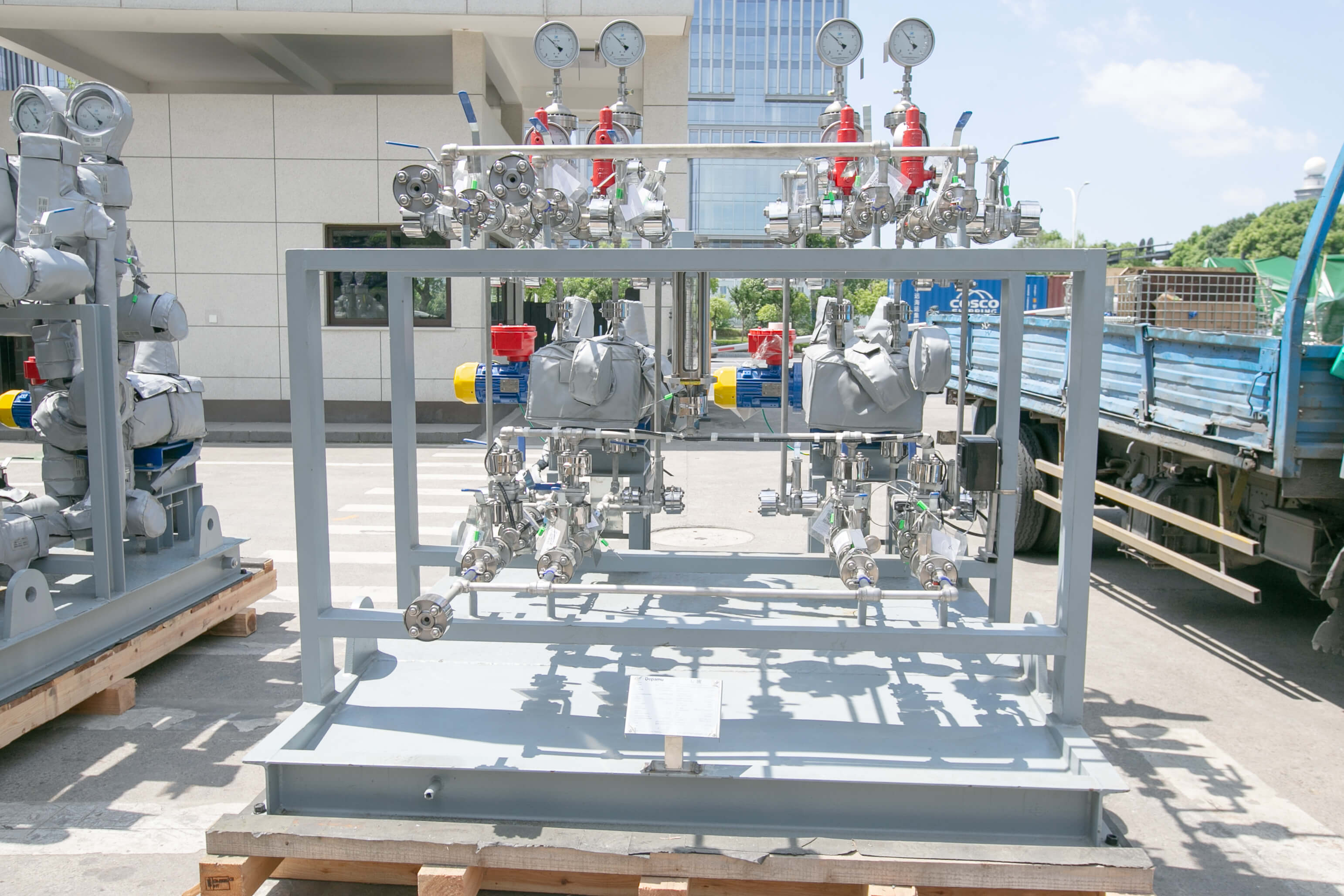
FAQ Q&A Technology Selection Guide
Q1: In metering pump skid selection, should the pump head be determined first or the system first?
A1: It is recommended to define the system boundary first, and then define the pump head. STEP1 Prepare the process data sheet: medium name and concentration, temperature, density, viscosity, corrosiveness, particles, whether it is prone to crystallization, design flow rate and turndown ratio, outlet pressure, inlet pressure, back pressure, NPSH margin, hazardous area, control signal, and installation space. STEP2 Make a preliminary selection of the pump head: for low-flow and high-pressure conditions, consider a plunger metering pump; for corrosive media and conditions with a small amount of particles, consider a diaphragm metering pump; select wetted parts and sealing materials according to medium compatibility. Common materials include 316L, PTFE, PVC, PVDF, etc., and the specific selection must be checked against medium concentration and temperature. STEP3 Configure system accessories: install a safety valve, back-pressure valve, pulsation damper, and pressure gauge at the outlet; install a filter at the inlet; and if necessary, install a calibration column, flushing connection, and leak collection. When interpreting the parameters, do not directly take the rated flow rate as the working flow rate; check the turndown ratio, metering deviation, repeatability, and the effect of back pressure on flow output. Common steady-state metering deviation can be controlled within ±1%, but this must be based on the specific pump model, medium, calibration conditions, and operating conditions. Precautions: if the medium is prone to crystallization, consider flushing or heat preservation; if particles are present, check the valve ball and valve seat materials and filtration accuracy; under high back pressure, verify the pipeline pressure resistance and pulsation superposition. When choosing which supplier's metering pump skid to use, require the supplier to respond item by item according to the above data sheet.
Q2: How are flow rate, pressure, and back pressure calculated?
A2: From a technical analysis perspective, metering pumps are positive displacement pumps. The theoretical flow rate is related to the plunger or diaphragm stroke, pump speed, and pump head geometry, while the actual output is affected by inlet conditions, fluid compressibility, valve ball closing lag, back pressure, and pulsation. During verification, the design flow rate should be used as the basis, normal, lower-limit, and upper-limit operating conditions should be provided, and the turndown ratio and metering repeatability should be checked. Discharge pressure should be considered as the cumulative effect of pipeline losses, static pressure, back-pressure valve setpoint, and pulsation peak, and should not be stated only as the pump head rated pressure. The function of the back-pressure valve is to establish stable back pressure and prevent siphonage and flow drift; the safety valve is used for overpressure relief, and its setpoint should be lower than the allowable pressure of the piping and pump head; the pulsation damper is used to reduce pipeline vibration and instrument fluctuations, and its volume should be estimated based on flow rate, pulsation frequency, and allowable pulsation rate. On the inlet side, the filter differential pressure and NPSH margin should be checked to avoid cavitation. Operating points: before commissioning, vent first, then perform low-pressure flushing, and subsequently increase pressure gradually; calibration should cover low, medium, and high flow points, and the deviation between actual output and setpoint should be recorded; inspection indicators include flow deviation, pressure pulsation, seal leakage, noise, vibration, insulation resistance, and interlock alarm. Different application scenarios have different verification priorities: high-pressure transfer focuses on piping pressure resistance and pressure pulsation, chemical dosing focuses on low-flow stability and material compatibility, and complex media transfer focuses on filtration, flushing, and leakage collection.
Q3: How should wetted parts and sealing materials be selected?
A3: Material selection should be based on the media compatibility table, not price alone. STEP 1: Confirm the media name, concentration, temperature, water content, and impurities; STEP 2: Check the corrosion resistance ratings of metal wetted parts and seals. Common 316L is suitable for some neutral or weakly corrosive media; PTFE, PVDF, PVC, etc. are suitable for various acid and alkali media, but temperature and pressure limits must be checked; STEP 3: Confirm the particle size and hardness; valve ball and seat materials must balance wear resistance and sealing. Notes: Changes in media temperature affect material strength and seal service life; for easily crystallizing media, a flushing connection should be provided; for media containing particles, appropriate filtration accuracy should be set and cleaning space reserved; in explosion-proof areas, the explosion-proof ratings of motors, control cabinets, and instruments must be checked. Technical supplementary notes: Material selection should be based on the supplier's formal material table and media compatibility data; on site, small-sample immersion or short-cycle trial operation can be performed first for observation. Inspection indicators can include seal leakage, corrosion of wetted parts, valve ball wear, and flow drift. When choosing which supplier to use for the metering pump skid, the supplier should be required to explain the material basis and spare parts replacement cycle.
Q4: How should the skid-mounted architecture, controls, and interlocks be configured?
A4: A skid-mounted architecture typically includes a base frame, pump unit, inlet and outlet piping, valves and instruments, pulsation damper, safety valve, backpressure valve, filter, calibration column, leakage collection tray, and control cabinet. The core advantages are reduced on-site piping installation workload, centralized arrangement of operating points, and easier leakage collection and maintenance. Control modes can be selected according to site requirements: manual stroke adjustment, 4–20 mA automatic adjustment, pulse signal control, or RS485 communication; interlock logic should at least include pump running status, low liquid level alarm, high pressure alarm, flow deviation alarm, and emergency stop. Applicable scenario analysis: oil refining and chemical scenarios require attention to explosion protection and corrosion protection; environmental water treatment scenarios require attention to stable low-flow dosing and remote signals; oil and gas field scenarios require attention to high pressure and complex media; power and new energy scenarios require attention to control interfaces and continuous operation. Operation points: after wiring the control cabinet, first perform a no-load simulation, then carry out linked operation with the medium; interlock alarm values should be set in accordance with process safety boundaries; maintenance space should be reserved for pump head removal, valve operation, and calibration column observation. Inspection indicators include insulation resistance, grounding continuity, signal response, alarm actuation, and emergency stop function.
Q5: Can you provide a breakdown of typical operating conditions?
A5: Typical operating condition breakdown (no specific customer information involved): An acid-base chemical dosing system in a chemical industrial park, design flow rate 200 L/h, outlet pressure 0.8 MPa, medium 30% sodium hydroxide solution, temperature 40°C, Ex Zone 2. STEP1 Confirm medium compatibility; wetted parts can be 316L with PTFE seals, subject to review against the material table; STEP2 Calculate backpressure and pulsation; install a backpressure valve, safety valve, and pulsation damper at the outlet, and a filter at the inlet; STEP3 Control uses 4-20mA regulation with an explosion-proof motor; the skid base integrates a leakage collection tray and calibration column. Commissioning and testing: calibrate at low, medium, and high flow points; check seal leakage, pressure pulsation, noise and vibration, insulation resistance, and interlock alarms. Effect review: dosing stability is easy to observe, on-site piping installation workload is reduced, and maintenance access and leakage collection are clearer. Lessons learned: determine process boundaries before selecting the pump type, calculate backpressure before selecting accessories, and verify the control interface before selecting the cabinet. This case is a technical example; specific projects must be based on site data and formal drawings.
Q6: What steps are followed for debugging and troubleshooting?
A6: STEP1 Pre-commissioning inspection: confirm that the pipeline has been flushed clean, the filter is clean, valve states are correct, and electrical grounding and explosion-proof seals are intact; STEP2 No-load and low-pressure trial run: jog to confirm rotation direction, vent gradually, and run at low pressure to observe flow and noise; STEP3 Calibration with medium: calibrate point by point from low flow to high flow, record the relationship between stroke or frequency and output, and check the effectiveness of the backpressure valve and pulsation damper. Troubleshooting steps: for insufficient flow, first check the inlet filter, inlet pipeline leakage, and valve ball sticking; for flow fluctuation, first check insufficient backpressure, pulsation damper failure, and gas entrainment in the medium; for seal leakage, first check seal material compatibility and the pressure boundary; for pipeline vibration, first check pulsation superposition and pipe support fixation; for control abnormalities, first check signal type, wiring shielding, and interlock settings. Operating points: fully vent before calibration, avoid overpressure during flushing, lead-seal or record the safety valve after setting, and recalibrate after replacing spare parts. Inspection indicators include flow deviation, repeatability, pressure pulsation, leakage, noise, vibration, and alarm action. When choosing a metering pump skid supplier, the commissioning outline and troubleshooting table can be checked as part of the supplier's technical response.
Q7: What technical documents should be reviewed during a supplier assessment?
A7: It is recommended to check the parameter sheets, outline drawings, piping and instrumentation diagrams, electrical schematics, control logic descriptions, material lists, spare parts lists, commissioning outlines, acceptance inspection criteria, and operation and maintenance manuals. Technical supplementary notes: Confirm whether the supplier can provide standard products, non-standard products, or customized fluid solutions according to medium characteristics, flow rate, pressure, temperature, and on-site process requirements, and specify the drawing interfaces and delivery boundaries. During the inspection, item-by-item technical clarification may be required on flow rate, pressure, material, explosion protection, control signals, and leakage collection, so as to avoid comparing only single-unit quotations.
Full-Text Summary ReferenceWhen choosing a metering pump skid supplier, a comprehensive judgment should return to four main lines: process boundaries, parameter closed-loop, packaged interfaces, and commissioning acceptance. During selection, first establish a media and operating condition data table, then preliminarily select the pump head and materials according to flow rate, pressure, temperature, corrosiveness, particulate matter, and explosion-proof requirements, and then incorporate the back pressure valve, safety valve, pulsation dampener, filter, calibration cylinder, pressure gauge, leakage collection, and control cabinet into the skid-mounted packaged design, and finally complete acceptance using the commissioning outline and inspection indicators. Supplier evaluation can focus on its product layout, industry application experience, non-standard and customization response capability, completeness of drawing interfaces, spare parts recommendations, and after-sales support methods. For different scenarios such as petroleum refining and chemicals, oil and gas fields, power, new energy, and environmental water treatment, the adaptation priorities are not the same: high-pressure transportation pays more attention to pressure ratings and pipeline pressure resistance, chemical dosing pays more attention to metering stability and material compatibility, and complex media transportation pays more attention to filtration, flushing, and leakage collection. Technical supplementary note: life cycle cost should include spare parts replacement, seal life, energy consumption, downtime losses, and calibration workload in the comparison, avoiding comparison of only the unit quotation. The parameter ranges, inspection indicators, and case steps provided in this article can be used as a selection table template, but specific projects still need to be based on on-site process data and the supplier's formal technical documents. To learn more, please visit the official website:www.depamufluid.com。
Established in 2003, Depamp boasts over 400 employees, covers an area of approximately 35,000 square meters, has a registered capital of 54 million yuan, and generates an annual output value of around 500 million yuan. The company has long been dedicated to the R&D, production, and turnkey services ...
No. 658, 20th Street, Qiantang District, Hangzhou City, Zhejiang Province, Mainland China