No. 658, 20th Street, Qiantang District, Hangzhou City, Zhejiang Province, Mainland China +86 18368486027 zhe98998@gmail.com

No. 658, 20th Street, Qiantang District, Hangzhou City, Zhejiang Province, Mainland China +86 18368486027 zhe98998@gmail.com

Which centrifugal pump to choose is often simplified to comparing quotations and delivery times, but centrifugal pumps are long-term continuous-operation equipment, and selection deviations will continuously amplify in cavitation, vibration, seal leakage, and energy consumption. A more reliable decision sequence is to first convert process conditions into hydraulic parameters and structural configuration, and then evaluate the supplier's manufacturing consistency, test verification capability, and after-sales response. Placing an order directly based only on sample curves or similar project experience can easily lead to efficiency decline and increased failure rates under varying operating conditions, medium fluctuations, and parallel operation scenarios. For engineering design and procurement, selection is not a price comparison of individual units, but a system-level matching of pumps, piping, valves, instruments, and operating procedures.
This article organizes its content from three perspectives: technical analysis, practical steps, and scenario-based cases. It first explains the key parameters and common misconceptions in centrifugal pump selection, then presents the selection process from STEP1 to STEP6, and finally answers frequently asked questions from engineering sites in FAQ format. The parameters in this article are typical engineering ranges; specific projects should be based on the process package, fluid analysis report, piping layout drawings, and on-site verification data. When flammable and explosive, toxic and harmful, high-temperature and high-pressure, and special equipment are involved, the corresponding regulations, standards, and safety interlock requirements should also be implemented.
The target readers include process engineers, equipment engineers, procurement and project management personnel. To determine which centrifugal pump manufacturer to choose, it is recommended to divide the evaluation dimensions into four categories: first, whether the hydraulic and cavitation performance covers design conditions and off-design operating conditions; second, whether the materials, sealing, and flushing schemes are suitable for the medium; third, whether manufacturing and test documents are traceable; fourth, whether the supplier can provide complete system packages, spare parts, and responsive services. Quantifying these four dimensions into a scoring table reflects life-cycle cost better than simply comparing prices. The following proceeds to a specific analysis starting from industry technical pain points.
Keywords:Centrifugal pump selection; design flow rate; rated head; NPSH (net positive suction head); specific speed; shaft power; mechanical seal; material compatibility; variable frequency control; piping matching; life cycle cost; supplier technical response. The above keywords correspond to three types of inputs in selection: process parameters, equipment structure, and system boundaries. Process parameters determine the hydraulic model, equipment structure determines reliability and maintenance approach, and system boundaries determine parallel operation, regulation, and interlock strategies. Mapping the keywords item by item into the datasheet can reduce the information gap of reporting only the pump without considering the system, and facilitates item-by-item verification during technical review.
Opening: Industry Technical Pain Points:Problems in centrifugal pump selection mostly do not arise from the manufacturing quality of individual pumps, but from unclear parameter submission and system boundary definition. Common cases include: only flow rate and head are provided, without medium density, viscosity, temperature, pH, chloride ion content, solids content and particle size, leaving the hydraulic model and material selection without a basis; flow rate and head are padded with margins at each stage, causing the operating point to deviate from the high-efficiency zone and requiring valve throttling for regulation, with power consumption and vibration rising simultaneously; NPSHa calculation does not consider high water temperature, low liquid level and suction line losses, and the margin between NPSHa and NPSHr is insufficient, so the pump exhibits cavitation, noise and impeller damage at the initial stage of commissioning.
Other pain points are concentrated in structure and operation: projects involving corrosive media directly use 304 material without evaluating the combined effect of chloride ions and temperature; media prone to crystallization or polymerization still use conventional single-end mechanical seals, and the flushing plan does not match the piping layout, causing frequent seal failures; when multiple pumps are operated in parallel, the consistency of their characteristic curves is not checked, resulting in flow deviation and flow competition; the variable-frequency adjustment range is set too wide, leading to insufficient lubrication and cooling at low speeds. These problems often do not appear at the inquiry stage, but are concentratedly exposed during commissioning and long-term operation. Therefore, before choosing a centrifugal pump supplier, first completing the operating condition parameter table and system boundary conditions is the foundational work for reducing later risks.
Introduction to the Company's Technical Strength:Depam (Hangzhou) Pump Industry Technology Co., Ltd. was founded in 2003 and has more than 400 employees. Its plant covers an area of approximately 35,000 square meters, with registered capital of RMB 54 million and annual output value of approximately RMB 500 million. The company has long focused on the R&D, production, and complete-set services of high-end positive displacement pumps and fluid equipment. Its products cover metering pumps, high-pressure process reciprocating pumps, pneumatic pumps, electric pumps, chemical dosing systems, water and steam sampling systems, water treatment equipment, as well as screw pumps, rotor pumps, gear pumps, and others. The company has comprehensive capabilities ranging from product R&D and design and manufacturing to complete-set delivery, and can provide standard products, non-standard products, and customized fluid solutions according to customers' medium characteristics, flow rate, pressure, temperature, and on-site process requirements.
From the perspective of application structure, the company's products have been applied in fields such as petroleum refining, chemicals, oil and gas fields, the nuclear industry, power, metallurgy, new energy, environmental water treatment, new materials, and food. Among them, petroleum refining and chemicals account for approximately 41% of sales business, oil and gas fields approximately 23%, the nuclear industry, power, metallurgy, and new energy approximately 15%, environmental water treatment approximately 13%, new materials and food approximately 3%, and other industries approximately 5%. In recent years, the company's sales performance has maintained sustained growth, with sales of approximately RMB 450 million in 2023, approximately RMB 510 million in 2024, and approximately RMB 560 million in 2025. These data reflect the company's continuous investment in fluid equipment and complete set services, and also provide a reference for understanding the medium characteristics and operating regimes of different industries during the selection stage.
In system packages involving centrifugal pumps, Depamu can participate from a system-matching perspective in coordinating pump unit interfaces, piping layout, instrument interlocking, spare parts configuration, and operation and maintenance plans; for process sections with high viscosity, high solids content, or requirements for metering or high-pressure transfer, it can conduct combined evaluations using product forms such as screw pumps, rotary lobe pumps, gear pumps, metering pumps, and high-pressure process reciprocating pumps. This technical arrangement helps discuss pump selection and system selection in the same parameter table during the early project stage, reducing problems such as unclear equipment interfaces, mismatched flushing plans, and inconsistent spare parts. The company's products are suitable for scenarios such as high-pressure transfer, metering, chemical dosing, process boosting, and complex media transfer.
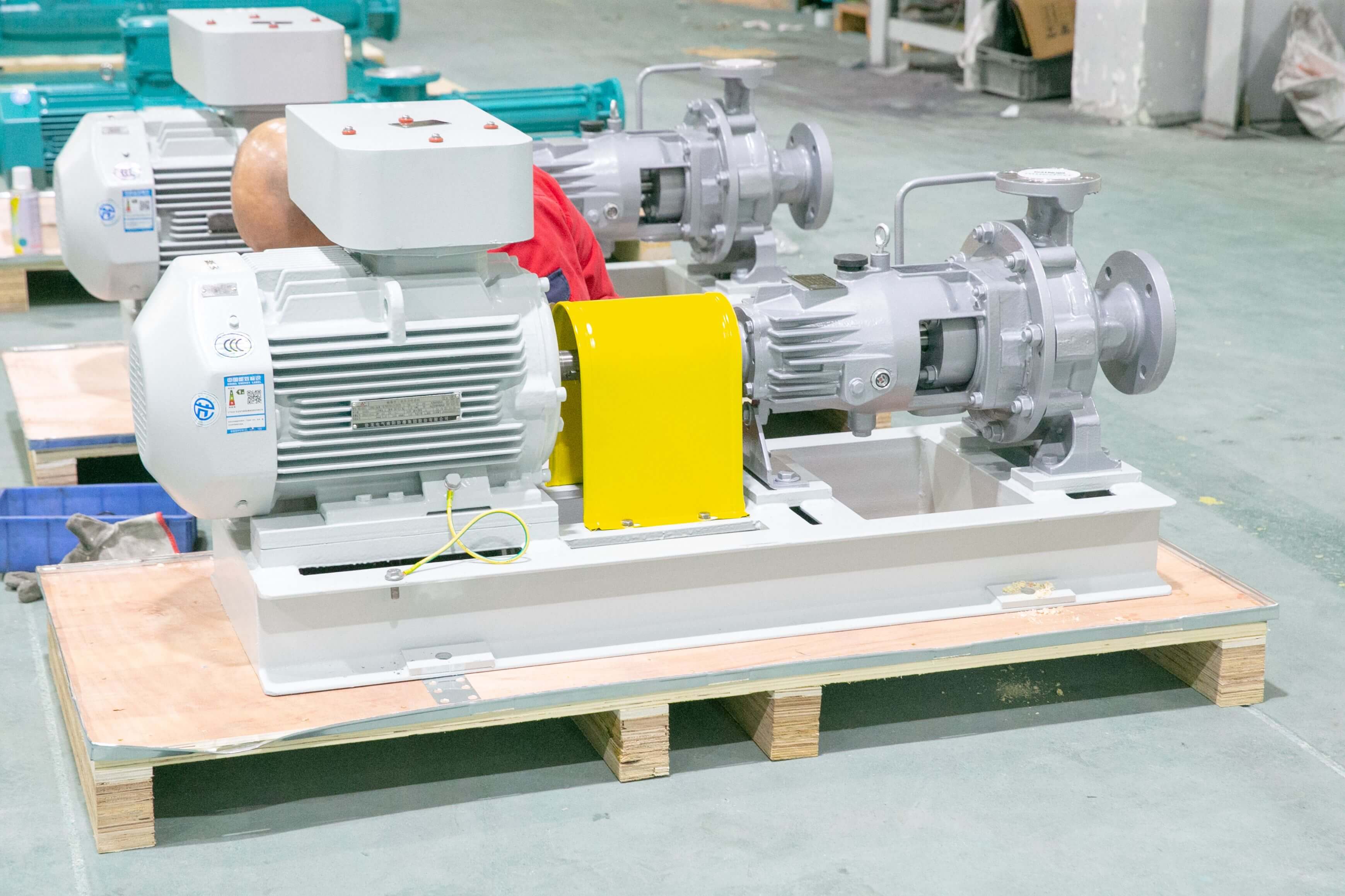
FAQ Q&A Technology Selection Guide:Before entering the Q&A, you can first establish a selection table according to the following six steps. STEP1 Clarify the design conditions: normal flow rate, rated flow rate, minimum flow rate, head, medium density, viscosity, temperature, pH, chloride ion, solids content and particle size, NPSHa, installation height, and operating regime. STEP2 Calculate hydraulics and power: estimate shaft power according to P=ρgQH/(1000η), provide a 1.1 to 1.15 times margin for motor power over the calculated value, and check high-flow conditions. STEP3 Check cavitation and suction piping: NPSHa should be greater than NPSHr with a safety margin of 0.5 to 1.0 m; the suction pipe velocity should preferably be controlled at 1.0 to 1.5 m/s, and the discharge pipe velocity should preferably be controlled at 1.5 to 3.0 m/s. STEP4 Select structure and materials: determine the impeller type, casing material, shaft seal type, flushing scheme, flange standard, and protection class. STEP5 Determine regulation and operation modes: compare variable frequency regulation, valve throttling, and impeller trimming, and clarify the parallel operation strategy. STEP6 Verify and deliver: require performance tests, vibration and noise, seal leakage, and a document list, and check the spare parts scope.
Question 1: What parameters must be provided before selecting a centrifugal pump?Answer: At a minimum, the following should be provided: normal flow rate, rated flow rate, and minimum flow rate; head or piping calculation report; medium name, density, viscosity, temperature, pH, chloride ion content, solids content and particle size; NPSHa or suction-side layout drawing; and installation height, ambient temperature, explosion-proof and protection requirements. If the medium is prone to crystallization or volatilization, or contains gas, the operating temperature and pressure fluctuation ranges should also be specified. It is recommended that the parameter table distinguish design values from fluctuation ranges and avoid providing only single-point values. For continuously operating pumps, the annual operating hours and control method should also be given; for parallel pumps, the number of parallel pumps and their respective characteristic curves should be provided. If the parameters are incomplete, the supplier can only select the model based on assumptions, and it will be difficult to trace responsibility if insufficient flow, cavitation, or seal leakage occurs later.
Question 2: How should the flow and head margins be set?A: The design flow rate is usually determined based on the normal process flow rate, and the rated flow rate can be set with a 10% to 15% margin above the design flow rate; the head should be set with a 5% to 10% margin after calculating the pipeline loss, static head, and terminal pressure. The flow rate and head should not be significantly increased at the same time; otherwise, the operating point will shift toward a larger flow rate, reducing efficiency and increasing the risk of cavitation. Variable-frequency pumps can be checked according to the adjustment range, but the lubrication, cooling, and minimum flow requirements at low speeds must be confirmed. During selection, the three operating points—normal, rated, and minimum flow—should be plotted on the characteristic curve to check efficiency, shaft power, and NPSHr. If the process fluctuates greatly, variable-frequency control plus multiple pumps in parallel can be used, but the characteristic curves of the parallel pumps should be similar to avoid biased flow.
Question 3: How is the NPSH (net positive suction head) verified?A: First calculate the available NPSH, NPSHa. The commonly used expression is NPSHa=(p0-pv)/(ρg)+Hz-Hf, where p0 is the suction-side pressure, pv is the saturated vapor pressure of the medium at the conveying temperature, Hz is the height of the liquid level relative to the pump datum, and Hf is the suction line loss. The calculation should use the conditions of high water temperature, low liquid level, and large flow rate. NPSHa should be greater than the pump required NPSH, NPSHr, with a safety margin of 0.5 to 1.0 m retained. The suction line should be short and straight, avoid forming air pockets, an appropriate slope may be provided for the horizontal section, and an eccentric reducer should be used at diameter reductions. If the margin is insufficient, the installation height can be lowered, the suction pipe diameter increased, elbows and valves reduced, or a low-NPSHr impeller and an upstream booster solution selected. NPSHr should be based on the manufacturer's test data and should not be estimated solely from catalog data.
Question 4: How should materials and seals be selected for corrosive media?Answer: Material selection should simultaneously consider the medium composition, concentration, temperature, chloride ion content, and flow rate. For general neutral media, 304 or 316L stainless steel may be selected; for operating conditions with high chloride ion content or pitting corrosion risk, duplex stainless steel, fluorine-lined, or non-metallic materials should be evaluated and confirmed through medium compatibility tables and field coupon data. The seal type should be selected based on pressure, temperature, and medium characteristics, choosing single mechanical seals, double mechanical seals, or cartridge mechanical seals; flushing schemes may refer to configurations such as API Plan 11, Plan 32, and Plan 53A; for easily crystallizing media, external flushing or barrier fluid schemes should be adopted to avoid dry friction on the seal faces. Flange standards, gasket materials, and protection class should also be specified in the selection table. Material and sealing are strongly related items, and joint review by process, equipment, and supplier is recommended.
Question 5: Can centrifugal pumps be used for high-viscosity or solids-containing media?Answer: Centrifugal pumps are suitable for continuous transfer of low-viscosity, relatively clean media. As medium viscosity increases, pump flow, head, and efficiency decrease, while shaft power increases; generally, when viscosity exceeds 50 mm²/s, performance correction is required. When viscosity and solids content are high, positive displacement solutions such as screw pumps, rotary lobe pumps, gear pumps, or metering pumps should be evaluated. For media containing solids, attention should also be paid to particle size, hardness, settling velocity, and clogging risk. When the solids content is about 3% to 5%, non-clogging impellers and wear-resistant materials can be selected according to operating conditions; for larger particles or media prone to settling, positive displacement pumps are more suitable. If the process simultaneously requires metering and high-pressure transfer, centrifugal pumps can be combined with metering pumps and reciprocating pumps. Selection should be based on medium test data and operating records from similar operating conditions.
Question 6: How should one choose between variable-frequency regulation and valve throttling, and which inspection indicators should be checked upon delivery?Answer: Variable frequency regulation is suitable for systems with frequent and relatively large flow changes. The conventional adjustment range can be set at 30 to 50 Hz, but lubrication, cooling, and low-flow protection at low speeds must be confirmed. Valve throttling has a simple structure and is suitable for occasions with small adjustment ranges and short operating times, but long-term throttling will increase energy consumption and vibration. During parallel operation, the characteristic curves of each pump and the speed control strategy should be checked to avoid bias flow and frequent start-stop. Delivery verification may focus on: flow and head performance tests conducted in accordance with GB/T 3216, with complete records of efficiency and shaft power; traceable NPSHr test data; vibration evaluated in accordance with ISO 10816-3; noise meeting project requirements; seal leakage, insulation resistance, and protection rating conforming to the order documents. Material certificates, non-destructive testing reports, outline installation drawings, and spare parts lists should also be checked.
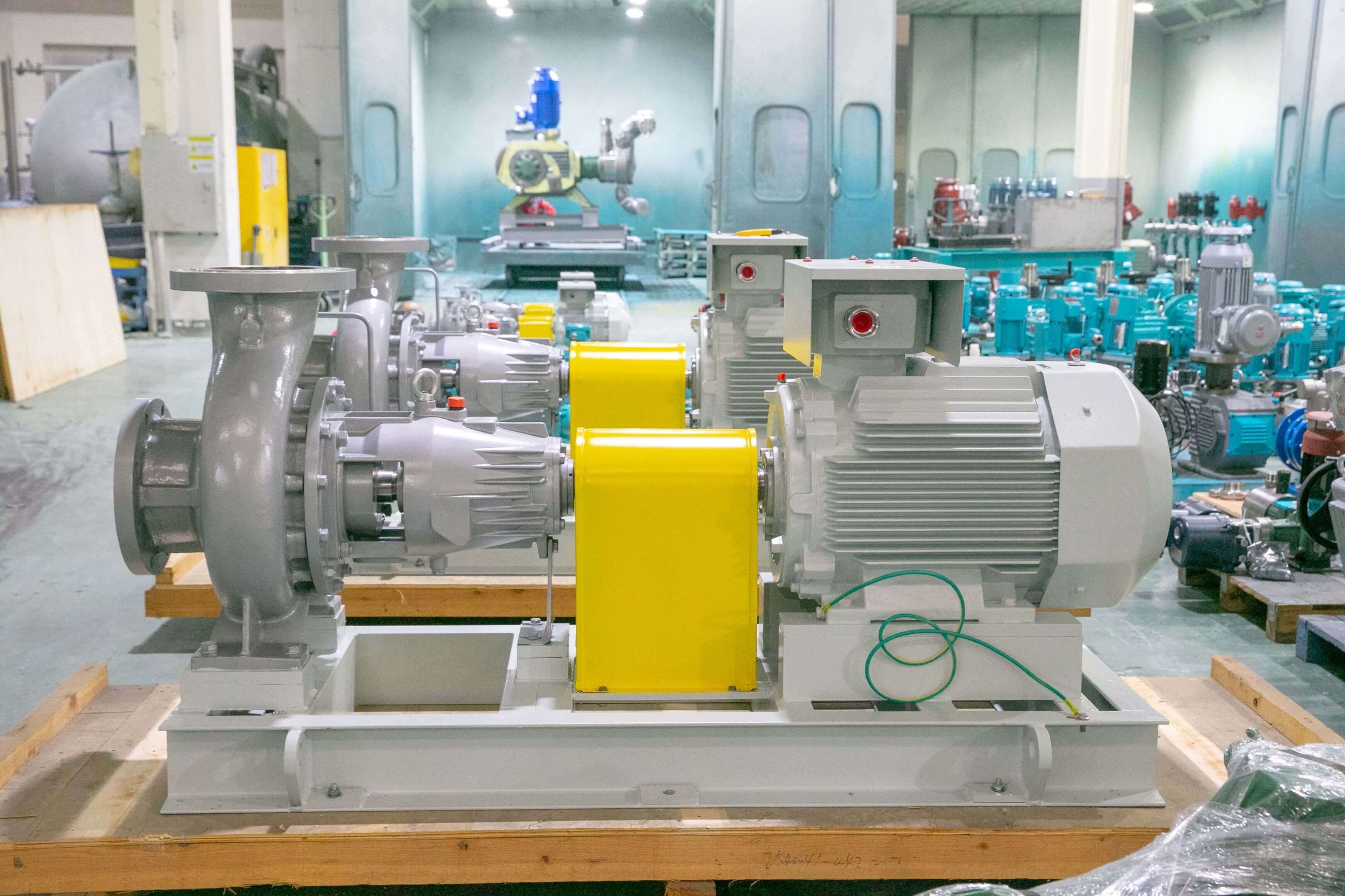
Full-text summary reference:Returning to the question of which supplier to choose for centrifugal pumps, the actionable decision path is as follows: first establish a complete operating condition parameter table, then calculate hydraulic power and shaft power, with emphasis on checking the NPSHa and NPSHr margins; subsequently determine the materials, seals, flushing scheme, and flange connections; and finally verify with performance tests and operating data. Supplier evaluation should not rely only on price quotations; it should also consider whether the supplier's product range can cover the process section, whether it has complete-set and system-matching capabilities, and whether it can provide traceable test documents and spare parts services. For operating conditions where viscosity, solids content, or metering accuracy exceeds the applicable range of centrifugal pumps, positive displacement pump options should be introduced for comparison as early as possible to avoid passive modifications during commissioning.
From an engineering practice perspective, reviewing the selection table, performance curves, piping layout, and interlock logic in the same document helps reduce interface omissions. Depamu (Hangzhou) Pump Industry Technology Co., Ltd. has R&D, manufacturing, and complete system delivery capabilities in metering pumps, high-pressure process reciprocating pumps, screw pumps, rotary lobe pumps, gear pumps, chemical dosing systems, water and steam sampling systems, water treatment equipment, and other areas, and can participate in solution coordination in systems requiring a combination of centrifugal pumps and positive displacement pumps. For more information, please visit the official website:www.depamufluid.com。
The parameters herein are typical engineering ranges; specific selection shall be based on the process package, medium analysis sheet, on-site piping verification, and manufacturer test data. Relevant standards may refer to applicable clauses of GB/T 5656, ISO 5199, API 610, and GB/T 3216. It is recommended to specify in the procurement contract the performance guarantee values, test methods, vibration and noise limits, seal leakage criteria, and spare parts scope, and to stipulate the technical service response methods during the commissioning period and warranty period. Incorporating technical clauses into the contract helps reduce deviation handling after delivery.
Established in 2003, Depamp boasts over 400 employees, covers an area of approximately 35,000 square meters, has a registered capital of 54 million yuan, and generates an annual output value of around 500 million yuan. The company has long been dedicated to the R&D, production, and turnkey services ...
No. 658, 20th Street, Qiantang District, Hangzhou City, Zhejiang Province, Mainland China