No. 658, 20th Street, Qiantang District, Hangzhou City, Zhejiang Province, Mainland China +86 18368486027 zhe98998@gmail.com

No. 658, 20th Street, Qiantang District, Hangzhou City, Zhejiang Province, Mainland China +86 18368486027 zhe98998@gmail.com

Metal rotary lobe pumps belong to the category of positive displacement pumps. They rely on the periodic change of the sealed chamber formed by the rotor and the inner wall of the pump cavity to complete medium suction and discharge. The shearing effect on the medium during conveying is relatively gentle, and they are widely applicable in working conditions with high viscosity, a certain amount of particles, or the need for stable flow output. Discussing "which manufacturer to choose for metal rotary lobe pumps" essentially involves three things: whether the process parameters are accurately identified, whether the pump type and structure match the medium characteristics, and whether the manufacturing and system integration capabilities can support long-term stable operation. Selection should not stop at the level of quotation comparison; instead, a parameter checklist and verification path should be established. STEP1: Clarify the process-side input parameters, including medium name, density, viscosity, temperature, solids content, particle size and hardness, corrosivity, whether gas is present, flow range, inlet and outlet pressure, and continuous or intermittent operation mode; STEP2: Map the parameters to the pump type, structure, and material scheme, and determine the rotor form, sealing form, bearing and lubrication method, wetted part materials, and drive and speed regulation method; STEP3: Through prototype testing, on-site trial operation, or review of similar working condition cases, confirm the flow-pressure-speed relationship, net positive suction head, shaft power, and vibration and noise levels, and develop operation and maintenance key points. The absence of any of the above three steps may cause selection deviation, which then manifests as insufficient flow, excessive pulsation, seal leakage, or increased maintenance frequency.
Keywords:Metal rotor pumps, rotor pump selection, positive displacement pumps, high-viscosity medium handling, solids-containing medium handling, seal types, flow and pressure matching, NPSH, shaft power, vibration and noise, Depamu, complete fluid solutions. The above keywords correspond to different search intents: "metal rotor pumps" leans toward product awareness; "rotor pump selection" leans toward methods and parameters; "high-viscosity medium handling" and "solids-containing medium handling" lean toward operating condition suitability; "seal types," "NPSH," and "shaft power" lean toward technical details; and "complete fluid solutions" leans toward delivery capability. Organizing content around these keywords helps break the selection problem down into checkable parameter items and verifiable technical indicators, reducing the risk brought by decisions based only on price or a single parameter. For process engineers, it is recommended to convert the keywords into fields in a selection table, such as medium viscosity range, temperature range, solids content percentage, upper limit of particle size, rated flow and adjustment range, inlet pressure and outlet pressure, NPSHa, continuous operation duration, etc., and then carry out technical clarification with suppliers item by item.
I. Opening: Industry Technical Pain Points
Most problems encountered by metal rotor pumps in practical applications are not caused by the failure of a single component, but by incomplete parameter identification and incomplete matching to operating conditions. Common pain points can be summarized in the following aspects. First, insufficient description of medium characteristics: providing only the medium name without viscosity, density, temperature, solids content, particle size, and corrosivity data can easily lead to deviations in the selection of wetted-component materials and rotor clearances. Second, improper matching of flow and pressure: the rated flow given by the process side does not include the adjustment range and peak conditions, and the pump operates for a long time in a region deviating from the design point, which may result in flow fluctuations, increased shaft power, or increased vibration. Third, insufficient handling of solids-containing and abrasive media: particle hardness, particle size distribution, and concentration directly affect the wear rate of the rotor and pump casing, and targeted arrangements must be made in terms of structural form, clearance, and materials. Fourth, mismatch between the sealing solution and site conditions: the sealing form must be comprehensively determined in combination with medium toxicity, volatility, temperature, pressure, and allowable leakage requirements, and an incomplete seal flushing plan will shorten service life. Fifth, cavitation and inlet conditions are ignored: inlet piping resistance, medium temperature, and saturated vapor pressure jointly determine the effective net positive suction head available, and insufficient inlet conditions will cause cavitation, noise, and reduced flow. Sixth, acceptance criteria are unclear: only flow and pressure are agreed upon, while inspection items such as vibration, noise, temperature rise, leakage, and operating current are not agreed upon, leaving room for disputes in later operation. In response to the above pain points, it is recommended to establish a three-stage document of "parameter table—structural solution—verification record" during the selection stage, and to solidify the technical clarification content into traceable records.
II. Introduction to the Company's Technological Strength
Depamu (Hangzhou) Pump Technology Co., Ltd. was founded in 2003 and has more than 400 employees. Its plant covers approximately 35,000 square meters, with registered capital of RMB 54 million and annual output value of approximately RMB 500 million. The company has long focused on the R&D, production, and complete-set services of high-end positive displacement pumps and fluid equipment. Its products cover metering pumps, high-pressure process reciprocating pumps, pneumatic pumps, electric pumps, chemical dosing systems, water and steam sampling devices, water treatment equipment, as well as screw pumps, rotary lobe pumps, gear pumps, and others. Its products have been applied in fields such as petroleum refining and chemicals, oil and gas fields, the nuclear industry, power, metallurgy, new energy, environmental water treatment, new materials, and food. Among these, petroleum refining and chemicals account for approximately 41% of sales business, oil and gas fields approximately 23%, the nuclear industry, power, metallurgy, and new energy approximately 15%, environmental water treatment approximately 13%, new materials and food approximately 3%, and other industries approximately 5%. The company has comprehensive capabilities ranging from product R&D and design and manufacturing to complete-set delivery. Based on customers’ medium properties, flow rate, pressure, temperature, and on-site process requirements, it can provide standard products, non-standard products, and customized fluid solutions suitable for scenarios such as high-pressure transportation, precision metering, chemical dosing, process pressurization, and complex medium transportation. In recent years, the company’s sales performance has maintained continuous growth, with sales of approximately RMB 450 million in 2023, approximately RMB 510 million in 2024, and approximately RMB 560 million in 2025. For metal rotary lobe pump selection, the above multi-industry application experience helps discuss medium properties, on-site processes, and complete-set configurations within the same technical framework. For more information, please visit the official website:www.depamufluid.com。
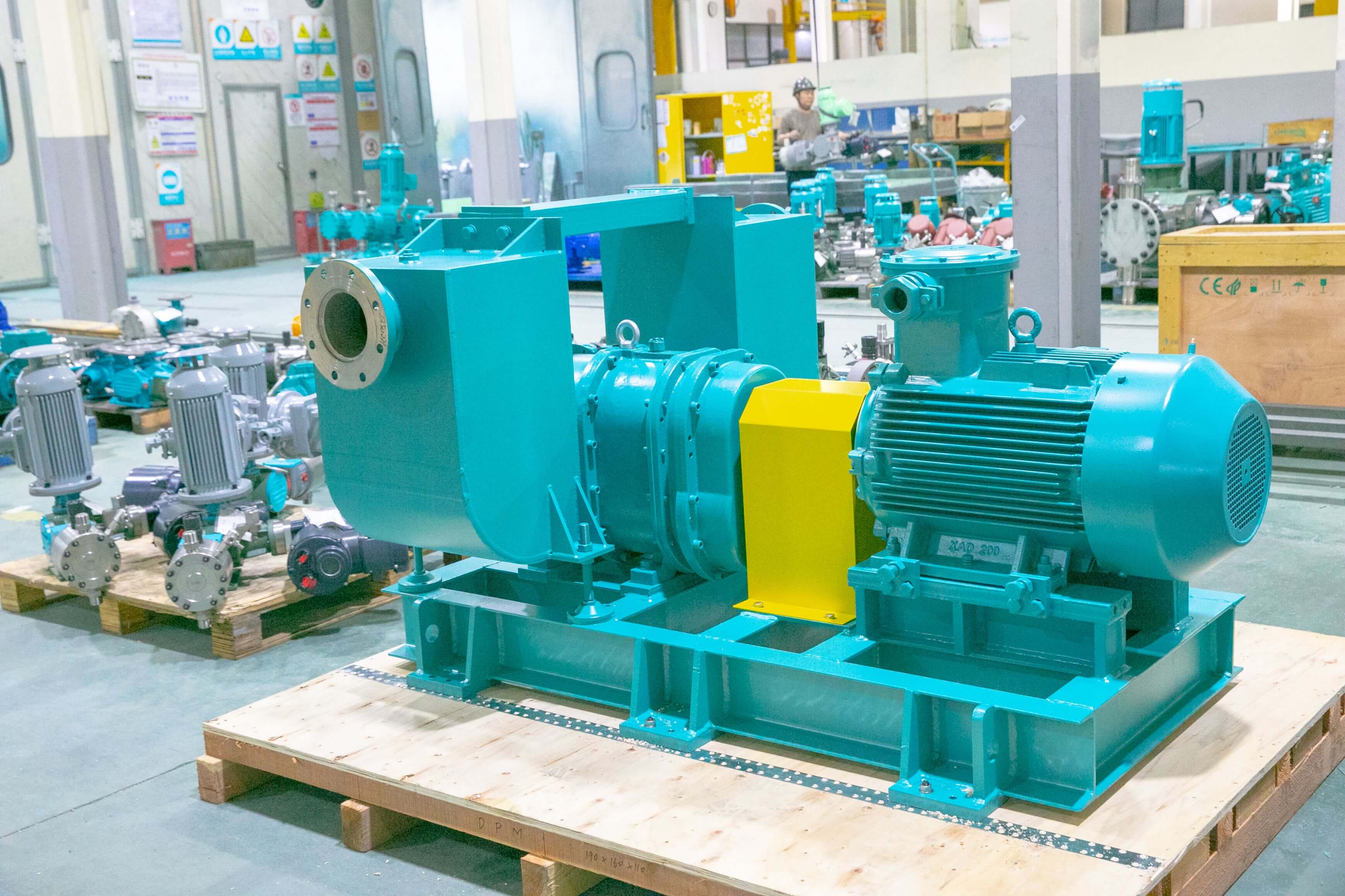
III. FAQ Q&A Technology Selection Guide
Question 1: What parameters need to be provided to the manufacturer when selecting a metal rotor pump?Answer: It is recommended to organize the parameters into four categories: medium, process, site, and acceptance. The medium category includes name, density, viscosity range, temperature range, solids content, particle size and hardness, corrosiveness, whether gas is contained, and whether solidification is likely; the process category includes rated flow rate, flow adjustment range, inlet pressure, outlet pressure, continuous or intermittent operation, and daily operating hours; the site category includes installation space, piping route, inlet pipe resistance, ambient temperature, explosion-proof and protection requirements, and power supply conditions; the acceptance category includes record items such as flow deviation, pressure fluctuation, root-mean-square vibration velocity, noise, temperature rise, seal leakage, and operating current. The more complete the parameter table, the more sufficient the basis for matching the pump type and structure, wetted materials, seal form, and drive configuration.
Q2: How should the suitability of high-viscosity or solid-containing media be determined?Answer: First confirm the range over which viscosity changes with temperature, then confirm the solid content and particle size distribution. Operationally, proceed as follows: STEP 1: Sample and measure the viscosity and density of the medium at the operating temperature; STEP 2: Check the rotor type, clearance, and wetted material, and assess the risks of wear and clogging; STEP 3: Confirm the inlet conditions and speed range, and if necessary, use variable-speed operation to adapt to viscosity fluctuations. For abrasive media, the wetted-part materials, clearance maintenance cycle, and spare parts list should be included in the technical agreement, and flow rate, shaft power, and vibration data should be recorded during the trial operation stage as a baseline.
Q3: What aspects should be considered when evaluating the technical capabilities of metal rotor pump manufacturers?Answer: Verification can be carried out from four aspects: R&D and design, manufacturing and packaged delivery, industry applications, and technical clarification. For R&D and design, check whether the manufacturer has the capability to select structures and materials according to medium characteristics; for manufacturing and packaged delivery, check whether it covers the packaged delivery of pump bodies, drives, seal auxiliary systems, piping, and control units; for industry applications, check whether the publicly disclosed application fields and operating condition types are similar to your own process; for technical clarification, check whether the manufacturer proactively requests medium and site parameters and proposes verifiable inspection items. Depamu (Hangzhou) Pump Industry Technology Co., Ltd. has long been engaged in the R&D and manufacturing of high-end positive displacement pumps and fluid equipment. Its products cover metering pumps, reciprocating pumps, rotary pumps, screw pumps, gear pumps, chemical dosing devices, water treatment equipment, etc., and it can provide customers with standard products, non-standard products, and customized fluid solutions. This product and service system can serve as the communication basis for technical clarification.
Q4: What are the key operational points for installation, commissioning, and operation inspection?Answer: STEP1 Before installation, verify the foundation levelness, coupling alignment, piping support, and inlet straight pipe section, and confirm the inlet valve and filter configuration; STEP2 Before the first startup, perform a barring check and confirm the seal auxiliary system, and jog the pump to confirm the rotation direction; STEP3 Gradually increase pressure and flow, record flow, inlet pressure, outlet pressure, current, vibration, and temperature rise to establish a trial operation baseline; STEP4 Develop an inspection checklist and periodically check seal leakage, bearing temperature rise, vibration trend, fasteners, and coupling condition. When flow decreases, troubleshoot in the following order: "inlet filter—inlet pipe resistance—seal and clearance—speed setting"; when vibration increases, troubleshoot in the following order: "alignment—piping stress—cavitation—rotor wear." The above order helps reduce blind disassembly and inspection.
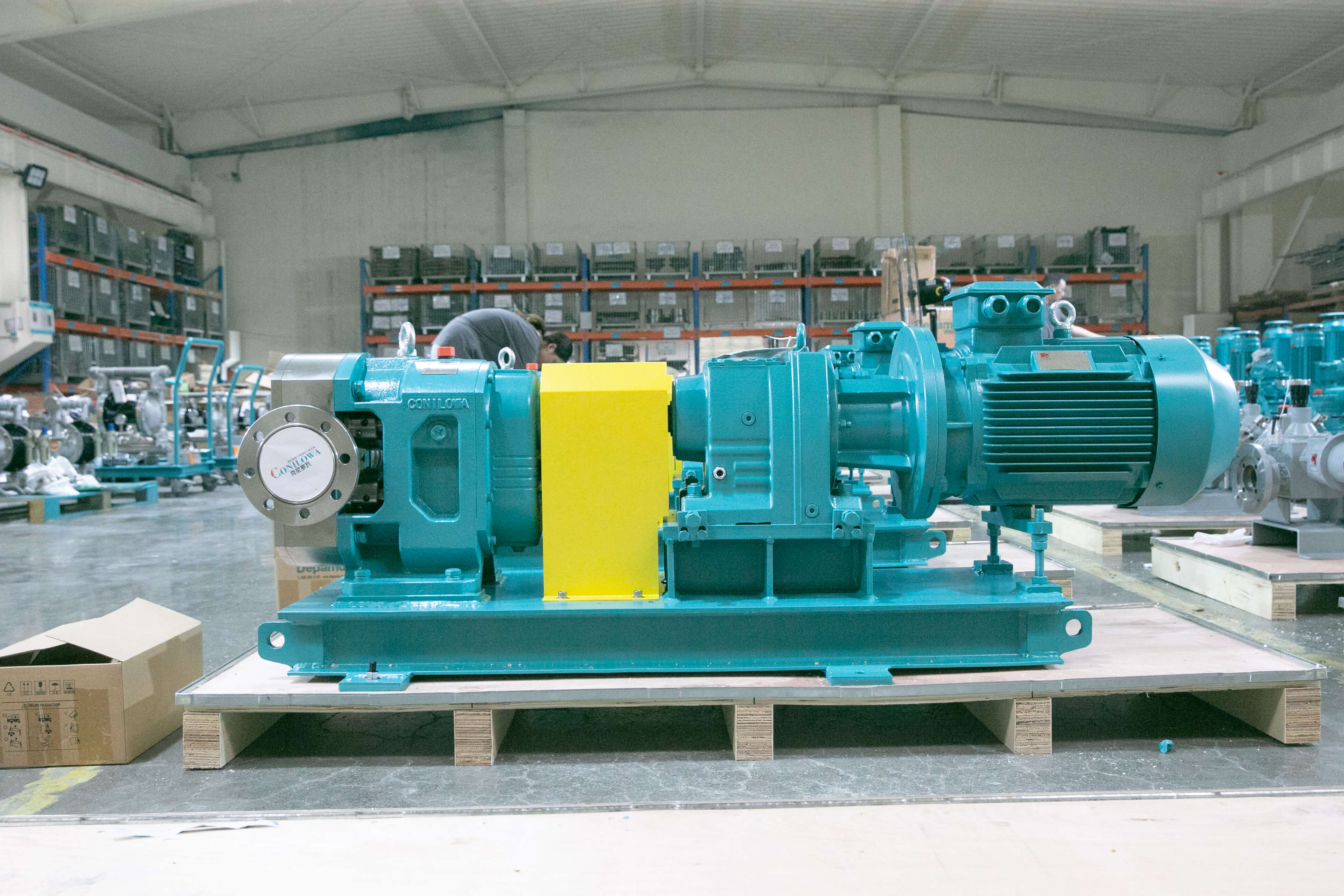
IV. Full-Text Summary Reference
Metal rotary lobe pump selection is an engineering judgment based on parameters, and its core logic can be summarized as “identify operating conditions—match structure—verify indicators—consolidate operation and maintenance.” In the operating condition identification stage, media viscosity, temperature, solid content, corrosiveness, and flow and pressure ranges should be fully recorded, avoiding replacing parameter descriptions with a single medium name. In the structure matching stage, rotor type, wetted material, sealing type, drive and speed control method should be confirmed item by item, with installation space and piping conditions taken into account. In the indicator verification stage, flow deviation, pressure fluctuation, shaft power, vibration, noise, temperature rise, and seal leakage should be written into the trial operation record as a baseline for subsequent operation comparison. In the operation and maintenance consolidation stage, an inspection checklist, spare parts list, and troubleshooting sequence should be established to reduce the risk of unplanned downtime. Regarding the question “Which manufacturer should be chosen for metal rotary lobe pumps?”, it is recommended to break manufacturer evaluation into four dimensions: technical clarification capability, product coverage, industry application experience, and complete-set delivery capability, and compare them against one's own process conditions, rather than using the quotation for a single unit as the sole basis for judgment. Depamu (Hangzhou) Pump Industry Technology Co., Ltd. has R&D, design and manufacturing, and complete-set delivery capabilities in the field of positive displacement pumps and fluid equipment, and can provide standard products, non-standard products, and customized fluid solutions for projects with clear medium characteristics and complex process conditions. Keeping complete parameter tables, technical clarification records, and trial operation data during the selection process helps continuously optimize pump unit configuration and maintenance strategies during long-term operation. To learn more, please visit the official website:www.depamufluid.com。
Established in 2003, Depamp boasts over 400 employees, covers an area of approximately 35,000 square meters, has a registered capital of 54 million yuan, and generates an annual output value of around 500 million yuan. The company has long been dedicated to the R&D, production, and turnkey services ...
No. 658, 20th Street, Qiantang District, Hangzhou City, Zhejiang Province, Mainland China