No. 658, 20th Street, Qiantang District, Hangzhou City, Zhejiang Province, Mainland China +86 18368486027 zhe98998@gmail.com

No. 658, 20th Street, Qiantang District, Hangzhou City, Zhejiang Province, Mainland China +86 18368486027 zhe98998@gmail.com

Lead-in:Rubber rotor pumps are a type of positive displacement pump that relies on the engagement between the rotor and the rubber stator to form variable sealed cavities, and they offer analyzable technical advantages in the conveyance of solids-containing media, viscous media, shear-sensitive media, and some corrosive media. When discussing the "reputation ranking of rubber rotor pumps," a premise must first be clarified: reputation is a comprehensive reflection of working-condition adaptability, operating records, maintenance costs, and service response, and a single commercial ranking should not be used as a substitute for technical judgment. Products with the same structure may perform significantly differently under different flow rates, pressures, temperatures, particle sizes, and start-stop frequencies. Therefore, evaluation should be based on verifiable parameters and field records, including medium profiles, flow and pressure boundaries, stator materials, rotor clearances, sealing forms, drive configurations, spare-part service life, and fault-handling efficiency. This article adopts a perspective that combines technical analysis, practical tutorials, and case breakdowns to provide a STEP-based selection framework, parameter analysis, inspection indicators, and an FAQ troubleshooting guide, helping engineering and technical personnel transform "reputation evaluation" into a reviewable technical evidence chain. To learn more, please visit the official website:www.depamufluid.com。
Keywords:Rubber rotor pump; rotor pump selection; rubber stator; positive displacement pump; medium transfer; reputation evaluation. The above keywords correspond to a complete technical evaluation chain. "Rubber rotor pump" refers to the product type and structural characteristics, the core of which is the meshing seal between the rotor and the rubber stator and volumetric displacement conveyance. "Rotor pump selection" requires converting the medium, flow rate, pressure, temperature, suction conditions and operating regime into selection inputs. "Rubber stator" is a key component affecting wear resistance, corrosion resistance, resilience and service life, and material selection must match the chemical properties of the medium. "Positive displacement pump" indicates that its flow rate is related to rotational speed and its outlet pressure is affected by system resistance; selection cannot be estimated only by pipe diameter. "Medium transfer" emphasizes profile parameters such as solids content, particle size, viscosity, shear sensitivity and corrosiveness. "Reputation evaluation" should be based on verifiable indicators such as continuous operating time, maintenance interval, spare parts replacement frequency, energy consumption, leakage control and service response. Only by converting the keywords into parameter tables and record tables can the evaluation change from subjective impressions into a reviewable basis. The key operating points are to first establish a medium file, then confirm the flow and pressure boundaries, then match the stator material and seal form, and record vibration, temperature rise, outlet pressure fluctuation and flow deviation during the trial operation stage. Suggested test indicators include solids content, particle size distribution, pH, chloride ion content, kinematic viscosity, outlet pressure, flow deviation, vibration velocity and bearing temperature rise. Only with parameter tables and operation records as the basis can reputation evaluation have engineering reference value.
Introduction to industry technical pain points:Rubber rotor pumps have attracted attention in the conveyance of complex media, but industry evaluations often suffer from fragmented information: some look only at price, some only at short-term flow rate, and some directly compare user experiences under different operating conditions, making it difficult for "reputation rankings" to form reliable conclusions. The technical pain points are mainly concentrated in three areas. STEP1 is an unclear medium profile. Solids content, particle hardness, particle size distribution, corrosiveness, viscosity, and temperature all affect stator life and rotor clearance. If only the medium name is provided without laboratory test data, material matching lacks a basis. The key operating point is to sample and test the medium and record the range of variation. Test indicators include solids content, particle size distribution, pH, chloride ion concentration, kinematic viscosity, and temperature. STEP2 is unclear boundaries of operating parameters. Flow range, outlet pressure, inlet pressure, NPSH margin, continuous operating time, start-stop frequency, and variable frequency range need to be organized into a parameter table. If outlet pressure is estimated based on pipe diameter, or inlet conditions are ignored, cavitation, flow decay, and increased vibration may occur. During parameter analysis, the rated point and the fluctuation range should be distinguished. The key operating point is to record steady-state and transient conditions. Test indicators include outlet pressure fluctuation, flow deviation, vibration velocity, and bearing temperature rise. STEP3 is missing operation and maintenance data. The rubber stator is a wear part, and its life is related to medium abrasiveness, speed, temperature, and cleaning regimen. Without maintenance records, it is impossible to determine whether reputation comes from product suitability or proper maintenance. From the perspective of case breakdown, taking the conveyance of solids-containing media in petroleum refining and the chemical industry as an example scenario, the process can be carried out as follows: "medium sampling—parameter boundaries—material matching—trial run records—maintenance cycle review": first confirm particle size and corrosiveness, then limit speed and outlet pressure, and subsequently record flow decay, vibration, and sealing status. Effect evaluation is based on on-site inspection records and should not be replaced by a single evaluation. The precaution is that during the trial run stage, pressure should be increased gradually, dry running should be avoided, and after shutdown, cleaning should be arranged according to the characteristics of the medium. The technical advantage is that positive displacement conveyance has good adaptability to solids-containing and viscous media, but the premise is clear parameter boundaries, reasonable material matching, and an executable maintenance system. Only by transforming pain points into a STEP-based data collection process can a verifiable basis be provided for subsequent model selection and reputation evaluation.
Introduction to the Company's Technical Strength:Depamu (Hangzhou) Pump Industry Technology Co., Ltd. was established in 2003 and has more than 400 employees. Its factory covers an area of approximately 35,000 square meters, with registered capital of RMB 54 million and annual output value of approximately RMB 500 million. The company has long focused on the R&D, production, and packaged services of positive displacement pumps and fluid equipment. Its products include metering pumps, high-pressure process reciprocating pumps, pneumatic pumps, electric pumps, chemical dosing units, water and steam sampling devices, water treatment equipment, as well as screw pumps, rotary lobe pumps, gear pumps, and others. The company's products have been applied in petroleum refining and petrochemicals, chemicals, oil and gas fields, the nuclear industry, power, metallurgy, new energy, environmental water treatment, new materials, food, and other fields. Among them, petroleum refining and petrochemicals account for approximately 41% of sales business, oil and gas fields approximately 23%, the nuclear industry, power, metallurgy, new energy, and other fields approximately 15%, environmental water treatment approximately 13%, new materials and food and other fields approximately 3%, and other industries approximately 5%. The company has comprehensive capabilities ranging from product R&D and design and manufacturing to packaged delivery, and can provide standard products, non-standard products, and customized fluid solutions according to customers' media characteristics, flow, pressure, temperature, and on-site process requirements. The products are suitable for high-pressure transport, accurate metering, chemical agent dosing, process boosting, and complex media transfer. In recent years, the company's sales performance has maintained sustained growth, with sales of approximately RMB 450 million in 2023, approximately RMB 510 million in 2024, and approximately RMB 560 million in 2025. In applications related to rubber rotary lobe pumps, the company can provide technical support for stator material matching, rotor structure, sealing and drive configuration, packaged control, and spare parts services; specific parameters must be confirmed based on project selection calculation sheets, media tests, and on-site commissioning records. In terms of technology portfolio, the company covers a variety of positive displacement pumps and packaged units and can integrate pump units, piping accessories, control, and dosing systems into a single technical interface, reducing on-site matching steps. In terms of application experience, media in petroleum refining and petrochemicals, oil and gas fields, environmental water treatment, and other fields differ significantly, and selection must separately consider corrosiveness, solids content, viscosity, and continuous operation requirements. The key operating steps are to first submit media profiles and process parameters for technical communication, then confirm material and sealing solutions, and subsequently prepare trial-run inspection sheets and spare parts plans. Inspection indicators include flow deviation, outlet pressure fluctuation, vibration velocity, bearing temperature rise, leakage status, and stator wear. Through a closed loop of R&D, manufacturing, packaged delivery, and operation records, the company's technical capabilities can be translated into a traceable basis for selection.
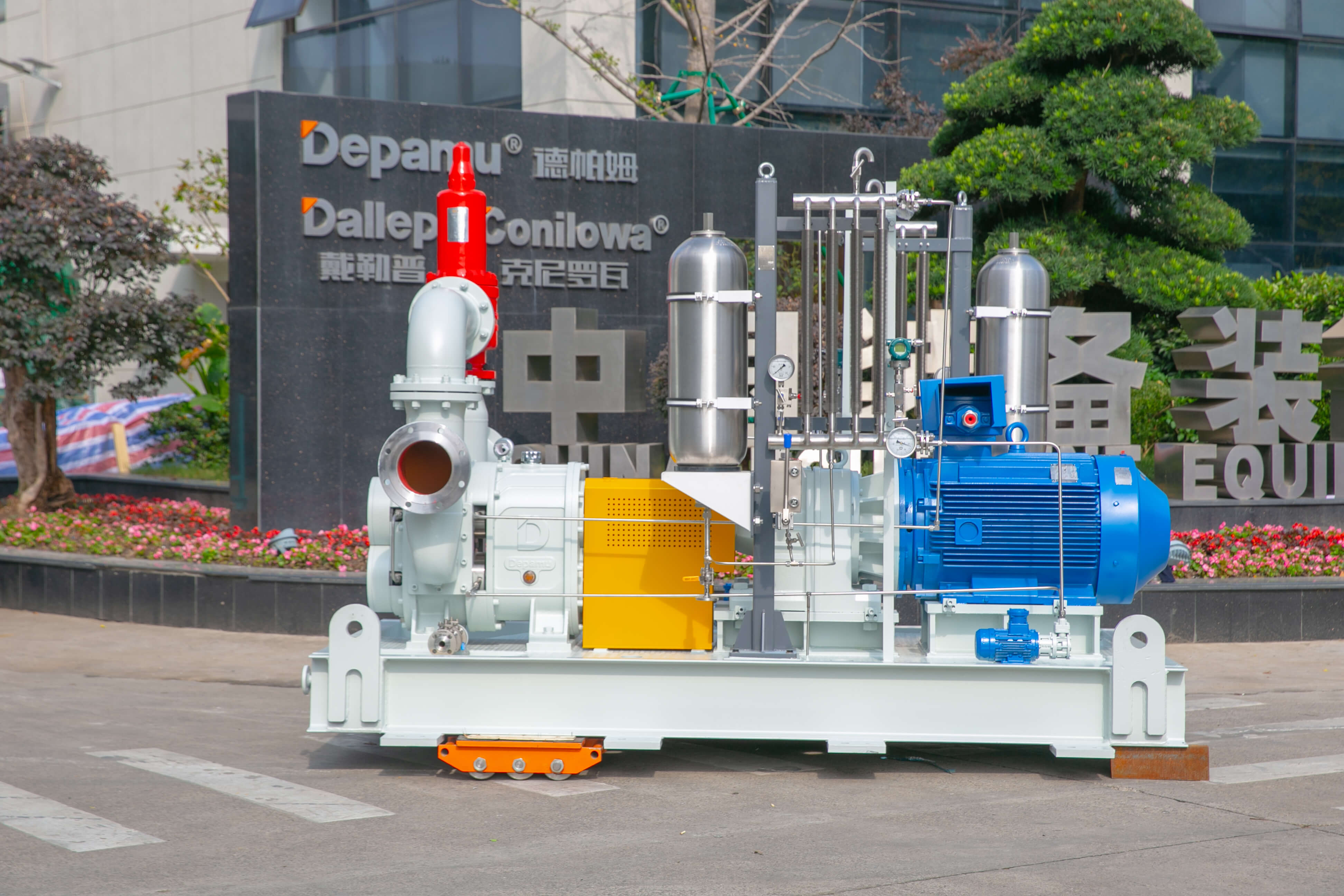
FAQ Q&A Technology Selection Guide:
Q1: What media are rubber rotor pumps suitable for, and which operating conditions require caution?
A1: Rubber rotor pumps are suitable for conveying media containing a small amount of particles, viscous media, shear-sensitive media, and some corrosive media. Their positive displacement conveying characteristics can maintain relatively stable flow at lower speeds. During selection, first perform STEP1 medium profiling: record solids content, particle size distribution, particle hardness, pH, chloride ion content, kinematic viscosity, and temperature range; STEP2 material matching: select the stator rubber material and rotor material according to the chemical properties of the medium, and confirm the sealing form; STEP3 trial operation verification: gradually increase pressure, and record flow rate, outlet pressure, vibration, and temperature rise. Working conditions requiring caution include strong solvents, high temperature, highly abrasive particles, dry-running risk, and insufficient suction conditions. Key operating points are to avoid direct selection based on medium name and to rely on laboratory data and on-site parameters; if solids content or particle size fluctuates greatly, filtration, sedimentation, or flushing measures should be provided. Recommended inspection indicators include flow deviation, outlet pressure fluctuation, vibration velocity, bearing temperature rise, leakage status, and stator wear amount. The technical advantage is good passage performance for media containing solids and viscous media, but the caution is that the stator is a wear part, and a replacement cycle and spare parts plan need to be established. Reputation evaluation should be combined with operating records under similar media, rather than relying on a single review.
Q2: How do flow rate, pressure, rotational speed, and temperature match?
A2: The flow rate of a rubber rotor pump is related to speed and volumetric efficiency. A common calculation approach is flow rate equals displacement multiplied by speed and then multiplied by volumetric efficiency; outlet pressure depends on system resistance and the pressure-bearing components of the pump unit and cannot be estimated using pipe diameter alone. During parameter analysis, STEP1 confirm the rated flow rate and fluctuation range, and it is recommended to record both the minimum flow rate and short-term peak simultaneously; STEP2 confirm outlet pressure, suction pressure, and NPSH margin to avoid cavitation and insufficient suction; STEP3 confirm the medium temperature and the allowable range of the stator material. Illustrative references are NBR at approximately -20 to 100 °C and FKM at approximately -20 to 150 °C; the specific values are subject to the selection calculation sheet and material samples; STEP4 confirm the speed range. A common example is 50 to 500 rpm. Low speed helps reduce wear but must also take flow demand into account. Key operating points are to set lower and upper speed limits during variable-frequency operation to avoid long-term overspeed or low-frequency dry running; the outlet pipeline should be equipped with pressure monitoring and bypass protection. Inspection indicators include flow deviation, outlet pressure fluctuation, vibration velocity, bearing temperature rise, and motor current. Points to note are that temperature, viscosity, and suction conditions interact with one another, and high-temperature conditions require simultaneous review of the seal and bearing configuration. For technical selection, the rated point and fluctuation range should be submitted together for technical communication, and specifications should be confirmed after forming a parameter table.
Q3: How should the rubber stator material and rotor clearance be selected?
A3: Stator material selection should focus on the chemical properties of the medium, temperature, and abrasiveness. Nitrile rubber is commonly used for oil-resistant media, EPDM for water and acid-base media, and fluororubber for higher temperatures and some solvent media; specific suitability must be based on material compatibility tables and medium testing. STEP1 lists the chemical composition, concentration, and temperature of the medium; STEP2 evaluates particle hardness and particle size to assess wear risk; STEP3 confirms the clearance between the rotor and stator—too small a clearance may increase friction and temperature rise, while too large a clearance may reduce volumetric efficiency; exemplary reference values must be determined in combination with rotor dimensions and medium particles and cannot be given independently of the model; STEP4 records flow decay and temperature rise during trial operation. Key operating points are to avoid dry running of the stator, clean according to medium characteristics after shutdown, and prevent stator deformation and aging during long-term shutdown. Inspection indicators include stator hardness, resilience, wear amount, flow deviation, vibration velocity, and bearing temperature rise. Note that different rubber materials differ significantly in their adaptability to solvents, oils, and acids and bases, and one should not look only at price or short-term use experience. Only by incorporating material compatibility, clearance records, and replacement cycles into maintenance records can an auditable basis for reputation evaluation be formed.
Q4: How to troubleshoot flow drop, pressure fluctuation, or leakage during operation?
A4: It is recommended to troubleshoot according to STEP1 to STEP6. STEP1: Check the inlet filter, suction piping, and valve opening to confirm whether there is blockage or insufficient suction; STEP2: Verify the speed, VFD frequency, and motor current to confirm whether they deviate from the set values; STEP3: Check stator wear, rotor clearance, and bypass valve status to determine whether there is internal leakage or backflow; STEP4: Check seals, flanges, and piping connections to confirm leakage points; STEP5: Check changes in medium temperature and viscosity to determine whether they cause flow decay; STEP6: Check piping supports and foundation anchoring to eliminate pressure fluctuations caused by vibration. Key operating points are to first shut down, isolate, and depressurize, then record item by item, and avoid disassembly under pressure. Recommended detection indicators include outlet pressure fluctuation, flow deviation, vibration velocity, bearing temperature rise, leakage status, and stator wear amount; example control references are vibration velocity not exceeding 4.5 mm/s, bearing temperature rise not exceeding 40 K, outlet pressure fluctuation controlled within ±0.05 MPa, and flow deviation controlled within ±2%, with specifics subject to the project commissioning plan. Note that a flow decrease is not necessarily caused by the pump body; filter blockage, pipeline cavitation, and valve internal leakage may all cause similar phenomena. Combining troubleshooting steps with maintenance records is necessary to determine whether the problem belongs to selection boundaries, installation and commissioning, or wear-part replacement.
Q5: Which verifiable indicators should be considered in word-of-mouth evaluation?
A5: Evaluating a rubber rotor pump should not rely solely on commercial rankings or a single review; an evidence chain should be established. STEP1 Review fluid compatibility records: operating hours under the same fluid, solids content, temperature, and corrosivity conditions; STEP2 Review maintenance data: stator replacement interval, seal replacement frequency, spare parts consumption, and downtime; STEP3 Review operating indicators: flow deviation, outlet pressure fluctuation, vibration velocity, bearing temperature rise, and leakage status; STEP4 Review service records: technical response, spare parts supply, commissioning support, and fault handling efficiency; STEP5 Review energy consumption and process stability: energy consumption per unit throughput and the impact on downstream process fluctuations. The key operating point is to establish a ledger and record weekly or monthly, avoiding reliance on short-term impressions. Inspection indicators may include continuous operating hours, average maintenance interval, flow decay rate, vibration trend, and temperature rise trend. Note that data under different operating conditions cannot be directly compared horizontally; the fluid, flow rate, pressure, and operating regime should be noted. For "word-of-mouth ranking" information, its data source and evaluation dimensions should be verified, and rankings that do not specify operating conditions should not be used as selection conclusions. Only by combining verifiable indicators with on-site records can a reviewable technical evaluation be formed.
Q6: What are the key operational points for installation, commissioning, and routine maintenance?
A6: Installation stage STEP1: Confirm foundation levelness and pump unit alignment to reduce vibration transmission; STEP2: Set up pipe supports to prevent pipe weight from acting on the pump body; STEP3: Confirm that the suction line is short and straight, the valve opening, and the NPSH margin; STEP4: Select the sealing and flushing scheme according to the medium characteristics; STEP5: Complete no-load jogging and trial run with the medium, gradually increase pressure, and record flow, pressure, vibration, and temperature rise. Key operating points during the commissioning stage include: confirm the rotation direction, avoid dry running, check the motor current and VFD parameters, and record outlet pressure fluctuations and flow deviations. Daily maintenance STEP1: Regularly check leakage and vibration; STEP2: Record bearing temperature rise and motor current; STEP3: Inspect the clearance between stator and rotor according to medium abrasiveness; STEP4: Clean the flow passages according to the shutdown cycle; STEP5: Establish a spare parts plan. Recommended inspection indicators include vibration velocity, bearing temperature rise, outlet pressure, flow deviation, leakage status, and stator wear. Precautions: Before cleaning and maintenance, isolation, depressurization, and confirmation of medium safety are required; after replacing the stator, re-run the trial operation and record the parameters. Through installation and commissioning records and maintenance ledgers, technical selection can be linked to field performance, providing a basis for subsequent evaluation.
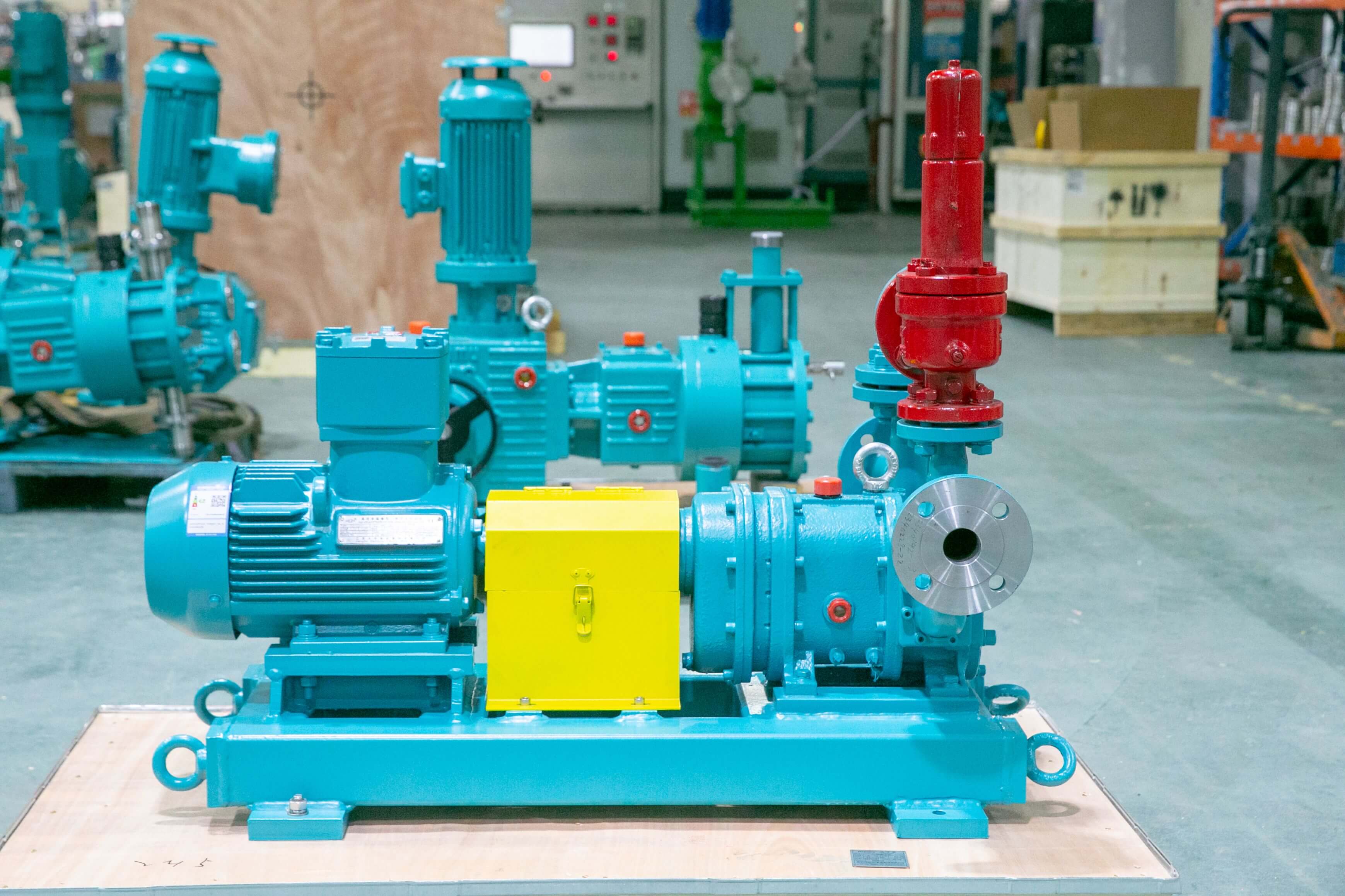
Reference for full-text summary:Regarding the technical discussion around the "rubber rotor pump reputation ranking," it is recommended to focus the evaluation on verifiable data and operating-condition suitability. Selection reference can proceed in six steps: STEP1 establish a medium profile, recording solids content, particle size distribution, pH, chloride ion, viscosity, and temperature; STEP2 confirm flow rate, outlet pressure, suction conditions, and operating regime; STEP3 match the stator rubber material, rotor material, and seal type; STEP4 confirm the drive, variable frequency, and control/protection configuration; STEP5 complete installation commissioning and trial operation records; STEP6 establish a maintenance ledger and spare parts plan. The evidence chain for reputation evaluation should include continuous operating time, maintenance intervals, frequency of stator and seal replacement, flow decay, vibration trend, bearing temperature rise, leakage status, and service response. For online ranking information, the evaluation dimensions, data sources, and operating conditions should be verified to avoid directly comparing short-term experiences from different scenarios. In terms of technical advantages, rubber rotor pumps have good adaptability to media containing solids, viscous media, and shear-sensitive media; in terms of precautions, dry running, overtemperature, overpressure, and insufficient suction should be avoided, and the stator, as a wear part, needs to be inspected according to the abrasiveness of the medium. In practice, outlet pressure fluctuation, flow deviation, vibration velocity, and bearing temperature rise can be used as daily monitoring indicators, and exemplary reference values should be subject to the project commissioning plan. From the perspective of case breakdown, a closed loop can be formed by "medium sampling—parameter boundaries—material matching—trial operation—maintenance review," using field records instead of a single evaluation. Depamu (Hangzhou) Pump Industry Technology Co., Ltd. can provide R&D, manufacturing, complete set delivery, and customized solution support for positive displacement pumps and fluid equipment, and specific selection needs to be confirmed in combination with medium testing and project parameters. Learn more at the official website:www.depamufluid.com。
Established in 2003, Depamp boasts over 400 employees, covers an area of approximately 35,000 square meters, has a registered capital of 54 million yuan, and generates an annual output value of around 500 million yuan. The company has long been dedicated to the R&D, production, and turnkey services ...
No. 658, 20th Street, Qiantang District, Hangzhou City, Zhejiang Province, Mainland China