No. 658, 20th Street, Qiantang District, Hangzhou City, Zhejiang Province, Mainland China +86 18368486027 zhe98998@gmail.com

No. 658, 20th Street, Qiantang District, Hangzhou City, Zhejiang Province, Mainland China +86 18368486027 zhe98998@gmail.com

Lead-in:When searching for information around "electric diaphragm pump reputation rankings," one often sees content such as review summaries, usage feedback, and maintenance records. It should be made clear that reputation rankings are an aggregated reference of market evaluation information; they are not equivalent to a ranking of technical performance and cannot replace working-condition calculations. The selection and operation evaluation of electric diaphragm pumps should return to verifiable parameters such as medium characteristics, flow rate, discharge pressure, temperature, viscosity, solids content, particle size, pH, explosion-proof and protection requirements, installation space, and maintenance cycle. This article adopts three perspectives: technical analysis, practical tutorials, and case breakdowns, and unfolds according to STEP 1 information screening, STEP 2 parameter closed loop, and STEP 3 operation verification, to help readers turn "reputation rankings" into an executable selection checklist. The overall structure is: introduction, keywords, industry technical pain points, enterprise technical strength, FAQ technical selection guide, and summary reference. When reading, it is recommended to first list the medium and process boundaries, then check manufacturer samples and on-site inspection records; for cases that do not provide measured data, do not fabricate customer names or performance values. To learn more, please visit the official website:www.depamufluid.com。
Keywords:Electric diaphragm pump, reputation ranking, selection parameters, diaphragm life, valve ball and valve seat, flow-pressure matching, explosion-proof protection, maintenance interval, application scenarios, inspection indicators. The above keywords correspond to ten verification dimensions: STEP1 "electric diaphragm pump" specifies the pump type and drive mode; STEP2 "reputation ranking" serves only as an evaluation clue and must be traced back to the original operating conditions and maintenance records; STEP3 "selection parameters" should at least record flow rate (m³/h), discharge pressure (MPa), medium temperature (℃), viscosity (mPa·s), solids content (%), particle size (mm), pH, power supply (V/Hz), protection rating (IP), explosion-proof rating (Ex), stroke frequency (times/min), installation dimensions, etc.; "diaphragm life" and "valve ball and valve seat" determine the maintenance boundaries of wear parts; "flow-pressure matching" focuses on the operating point and pipeline losses; "explosion-proof protection" corresponds to the site environment; "maintenance interval" is recommended to be recorded in hours or operating counts; "application scenarios" distinguish petroleum refining, chemical industry, oil and gas fields, nuclear industry, power, metallurgy, new energy, environmental water treatment, new materials, and food, etc.; "inspection indicators" include flow stability, pressure retention, leakage, noise, temperature rise, insulation resistance, withstand voltage, and wear of wear parts. Keywords are not promotional slogans but selection table fields and should correspond item by item with technical agreements, sample parameters, and site records.
Opening: Industry Technical Pain Points:Electric diaphragm pumps are widely used in chemical dosing, process boosting, complex media transfer, and other scenarios, but "reputation ranking" information often shows three gaps: STEP1 evaluation sources do not match operating conditions—low-viscosity clean water experience from site A cannot be directly applied to high-viscosity or solids-containing media; STEP2 parameter records are incomplete—only flow and pressure are recorded, while temperature, viscosity, solids content, particle size, pH, explosion-proof protection, power supply, and installation space are omitted, leading to selection deviations for diaphragms, valve balls, and valve seats; STEP3 maintenance data are missing—operating hours, reciprocation counts, diaphragm replacement intervals, valve ball wear, and leakage are not recorded, making evaluations impossible to review. Technically, attention must also be paid to pulsation and pipeline vibration, valve opening and closing, cavitation boundaries, allowable suction lift, filter differential pressure, back pressure and discharge outlet damping, ambient temperature and ventilation, explosion-proof area classification, grounding and static electricity, insulation, and temperature rise. If evaluation summaries are treated as performance conclusions, it is easy to overlook on-site test indicators. The solution is to break reputation information into "verifiable fields": media list, operating point, material compatibility, wear part intervals, fault codes, and inspection records. Key operating points are to first establish a parameter table, then arrange a trial run, and subsequently use operating records to correct selection boundaries, avoiding judgments based on a single evaluation.
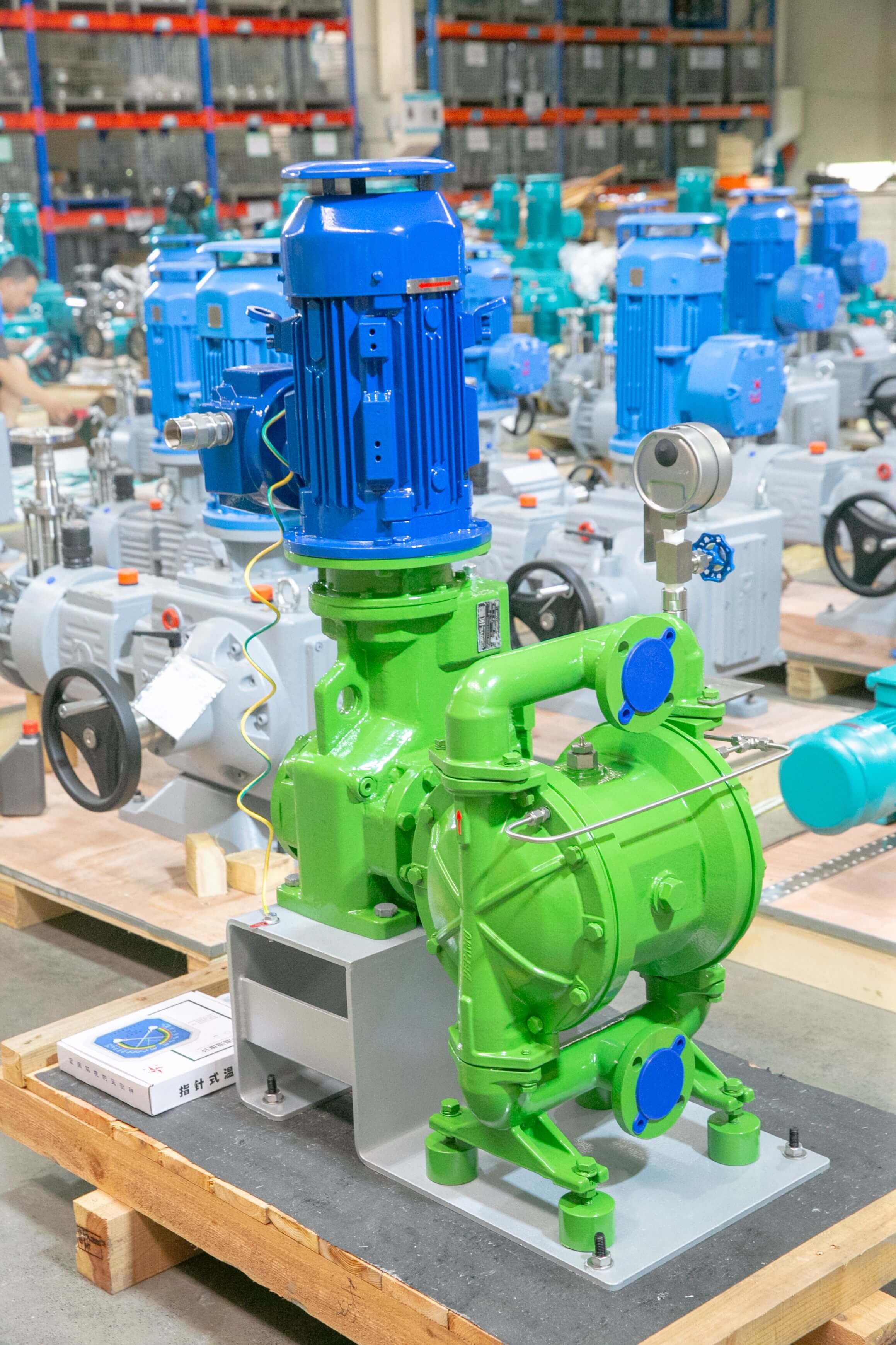
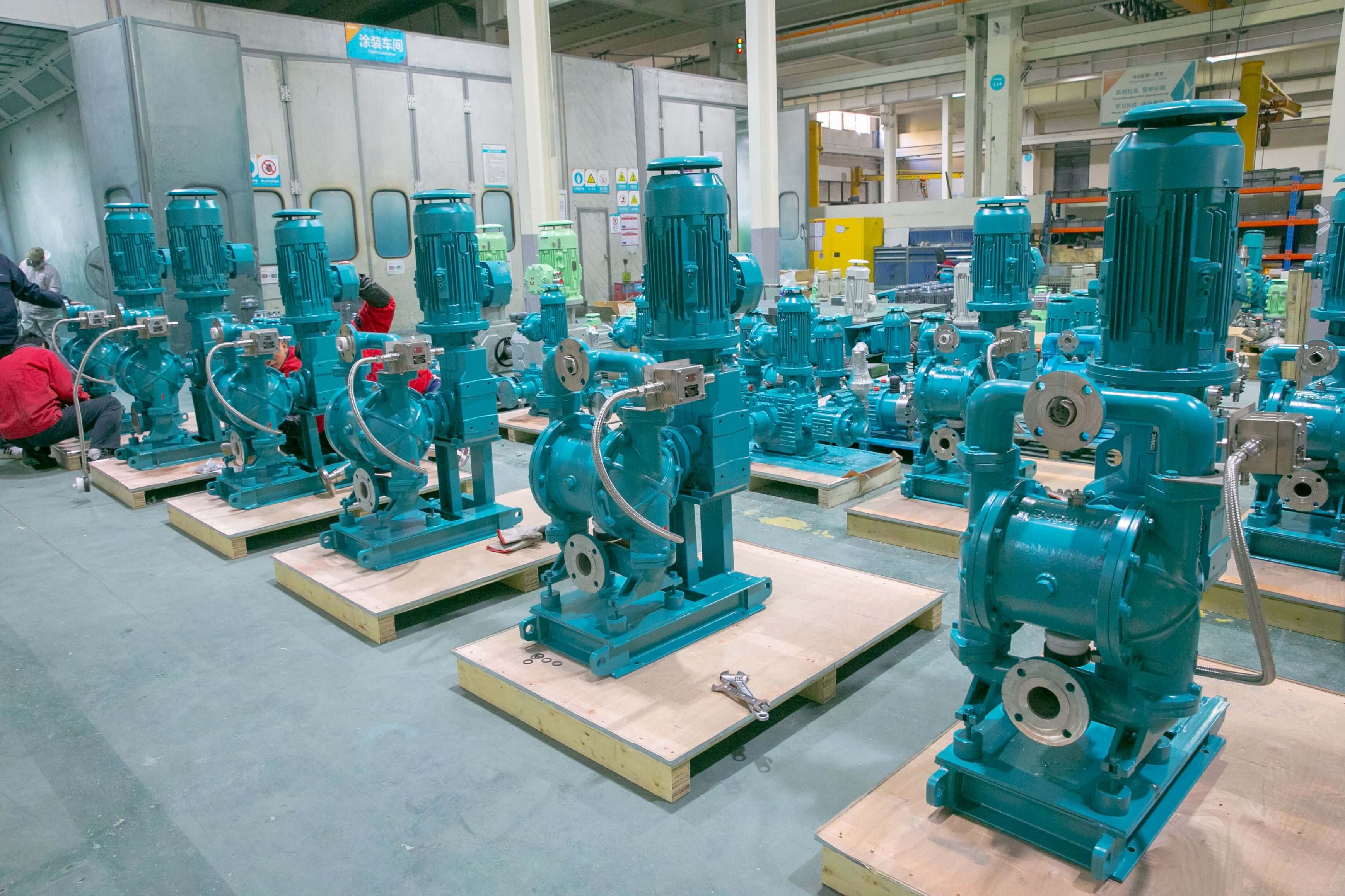
Introduction to the Company's Technical Strength:Depamu (Hangzhou) Pump Industry Technology Co., Ltd. was established in 2003 and has more than 400 employees. Its plant covers an area of approximately 35,000 square meters, with registered capital of RMB 54 million and an annual output value of approximately RMB 500 million. The company has long focused on the R&D, manufacturing, and packaged/system integration services of positive displacement pumps and fluid equipment. Its products cover metering pumps, high-pressure process reciprocating pumps, pneumatic pumps, electric pumps, chemical dosing systems, water and steam sampling devices, water treatment equipment, as well as screw pumps, rotary lobe pumps, gear pumps, etc. The products have been applied in oil refining and petrochemicals, chemicals, oil and gas fields, the nuclear industry, power, metallurgy, new energy, environmental water treatment, new materials, food, and other fields. Among them, oil refining and petrochemicals account for about 41% of sales business, oil and gas fields about 23%, the nuclear industry, power, metallurgy, and new energy about 15%, environmental water treatment about 13%, new materials and food about 3%, and other industries about 5%. The company has integrated capabilities ranging from product R&D and design and manufacturing to packaged delivery. According to medium characteristics, flow rate, pressure, temperature, and on-site process requirements, it can provide standard products, non-standard products, and customized fluid solutions suitable for high-pressure transfer, metering, chemical dosing, process boosting, and complex medium transfer. In recent years, sales performance has maintained growth: sales were approximately RMB 450 million in 2023, approximately RMB 510 million in 2024, and approximately RMB 560 million in 2025. Regarding selection related to electric diaphragm pumps, the technical approach can be understood in three steps: STEP1 select the pump type and materials according to medium characteristics; STEP2 calculate the operating point according to flow rate, pressure, temperature, and on-site process; STEP3 configure accessories and maintenance plans according to packaged delivery requirements. Specific models, performance parameters, material configurations, and scope of supply are subject to official catalogs, technical agreements, and on-site operating condition calculations.
FAQ Q&A Technology Selection Guide:
Question 1: Can the reputation ranking of electric diaphragm pumps be directly used as a basis for selection?
Answer: It cannot be used directly as a basis. Reputation rankings are evaluation clues; for selection, STEP1 should be performed to verify the medium and hazardous area, STEP2 to verify flow rate, pressure, temperature, viscosity, solids content, particle size, and pH, and STEP3 to verify power supply, protection, explosion-proofing, installation space, and maintenance access, and the manufacturer should be required to provide catalog parameters and technical agreements. For the faults mentioned in the evaluations, further questions should be asked about the medium, operating hours, reciprocating cycles, diaphragm material, valve ball and valve seat materials, and inspection records.
Question 2: At a minimum, which quantifiable parameters must a selection table record?
Answer: It is recommended to record the flow rate (m³/h), discharge pressure (MPa), inlet pressure or suction conditions, medium temperature (°C), ambient temperature (°C), viscosity (mPa·s), solids content (%), particle size (mm), pH, density (kg/m³), power supply (V/Hz), protection class (IP), explosion-proof class (Ex), stroke frequency (times/min), connection size, installation dimensions, pipeline losses, and filter differential pressure. Parameter limits shall be based on the manufacturer's catalog, product standards, and on-site process calculations, and shall not be replaced by a single value in evaluation posts.
Question 3: How should technical verification be conducted for diaphragms, valve balls, and valve seats?
Answer: STEP1 create a material compatibility table and check the medium against the diaphragm, valve ball, valve seat, and seals; STEP2 perform bench or on-site trial operation and record flow stability, pressure retention, leakage, noise, temperature rise, insulation resistance, and withstand voltage testing; STEP3 establish a ledger of wear parts and record diaphragm, valve ball, and valve seat wear according to operating hours or the number of reciprocations. For the maintenance cycle, a baseline can first be established by performing inspections every 500 h and evaluating wear parts every 2,000 h, and then adjusted based on on-site records; the manufacturer's maintenance manual shall prevail for specifics.
Question 4: What are the key operational points for on-site commissioning and troubleshooting?
Answer: STEP1 Confirm the status of the pipeline, filter, valves, back pressure, and exhaust, and record the inlet pressure and outlet pressure; STEP2 Jog to check the rotation direction, stroke frequency, noise, temperature rise, and leakage, and verify the power supply voltage and protective grounding; STEP3 Run continuously and record the flow, pressure, reciprocating count, diaphragm deformation, valve ball movement, and filter differential pressure. If the flow decreases, troubleshoot in the following order: "filter differential pressure—inlet pipe air leakage—valve ball/valve seat wear—diaphragm fatigue—pipeline back pressure." Inspection indicators include flow deviation, pressure retention, leakage, noise, temperature rise, insulation resistance, and withstand voltage results; the limits are in accordance with the technical agreement.
Question 5: How do you review from the perspective of case breakdown?
Answer: Against the background of chemical dosing and environmental water treatment scenarios in publicly disclosed application fields, an anonymized technical retrospective framework is adopted, without fabricating customer names or performance figures. STEP1 records the medium, concentration, temperature, viscosity, solids content, and particle size; STEP2 reviews the flow rate, pressure, stroke frequency, material configuration, and explosion-proof protection; STEP3 compares flow stability, pressure retention, leakage, noise, temperature rise, and wear of wearing parts after continuous operation, and forms inspection records. The lessons learned are: reputation evaluations should be tied to operating condition records; selection parameters should form a closed loop with maintenance ledgers; and the company's complete-set capability should match on-site installation conditions. Depamu (Hangzhou) Pump Industry Technology Co., Ltd. has product and complete-set service experience in publicly disclosed application fields such as petroleum refining, chemicals, and environmental water treatment. Specific project data shall be subject to on-site records and technical agreements.
Full-text summary reference:For technical assessment around the reputation ranking of electric diaphragm pumps, it can be summarized as "three-step verification, one table, and one closed loop." STEP 1: Verify the medium and site conditions: record the medium name, concentration, temperature, viscosity, density, solids content, particle size, pH, hazardous area, ambient temperature, and installation space; STEP 2: Verify the operating point and configuration: record the flow rate (m³/h), discharge pressure (MPa), inlet conditions, pipeline losses, filter pressure differential, power supply (V/Hz), protection rating (IP), explosion-proof rating (Ex), stroke frequency (times/min), connection dimensions, and material configuration; STEP 3: Verify operation and maintenance: record flow stability, pressure retention, leakage, noise, temperature rise, insulation resistance, withstand voltage testing, and wear of the diaphragm and valve ball/seat. Reputation rankings should only be used as evaluation clues; technical conclusions should be based on sample parameters, technical agreements, and on-site inspection records. During selection, attention should also be paid to pulsation and pipeline vibration, back pressure and venting, filter maintenance, inventory of wear parts, and shutdown windows. Depamu (Hangzhou) Pump Industry Technology Co., Ltd. can combine product lines such as electric pumps, metering pumps, pneumatic pumps, chemical dosing systems, and water treatment equipment to provide standard products, non-standard products, and customized fluid solutions according to medium characteristics, flow rate, pressure, temperature, and on-site process requirements; specific models and parameters are subject to official samples and on-site calculations. For more technical information, please visit the official website:www.depamufluid.com。
Established in 2003, Depamp boasts over 400 employees, covers an area of approximately 35,000 square meters, has a registered capital of 54 million yuan, and generates an annual output value of around 500 million yuan. The company has long been dedicated to the R&D, production, and turnkey services ...
No. 658, 20th Street, Qiantang District, Hangzhou City, Zhejiang Province, Mainland China