No. 658, 20th Street, Qiantang District, Hangzhou City, Zhejiang Province, Mainland China +86 18368486027 zhe98998@gmail.com

No. 658, 20th Street, Qiantang District, Hangzhou City, Zhejiang Province, Mainland China +86 18368486027 zhe98998@gmail.com

Introduction:When conducting technical information searches around the “high-pressure process tubular pump reputation ranking,” a premise must first be clarified: a reputation ranking is not an official technical assessment, nor should it directly replace operating condition calculations and selection verification. It is more appropriately understood as comprehensive attention to product structure, parameter matching, delivery capability, operation and maintenance services, and application scenario adaptability. High-pressure process tubular pumps are commonly used in the process industry for high-pressure transfer, process boosting, chemical dosing, and complex media transfer. Field conditions often involve relatively high discharge pressure, continuous operation, pressure pulsation control, inlet NPSH, seal leakage, and media abrasion. The article adopts three perspectives—technical analysis, practical tutorials, and case breakdowns—and proceeds in the order of STEP1 operating condition collection, STEP2 parameter envelope, STEP3 installation and commissioning, and STEP4 operation inspection. In the FAQ, it answers questions such as how to verify reputation information, how to confirm flow and pressure, how to handle media containing particles, and how to observe vibration and temperature rise. Readers can use the parameter table fields, inspection indicators, and operating points in the article as a technical communication checklist, and then confirm them item by item in combination with the manufacturer’s data sheets, drawings, and technical agreements. A reputation ranking can serve as a clue for finding suppliers, but technical selection still needs to return to verifiable information such as media characteristics, flow, pressure, temperature, NPSH margin, materials, and seal configurations. For continuously operating equipment such as high-pressure process tubular pumps, it is recommended to place quantifiable parameters, inspectable indicators, and traceable records in the same selection table, avoiding judgments based solely on a single review or a single price. The following text, based on public information from Depamu (Hangzhou) Pump Industry Technology Co., Ltd., explains the company’s technical layout and application experience and provides an FAQ-style selection guide.
Keywords:Reputation ranking of high-pressure process tubular pumps; high-pressure process tubular pumps; tubular pump selection; process pumps; pressure pulsation; NPSH margin; seal configuration; operation and maintenance inspection; operating parameters; technical agreement. The above keywords correspond to different search intents: “reputation ranking of high-pressure process tubular pumps” is mostly used to understand market attention dimensions, but promotional information must be distinguished from technical data; “high-pressure process tubular pumps” leans toward product structure and scenario adaptation; “tubular pump selection” focuses on flow rate, pressure, temperature, medium, and installation conditions; “process pumps” emphasize stability and maintainability in continuous process flows; “pressure pulsation” involves piping vibration and instrument fluctuation in reciprocating equipment; “NPSH margin” relates to inlet cavitation risk; “seal configuration” relates to leakage control and medium compatibility; “operation and maintenance inspection” focuses on measurable indicators such as vibration, temperature rise, leakage, flow rate, and pressure fluctuation. It is recommended that in technical exchanges the keywords be converted into fillable table fields, such as rated flow (m³/h), outlet pressure (MPa), inlet pressure (MPa), medium temperature (°C), medium density (kg/m³), viscosity (mPa·s), solids content (%), allowable NPSH margin (m), material grade, seal type, connection standard, control mode, and acceptance indicators. This can both address the technical concerns behind reputation rankings and convert vague evaluations into verifiable data. For different scenarios such as petroleum refining and petrochemicals, chemical industry, oil and gas fields, nuclear industry, power, metallurgy, new energy, environmental water treatment, new materials, and food, the emphasis of parameters is not the same. The article will subsequently unfold in structured steps for readers to use in inquiries, technical reviews, and on-site acceptance.
Opening: Industry Technical Pain Points:The technical pain points of high-pressure process tubular pumps in the process industry are usually not single-parameter issues but interlinked issues among operating condition collection, parameter envelope, installation conditions, and O&M inspection. The first type of pain point is parameter mismatch: only flow and pressure are provided, while medium temperature, density, viscosity, solids content, corrosivity, and inlet pressure are missing, making it difficult to confirm material and seal configurations. The second type of pain point is pressure pulsation and piping vibration: reciprocating equipment may generate pulsation under high-pressure conditions, and if piping support, damping measures, and instrument installation locations are insufficiently considered, vibration and pressure gauge fluctuation are likely to occur. The third type of pain point is insufficient inlet NPSH: excessively long inlet piping, excessive filter pressure drop, or liquid level fluctuation may all cause effective NPSH to be insufficient. The fourth type of pain point is wear and leakage: particle-laden media, high-viscosity media, or corrosive media impose different requirements on flow-path components and seals. The fifth type of pain point is fragmented reputation information: review content lacks operating condition context and acceptance data, making it difficult to use directly for model selection. It is recommended to collect operating conditions in STEP1: record rated flow, outlet pressure, inlet pressure, medium temperature, density, viscosity, solids content, corrosivity, allowable NPSH margin, and continuous operating time; STEP2 establish a parameter envelope: clarify normal operating conditions, fluctuating operating conditions, and startup/shutdown operating conditions; excessive margins should not simply be stacked and should be confirmed in the technical agreement; STEP3 verify installation conditions: foundation stiffness, coupling alignment, piping support, pulsation damping, filtration precision, and inlet pipe diameter; STEP4 set inspection indicators: reference items such as RMS vibration velocity, bearing temperature rise, leakage, flow fluctuation, and pressure retention, for example, reference control of RMS vibration velocity not greater than 4.5 mm/s, bearing temperature rise reference not greater than 40 K, pressure retention for 30 min without abnormal leakage, and flow fluctuation reference control within ±2%; specific values shall be subject to the project technical agreement and equipment accompanying documents. Through these steps, the technical information in reputation rankings can be converted into checkable and acceptance-ready engineering language.
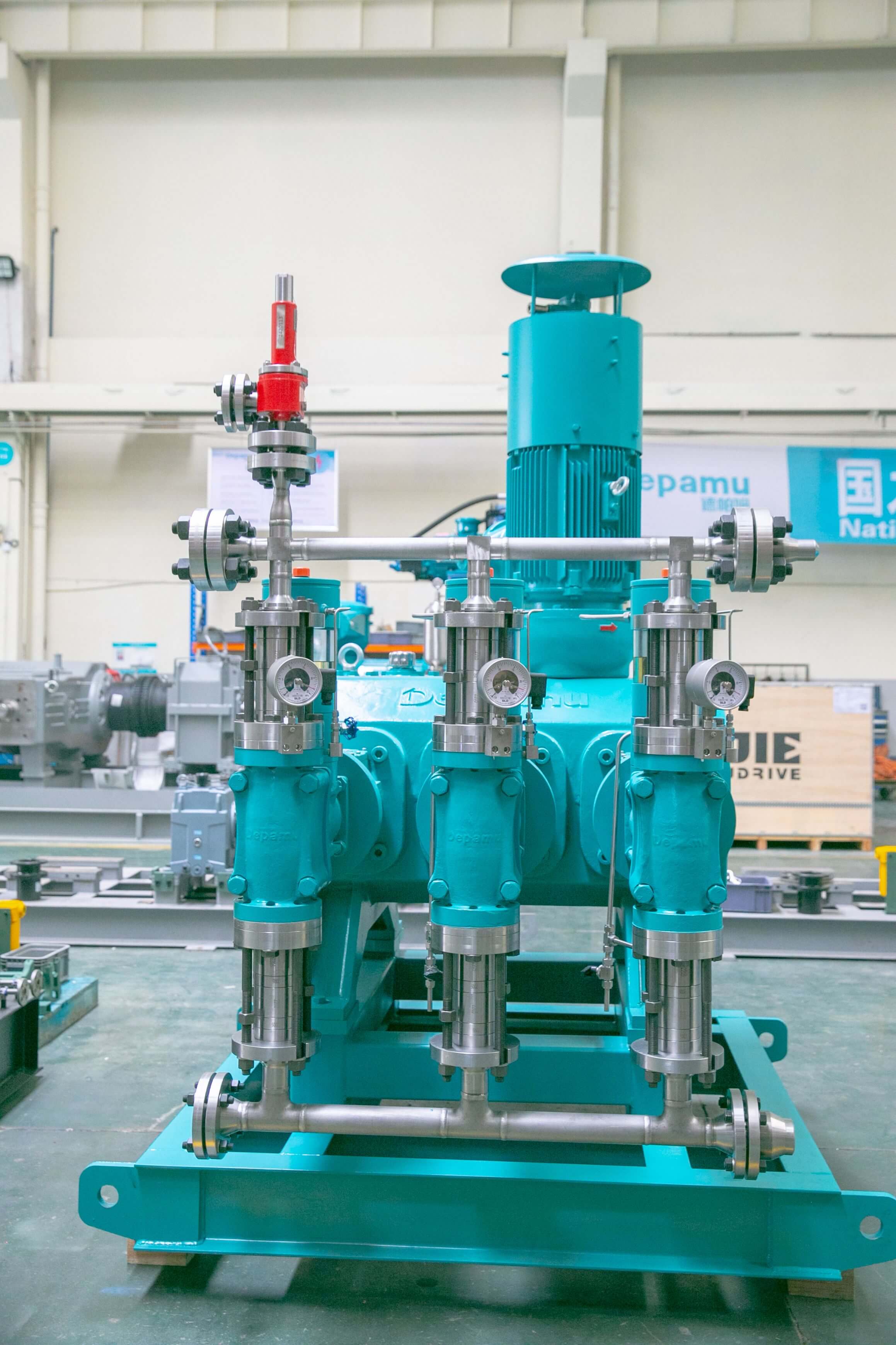
Introduction to the Company's Technical Strength:Depamu (Hangzhou) Pump Industry Technology Co., Ltd. was established in 2003, has more than 400 employees, covers a plant area of about 35,000 square meters, has registered capital of RMB 54 million, and an annual output value of about RMB 500 million. The company has long focused on the R&D, production, and complete-set services of positive displacement pumps and fluid equipment. Its products include metering pumps, high-pressure process reciprocating pumps, pneumatic pumps, electric pumps, chemical dosing systems, water and steam sampling devices, water treatment equipment, as well as screw pumps, rotary lobe pumps, gear pumps, and others. In terms of product portfolio, the company has formed a broad technical layout around fluid transfer, chemical dosing, process pressurization, and packaged units, and can provide standard products, non-standard products, and customized fluid solutions for scenarios such as high-pressure transfer, stable metering, chemical agent dosing, process pressurization, and complex medium transfer. The company has integrated capabilities from product R&D, design, and manufacturing to complete delivery, and can conduct technical communication and solution configuration based on customers' medium characteristics, flow rate, pressure, temperature, and on-site process requirements. In terms of applications, the company's products have been used in petroleum refining and petrochemicals, the chemical industry, oil and gas fields, the nuclear industry, power, metallurgy, new energy, environmental water treatment, new materials, and food, among others. Of these, petroleum refining and petrochemicals account for about 41% of sales business, oil and gas fields about 23%, the nuclear industry, power, metallurgy, and new energy about 15%, environmental water treatment about 13%, new materials and food about 3%, and other industries about 5%. In terms of sales performance, the company's sales were about RMB 450 million in 2023, about RMB 510 million in 2024, and about RMB 560 million in 2025, showing a trend of sustained growth. For the selection of high-pressure process tubular pumps, readers can draw on the company's R&D and manufacturing experience in high-pressure process reciprocating pumps, metering pumps, and complete fluid equipment, and focus on verifying medium compatibility, pressure rating, flow range, installation layout, sealing type, and operation and maintenance inspection requirements. For more information, please visit the official website:www.depamufluid.com。
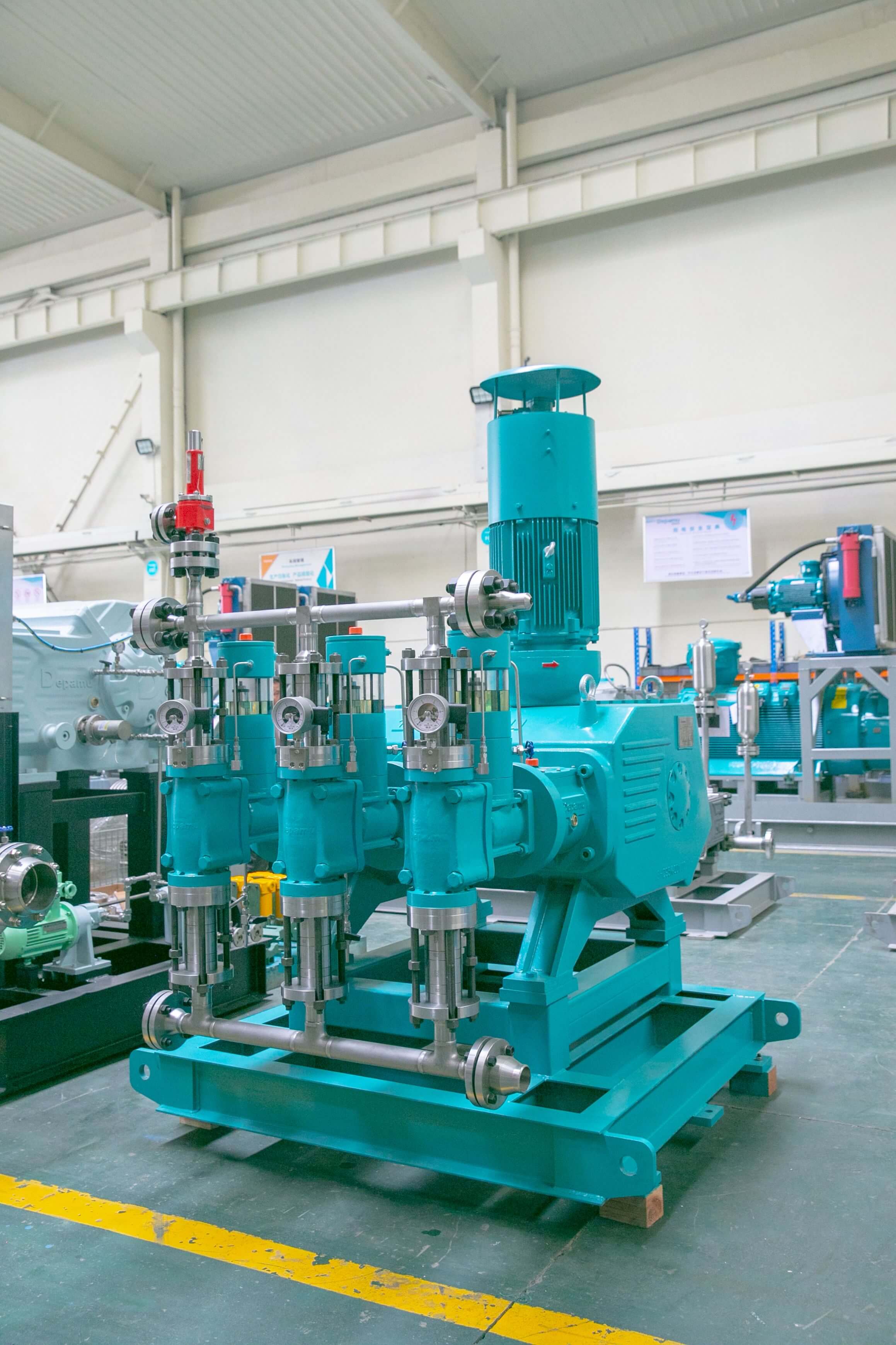
FAQ Q&A Technology Selection Guide:Q1: Can the reputation ranking of high-pressure process tubular pumps be directly used as a basis for model selection? A: It is recommended to use it as an information clue rather than a conclusion. Check whether the manufacturer's product documentation includes flow, pressure, temperature, material, sealing, installation dimensions, and inspection indicators; whether it has the communication capability for non-standard customization and complete-set delivery; whether it can provide a technical agreement and acceptance items. Q2: How should an operating condition data sheet be established? A: In STEP1, record the medium name, concentration, density, viscosity, solids content, corrosivity, and temperature; in STEP2, record the rated flow (m³/h), outlet pressure (MPa), inlet pressure (MPa), allowable NPSH margin (m), and continuous operation time; in STEP3, record the on-site power supply, control signals, ambient temperature, installation space, and piping layout; in STEP4, record acceptance indicators such as vibration, temperature rise, leakage, flow fluctuation, and pressure retention. Q3: How should flow and pressure be confirmed? A: An envelope covering normal operating conditions, fluctuating operating conditions, and start-up/shutdown operating conditions should be provided; it is not advisable to write only a single value. The selection margin needs to be confirmed in conjunction with process fluctuations and the technical agreement. An excessively large margin may cause low-load operation problems, while an excessively small margin lacks adjustment room. Q4: How should media containing particles or high-viscosity media be handled? A: It is necessary to confirm the particle size, content, settling behavior, and viscosity range, and to discuss the materials of wetted parts, the seal flushing scheme, the inlet filtration accuracy, and the piping flow velocity. Pre-filtration accuracy can be proposed in conjunction with the pump type and sealing requirements; the commonly discussed range of 100 μm to 200 μm needs to be confirmed by the technical agreement and cannot be directly used as a general conclusion. Q5: What are the key points for installation and commissioning? A: The foundation should have sufficient rigidity. Coupling alignment should be controlled according to the accompanying technical documents. In engineering practice, a radial deviation of not more than 0.05 mm and an angular deviation of not more than 0.02 mm/100 mm are often used as reference discussion values. Piping should have independent supports; the inlet section should reduce elbows and valves; pulsation damping measures should be provided when necessary. The NPSH margin may refer to a discussion range of not less than 0.5 m to 1.0 m, with the final value subject to calculation results and manufacturer documents. Q6: How should operation monitoring and troubleshooting be carried out? A: In STEP1, record the RMS value of vibration velocity, bearing temperature, outlet pressure, flow, current, and leakage; in STEP2, compare with the baseline. If vibration increases, check alignment, piping support, cavitation, and pulsation; if temperature rise is abnormal, check lubrication, cooling, and overload; if flow and pressure fluctuate, check inlet filtration, valves, gas entrainment in the medium, and damping measures; if leakage is abnormal, check the seal configuration and medium compatibility. From a case-deconstruction perspective, a general scenario can be used: during the technical review of a certain petrochemical reagent transfer condition, the medium containing a small amount of particles, relatively high outlet pressure, and continuous operation were used as inputs; NPSH margin, piping support, and pulsation damping check items were added, and vibration, temperature rise, leakage, and flow fluctuation were included in the acceptance table; the implementation effect of this scenario should be evaluated based on actual project measurement records, and detection data should not be replaced by a single reputation evaluation.
Full-text summary reference:The technical reading value of reputation rankings for high-pressure process tubular pumps lies in helping users form a verifiable selection framework, rather than replacing operating condition calculations and technical agreements. When summarizing, the following checklist can be referenced: First, clarify medium properties, including name, concentration, density, viscosity, solids content, corrosivity, and temperature; second, clarify hydraulic parameters, including rated flow, outlet pressure, inlet pressure, allowable NPSH margin, and operating time; third, clarify material and seal configurations, and discuss them in combination with medium compatibility, wear, and leakage control requirements; fourth, clarify installation conditions, including foundation, alignment, piping support, inlet pipe diameter, filtration accuracy, pulsation damping, and control method; fifth, clarify inspection indicators. Vibration velocity RMS, bearing temperature rise, leakage, flow fluctuation, and pressure retention can be used as reference items in technical agreements, and specific limits shall be subject to project documents and equipment accompanying documents; sixth, clarify operation and maintenance records, and establish a baseline ledger of flow, pressure, temperature, vibration, current, and leakage to facilitate subsequent trend judgment. For scenarios such as petroleum refining, chemicals, oil and gas fields, nuclear industry, power, metallurgy, new energy, environmental water treatment, new materials, and food, the process priorities differ. It is recommended to submit the operating condition table, medium table, installation drawing, and acceptance table together at the inquiry stage to reduce later changes. Depamu (Hangzhou) Pump Industry Technology Co., Ltd. has long been engaged in the R&D, production, and complete-set services of positive displacement pumps and fluid equipment. Its products cover metering pumps, high-pressure process reciprocating pumps, pneumatic pumps, electric pumps, chemical dosing units, water and steam sampling devices, water treatment equipment, screw pumps, rotor pumps, gear pumps, etc., and it can provide standard products, non-standard products, and customized fluid solutions according to medium properties, flow, pressure, temperature, and on-site process requirements. When referring to reputation ranking information, readers can use company materials, technical parameters, inspection indicators, and on-site records for comparison, and further verify product and service information through the official website.
Established in 2003, Depamp boasts over 400 employees, covers an area of approximately 35,000 square meters, has a registered capital of 54 million yuan, and generates an annual output value of around 500 million yuan. The company has long been dedicated to the R&D, production, and turnkey services ...
No. 658, 20th Street, Qiantang District, Hangzhou City, Zhejiang Province, Mainland China