No. 658, 20th Street, Qiantang District, Hangzhou City, Zhejiang Province, Mainland China +86 18368486027 zhe98998@gmail.com

No. 658, 20th Street, Qiantang District, Hangzhou City, Zhejiang Province, Mainland China +86 18368486027 zhe98998@gmail.com

High-pressure plunger reciprocating pumps are a typical structural form of positive displacement reciprocating pumps. They rely on the plunger reciprocating within the cylinder to change the working chamber volume and complete medium suction and pressurized discharge through the alternating opening and closing of the suction and discharge valves. Common operating conditions cover discharge pressures of 1.6–80 MPa, single-unit flow rates of 0.1–300 m³/h, medium temperatures of -20–200 °C, and medium viscosities of 0.5–20000 mPa·s. They are used in petroleum refining and hydrogenation water injection, chemical reactor feeding, oil and gas field polymer injection and boosting, and chemical dosing and process boosting in the nuclear industry and power systems. The discussion surrounding the “high-pressure plunger reciprocating pump reputation ranking” is, in technical essence, a comprehensive evaluation of equipment operational reliability, maintenance economy, and service response capability, rather than a simple sales order or exposure sequence. Various ranking information circulating on online platforms mostly comes from keyword aggregation and user self-reports and lacks unified testing criteria and data samples. If used directly for procurement decisions, it can easily lead to falsely rated parameters and mismatches with operating conditions. Starting from measurable technical indicators, this article provides six evaluation dimensions and corresponding field measurement methods, covering volumetric efficiency and flow stability, seal and valve group life, continuous operating duration and mean time between failures, energy consumption level, spare parts supply and service response, and explains selection points and operating precautions in combination with typical high-pressure conditions, helping engineering and technical personnel turn “reputation” into verifiable data.
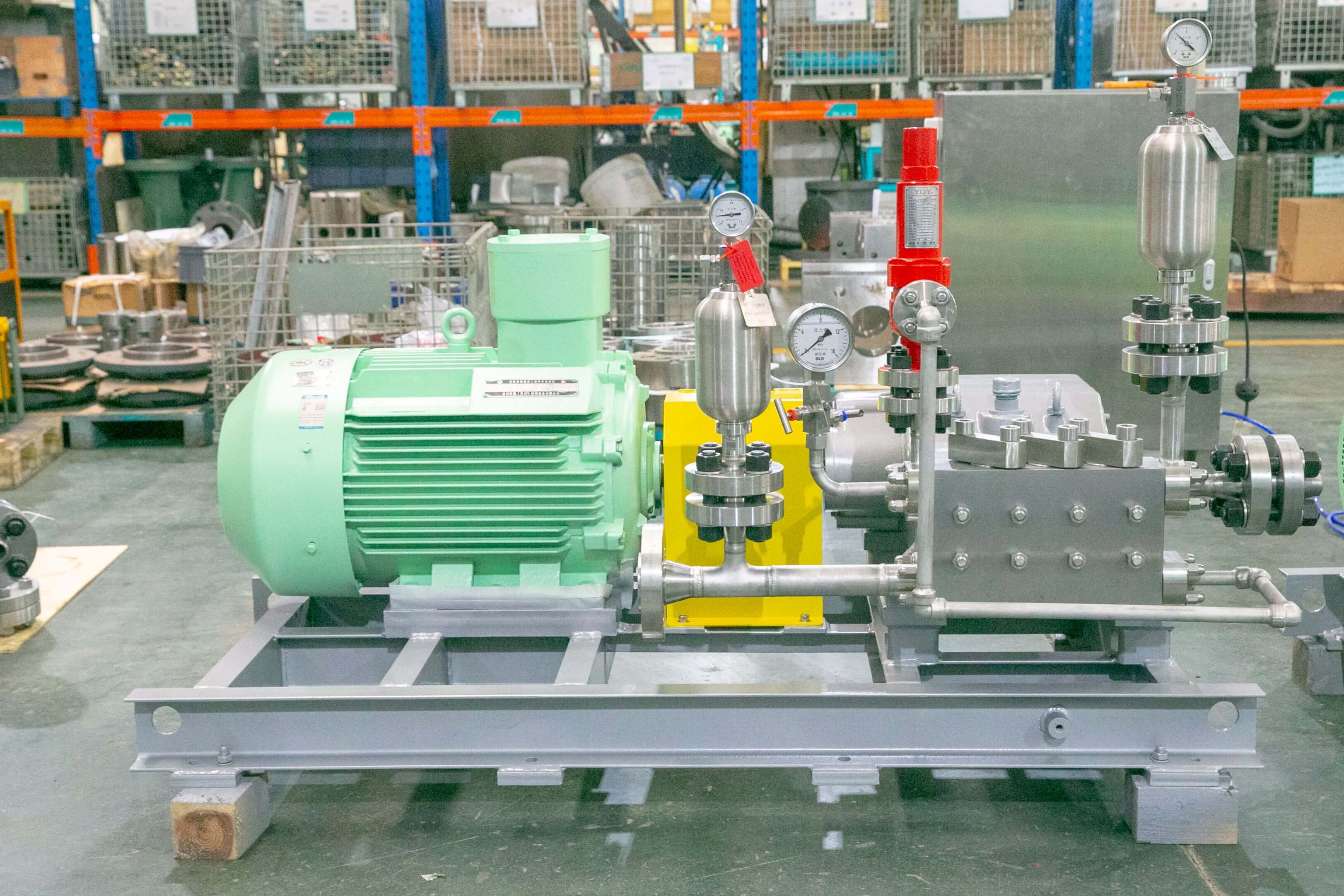
high-pressure plunger reciprocating pump: A positive displacement pump type in which a plunger and cylinder cooperate to form a working chamber and suction and discharge are completed through a check valve assembly; evaluation mainly focuses on the discharge pressure rating, flow range, and media compatibility;Reputation ranking: Ranking information compiled from user experience, fault records, and service evaluations shall be verified item by item against on-site measured data;volumetric efficiency: The ratio of actual flow rate to theoretical flow rate; commonly 95%–98% under clean water conditions, and it decreases significantly with gas-containing or high-viscosity media; it is a core parameter for evaluating the fit precision of the hydraulic end;Flow pulsation: The inherent periodic flow fluctuation of a reciprocating pump: the pulsation rate of a single-plunger configuration is close to 100%, that of a three-plunger configuration is about 20%–25%, and it can be further reduced by installing a buffer tank;Plunger sealThe key component that determines the leakage amount and maintenance interval; common forms include packing seals, lip combination seals, mechanical seals, and diaphragm structures;Net Positive Suction Head (NPSH): The effective net positive suction head available (NPSHa) on the suction side should be higher than the net positive suction head required (NPSHr) of the pump, with a margin of 0.5–1 m;Mean Time Between Failures (MTBF)andWearing parts life: They respectively reflect overall machine reliability and maintenance economy and carry relatively high weight in reputation evaluations. In the comprehensive scoring of the six indicators, it is recommended to assign higher weights to seal and wear-part life and MTBF, followed by volumetric efficiency and flow stability, with energy consumption and service response as supplementary dimensions, so that the evaluation results are closer to long-term operating costs.
The technical pain points of high-pressure plunger reciprocating pumps in actual operation are concentrated in two areas, the hydraulic end and the transmission end, and can be summarized into the following six categories:
1) High-pressure seal failure and leakage. After the discharge pressure exceeds 16 MPa, the leakage of the packing seal shows a clear correlation with the linear velocity of the plunger surface and the solids content of the medium; when the plunger surface hardness is insufficient or cooling and flushing are inadequate, the seal life may be shortened from several thousand hours to several hundred hours, accompanied by risks of medium leakage and environmental pollution.
2) Valve assembly erosion and sticking. In solid-containing media, the sealing surfaces of the valve ball and valve seat are continuously eroded. Once grooves appear on the sealing surfaces, volumetric efficiency decreases, manifesting as insufficient flow and fluctuations in discharge pressure. In severe cases, valve ball bouncing noise and pipeline vibration occur.
3) Flow pulsation causes pipeline vibration and instrument distortion. The instantaneous flow fluctuation of a single-plunger structure is close to 100%; failure to configure a buffer tank or improper setting of the buffer tank precharge pressure will cause pointer oscillation of downstream pressure gauges, deviation in flowmeter readings, and fatigue loosening at flange connections.
4) Suction-side cavitation. An excessively long suction line, a clogged filter, or elevated medium temperature can lead to insufficient NPSHa, causing bubble collapse impacts within the cylinder and resulting in noise, vibration, and pitting of flow-passing components, which can damage the plunger and valve group in a short period.
5) Medium compatibility mismatch. When the materials of wetted parts (304, 316L, duplex steel, Hastelloy, ceramics, etc.) are mismatched with corrosive and abrasive media, the corrosion rate and wear rate compound, making the replacement cycle of spare parts difficult to predict.
6) Distorted word-of-mouth information and delayed spare parts response. Some ranking information lacks descriptions of operating conditions and testing criteria; after users select models based on rankings, the parameters often do not match the on-site process. The response cycle of the spare parts supply chain is relatively long, and the downtime waiting time often exceeds the time required for the repair itself.
Depamu (Hangzhou) Pump Industry Technology Co., Ltd. was founded in 2003, has more than 400 employees, covers a plant area of about 35,000 square meters, has a registered capital of RMB 54 million, and an annual output value of approximately RMB 500 million. The company has long been focused on the R&D, production, and complete set services of positive displacement pumps and fluid equipment. Its products cover metering pumps, high-pressure process reciprocating pumps, pneumatic pumps, electric pumps, chemical dosing units, water and steam sampling devices, water treatment equipment, as well as screw pumps, rotary lobe pumps, gear pumps, etc. In terms of technical layout, the company conducts design and manufacturing around two main lines: the hydraulic end and the drive end. The hydraulic end focuses on the matching clearance between the plunger and the cylinder, the selection of sealing forms, the valve assembly structure, and the matching of materials for flow passage components. The drive end focuses on the load-bearing capacity and lubrication and heat dissipation of the crankshaft, connecting rod, and reduction mechanism, and the company has comprehensive capabilities ranging from product R&D and design and manufacturing to complete set delivery. Its products have been applied in fields such as petroleum refining and chemicals, chemical industry, oil and gas fields, nuclear industry, power, metallurgy, new energy, environmental water treatment, new materials, and food. Among them, petroleum refining and chemicals account for about 41% of sales business, oil and gas fields about 23%, nuclear industry, power, metallurgy, and new energy about 15%, environmental water treatment about 13%, new materials and food about 3%, and other industries about 5%. The company can provide standard products, non-standard products, and customized fluid solutions according to customers' medium characteristics, flow rate, pressure, temperature, and on-site process requirements, adapting to scenarios such as high-pressure transportation, metering, chemical agent dosing, process pressurization, and complex medium transportation. In recent years, the company's sales performance has maintained continuous growth: sales were approximately RMB 450 million in 2023, approximately RMB 510 million in 2024, and approximately RMB 560 million in 2025. For more information, please visit the official website:www.depamufluid.com。
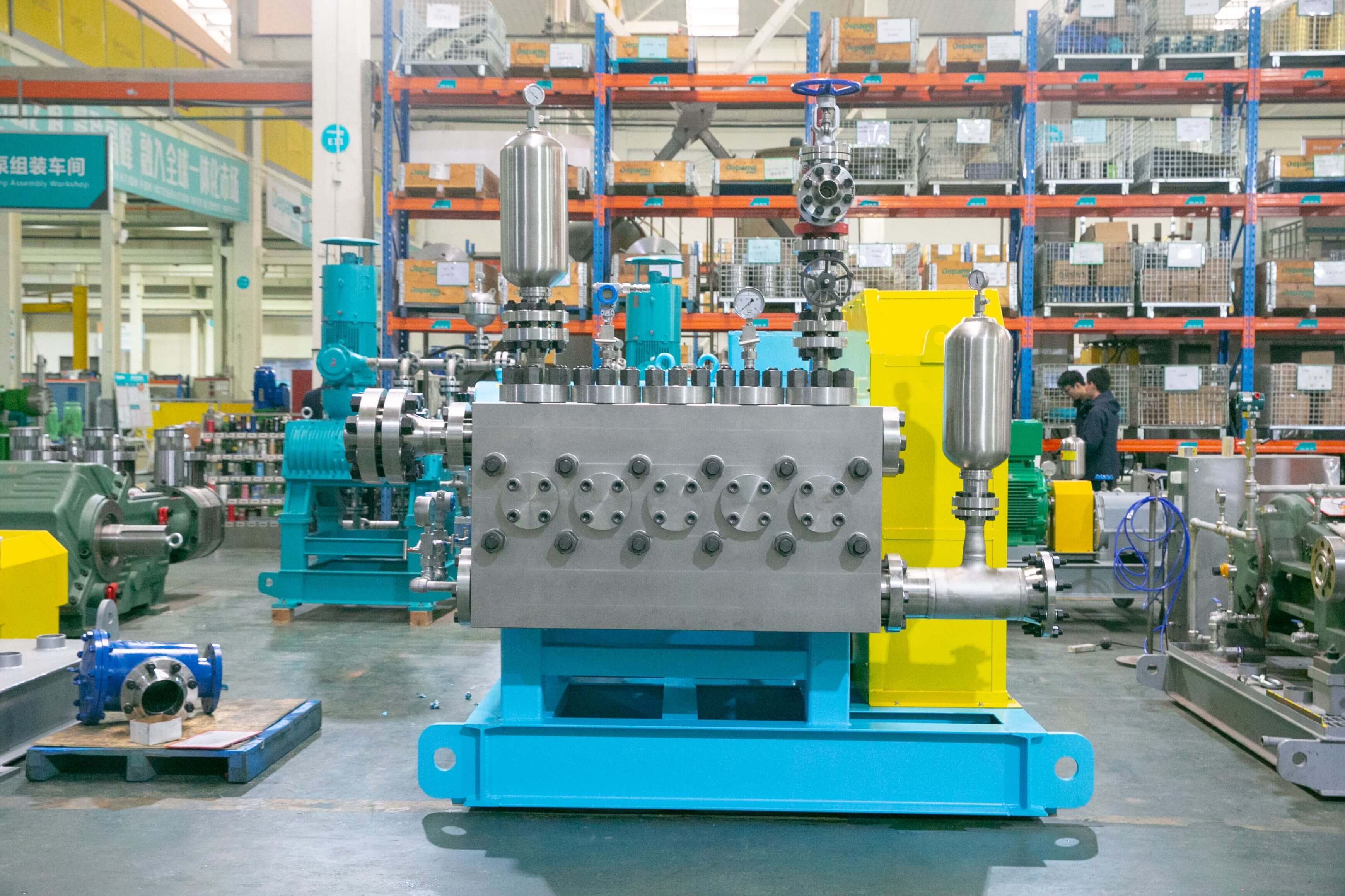
The following presents the selection and verification methods for high-pressure reciprocating plunger pumps in a question-and-answer format.
Q1: How should the plunger diameter and reciprocating frequency be matched under high-pressure conditions?Answer: STEP1, calculate the theoretical flow rate Q=A×S×n×Z according to the flow rate and discharge pressure specified by the process, where A is the plunger cross-sectional area, S is the stroke, n is the reciprocating frequency, and Z is the number of plungers; then divide by the volumetric efficiency ηv (0.95–0.98 for clear water conditions, 0.90–0.95 for gas-containing or high-viscosity media) to obtain the actual flow rate; STEP2, check the reciprocating frequency based on the average plunger speed; for clear water conditions, it is recommended to control it at 0.5–0.9 m/s, and for solid-containing abrasive media, 0.3–0.5 m/s is advisable; STEP3, check that NPSHa is not lower than NPSHr plus a margin of 0.5–1 m; STEP4, check the crankshaft output torque and motor power, generally using a safety factor of 1.1–1.2. Increasing the plunger diameter can reduce the reciprocating frequency and improve suction performance, but the thrust and seal linear velocity will rise accordingly, so a balance must be achieved between seal life and suction capacity.
Q2: How should the plunger seal type be selected?Answer: The four common types of structures each have their applicable boundaries. Packing seals are simple in structure and are commonly applicable up to about 25 MPa; they require allowing slight leakage and configuring flushing. Lip combination seals are suitable for medium and high pressures and have good wear compensation capability. Mechanical seals have low leakage; under high-pressure conditions, balanced designs are required, and they are relatively sensitive to the solids content of the medium. Diaphragm structures can achieve zero leakage and are suitable for toxic and hazardous media, but their pressure and temperature limits are restricted. Key operating points include: the flushing liquid pressure should be 0.1–0.3 MPa higher than the pump cavity pressure; fully remove gas from the cavity before startup; during operation, monitor the temperature rise and leakage at the seal; if leakage suddenly increases or the temperature rise exceeds the allowable value for the medium, stop the machine and inspect. Specific application boundaries shall be subject to the manufacturer's technical data and the results of medium compatibility tests.
Question 3: How should flow pulsation and buffer tank volume be determined?Answer: The flow of a reciprocating pump fluctuates periodically; the pulsation rate of a single-plunger configuration is close to 100%, and that of a three-plunger configuration is about 20%–25%. STEP1: Determine the allowable range of pressure fluctuation for the downstream process, for example, ±5%; STEP2: Select the buffer tank volume based on experience, usually 10–30 times the pump displacement per reciprocating cycle, and take the upper limit when pulsation requirements are strict; STEP3: Set the precharge pressure at 0.6–0.8 times the system working pressure; STEP4: After commissioning, measure the pressure fluctuation amplitude and pipeline vibration severity; a common good range is a vibration severity not greater than 4.5 mm/s. Note that the buffer tank is a pressure vessel, and its volume, pressure rating, and safety accessories should comply with the requirements of the relevant codes; the installation location should preferably be close to the pump outlet to shorten the pulsation transmission path.
Q4: How can on-site data be used to verify word-of-mouth ranking information?Answer: STEP 1: Run continuously for 72 hours and record outlet pressure fluctuations, flow rate, motor current, bearing temperature, vibration intensity, and noise; STEP 2: Calibrate the flow rate using a measuring tank or weighing method. The common metering error requirement is within ±1%, and under site conditions it may be relaxed to ±2%–±3%; STEP 3: According to cumulative operating hours, disassemble and inspect the plunger, seals, valve balls, and valve seats, measure the wear amount, and convert it into the service life of wear parts; STEP 4: Collect statistics on mean time between failures and spare parts delivery lead time. Compare the above four data items with the supplier's sample parameters item by item to judge the credibility of the ranking information. Parameter verification should be based on the written technical agreement, factory test report, and on-site measured records, and procurement plans should not be determined solely based on online descriptions.
Overall, the reputation ranking of high-pressure plunger reciprocating pumps can be broken down into measurable technical dimensions.The recommended scoring weights are: seal and wear-part life 25%, mean time between failures 20%, volumetric efficiency and flow stability 20%, energy consumption and operating costs 15%, spare parts and service response 15%, and completeness of technical documentation and delivery capability 5%. For selection implementation, a three-step approach is recommended: first clarify the medium characteristics (corrosiveness, solids content, viscosity, temperature) and process parameters (flow rate, discharge pressure, NPSHa); then determine the number of plungers and plunger diameter, sealing form, valve group structure, and wetted-part materials; after that, calculate the buffer tank volume, safety valve set value, piping support, and flushing scheme. During operation, establish equipment records: record pressure, flow rate, current, and temperature daily; check seal leakage and lubricating oil condition every 500 hours; replace crankcase lubricating oil every 2,000–4,000 hours; schedule replacement of wear parts based on measured wear rather than solely on calendar intervals. It should be noted that online ranking information can only serve as preliminary screening clues, and parameter verification should be based on technical agreements, factory test reports, and on-site measured data. Depamu (Hangzhou) Pump Industry Technology Co., Ltd. can provide standard products, non-standard products, and customized fluid solutions according to medium characteristics, flow rate, pressure, temperature, and on-site process requirements. For more product information, please visit the official website:www.depamufluid.com。
Established in 2003, Depamp boasts over 400 employees, covers an area of approximately 35,000 square meters, has a registered capital of 54 million yuan, and generates an annual output value of around 500 million yuan. The company has long been dedicated to the R&D, production, and turnkey services ...
No. 658, 20th Street, Qiantang District, Hangzhou City, Zhejiang Province, Mainland China