No. 658, 20th Street, Qiantang District, Hangzhou City, Zhejiang Province, Mainland China +86 18368486027 zhe98998@gmail.com

No. 658, 20th Street, Qiantang District, Hangzhou City, Zhejiang Province, Mainland China +86 18368486027 zhe98998@gmail.com

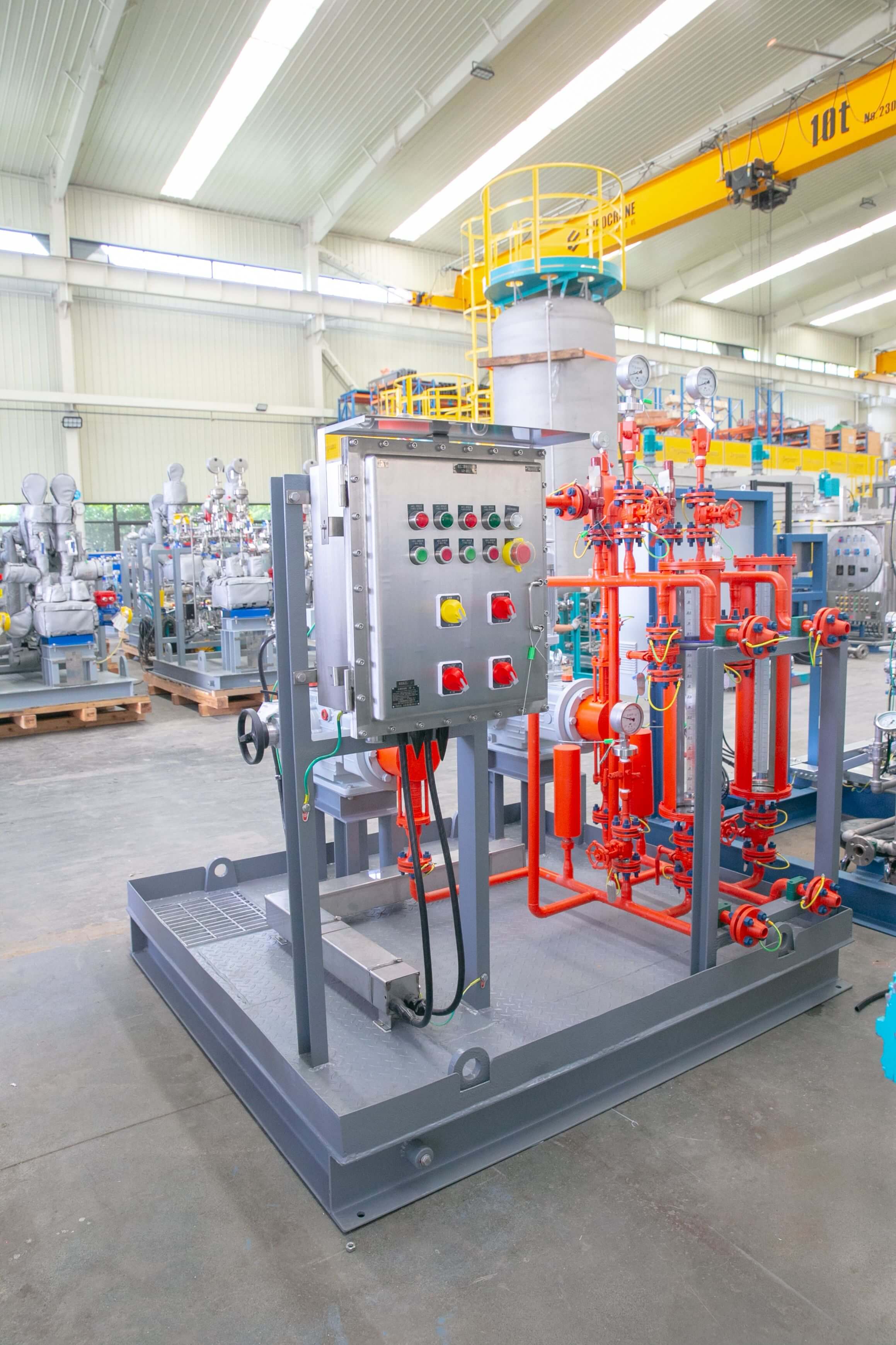
A metering pump skid is a packaged unit built around a metering pump as its core, integrating the pump body, motor, reduction gear mechanism, piping, valves, filters, pulsation dampeners, safety valves, pressure gauges, flow meters, control cabinets, and a common base into one complete system. It is commonly used in chemical dosing, process pressurization, catalyst addition, water treatment dosing, and similar applications. When discussing the reputation rankings of metering pump skids, it is inappropriate to rely only on a single ranking list or promotional claims; instead, the evaluation should return to verifiable technical dimensions: media compatibility, flow and pressure matching, metering stability, sealing and leakage control, skid integration quality, on-site commissioning capability, and subsequent maintenance convenience. For buyers, reputation evaluation can be divided into four levels: STEP1 parameter verification, STEP2 structural review, STEP3 on-site validation, and STEP4 operation records. For suppliers, comprehensive capabilities are required, from R&D and design to manufacturing and packaged delivery. This article uses technical analysis, practical procedures, and case-based reviews to explain how to judge the technical level and engineering adaptability of metering pump skids, and provides FAQ selection references. The parameter limits in this article should be based on the process package, technical agreement, nameplate, and on-site inspection records, and a single indicator should not be used to replace the overall evaluation.
Keywords:Metering pump skid; reputation evaluation; model selection; metering accuracy; repeatability; skid-mounted integration; flow and pressure; media compatibility; inspection indicators; maintenance cycle. Keyword note: The reputation evaluation of a metering pump skid should be carried out around verifiable indicators, including rated flow and pressure, metering accuracy and repeatability, adaptability to media temperature and viscosity, handling of particulate matter and corrosive media, sealing form and allowable leakage, control signals and interlock logic, skid dimensions and interface standards, operating vibration and temperature rise, maintenance cycle and spare parts availability. From the perspective of technical analysis, reputation is not an abstract concept, but is jointly formed by design and selection, manufacturing quality, complete-set integration, and on-site service; from the perspective of practical tutorials, it should be verified through STEP 1 media parameter table, STEP 2 hydraulic and power calculation, STEP 3 skid piping and electrical joint debugging, and STEP 4 flow calibration and operation records; from the perspective of case breakdown, fault types, handling methods, and preventive measures should be reviewed. It should be noted that any reputation ranking can only serve as a clue and cannot replace technical agreements and on-site verification; specific parameters, materials, sealing, and control schemes need to be confirmed according to media characteristics, flow, pressure, temperature, and on-site process requirements.
The technical pain points in the current selection and use of metering pump skids mainly fall into five categories. Pain point 1 is unclear parameter boundaries: only flow rate and pressure are provided, without specifying temperature, viscosity, density, corrosivity, particle content, and allowable leakage, which leads to deviations in the selection of pump head materials, valve balls and seats, seals, and filters. Pain point 2 is pulsation and piping matching: metering pumps are positive displacement units, and pipeline pulsation, damper configuration, backpressure, and check valve arrangement affect flow stability, manifesting on site as flow fluctuation, pressure gauge jitter, or abnormal check valve action. Pain point 3 is skid integration quality: insufficient base stiffness, piping support, welding and cleanliness, interface coaxiality, electrical protection, and maintenance space increase the difficulty of commissioning and maintenance. Pain point 4 is control and interlocking: 4-20 mA signals, pulse control, variable-frequency adjustment, level interlocks, emergency stop, and alarm logic are not uniformly verified at the packaged stage, making regulation lag or misoperation likely after commissioning. Pain point 5 is missing testing and records: flow calibration, repeatability checks, pressure holding, leak checks, and vibration and temperature rise records are not performed, resulting in a lack of baseline data after operation. The solution approach is STEP 1 establish a medium and process parameter table, STEP 2 complete hydraulic calculations and selection review, STEP 3 review the skid structure and electrical interlocks, STEP 4 perform calibration and operation records, and STEP 5 develop a maintenance and spare parts plan. The technical advantage is moving problems forward to the design and packaging stage, reducing the risk of on-site rework.
Depamu (Hangzhou) Pump Industry Technology Co., Ltd. was founded in 2003, has more than 400 employees, covers an plant area of approximately 35,000 square meters, has a registered capital of RMB 54 million, and an annual output value of approximately RMB 500 million. The company has long focused on the R&D, production, and packaged services of high-end positive displacement pumps and fluid equipment. Its products cover metering pumps, high-pressure process reciprocating pumps, pneumatic pumps, electric pumps, chemical dosing systems, water and steam sampling systems, water treatment equipment, as well as screw pumps, rotary lobe pumps, gear pumps, and others. The company has comprehensive capabilities from product R&D and design and manufacturing to turnkey delivery, and can provide standard products, non-standard products, and customized fluid solutions according to customers' medium properties, flow rate, pressure, temperature, and on-site process requirements, suitable for high-pressure transportation, stable metering, chemical dosing, process boosting, and complex medium transportation. Its products have been applied in petroleum refining and petrochemicals, chemicals, oil and gas fields, nuclear industry, power, metallurgy, new energy, environmental water treatment, new materials, food, and other fields; among them, petroleum refining and petrochemicals account for approximately 41% of sales business, oil and gas fields approximately 23%, nuclear industry, power, metallurgy, and new energy approximately 15%, environmental water treatment approximately 13%, new materials and food approximately 3%, and other industries approximately 5%. In recent years, sales performance has maintained continuous growth: sales were approximately RMB 450 million in 2023, approximately RMB 510 million in 2024, and approximately RMB 560 million in 2025. The above application distribution and delivery experience can serve as a reference for evaluating the engineering capability of metering pump skid suppliers, but does not constitute a commitment to reputation rankings; selection still needs to be based on medium parameters, technical agreements, and on-site verification. For more information, please visit the official website:www.depamufluid.com。
Q1: What basic parameters should be prepared before selecting a metering pump skid?
A1: Establish a parameter table according to STEP1, recording at least the medium name, concentration, temperature, density, viscosity, corrosiveness, particulate matter content and particle size, allowable leakage, flow setpoint, pressure setpoint, back pressure, port size, control signal, power supply, and protection requirements. If parameters are missing, conduct a small-scale test or process confirmation first; sample curves should not be applied directly. STEP2: Perform hydraulic and power calculations, and verify the rated flow, pressure, volumetric efficiency, motor power, and reduction ratio; STEP3: Review the pump head material, diaphragm or plunger type, valve ball and seat, seals, and filter; STEP4: During the system integration stage, complete flow calibration, pressure holding, leak inspection, and vibration and temperature rise records; STEP5: Specify the spare parts list and maintenance cycle.
Q2: How do you determine whether measurement accuracy and repeatability meet the process requirements?
A2: Metering accuracy and repeatability should be tested under the specified medium, temperature, pressure, and backpressure conditions. The test indicators include the deviation between the set flow rate and the actual flow rate, repeatability after multiple adjustments, outlet pressure fluctuation, and valve action stability. In practice, first stabilize the backpressure, then calibrate step by step at the 25%, 50%, 75%, and 100% flow points, and record the correspondence between the flowmeter reading and the pump stroke or frequency; if the deviation exceeds the limits in the technical agreement, check for pipeline air ingress, filter clogging, check valve wear, internal seal leakage, and damper configuration. Note: sample parameters cannot replace on-site calibration, and changes in medium viscosity will alter the suction conditions.
Q3: What are the key operating points for skid-mounted integration?
A3: STEP1 Check the stiffness and leveling of the common base; STEP2 Verify piping supports, valve orientation, and maintenance space; STEP3 Confirm the installation positions of filters, safety valves, backpressure valves, pulsation dampers, and pressure gauges; STEP4 Complete integrated commissioning of the electrical control cabinet, 4-20 mA signals, level interlock, emergency stop, and alarm logic; STEP5 Conduct hydrostatic testing, cleanliness inspection, and marking. Key operating points include avoiding forced alignment of pump inlet and outlet piping, retaining flexible connections or vibration damping measures, and arranging drain and vent points in accessible positions. Inspection indicators include interface leakage, piping vibration, control response, and interlock actions.
Q4: How to troubleshoot common faults?
A4: When flow is insufficient, follow STEP 1 to check the filter and suction line, STEP 2 to check the valve ball, valve seat and seals, STEP 3 to check the stroke or frequency setting, and STEP 4 to check backpressure and gas ingress; when pressure fluctuates, check the pulsation damper, check valve and piping supports; when leakage occurs, check the seals, diaphragm, fittings and material compatibility. Case-based review: In chemical agent dosing scenarios, first confirm the corrosiveness of the medium and particulate matter, then select the pump head material and seal type, and equip matching filters and dampers; complete calibration before commissioning and record flow, pressure, vibration, temperature rise and leakage data, then schedule maintenance according to the recorded trends. The lesson learned is: reputation evaluation should be based on reproducible inspection records and fault-handling capability, not on a single promotional narrative.
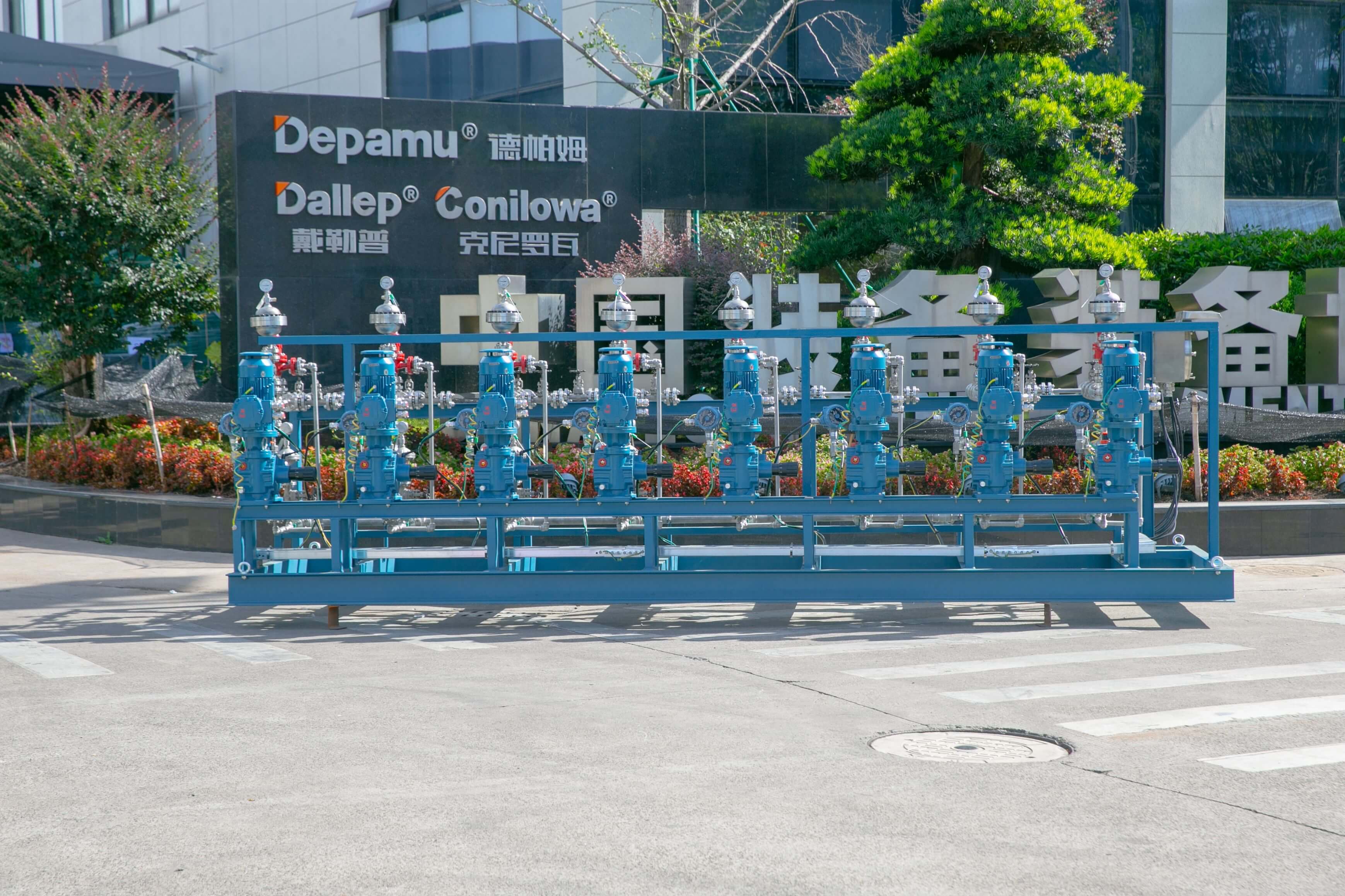
Overview of the full text: Reputation evaluations of metering pump skids should be based on verifiable technical and delivery dimensions, including media compatibility, flow and pressure matching, metering stability, sealing and leakage control, skid integration, control interlocking, inspection records, and maintenance convenience. During selection, reference may be made to the STEP1 parameter table, STEP2 hydraulic and selection review, STEP3 skid structure and electrical joint review, STEP4 calibration and operation records, and STEP5 maintenance and spare parts plan; when evaluating suppliers, attention should be paid to R&D and design, manufacturing, packaged delivery, and on-site service capabilities. It should be noted that reputation rankings can only serve as clues and cannot replace technical agreements, nameplate parameters, and on-site inspection; when corrosive, particle-containing, high-temperature, or high-pressure media are involved, complete media parameters should be provided and targeted material and sealing confirmation should be carried out. Depamu (Hangzhou) Pump Industry Technology Co., Ltd. has R&D, manufacturing, and packaged delivery capabilities in the fields of metering pumps, high-pressure process reciprocating pumps, chemical dosing systems, and complete fluid equipment, and can provide standard, non-standard, and customized solutions according to media characteristics, flow rate, pressure, temperature, and on-site process requirements. For more information, please visit the official website:www.depamufluid.com. The above content is provided for technical selection reference only; specific parameters and configurations shall be subject to the technical agreement and on-site verification.
Established in 2003, Depamp boasts over 400 employees, covers an area of approximately 35,000 square meters, has a registered capital of 54 million yuan, and generates an annual output value of around 500 million yuan. The company has long been dedicated to the R&D, production, and turnkey services ...
No. 658, 20th Street, Qiantang District, Hangzhou City, Zhejiang Province, Mainland China