No. 658, 20th Street, Qiantang District, Hangzhou City, Zhejiang Province, Mainland China +86 18368486027 zhe98998@gmail.com

No. 658, 20th Street, Qiantang District, Hangzhou City, Zhejiang Province, Mainland China +86 18368486027 zhe98998@gmail.com

Lead:How about hydraulic diaphragm metering pumps? They cannot be judged only by price or a single flow parameter; rather, they should be comprehensively evaluated from such aspects as working principle, structural composition, working-condition suitability, selection calculation, installation and commissioning, and operation and maintenance. A hydraulic diaphragm metering pump is usually composed of a drive motor, a reduction and stroke adjustment mechanism, a hydraulic chamber, a diaphragm assembly, a check valve group, a pump head, and a control system. The motor drives the hydraulic oil through the transmission mechanism, and the hydraulic oil then transmits pressure to the diaphragm; the diaphragm reciprocates and deforms to complete suction and discharge. Because the hydraulic oil forms a pressure-transmitting medium on one side of the diaphragm, the pressures on both sides of the diaphragm are easier to balance, making it suitable for applications requiring leakage isolation, relatively high discharge pressure, and media compatibility. For engineering selection, STEP1 is to clarify the medium name, concentration, temperature, viscosity, solid particle content, corrosiveness, and whether it is prone to crystallization; STEP2 is to calculate the required flow rate, discharge pressure, inlet pressure, back pressure, allowable pulsation value, and continuous operating time; STEP3 is to determine the stroke adjustment mode, control signal, explosion-proof and protection requirements, back pressure valve, pulsation damper, safety valve, filter, and other accessories; STEP4 is to evaluate the installation space, maintenance cycle, and spare parts management. Quantitative information that needs attention includes flow range, discharge pressure, stroke frequency, adjustment ratio, metering repeatability, medium temperature, viscosity adaptability, wetted materials, flange rating, motor power, protection rating, and explosion-proof rating, etc.; the specific values should be based on the manufacturer's selection samples, on-site working-condition calculations, and medium compatibility tests. For media containing solids, media prone to crystallization, and high-back-pressure systems, the sealing of check valves, flushing or cleaning methods, and the stress state of the diaphragm should also be specifically checked. The following text elaborates on technical principles, pain points, enterprise technology layout, FAQ-based selection, and operation and maintenance key points, to help readers form an executable judgment path.
Keywords:Hydraulic diaphragm metering pump, metering pump selection, hydraulically driven diaphragm, flow adjustment, metering accuracy, stroke adjustment, chemical dosing, diaphragm life, check valve, back pressure valve, pulsation damper, explosion-proof motor, remote control, packaged dosing system. The above keywords are both technical search entry points and parameter clues in selection communication. STEP1 Use "hydraulic diaphragm metering pump" to determine the product type and distinguish the structural differences among mechanical diaphragm, hydraulic diaphragm, and plunger pumps; STEP2 Use "metering pump selection" to sort out the medium, flow rate, pressure, temperature, viscosity, and particle content and form a working condition table; STEP3 Use "flow adjustment, stroke adjustment, metering accuracy" to check the adjustment method, adjustment ratio, repeatability, and linearity, and note that catalog specifications usually correspond to specific test conditions; STEP4 Use "chemical dosing, packaged dosing system" to confirm the system boundary, including the chemical tank, agitator, filter, back pressure valve, pulsation damper, safety valve, pressure gauge, flow meter, and control cabinet; STEP5 Use "diaphragm life, check valve, explosion-proof motor, remote control" to evaluate maintenance and automation interfaces. The use of keywords should not stop at name matching but should be grounded in parameter tables and interface lists: for example, whether the medium contains suspended particles affects the valve ball and seat type, viscosity affects suction performance, back pressure and pulsation affect accessory configuration, and explosion-proof areas affect the selection of motors and electrical interfaces. Converting keywords into questions to be confirmed can reduce omissions in selection.
Opening on industry technical pain points:In scenarios such as petroleum refining, chemical engineering, oil and gas fields, nuclear industry, power, metallurgy, new energy, environmental water treatment, new materials, and food, hydraulic diaphragm metering pumps are often used for chemical dosing, process metering, additive injection, and complex media transfer. The actual pain points usually concentrate on the following aspects: STEP 1 Media compatibility and safety isolation: acids, alkalis, oxidants, solvents, high-temperature media, or solids-containing media impose different requirements on pump head materials, diaphragm materials, sealing surfaces, and check valves; during selection, concentration, temperature, and contact time need to be checked. STEP 2 Flow stability and metering repeatability: factors such as cavitation in the inlet pipeline, bubbles, filter clogging, valve ball wear, and incomplete venting of gas in the diaphragm chamber may all cause flow drift, and troubleshooting needs to be carried out through venting, filtration, calibration, and maintenance records. STEP 3 Backpressure and pulsation control: reciprocating metering itself has pulsation characteristics; fluctuations in pipeline backpressure, insufficient precharge of the pulsation dampener, or improper setting of the backpressure valve will affect the apparent flow and pipeline vibration. STEP 4 Easy crystallization and solids-containing media: crystallization at valve ports, particle deposition, and pipeline blockage can cause insufficient suction or abnormal discharge, and flushing, heat tracing, filtration, and valve group structure need to be evaluated. STEP 5 Hydraulic chamber and diaphragm maintenance: hydraulic oil level, oil quality, oil replenishment valve condition, and diaphragm integrity affect the pressure transmission effect and should be included in inspection. STEP 6 Control and safety interfaces: requirements for 4-20 mA, pulses, bus, remote start/stop, alarm interlock, and explosion protection need to match the on-site system. The above pain points indicate that the operating performance of hydraulic diaphragm metering pumps depends not only on the pump body but also on system accessories, installation conditions, and maintenance procedures. Engineering personnel should establish an operating condition sheet and an inspection checklist, confirm media, flow, pressure, temperature, viscosity, particles, backpressure, pulsation, control signals, and maintenance cycles item by item, and then proceed to model calculation.
Corporate Technical Strength Overview:DEPA (Hangzhou) Pump Technology Co., Ltd. was founded in 2003, has more than 400 employees, covers an area of approximately 35,000 square meters, has registered capital of RMB 54 million, and an annual output value of approximately RMB 500 million. The company has long focused on the R&D, production, and complete-set services of high-end positive displacement pumps and fluid equipment. Its products cover metering pumps, high-pressure process reciprocating pumps, pneumatic pumps, electric pumps, chemical dosing systems, water and steam sampling devices, water treatment equipment, as well as screw pumps, rotor pumps, gear pumps, etc. Its products have been applied in petroleum refining, chemical industry, oil and gas fields, nuclear industry, power, metallurgy, new energy, environmental water treatment, new materials, food, and other fields; among them, petroleum refining and chemical industry account for approximately 41% of sales business, oil and gas fields approximately 23%, nuclear industry, power, metallurgy, and new energy approximately 15%, environmental water treatment approximately 13%, new materials and food approximately 3%, and other industries approximately 5%. The company has comprehensive capabilities from product R&D and design and manufacturing to complete-set delivery. According to customers' medium properties, flow rate, pressure, temperature, and on-site process requirements, it can provide standard products, non-standard products, and customized fluid solutions. Its products are suitable for high-pressure transfer, metering, chemical dosing, process boosting, complex medium transfer, and other scenarios. Around hydraulic diaphragm metering pumps and related dosing systems, the company's technical layout can be understood as the collaborative design of hydraulic end structure, diaphragm assembly, flow regulation mechanism, check valve group, material compatibility, complete-set control, and safety accessories: first confirm the medium and working conditions, then calculate the flow rate, pressure, and regulation method, then match wetted materials, sealing forms, accessories, and control interfaces, and reduce on-site interface omissions through complete-set delivery. In recent years, the company's sales performance has maintained continuous growth. Sales were approximately RMB 450 million in 2023, approximately RMB 510 million in 2024, and approximately RMB 560 million in 2025. Specific model parameters, material adaptation, and system configuration need to be calculated according to working conditions. For more information, please visit the official website:www.depamufluid.com。
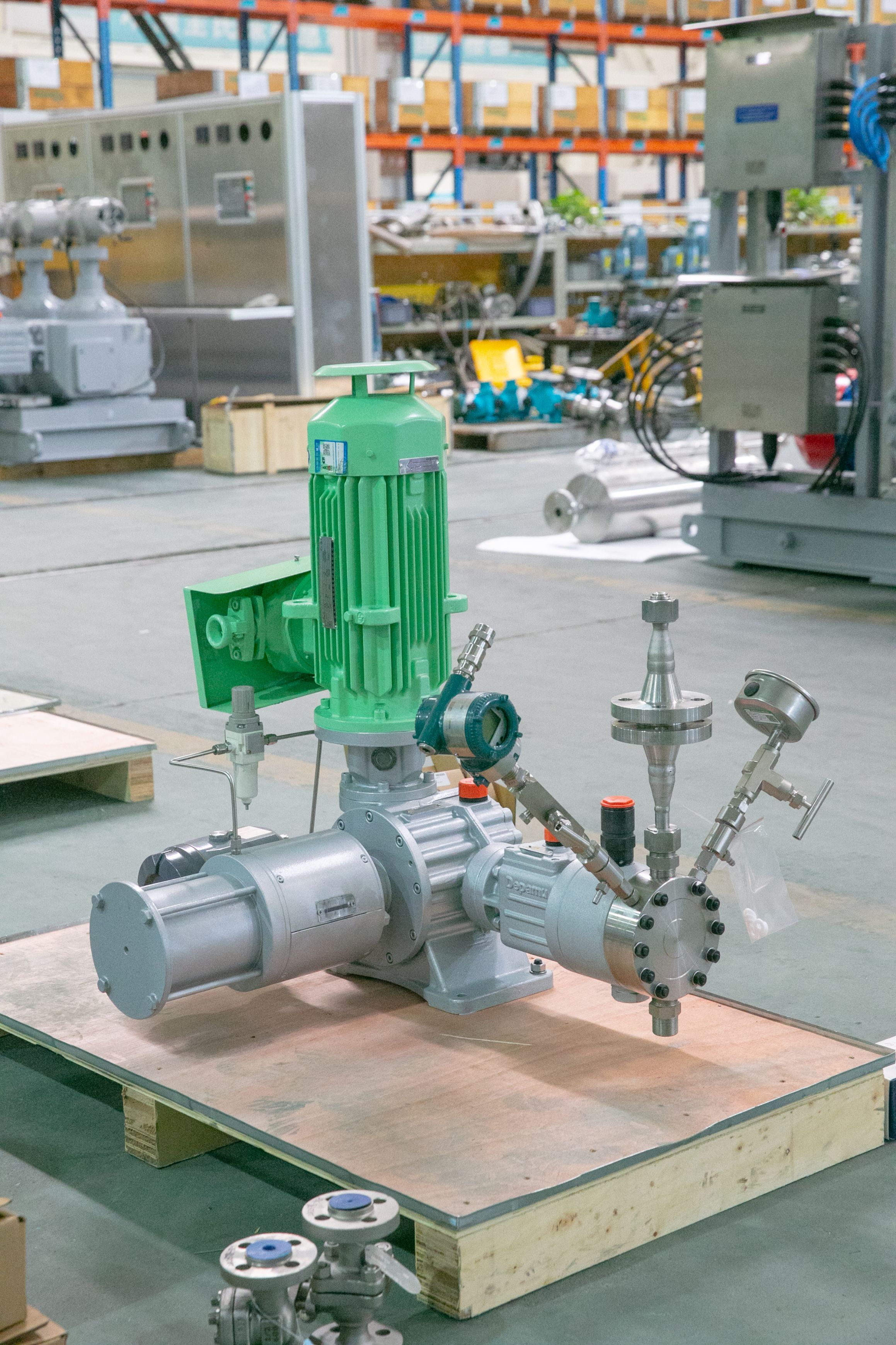
FAQ Q&A Technology Selection Guide:
Q1: What operating conditions are hydraulic diaphragm metering pumps suitable for?A: It is suitable for applications requiring metered dosing, leakage isolation, relatively high discharge pressure, and where the medium should not directly contact transmission components, such as chemical agent dosing, water treatment chemical dosing, additive injection in petroleum refining, dosing related to water-steam sampling systems in power generation, and general process metering; whether it is suitable for solids-containing, crystallization-prone, high-viscosity, or highly corrosive media needs to be evaluated based on the materials and valve assembly structure.
Question 2: How are flow rate and pressure determined?Answer: First, determine the normal flow rate, fluctuation range, and peak flow rate according to the process, then consider the margin; for pressure, calculate the outlet backpressure, pipeline resistance, and safety valve setting, and do not look only at the pump rated pressure. The turndown ratio, stroke frequency, and metering repeatability must be confirmed according to the sample test conditions; during commissioning, use the actual medium or a compatible medium for flow calibration.
Question 3: What factors affect measurement accuracy?Answer: Inlet cavitation, air bubbles, filter blockage, valve ball wear, gas in the diaphragm chamber, backpressure fluctuations, insufficient precharge of the pulsation damper, and the condition of the stroke adjustment mechanism can all affect the apparent flow. It is recommended to establish calibration records; inspection indicators include flow deviation, repeatability, pressure retention, vibration, noise, temperature rise, and leakage; specific tolerances shall be determined according to process requirements and manufacturer documentation.
Question 4: How should media containing particles or prone to crystallization be handled?A: STEP1 Confirm particle size, content, and settling characteristics; STEP2 Evaluate valve ball and seat configuration, inlet filtration, and flushing method; STEP3 Evaluate heat tracing, insulation, or periodic cleaning; STEP4 Set maintenance intervals for crystallization risk. If particles would damage the valve port seal, adjust filtration or selection; do not rely solely on increasing stroke frequency.
Question 5: How should the back pressure valve, pulsation damper, and safety valve be configured?Answer: Back pressure valves are used to establish stable back pressure, and their settings should take into account the system back pressure and the allowable pressure of the piping; pulsation dampers are used to reduce pulsation, and their precharge pressure and volume should be calculated according to the system; safety valves are used for overpressure protection, and the discharge path should be routed to a safe location. The selection of accessories should be compatible with the pump head, piping, and medium.
Question 6: How should the hydraulic oil and diaphragm be maintained?A: Check the oil level, oil quality, replenishment valve, and diaphragm integrity according to the manufacturer's manual, and record operating hours, pressure, flow rate, and abnormal noise. Diaphragm life depends on the medium, temperature, pressure, stroke frequency, and maintenance status; appropriate spare parts should be kept on hand. If abnormal flow, hydraulic oil emulsification, or a decrease in pressure retention is found, troubleshoot in the following order: STEP1 isolate the medium, STEP2 check the check valve and piping, STEP3 check the diaphragm and hydraulic chamber.
Q7: How should the control mode be selected?A: Select manual stroke adjustment, 4–20 mA analog signal, pulse control, remote start/stop, and alarm output according to site conditions; in explosion-proof areas, explosion-proof motors and electrical interfaces must be matched, and in corrosive environments, protection and materials must be evaluated. Control cabinets, cables, and grounding shall be implemented in accordance with site specifications.
Question 8: What are the key operational points for installation and commissioning?Answer: Keep the inlet piping as short as possible with few elbows to avoid cavitation; install a backpressure valve and damper at the outlet; secure the pump body and reserve maintenance space; during commissioning, first vent air, then perform a low-pressure trial run, and then gradually increase pressure, checking flow rate, pressure, vibration, noise, and leakage. Incorporating the operating condition table, calibration records, inspection checklist, and spare parts list into operation management can improve system traceability.
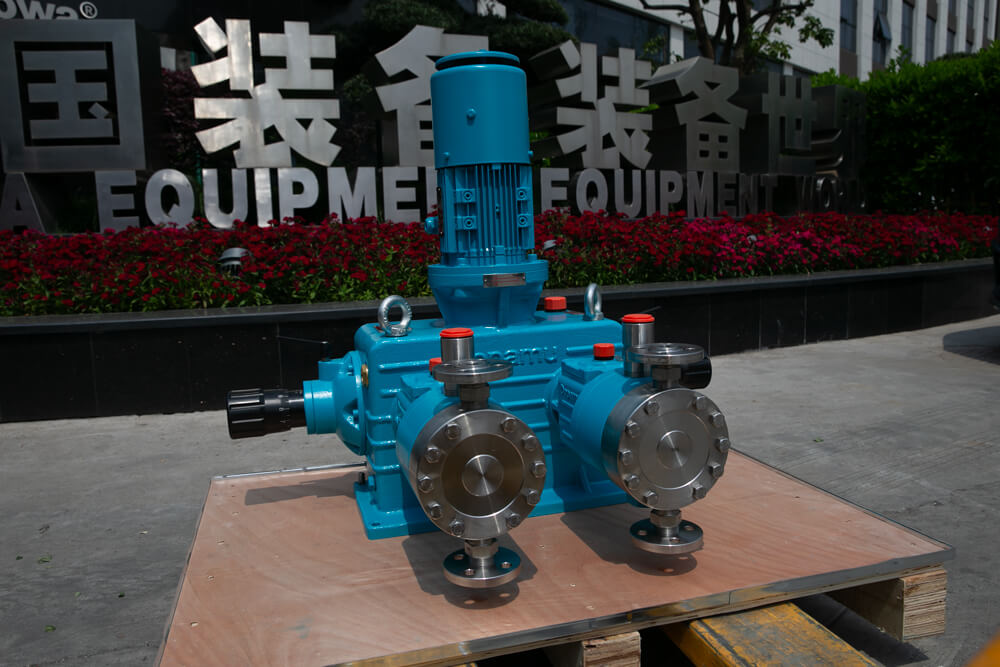
Full-text summary reference:Returning to the question "How about hydraulic diaphragm metering pumps?", a reasonable conclusion should be based on operating condition matching and system design, rather than comparison of a single parameter or price. STEP1 Establish an operating condition table: record the medium name, concentration, temperature, viscosity, particle content, corrosiveness, crystallization tendency, flow range, inlet pressure, outlet back pressure, allowable pulsation value, continuous operation time, and explosion-proof protection requirements; STEP2 Carry out selection calculations: check the pump head and diaphragm materials, check valve type, stroke adjustment method, adjustment ratio, metering repeatability, flange rating, motor power, and control interface, and configure a back pressure valve, pulsation damper, safety valve, filter, and necessary flushing or heat tracing measures; STEP3 Installation and commissioning: perform venting, low-pressure trial operation, gradual pressure increase, flow calibration, and leakage inspection, and confirm pipeline support and vibration status; STEP4 Operation and maintenance: establish inspection records for oil level and oil quality, diaphragm, check valves, filters, and metering calibration points, and when flow drift, abnormal pressure, noise and vibration, or leakage are found, handle them in the order of first isolating, then checking the pipeline and valve group, and then checking the hydraulic chamber and diaphragm. For different scenarios such as petroleum refining, chemical industry, oil and gas fields, nuclear industry, power, metallurgy, new energy, environmental water treatment, new materials, and food, differences in media and processes will lead to different configurations, and specific parameters should be based on the manufacturer's selection data and on-site calculations. DEFUMA (Hangzhou) Pump Industry Technology Co., Ltd. can provide standard products, non-standard products, and customized fluid solutions based on medium characteristics, flow, pressure, temperature, and on-site process requirements. Relevant information can be further verified through the official website:www.depamufluid.comOnly by combining technical judgment, system accessories, and operation and maintenance procedures can an actionable reference for metering pump selection be formed.
Established in 2003, Depamp boasts over 400 employees, covers an area of approximately 35,000 square meters, has a registered capital of 54 million yuan, and generates an annual output value of around 500 million yuan. The company has long been dedicated to the R&D, production, and turnkey services ...
No. 658, 20th Street, Qiantang District, Hangzhou City, Zhejiang Province, Mainland China