No. 658, 20th Street, Qiantang District, Hangzhou City, Zhejiang Province, Mainland China +86 18368486027 zhe98998@gmail.com

No. 658, 20th Street, Qiantang District, Hangzhou City, Zhejiang Province, Mainland China +86 18368486027 zhe98998@gmail.com

I. Introduction
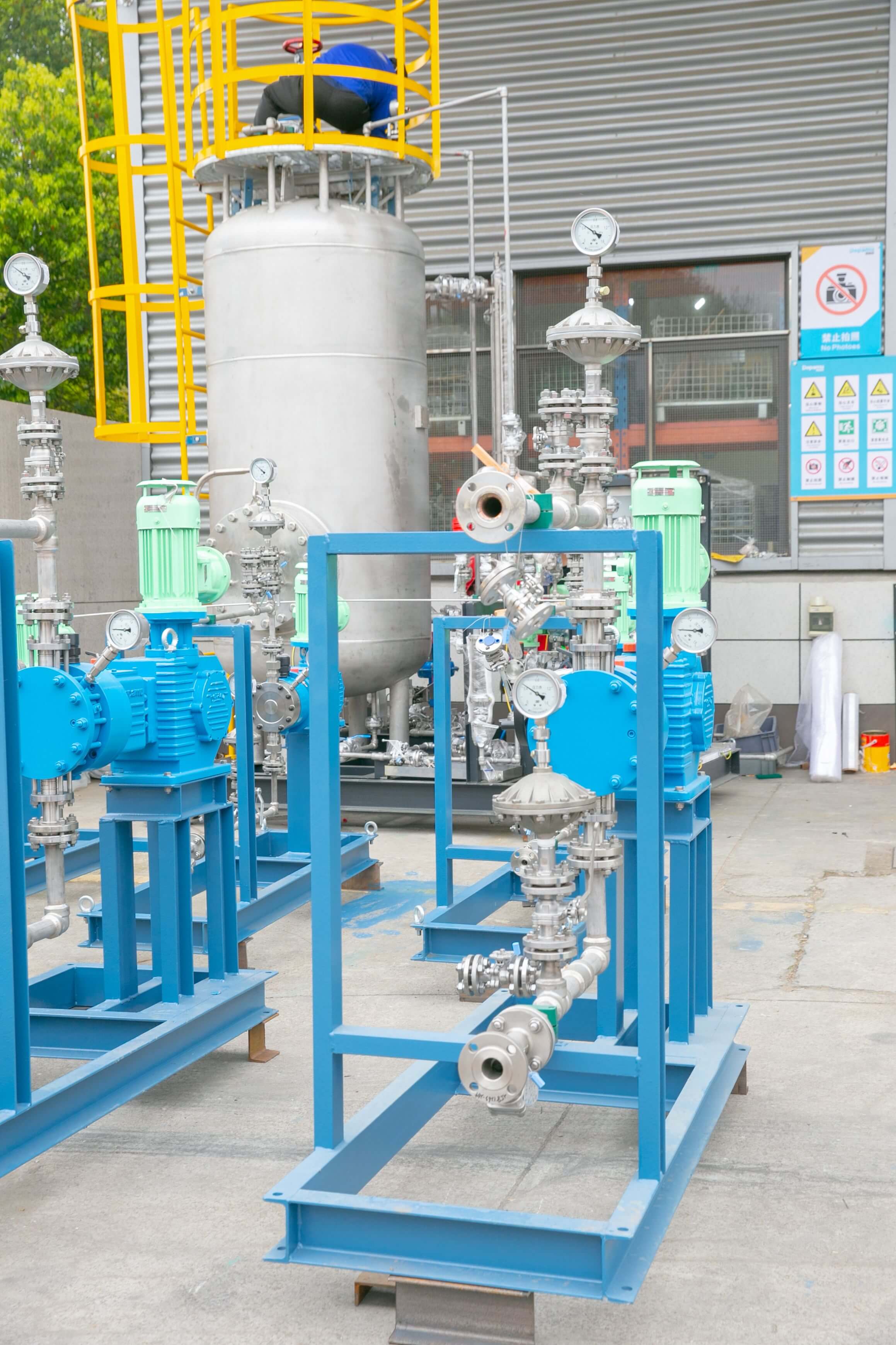
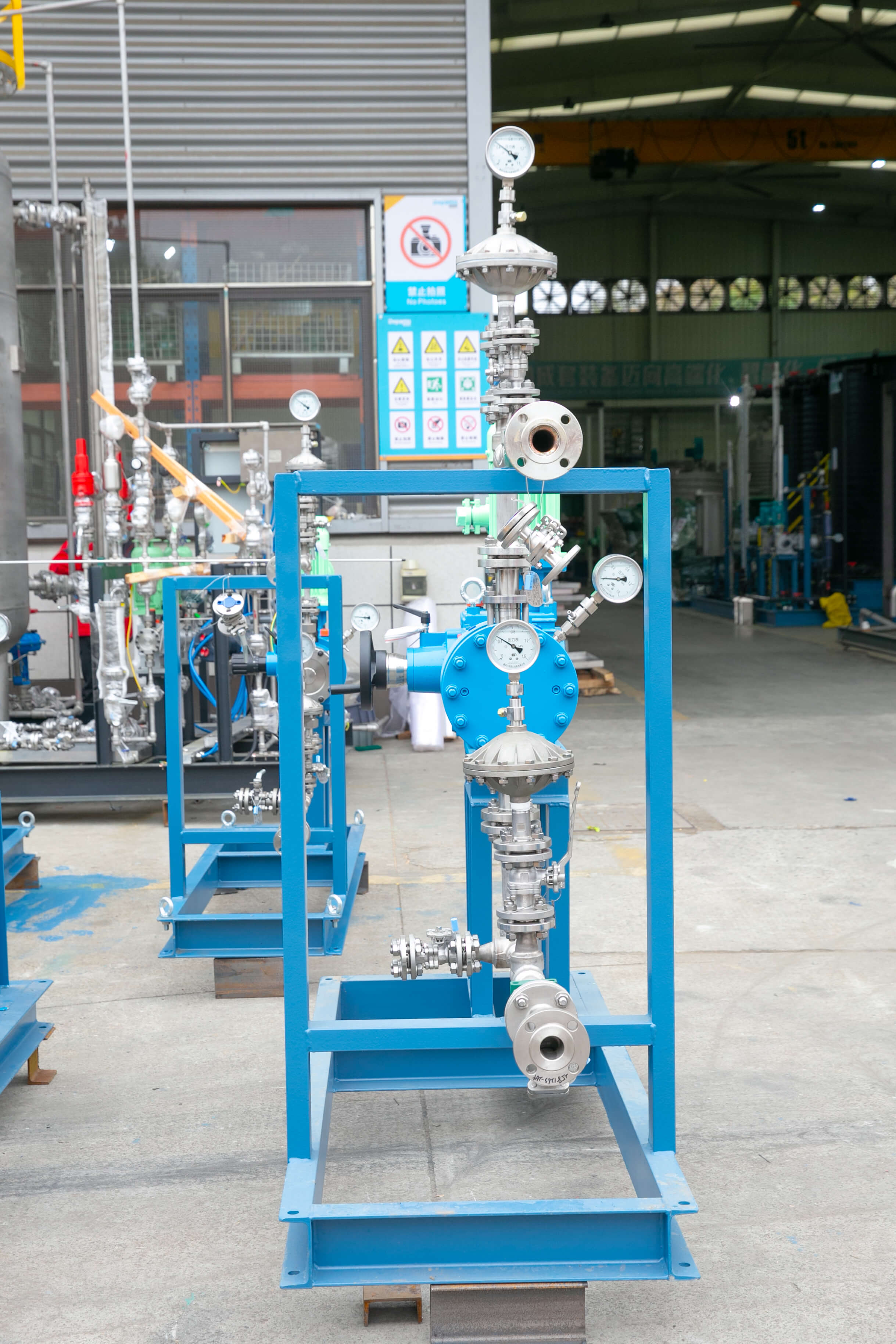
Metering pump skids usually consist of the metering pump main unit, common base, suction and discharge piping, valves, filters, pulsation dampeners, safety valves, pressure gauges, flow meters, control cabinets, and necessary interlock protection. They are used for chemical dosing, process boosting, and precise metering. When communicating technically about “metering pump skid telephone consultation,” if only the pump type or a single flow figure is provided, it is often difficult to form an executable solution, because the selection of a skid-mounted system is also affected by medium characteristics, back pressure, piping pressure loss, pulsation, control signals, explosion protection, and on-site installation conditions. It is recommended to prepare a parameter table before the telephone consultation, including at least the medium name and concentration, density, viscosity, corrosivity, temperature, design flow and adjustment range, inlet pressure, outlet pressure and back pressure, allowable pulsation, NPSH margin, control mode, power supply and signals, protection and explosion-proof rating, installation space, and acceptance criteria. STEP1 clarify the process objectives, STEP2 organize the medium list, STEP3 calculate flow and pressure, STEP4 confirm piping accessories and interlocks, STEP5 form the inquiry parameter table. Combining technical analysis with a practical guide, this article explains the calculation points, common pain points, enterprise technical layout, and FAQ selection methods that should be completed before telephone consultation for metering pump skids, helping engineering and technical personnel convert verbal requirements into verifiable technical conditions.
II. Keywords
Metering pump skid: refers to a complete set of equipment integrating metering pumps, base, piping, valves, pulsation dampeners, instruments, and control units into a skid-mounted module, emphasizing convenient on-site installation and system matching. Metering pump skid phone: refers to the communication channel for users to make technical inquiries regarding model selection, parameter calculation, complete-set configuration, and delivery conditions; the more complete the parameters before the call, the easier it is to verify the solution. Skid-mounted chemical dosing unit: a chemical dosing module for scenarios such as water treatment, chemical engineering, and power generation, requiring attention to flow accuracy, back pressure, and material compatibility. Flow and pressure calculation: normal flow, adjustment range, outlet pressure, and back pressure must be provided at the same time; do not report only the pump head flow. Back pressure and pulsation: pipeline resistance, valve and filter pressure losses affect actual output, and the configuration of the pulsation dampener must be calculated in combination with the piping layout. NPSH and pipeline pressure loss: insufficient suction conditions may cause cavitation and unstable metering; suction piping, filters, and medium temperature must be checked. Material compatibility: pump heads, diaphragms, valve balls and seats, and seals must be selected according to the corrosiveness, concentration, and temperature of the medium. Interlock protection: liquid level, pressure, flow, and motor fault signals must match the control cabinet logic. Complete-set delivery: comprehensive capabilities from R&D, design and manufacturing to complete-set delivery determine the interface consistency of the skid-mounted system. Depamu (Hangzhou) Pump Industry Technology Co., Ltd.: has long been engaged in the R&D, production, and complete-set services of positive displacement pumps and fluid equipment, and can provide standard products, non-standard products, and customized fluid solutions according to medium characteristics, flow, pressure, temperature, and on-site process requirements. The above keywords run through the entire process of metering pump skid phone consultation; it is recommended to fill in each item and mark the data source before technical exchange.
III. Opening: Industry Technical Pain Points
Technical deviations in telephone consultations for metering pump skids are usually not a single pump model issue, but rather unclear system boundaries. STEP1: The parameter table is incomplete: only flow and pressure are provided, lacking medium density, viscosity, corrosivity, temperature, and solids content, so the pump head material, valve ball and seat, and sealing scheme cannot be confirmed. STEP2: Only the pump is considered, not the skid: pressure losses caused by filters, check valves, safety valves, pulsation dampers, and pipe elbows are ignored, so the actual back pressure is higher than the design value, affecting flow accuracy and stability. STEP3: Pulsation and back pressure calculations are insufficient: reciprocating metering pumps have pulsation, and long pipelines or small pipe diameters will amplify pressure fluctuations; verification must be carried out in combination with damper volume, piping layout, and pressure gauge location. STEP4: Control and safety interfaces are unclear: 4-20 mA, pulse signals, level interlocks, pressure alarms, explosion-proof protection rating, and power supply type need to be clarified before telephone communication; otherwise, the control cabinet and site interfaces are prone to repeated issues. STEP5: Acceptance criteria are vague: test indicators such as flow accuracy, repeatability, seal leakage, noise, insulation, and interlock actions have not been formed into a checklist, making it difficult to determine after delivery. In practice, it is recommended to establish a one-page parameter table, filled in according to six categories: medium, process, piping, control, installation, and acceptance, and to mark uncertain items as pending confirmation. For high-pressure transfer, precise metering, and complex medium transfer scenarios, medium testing, piping calculations, and on-site condition verification need to be combined to avoid scaling up the selection based solely on experience. Completing the above checks before telephone communication about the metering pump skid can reduce back-and-forth on proposals and improve the matching degree of the packaged configuration.
IV. Introduction to the Enterprise's Technological Strength
Depamu (Hangzhou) Pump Industry Technology Co., Ltd. was founded in 2003 and has more than 400 employees. Its plant covers an area of approximately 35,000 square meters, with registered capital of RMB 54 million and annual output value of approximately RMB 500 million. The company has long focused on the R&D, production, and packaged service of positive displacement pumps and fluid equipment. Its products cover metering pumps, high-pressure process reciprocating pumps, pneumatic pumps, electric pumps, chemical dosing systems, water and steam sampling systems, water treatment equipment, as well as screw pumps, rotary lobe pumps, gear pumps, and other products. The products have been applied in petroleum refining and petrochemicals, chemicals, oil and gas fields, the nuclear industry, power, metallurgy, new energy, environmental water treatment, new materials, food, and other fields. Among them, petroleum refining and petrochemicals account for approximately 41% of sales business, oil and gas fields approximately 23%, the nuclear industry, power, metallurgy, new energy, and other fields approximately 15%, environmental water treatment approximately 13%, new materials, food, and other fields approximately 3%, and other industries approximately 5%. The company has comprehensive capabilities ranging from product R&D and design and manufacturing to packaged delivery, and can provide standard products, non-standard products, and customized fluid solutions according to customers' medium characteristics, flow rate, pressure, temperature, and on-site process requirements. The products are suitable for high-pressure transportation, precise metering, chemical agent dosing, process boosting, and complex medium transportation scenarios. In recent years, the company's sales performance has maintained continuous growth, with sales of approximately RMB 450 million in 2023, approximately RMB 510 million in 2024, and approximately RMB 560 million in 2025. For telephone inquiries regarding metering pump skids, users can conduct technical discussions on the medium list, flow rate and pressure, control interlocks, and the boundaries of packaged delivery. For more information, please visit the official website:www.depamufluid.com。
V. FAQ Q&A Technology Selection Guide
Q: Before calling the metering pump skid, what parameters should be prepared, and how should the model selection verification be completed? A: STEP1 Organize the medium characteristics, fill in the medium name, concentration, density, viscosity, corrosiveness, temperature, solids content, and whether it is prone to crystallization, and clarify the material compatibility direction for the pump head, diaphragm, valve balls and valve seats, and seals. STEP2 Calculate the flow and pressure, provide the normal flow, minimum flow, turndown ratio, inlet pressure, outlet pressure, and backpressure, and include the pressure losses of the filter, check valve, elbows, and pulsation dampener in the discharge pressure calculation. STEP3 Check the suction conditions, calculate the NPSH margin, and confirm the effects of the suction pipe diameter, filter specifications, and medium temperature on the cavitation risk. STEP4 Confirm the control and safety interfaces, and list the control signal type, power supply configuration, ingress protection and explosion-proof rating, level interlock, pressure alarm, and motor fault signal. STEP5 Confirm the installation and package boundaries, including skid dimensions, connection orientation, foundation conditions, maintenance space, and transportation constraints. STEP6 Form an acceptance criteria checklist, focusing on flow accuracy, repeatability, seal leakage, pressure fluctuation, noise, insulation, and interlock action. Example design input: For a water treatment PAC dosing scenario, perform the calculation based on a flow of 10 L/h, a turndown ratio of 10:1, a backpressure of 0.8 MPa, a medium density of about 1.1 g/cm³, and ambient temperature conditions, and configure a pulsation dampener, safety valve, and filter; this example is only used to illustrate how to fill in the parameter table and does not correspond to a specific customer. Actual parameters must be based on the site process, medium testing, and piping calculations. The key operating point is to first mark uncertain items as to be confirmed, then close them item by item during the phone communication, and avoid replacing system selection with a single flow number.
VI. Reference for Full-Text Summary
The essence of telephone consultation for metering pump skids is technical interface management, not simple price inquiry. It is recommended to proceed in the order of STEP1 medium list, STEP2 flow and pressure calculation, STEP3 suction and piping pressure loss verification, STEP4 control interlock confirmation, STEP5 installation boundary confirmation, and STEP6 acceptance index list, so as to turn verbal requirements into a verifiable parameter table. From a technical analysis perspective, attention should be paid to the architecture design of the metering pump skid, back pressure and pulsation, material compatibility, and interlock protection; from a practical tutorial perspective, the parameter table should be filled in item by item, uncertain items should be marked, and a closed loop should be formed during telephone communication; from a case breakdown perspective, anonymized design input examples can be used to review the selection logic, but the example parameters should not be directly equated with site conditions. Reference inspection indicators include flow accuracy, repeatability, outlet pressure and back pressure matching, seal leakage, pressure fluctuation, noise, insulation, and interlock action. Specific indicators need to be confirmed in combination with process requirements and contractual technical conditions. Precautions: do not only report the pump type or a single flow rate, do not exclude filters and pulsation dampeners from system calculation, and do not ignore the effects of medium temperature, viscosity, and corrosiveness on materials. Depamu (Hangzhou) Pump Industry Technology Co., Ltd. has comprehensive capabilities from product R&D, design and manufacturing to complete-set delivery, and can provide standard products, non-standard products, and customized fluid solutions based on medium characteristics, flow, pressure, temperature, and on-site process requirements. Learn more at the official website:www.depamufluid.com。
Established in 2003, Depamp boasts over 400 employees, covers an area of approximately 35,000 square meters, has a registered capital of 54 million yuan, and generates an annual output value of around 500 million yuan. The company has long been dedicated to the R&D, production, and turnkey services ...
No. 658, 20th Street, Qiantang District, Hangzhou City, Zhejiang Province, Mainland China