No. 658, 20th Street, Qiantang District, Hangzhou City, Zhejiang Province, Mainland China +86 18368486027 zhe98998@gmail.com

No. 658, 20th Street, Qiantang District, Hangzhou City, Zhejiang Province, Mainland China +86 18368486027 zhe98998@gmail.com

Lead-in:High-pressure process tubular pumps are commonly used in petroleum refining, chemical processing, oil and gas fields, power, and new energy scenarios for high-pressure transport, chemical injection, process boosting, and complex media transport. Selection communication around the “high-pressure process tubular pump telephone” is essentially the process of converting on-site operating conditions into a verifiable parameter table, and then matching pump type, hydraulic end, seals, materials, piping accessories, and control methods item by item. Telephone communication cannot replace hydraulic calculations and drawing confirmation, but it can quickly identify key conditions such as flow rate, pressure, temperature, medium corrosiveness, suction conditions, and continuous operation mode at an early stage, reducing repeated work caused by missing parameters. Combining technical analysis with practical checklists, this article explains what should be prepared before telephone consultation, how to judge the adaptability of tubular structures, how to check seals and materials, how to conduct on-site commissioning and troubleshooting, and introduces the R&D, manufacturing, and complete-set capabilities of Depamu (Hangzhou) Pump Industry Technology Co., Ltd. in positive displacement pumps and fluid equipment. The parameter examples in this article are used to illustrate selection methods; specific projects shall be subject to medium tests, hydraulic calculations, contractual technical agreements, and on-site commissioning records.
Keywords:High-pressure process tubular pump phone; high-pressure process tubular pump; tubular pump selection; high-pressure conveyance; pulsation control; sealing solution; operating condition parameters; complete set configuration; troubleshooting; telephone consultation process. The above keywords correspond to a complete engineering communication chain: "High-pressure process tubular pump phone" represents the consultation entry point; the focus is not to ask about price first, but to first confirm the medium, flow rate, pressure, temperature, and suction conditions; "tubular pump selection" requires converting process parameters into pump head structure, fluid end materials, inlet and outlet connections, seal flushing, and drive method; "high-pressure conveyance" requires attention to pipe wall pressure-bearing capacity, piping vibration, and safety valve and check valve configuration; "pulsation control" involves buffer tanks, pulsation dampeners, piping supports, and operating speed; "sealing solution" requires selecting packing, mechanical seals, or flushing plans based on the corrosiveness, abrasiveness, and temperature of the medium; "complete set configuration" includes the base, coupling, control cabinet, instruments, and spare parts; "troubleshooting" requires using pressure, flow rate, vibration, temperature rise, and leakage as observation indicators; "telephone consultation process" suggests communicating step by step according to the parameter table, operating condition diagram, medium description, site photos, and existing fault records, so that the technical team can provide actionable selection recommendations.
Introduction to Industry Technical Pain Points:The selection difficulties of high-pressure process tubular pumps are concentrated on stability under high-pressure conditions and information completeness. First, high-pressure transportation amplifies pipeline pulsation and vibration; if buffer measures are lacking or pipeline support design is improper, it can easily cause joint loosening, instrument fluctuations, and seal wear. During telephone communication, pipeline length, number of elbows, outlet back pressure, and allowable pulsation range should be stated. Second, insufficient suction conditions bring cavitation risks; inlet pressure, installation height, medium saturated vapor pressure, and NPSH margin need to be provided, and it is not enough to report only flow rate and outlet pressure. Third, the corrosiveness, abrasiveness, and solid content of the medium determine the hydraulic end material and valve group type; if the medium contains particles, is prone to crystallization, or has high viscosity, the temperature window and cleaning method need to be stated. Fourth, seal failure is a common problem in the operation of high-pressure pumps; the seal form, flushing liquid, cooling method, and allowable leakage value need to be confirmed. Fifth, temperature changes cause material expansion, medium viscosity changes, and sealing performance changes, and checks need to be carried out by categories of normal temperature, medium temperature, and high temperature. Sixth, a common problem in telephone selection is that only "how much pressure and how much flow are required" is provided, lacking the medium name, concentration, density, viscosity, continuous operation time, and explosion-proof requirements, which leads to repeated proposals. Seventh, maintenance and spare parts strategy need to be communicated in advance, including the wear parts list, maintenance cycle, on-site tools, and training needs. Around these pain points, establishing a structured parameter table is the basis for improving the efficiency of telephone communication for high-pressure process tubular pumps.
Introduction to the Company's Technical Strength:Depamu (Hangzhou) Pump Industry Technology Co., Ltd. was established in 2003 and has more than 400 employees. Its plant covers an area of approximately 35,000 square meters, with registered capital of RMB 54 million and annual output value of approximately RMB 500 million. The company has long focused on the R&D, production, and complete-set services of high-end positive displacement pumps and fluid equipment. Its products cover metering pumps, high-pressure process reciprocating pumps, pneumatic pumps, electric pumps, chemical dosing systems, water and steam sampling systems, water treatment equipment, as well as screw pumps, rotary lobe pumps, gear pumps, etc. Its products have been applied in fields such as petroleum refining and petrochemicals, chemicals, oil and gas fields, the nuclear industry, power, metallurgy, new energy, environmental water treatment, new materials, and food. Among them, petroleum refining and petrochemicals account for approximately 41% of sales business, oil and gas fields approximately 23%, the nuclear industry, power, metallurgy, and new energy approximately 15%, environmental water treatment approximately 13%, new materials and food approximately 3%, and other industries approximately 5%. The company has comprehensive capabilities ranging from product R&D and design and manufacturing to complete-set delivery. Based on customers' medium properties, flow rate, pressure, temperature, and on-site process requirements, it can provide standard products, non-standard products, and customized fluid solutions, suitable for scenarios such as high-pressure transfer, metering, chemical dosing, process boosting, and complex medium transfer. Company information shows that sales were approximately RMB 450 million in 2023, approximately RMB 510 million in 2024, and approximately RMB 560 million in 2025. Regarding telephone inquiries about high-pressure process tubular pumps, the technical team usually first verifies the medium and operating conditions, then discusses the fluid end structure, seal flushing, piping accessories, and spare parts strategy, and incorporates the conclusions of the telephone discussion into selection calculations and technical agreements. For more information, please visit the official website:www.depamufluid.com。
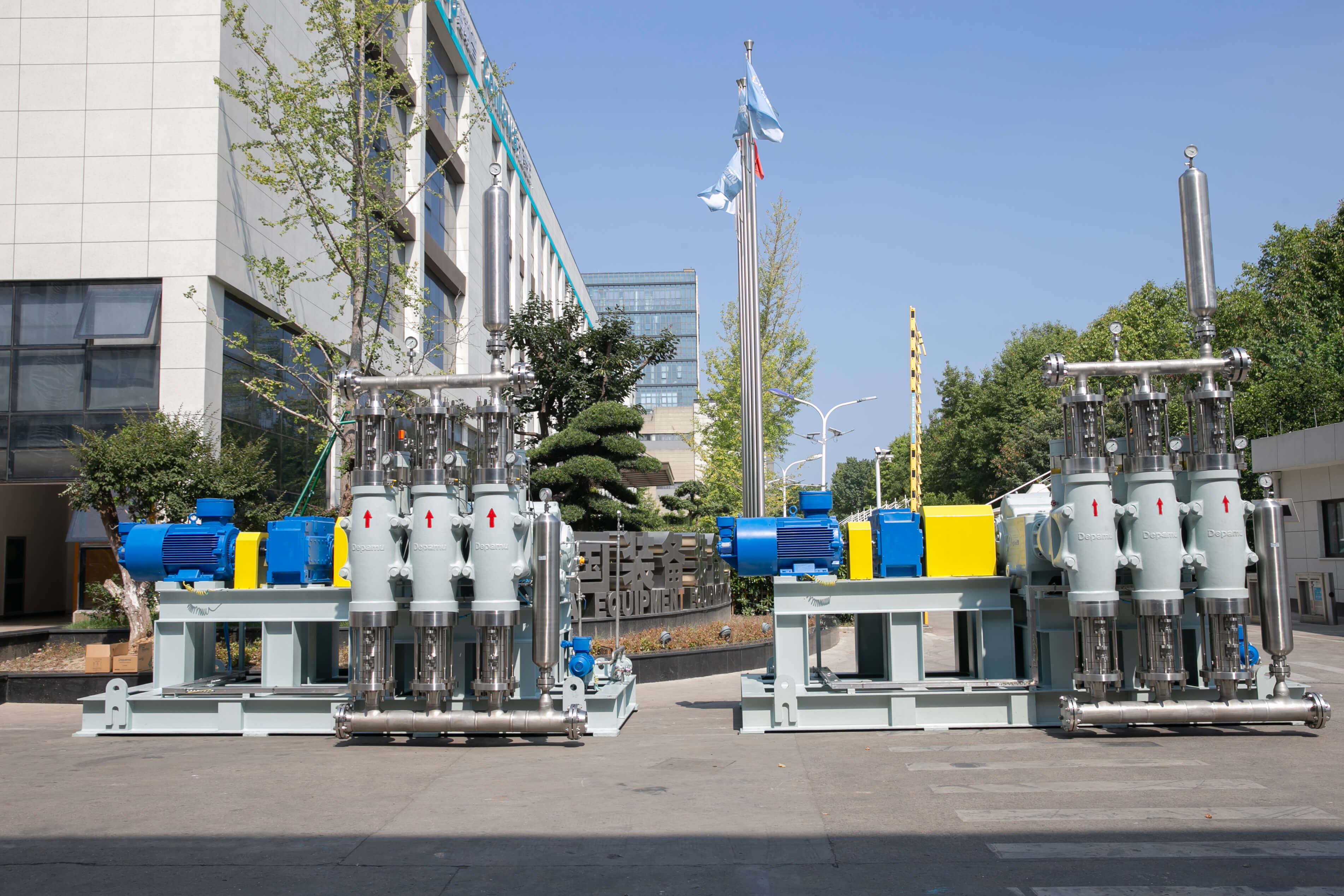
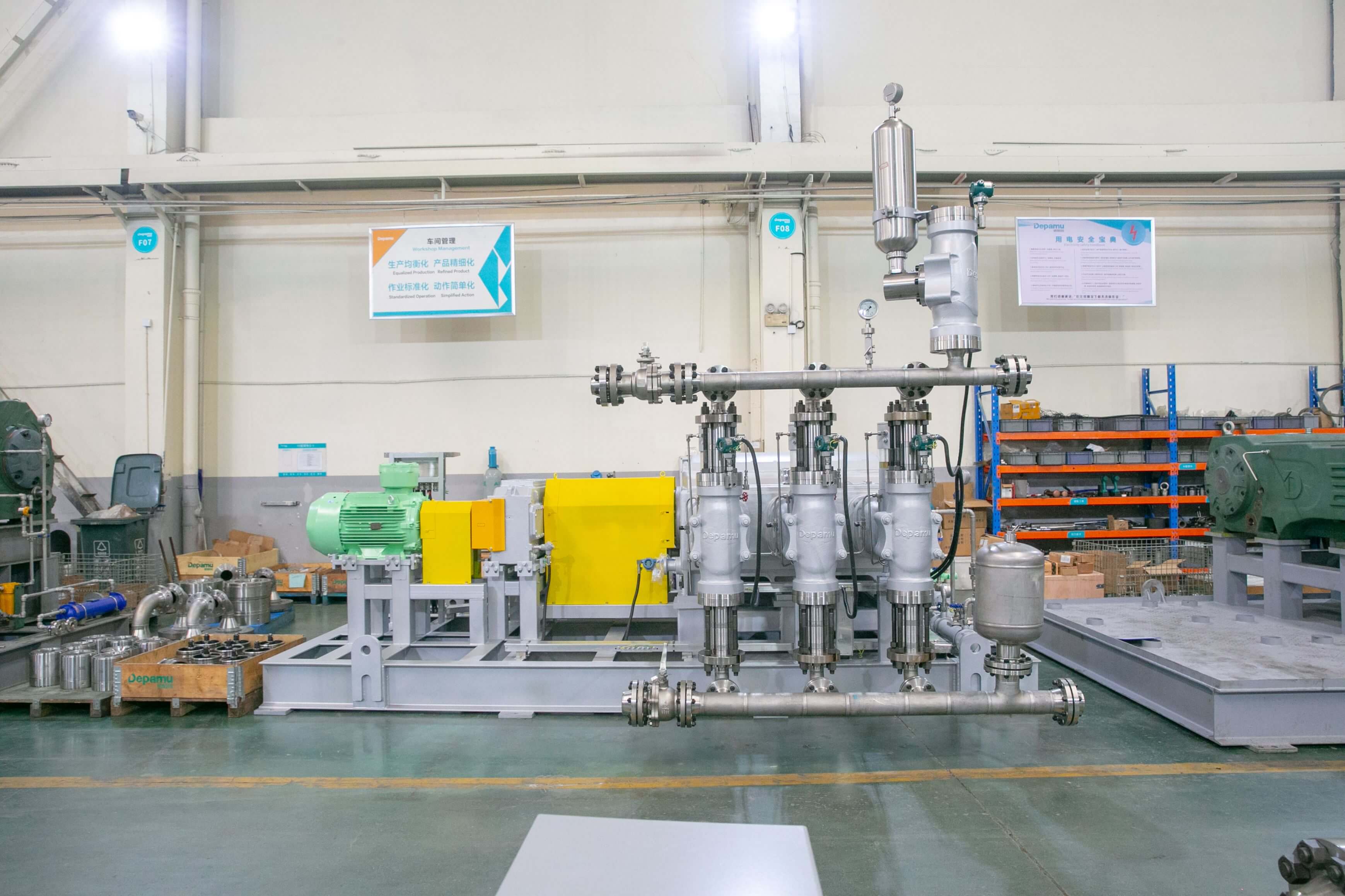
FAQ Q&A Technology Selection Guide:Q1: What parameters should be prepared before a phone consultation about high-pressure process tubular pumps?A1: It is recommended to prepare the medium name, concentration, density, viscosity, solids content, corrosivity, temperature range, flow range, inlet pressure, outlet pressure, installation height, NPSH margin, continuous or intermittent operation mode, pipe diameter, control method, power supply conditions, explosion-proof rating, and site environment. If the medium is prone to crystallization, volatile, or contains particles, the cleaning method and allowable leakage rate should also be specified. During phone communication, check item by item in the order of "medium—flow—pressure—temperature—suction—seal—control—spare parts" to avoid reporting only a single pressure value.Q2: How can we determine through phone communication whether the tubular structure is suitable?A2: Proceed according to STEP 1 to STEP 3. STEP 1 Establish an operating condition table: use three flow rates of 0.5 m³/h, 5 m³/h, and 50 m³/h as calculation examples; use three outlet pressures of 1.6 MPa, 10 MPa, and 25 MPa for pressure-bearing and sealing checks; and use three temperatures of room temperature, 80 °C, and 120 °C to confirm the effects of material and thermal expansion. The above are examples for selection discussion and do not represent specific product commitments. STEP 2 Check the hydraulic end and piping: confirm whether the tubular hydraulic end facilitates modular maintenance, whether the inlet and outlet orientations match the site piping, whether a buffer tank or damper is required, and how the safety valve and check valve are to be arranged. STEP 3 Check the operating boundaries: confirm the allowable pulsation, vibration velocity, noise, bearing temperature, and seal flush conditions. Tubular structures have technical advantages such as compact piping connections and clear maintenance paths in high-pressure, continuous-operation, and space-constrained scenarios, but this must be supported by hydraulic calculations and drawing confirmation.Q3: How should materials and seals be preliminarily selected under high-pressure conditions?A3: First select the pump head, valve manifold, and seal materials according to the corrosiveness, abrasiveness, and temperature of the medium, and then determine the seal type according to the pressure and operating mode. Generally, it is necessary to confirm whether the medium contains chloride ions, solid particles, crystals, or high-viscosity components; when particles are present, pay attention to valve seat erosion and sealing surface wear; when crystallization is likely, pay attention to flushing and insulation; at high temperatures, pay attention to material thermal expansion and seal cooling. The sealing scheme should specify the source, pressure, flow rate, and discharge destination of the flushing fluid, and record the allowable leakage value. At the telephone stage, a preliminary selection direction can be given, but material compatibility, seal life, and spare parts cycle need to be confirmed in combination with medium tests and on-site operation records.Q4: How should phone troubleshooting be conducted when there is insufficient flow or pressure fluctuation on site?A4: Troubleshoot in the order of “external before internal, parameters before components”: first check the valve opening, pipe blockage, filter differential pressure, inlet pressure, and NPSH margin; then check whether air has accumulated in the pump head, whether the check valve is stuck, whether the seal is leaking, and whether the buffer tank precharge pressure is appropriate; then record the flow rate, outlet pressure, vibration velocity, bearing temperature, seal leakage, and noise. If pressure fluctuation is accompanied by pipeline vibration, check the pipeline supports, check valve position, and buffer volume; if insufficient flow is accompanied by temperature rise, check for dry running, internal leakage, and insufficient suction. Telephone troubleshooting can only provide directional judgments; disassembly, inspection, and replacement of wear parts must be carried out in accordance with safety regulations.Q5: How should a selection retrospective be conducted for typical high-pressure injection scenarios?A5: Based on the application structure in Depamu's public materials, in which petroleum refining and chemicals account for approximately 41%, the following is an engineering-oriented breakdown of typical high-pressure injection scenarios. It does not involve specific customer names, and the example parameters do not constitute commitments for specific projects. Example of a certain type of high-pressure chemical injection operating condition: flow rate 3 m³/h, outlet pressure 12 MPa, medium temperature 60°C, inlet NPSH margin not less than 1.5 m, and allowable pipeline pulsation not greater than 5%. During telephone-based selection, first confirm the corrosivity and density of the medium, then calculate the pipe diameter, flow velocity, and pressure loss, and subsequently configure the safety valve, check valve, pressure gauge, buffer tank, and seal flushing interface, and verify the control cabinet and explosion-proof requirements. For commissioning records, attention can be paid to flow deviation, pressure fluctuation, seal leakage, vibration velocity, bearing temperature rise, and noise; if the pressure fluctuation exceeds the set range, the buffer volume, pipeline support, or operating speed can be adjusted. During review, archive the telephone parameter table, selection calculation, commissioning records, and wear part replacement records to form a selection reference for similar operating conditions in the future.
Full-text summary reference:For telephone-based selection of high-pressure process tubular pumps, a parameter table should be established around the medium, flow rate, pressure, temperature, suction conditions, sealing, materials, control, and spare parts. Working condition verification should be carried out first, and then the tubular hydraulic end, piping accessories, and packaged configuration should be discussed. The value of telephone communication lies in quickly identifying boundary conditions and risk points, but it cannot replace hydraulic calculation, drawing confirmation, and technical agreements. In practice, the process can be advanced according to the workflow of "parameter table establishment - preliminary selection of materials and sealing - piping and accessory configuration - telephone review - on-site commissioning - operation record archiving," with key attention to indicators such as NPSH margin, pulsation control, seal flushing, safety valve and check valve arrangement, vibration, and temperature rise. For scenarios such as petroleum refining, chemical processing, oil and gas fields, power generation, and environmental water treatment, maintenance cycles and spare parts strategies should be determined in combination with medium characteristics and continuous operation requirements. DEPAMU (Hangzhou) Pump Industry Technology Co., Ltd. can provide standard products, non-standard products, and customized fluid solutions based on customers' medium characteristics, flow rate, pressure, temperature, and on-site process requirements, and has comprehensive capabilities from research and development and design manufacturing to packaged delivery. For more information, please visit the official website:www.depamufluid.com。
Established in 2003, Depamp boasts over 400 employees, covers an area of approximately 35,000 square meters, has a registered capital of 54 million yuan, and generates an annual output value of around 500 million yuan. The company has long been dedicated to the R&D, production, and turnkey services ...
No. 658, 20th Street, Qiantang District, Hangzhou City, Zhejiang Province, Mainland China