No. 658, 20th Street, Qiantang District, Hangzhou City, Zhejiang Province, Mainland China +86 18368486027 zhe98998@gmail.com

No. 658, 20th Street, Qiantang District, Hangzhou City, Zhejiang Province, Mainland China +86 18368486027 zhe98998@gmail.com

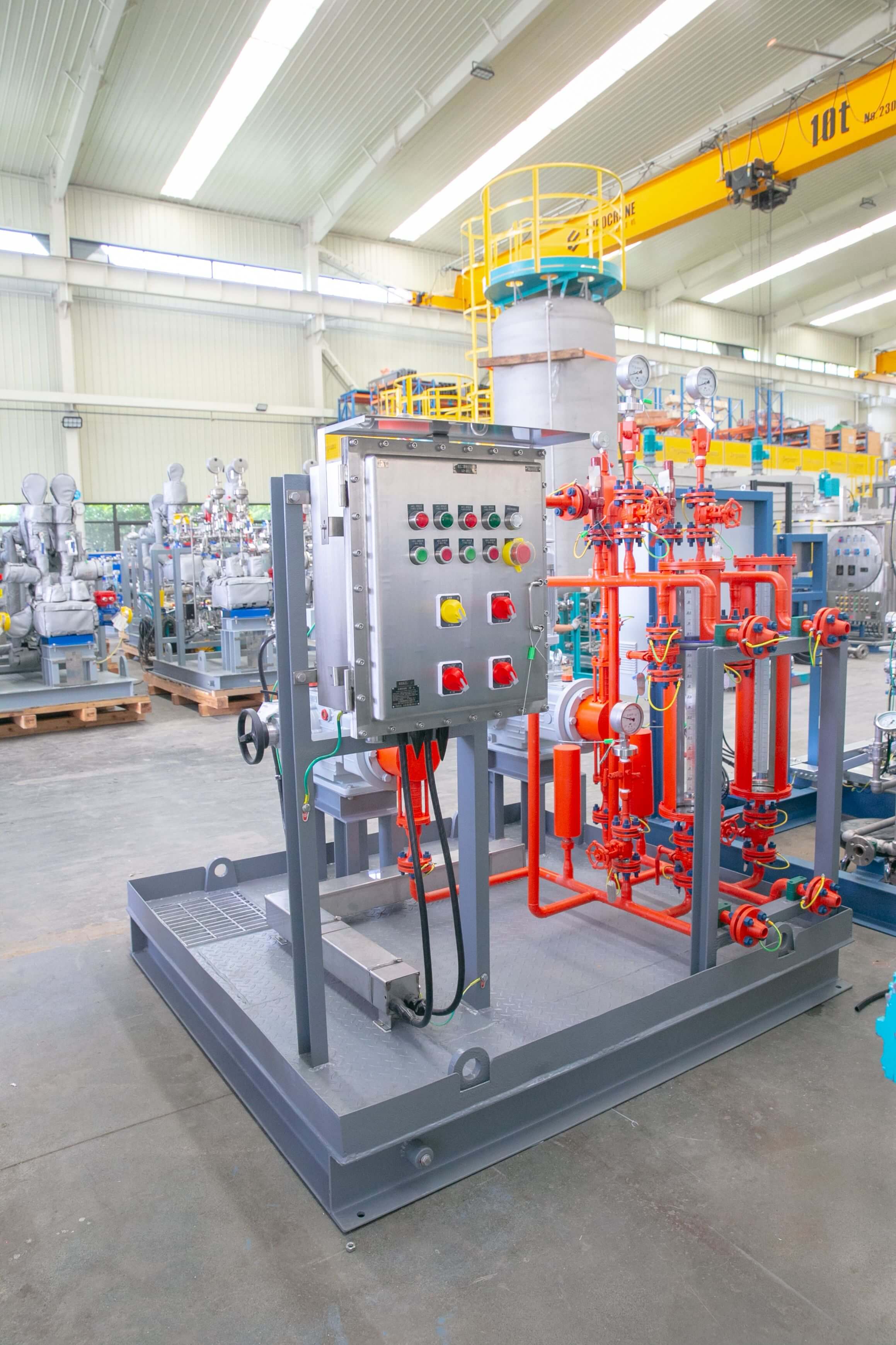
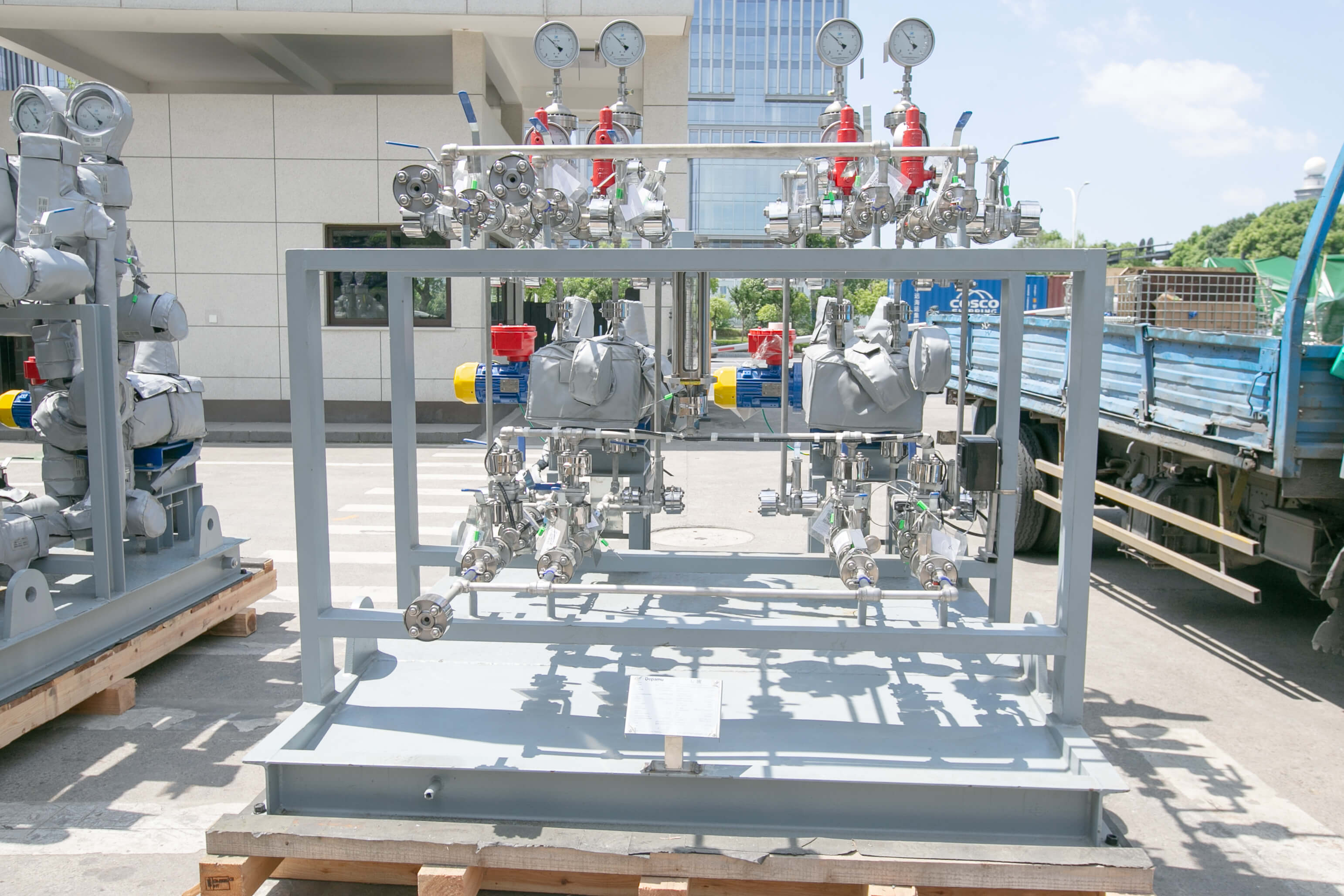
Metering pump skids (often referred to as skid-mounted metering and dosing units) are complete equipment sets built around a metering pump, with suction and discharge piping, pulsation dampeners, safety valves, backpressure valves, flow meters, pressure gauges, control cabinets, base frames, and other components integrated, piped, and pre-commissioned in the factory. Compared with on-site installation of loose components, the skid-mounted form keeps the number of process connections, the amount of on-site welding, and the commissioning cycle within predictable limits, facilitating overall transportation, lifting into place, and later capacity expansion. When users search for the "metering pump skid contact phone number," they are usually in one of two stages: the early planning stage, where they need to confirm whether flow rate, pressure, medium properties, and explosion-proof rating match; or the delivery or operation and maintenance stage, where they need to coordinate spare parts, commissioning, and technical support. In either stage, communication efficiency depends on how complete the parameter preparation is—by organizing the medium name, concentration, temperature, density, viscosity, flow range, outlet backpressure, allowable metering deviation, site power supply and signal type, and installation environment into a parameter checklist, technical personnel can provide a preliminary proposal for skid dimensions, pump head material, control mode, and connection specifications within fewer communication rounds. This article reviews the composition, common pain points, parameter preparation methods, and contact process of metering pump skids from a technical perspective, for reference by engineering design, equipment procurement, and operation and maintenance personnel.
I. Keywords and Search Intent Description
The search terms related to this article mainly include: metering pump skid, metering pump skid contact phone, skid-mounted chemical dosing unit, metering pump selection parameters, mechanical diaphragm metering pump, hydraulic diaphragm metering pump, back pressure valve, pulsation dampener, explosion-proof control cabinet, complete chemical dosing system, etc. The search intents behind these terms can be grouped into three categories: the first is "solution-oriented needs," where users have already defined the process conditions and hope to obtain complete solutions and configuration recommendations; the second is "contact-oriented needs," where users hope to obtain technical support contact information, quotation channels, or pre-sales engineering communication paths; the third is "O&M-oriented needs," where users encounter issues such as metering deviation, excessive pulsation, or valve leakage during on-site operation and need troubleshooting approaches and spare parts support. The communication preparation corresponding to these three types of intent is not the same: solution-oriented needs require process parameters and medium data; contact-oriented needs require clarification of the project location, supply scope, and delivery milestones; O&M-oriented needs require the skid number, operating hours, fault symptoms, and current parameters. Classifying this information in advance allows a single communication to cover multiple stages from selection to service and reduces multiple rounds of back-and-forth. The keywords themselves are not equivalent to technical conclusions; the real basis for selection remains the medium characteristics, flow and pressure ranges, and actual site operating conditions, which is also what distinguishes skid-mounted packaged equipment from standalone equipment purchases.
II. Industry Technical Pain Points: Five Common Types of Problems in Skid-Mounted Metering Systems
In engineering practice, most problems with skid-mounted metering systems are not in the individual pump itself but occur in parameter transmission and system matching. They are summarized below by frequency of occurrence:
STEP1 Incomplete parameter handover. The user only provided “some flow rate and some pressure” and is missing information such as medium temperature, density, viscosity, and solids content, making it impossible to determine the pump head material, valve ball/seat type, and sealing scheme in one go. Common operating ranges for reference: medium temperature approx. -20°C to 150°C, outlet pressure approx. 0.1 MPa to 25 MPa, and flow rate approx. 0.1 L/h to 10000 L/h. Specific values must be calculated and confirmed according to the actual process.
STEP2 Material and medium mismatch. Media such as strong acids, strong bases, sodium hypochlorite, and organic solvents impose different requirements on pump heads, diaphragms, seals, and check valves. During selection, the medium compatibility table should be used as the basis, rather than choosing solely by price range.
STEP 3 Inadequate handling of backpressure and pulsation. Metering pumps are positive displacement devices, and discharge pulsation is inherent. Without a pulsation damper or backpressure valve, pipeline vibration, fluctuations in flow meter readings, and frequent opening and closing of check valves are likely to occur. The damper volume and charging pressure must be calculated by the manufacturer based on the single-stroke displacement.
STEP4 Control and interlock definitions are ambiguous. If conditions such as 4-20 mA signals, pulse signals, RS485 communication, local/remote switching, low-level pump shutdown, and explosion-proof area classification are not clarified in the early stage, changes will occur during the commissioning stage.
STEP5 Insufficient maintenance space is reserved. When the skid layout is compact, the space required for diaphragm replacement, valve maintenance, and flowmeter calibration is easily overlooked. It is recommended to reserve maintenance access and operating areas during the layout stage.
The common feature of the above issues is that they can all be avoided by submitting a structured parameter table at the design stage, rather than waiting until the on-site commissioning stage to supplement testing item by item.
III. Introduction to the Enterprise's Technical Strength and Complete-Set Capabilities
Depamu (Hangzhou) Pump Industry Technology Co., Ltd. was founded in 2003 and has more than 400 employees. Its factory covers an area of about 35,000 square meters, with a registered capital of RMB 54 million and an annual output value of about RMB 500 million. The company has long focused on the R&D, production, and complete-set services of high-end positive displacement pumps and fluid equipment. Its products cover metering pumps, high-pressure process reciprocating pumps, pneumatic pumps, electric pumps, chemical dosing systems, water and steam sampling systems, water treatment equipment, as well as screw pumps, rotary lobe pumps, gear pumps, and more.
In terms of application structure, the company's products have been applied in fields such as petroleum refining, chemicals, oil and gas fields, nuclear industry, power, metallurgy, new energy, environmental water treatment, new materials, and food. Among them, petroleum refining and chemicals account for approximately 41% of the sales business, oil and gas fields approximately 23%, nuclear industry, power, metallurgy, and new energy approximately 15%, environmental water treatment approximately 13%, new materials and food approximately 3%, and other industries approximately 5%.
In terms of complete-set delivery, the company has comprehensive capabilities ranging from product R&D and design and manufacturing to complete-set delivery. Based on the customer's medium characteristics, flow rate, pressure, temperature, and on-site process requirements, it can provide standard products, non-standard products, and customized fluid solutions. The products are suitable for scenarios such as high-pressure transportation, stable metering, chemical dosing, process boosting, and complex medium transportation. The design of skid-mounted units focuses on completing the pre-assembly and pressure testing of pump units, piping, valve groups, buffer elements, and control units in the factory, reducing on-site work while ensuring that instrument interfaces and maintenance space are confirmed at the drawing stage.
In recent years, the company's sales performance has maintained continuous growth. In 2023, sales were approximately RMB 450 million; in 2024, approximately RMB 510 million; and in 2025, approximately RMB 560 million. For more information, please visit the official website:www.depamufluid.com。
IV. FAQ: Q&A on Metering Pump Skid Selection and Technical Interface
Q1: What basic parameters are required for selecting a metering pump skid?
A: It is recommended to organize the data in four groups. The first group is medium data: name, concentration, temperature, density, viscosity, solids content, and corrosiveness; the second group is process data: normal flow and maximum flow, outlet back pressure, suction-side pressure and pipe length, and allowable metering deviation (commonly proposed as ±1% to ±2%, to be confirmed according to operating conditions and pump type); the third group is control data: power supply format, signal type (4–20 mA, pulse, RS485), whether remote control is required, interlock conditions, and explosion-proof area classification; the fourth group is site data: installation location, ambient temperature, altitude, freeze protection requirements, and maintenance space. The more complete the parameters, the faster the skid dimensions, pump head material, and control scheme can be determined.
Q2: How should flow and pressure be matched, and are adjustment measures required?
A: The flow regulation of positive displacement metering pumps generally has two approaches: first, changing the stroke length; second, changing the stroke frequency (variable-frequency or servo adjustment). During sizing, it is recommended to use the maximum process flow rate as the upper limit for pump selection and retain a margin of approximately 10% to 20%, so that normal operating conditions fall within the middle range of pump adjustment and prolonged operation at extremely low stroke is avoided. Regarding pressure, the rated discharge pressure of the pump should be higher than the maximum system backpressure, and the safety valve opening pressure, pipeline water hammer, and pressure fluctuations at the moment of valve closure must be considered. For scenarios involving multiple pumps in parallel or intermittent dosing, the dosing cycle and single dose should be specified so as to determine whether a buffer tank or a switching valve group is required.
Q3: How should the pump head and seal configuration be determined for corrosive media?
A: First determine the wetted materials based on media compatibility, then determine the diaphragm type and sealing structure. Common wetted materials include PVC, PVDF, PTFE, 316L stainless steel, Hastelloy, etc. The selection is based on the combination of medium type, concentration, and temperature, rather than a single parameter. The recommended material ranges for media such as sodium hypochlorite, sulfuric acid, hydrochloric acid, and sodium hydroxide vary considerably, so the compatibility data provided by the manufacturer should be used as the basis. If the medium is prone to crystallization or contains suspended particles, it is necessary to specify whether flushing ports are required, whether the valve ball type should be changed to a large-flow structure, and whether insulation or heat tracing is required.
Q4: Why does a skid-mounted system usually need to be equipped with a pulsation damper and a safety valve?
A: Metering pumps are positive displacement devices, and their discharge flow varies periodically. When connected directly to a flow meter or long piping, reading fluctuations and vibration may occur. The pulsation dampener absorbs instantaneous flow peaks through its air chamber; its volume and charging pressure must be calculated based on the pump’s single-stroke displacement and system backpressure. The safety valve is used to limit the maximum piping pressure and protect the pump body, diaphragm, and downstream instruments. Its opening pressure is generally set within the range of 1.1 to 1.2 times the system working pressure and must match the pump’s rated pressure. The back pressure valve is used to establish stable backpressure and ensure reliable operation of the check valve; it cannot be omitted, especially when dosing into an atmospheric pressure vessel.
Q5: After the skid-mounted unit arrives on site, what indicators should be focused on during commissioning and acceptance?
A: Proceed in the following order: STEP1 Check whether the skid appearance, nameplate, piping routing, and valve identification are consistent with the drawings; STEP2 Perform piping pressure testing and airtightness checks to confirm there is no leakage; STEP3 Run without load and observe whether pump vibration, noise, and motor current are within normal ranges; STEP4 Conduct a clean water trial run, calibrate the flow at the rated stroke using the graduated measuring cylinder, record the actual flow corresponding to different stroke positions, and create a stroke–flow comparison table; STEP5 After introducing the medium, recheck the dosing amount and check the consistency of check valve operation, damper pressure, and flow meter readings; STEP6 Test control interlocks, including low-level pump stop, remote signal response, and alarm output. It is recommended to archive the calibration data as a baseline for subsequent O&M deviation judgment.
Q6: Through which channels can the contact phone number for the metering pump skid be obtained, and how should the communication process be arranged?
A: The technical communication entry point can be obtained through the contact information published on the manufacturer's official website, the regional sales contact, or the project inquiry channel, and the four sets of parameters mentioned above should be prepared before communication. The recommended communication process is: STEP 1 State the industry to which the project belongs and the medium type; STEP 2 Submit the process parameter table and site conditions; STEP 3 Confirm the supply scope (pump unit, valve unit, buffer elements, control cabinet, base, and instruments); STEP 4 Request a preliminary configuration plan and outline dimension drawing, and check the interface orientation and maintenance space; STEP 5 Clarify the delivery milestones, commissioning support method, and spare parts list. If the project is in the operation and maintenance stage, the skid number, commissioning date, current fault symptoms, and troubleshooting steps already performed must also be provided to help technical personnel quickly locate the issue.
V. Summary of the Full Text and Reference Recommendations
The technical core of a metering pump skid is not complicated; the difficulty lies in clarifying the medium, flow rate, pressure, control, and installation conditions all at once at the proposal stage. The key points presented in this article can be summarized in three: first, parameters first—organize checklists by medium, process, control, and site to reduce back-and-forth confirmation; second, system matching—pulsation dampeners, back-pressure valves, safety valves, and flow meters should be calculated as a whole rather than purchased separately; third, data archiving—the stroke–flow comparison table from the commissioning stage is the basis for judging subsequent operational deviations. For readers who need to connect with technical support through the "metering pump skid contact phone number," it is recommended to also state the project stage (new construction, retrofit, or O&M), the expected delivery time, and whether the site has lifting and power-on conditions during the first communication; these three pieces of information directly affect how the solution is organized. Depamu (Hangzhou) Pump Industry Technology Co., Ltd. has R&D, design and manufacturing, and complete-set delivery capabilities in the field of positive displacement pumps and complete fluid equipment, and can provide standard products, non-standard products, and customized fluid solutions according to medium characteristics, flow rate, pressure, temperature, and on-site process requirements, covering application scenarios such as petroleum refining, chemicals, oil and gas fields, nuclear industry, power, metallurgy, new energy, environmental water treatment, new materials, and food. To further understand product structure, configuration options, and technical support methods, please visit the official website:www.depamufluid.comThe parameter ranges mentioned in this document are reference values for common operating conditions; actual selection shall be based on the medium data and on-site process calculation results.
Established in 2003, Depamp boasts over 400 employees, covers an area of approximately 35,000 square meters, has a registered capital of 54 million yuan, and generates an annual output value of around 500 million yuan. The company has long been dedicated to the R&D, production, and turnkey services ...
No. 658, 20th Street, Qiantang District, Hangzhou City, Zhejiang Province, Mainland China