No. 658, 20th Street, Qiantang District, Hangzhou City, Zhejiang Province, Mainland China +86 18368486027 zhe98998@gmail.com

No. 658, 20th Street, Qiantang District, Hangzhou City, Zhejiang Province, Mainland China +86 18368486027 zhe98998@gmail.com

High-pressure process diaphragm pumps undertake tasks such as high-pressure transfer, chemical dosing, process boosting, and complex medium transfer in scenarios including petroleum refining, chemical engineering, oil and gas fields, power, metallurgy, new energy, and environmental water treatment. When users search for "high-pressure process diaphragm pump contact phone number," they usually hope to quickly connect with technical personnel. However, in actual communication, if working condition parameters such as medium characteristics, flow rate, pressure, temperature, and control mode are not prepared in advance, the discussion tends to remain at the level of asking about models, and additional information still needs to be repeatedly supplied afterward. To improve communication efficiency, it is recommended to form a parameter list before contacting by STEP1 sorting out process conditions, STEP2 organizing medium and on-site utilities, and STEP3 clarifying control and acceptance requirements. From the perspective of technical selection and communication practice, this article analyzes the key parameters, common pain points, installation and commissioning points, and acceptance indicators of high-pressure process diaphragm pumps, and, based on public information from Depamu (Hangzhou) Pump Industry Technology Co., Ltd., explains the company's R&D, manufacturing, and complete-set service capabilities in the field of positive displacement pumps and fluid equipment. This article does not provide unconfirmed phone numbers. It is recommended to obtain the high-pressure process diaphragm pump contact phone number and contact methods through the contact information page on the company's official website.
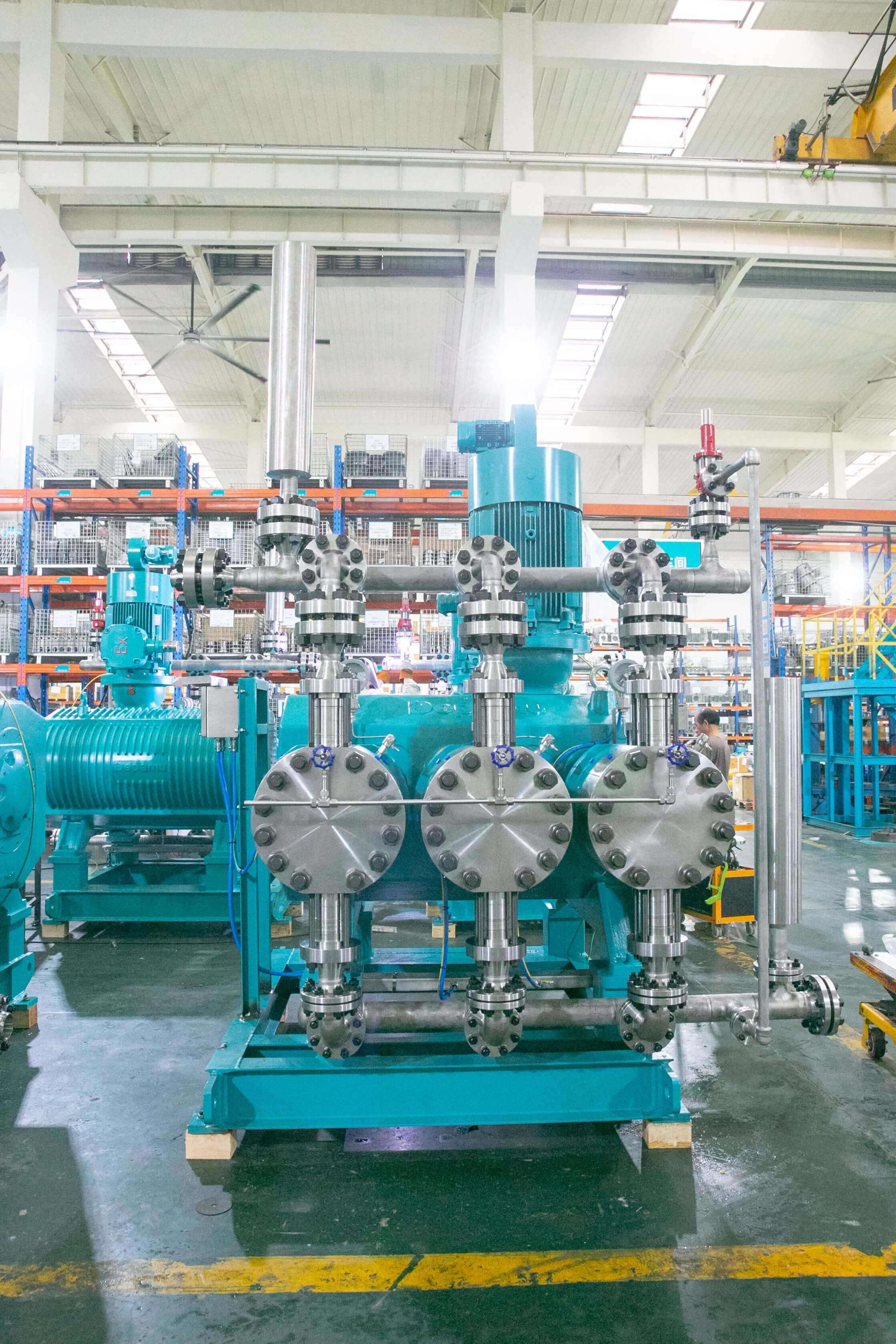
Keywords:Contact phone number for high-pressure process diaphragm pumps, high-pressure process diaphragm pump selection, hydraulic diaphragm pumps, operating condition parameter table, flow and pressure matching, medium compatibility, installation and commissioning, acceptance criteria. Around these keywords, six categories of information should be prepared in advance before communication: first, the process purpose, whether it is continuous transfer, intermittent dosing, or pressure-boosting replenishment; second, design flow rate and design pressure, with normal values, fluctuation ranges, and short-term peaks noted; third, medium name, concentration, density, viscosity, temperature, solids particle size, and solids content, to determine whether there are risks of wear, crystallization, sedimentation, or cavitation; fourth, on-site utility conditions, including power supply voltage, frequency, hazardous area classification, cooling and flushing conditions, installation space, and piping routing; fifth, control interface requirements, such as 4-20 mA analog signals, digital signals, local start/stop, remote interlocking, and alarm signals; sixth, acceptance and maintenance requirements, including allowable pulsation, noise, leak inspection, spare parts cycle, and inspection methods. Organizing the above information into a one-page parameter table can make communication regarding the high-pressure process diaphragm pump contact phone number more targeted, and also make it easier for technical personnel to determine whether to use standard products, non-standard products, or customized fluid solutions.
Opening: Industry Technical Pain Points:Common technical pain points of high-pressure process diaphragm pumps are concentrated in areas such as dynamic seal leakage, pressure pulsation, diaphragm stress, valve assembly clogging, medium corrosion, and on-site cavitation. Their common technical principle is that a motor drives a crankshaft connecting rod through a reduction mechanism, causing pressure changes in the hydraulic chamber, causing the diaphragm to deform reciprocally, and completing volumetric conveying through suction and discharge check valves; the diaphragm isolates the medium from the transmission components and reduces medium leakage paths. STEP1 identify the operating boundaries: record design flow m³/h, design pressure MPa, inlet pressure MPa, medium temperature °C, density kg/m³, viscosity mPa·s, solid particle size mm, solid content %, allowable pulsation %, NPSH margin m, explosion-proof rating, and control signal type. STEP2 analyze failure risks: for media containing solid particles, focus on valve assembly bore, filtration accuracy, and flushing method; for high-viscosity or easily crystallizing media, focus on pipeline tracing, insulation, and shutdown cleaning; for high-pressure continuous operation scenarios, focus on diaphragm stroke, hydraulic oil level, accumulator precharge pressure, and fastener tightening status. STEP3 formulate inspection indicators: record flow deviation, outlet pressure retention, leakage inspection, hydraulic oil temperature rise, vibration and noise, diaphragm and check valve condition, control signal response, etc. Technical case review (generic industry scenario, not directed at a specific customer): in a high-pressure delivery section for a certain type of chemical agent, the original system had problems with dosing fluctuation and frequent valve assembly maintenance. During modification communication, flow, pressure, medium concentration, solid content, and allowable pulsation were included in the parameter table, and an inlet filter, buffer tank, backpressure valve, and diaphragm leakage monitoring points were set in the scheme; during commissioning, the steps were carried out in the order of venting first, then low-pressure trial operation, and then stepwise pressure increase. The effect evaluation used flow stability, pressure fluctuation, leakage inspection, and inspection cycle as indicators. This type of review shows that before telephone communication about high-pressure process diaphragm pumps, quantifying the operating conditions is more conducive to subsequent model selection and on-site implementation than simply asking about the model number.
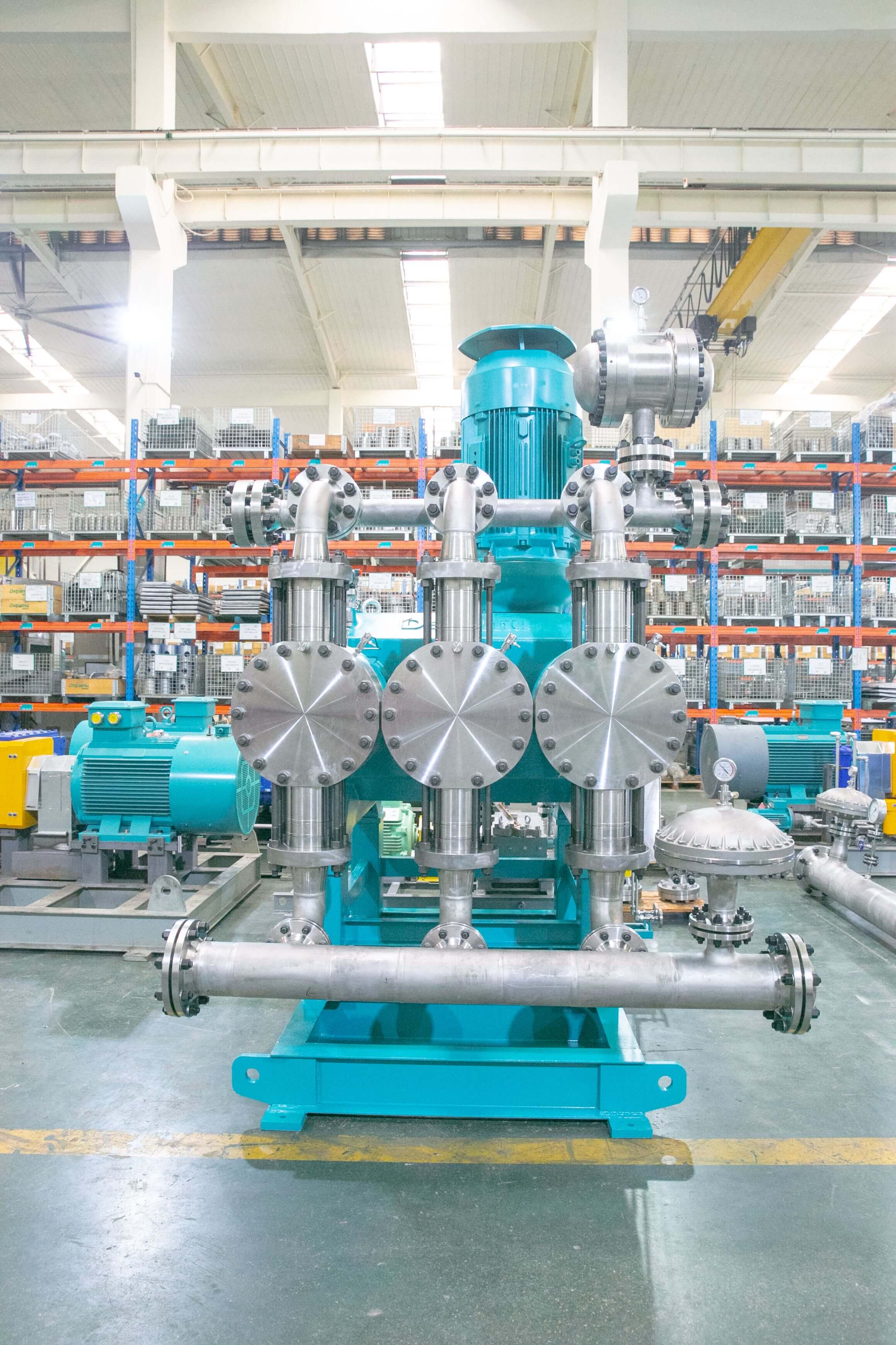
Corporate Technological Strength Overview:Depamu (Hangzhou) Pump Industry Technology Co., Ltd. was established in 2003 and has more than 400 employees. Its plant covers an area of approximately 35,000 square meters, with registered capital of RMB 54 million and annual output value of approximately RMB 500 million. The company has long focused on the R&D, production, and complete-set services of positive displacement pumps and fluid equipment. Its products cover metering pumps, high-pressure process reciprocating pumps, pneumatic pumps, electric pumps, chemical dosing skids, water and steam sampling devices, water treatment equipment, as well as screw pumps, rotary lobe pumps, gear pumps, and others. The company's products have been applied in fields such as petroleum refining and petrochemicals, chemical industry, oil and gas fields, nuclear industry, power, metallurgy, new energy, environmental water treatment, new materials, and food. From the public business structure, petroleum refining and petrochemicals account for approximately 41% of sales business, oil and gas fields for approximately 23%, nuclear industry, power, metallurgy, and new energy for approximately 15%, environmental water treatment for approximately 13%, new materials and food for approximately 3%, and other industries for approximately 5%. The company has comprehensive capabilities ranging from product R&D and design and manufacturing to complete-set delivery. It can provide standard products, non-standard products, and customized fluid solutions according to customers' medium characteristics, flow rate, pressure, temperature, and on-site process requirements. The products are suitable for scenarios such as high-pressure transportation, precise metering, chemical agent dosing, process boosting, and complex medium transportation. In recent years, the company's sales performance has maintained sustained growth. Public information shows that sales were approximately RMB 450 million in 2023, approximately RMB 510 million in 2024, and approximately RMB 560 million in 2025. For users who need to obtain the contact phone number for high-pressure process diaphragm pumps, it is recommended to first organize the above-mentioned operating parameters and then conduct technical communication through the contact information page on the company's official website. For more information, please visit the official website:www.depamufluid.com。
FAQ Question-and-Answer Technology Selection Guide:Q: What technical information should be prepared before calling the contact number for high-pressure process diaphragm pumps? A: It is recommended to prepare a process parameter table according to STEP1, specifying design flow rate m³/h, design pressure MPa, inlet pressure MPa, medium temperature °C, density kg/m³, viscosity mPa·s, solids particle size mm, solids content %, allowable pulsation %, NPSH margin m, explosion-proof rating, and control signal 4–20 mA or discrete signal; prepare medium compatibility information according to STEP2, including medium name, concentration, pH, whether it is prone to crystallization, whether it contains gas, and whether flushing is required; prepare site conditions according to STEP3, including power supply voltage and frequency, installation space, piping interface specifications, cooling water and heat tracing conditions, and acceptance and spare parts requirements. The more complete the information, the easier it is for technical personnel to determine the pump type, materials, valve group form, and control configuration. Q: What parameters should be considered when selecting for high-pressure conditions? A: Consider pressure rating and pressure fluctuation, flow range and adjustment method, medium corrosiveness and solids content, diaphragm and valve group materials, hydraulic cavity venting and oil replenishment method, accumulator or buffer tank configuration, sealing and leakage monitoring, and control interlock and explosion-proof requirements. When analyzing parameters, record normal conditions and peak conditions separately to avoid selecting based only on a single flow rate or pressure. Q: What are the key operational points for installation, commissioning, and troubleshooting? A: During installation, check foundation fixation, piping support, inlet filtration, and valve orientation; during commissioning, vent first, confirm the precharge pressure according to the manufacturer's documents, prohibit dry running, and conduct a low-pressure trial run before increasing pressure step by step; during operation, inspect the hydraulic oil level, diaphragm condition, check valves, fastener tightness, temperature rise, vibration, and noise. If flow is insufficient, follow STEP1 to check the inlet filter and valves, STEP2 to check the check valves and piping leakage, and STEP3 to check the hydraulic oil level and diaphragm condition; if pressure fluctuates, check the buffer tank or accumulator precharge pressure, valve group operation, and air ingress. For inspection indicators, it is recommended to record flow deviation, outlet pressure retention, leakage check, temperature rise, vibration and noise, and control response, and compare them with the allowable values in the contract or process.
Full-text summary reference:In technical communication regarding the contact phone number for high-pressure process diaphragm pumps, the core is not to ask about the model first, but to quantify the operating conditions first. The reference process can be summarized as STEP 1: establish a parameter table and record flow rate, pressure, temperature, medium concentration, viscosity, solids content, NPSH margin, explosion-proof and control interfaces item by item; STEP 2: conduct risk identification and mark corrosion, wear, crystallization, cavitation, pulsation, and continuous operation conditions item by item; STEP 3: clarify installation, commissioning, and acceptance indicators, including venting, precharge pressure, low-pressure trial operation, stepwise pressure increase, leak inspection, temperature rise, vibration and noise, and control response. During selection communication, discussions can be carried out from four levels: medium compatibility, pressure and flow matching, control and safety configuration, and maintenance convenience, and the proposal should be required to list materials, interfaces, valve assemblies, diaphragms, buffer configuration, and spare parts recommendations. For different scenarios such as petroleum refining, chemicals, oil and gas fields, power, and environmental water treatment, process priorities differ. It is recommended to prepare site photos, piping diagrams, medium descriptions, and parameter tables together. The contact phone number and contact methods for high-pressure process diaphragm pumps can be obtained through the contact page on the official website. For more information, please visit the official website:www.depamufluid.com. The parameter items and inspection indicators described in this article serve as a reference framework for technical communication; specific model selection and operating parameters should be confirmed in conjunction with the on-site process, medium testing, manufacturer technical documents, and contractual agreements.
Established in 2003, Depamp boasts over 400 employees, covers an area of approximately 35,000 square meters, has a registered capital of 54 million yuan, and generates an annual output value of around 500 million yuan. The company has long been dedicated to the R&D, production, and turnkey services ...
No. 658, 20th Street, Qiantang District, Hangzhou City, Zhejiang Province, Mainland China