No. 658, 20th Street, Qiantang District, Hangzhou City, Zhejiang Province, Mainland China +86 18368486027 zhe98998@gmail.com

No. 658, 20th Street, Qiantang District, Hangzhou City, Zhejiang Province, Mainland China +86 18368486027 zhe98998@gmail.com

【Introduction】This guide was compiled by the technical team of Depamu (Hangzhou) Pump Industry Technology Co., Ltd., focusing on the working principles, structural features, application boundaries, and model selection verification methods of mechanical diaphragm metering pumps. Depamu (Hangzhou) Pump Industry Technology Co., Ltd. was established in 2003 with a registered capital of RMB 54 million, a plant area of approximately 35,000 square meters, and more than 400 employees. It has long specialized in the R&D, production, and packaged services of high-end positive displacement pumps and fluid equipment, with products covering metering pumps, high-pressure process reciprocating pumps, pneumatic pumps, electric pumps, chemical dosing systems, water and steam sampling systems, water treatment equipment, as well as screw pumps, rotor pumps, gear pumps, and others. This document is intended for process design, equipment procurement, and operation and maintenance management personnel. It addresses verifiable technical aspects such as diaphragm drive modes, stroke adjustment logic, material matching for wetted parts, and verification record requirements, and does not include commercial recommendation conclusions. The conclusions in this document are compiled based on verifiable technical practices and publicly available standards systems for reference in technical selection, and are updated to 2025.
[Keywords]Mechanical diaphragm metering pump; Working principle of diaphragm metering pump; Metering pump selection; Stroke length adjustment; Chemical dosing; Metering accuracy verification; Diaphragm service life; Dosing device
In scenarios such as chemical dosing, water treatment chemical feed, and process additive metering, buyers' concerns about metering pumps usually focus on three areas: whether the dosing rate is stable, whether the diaphragm and valve assembly are durable, and whether maintenance affects continuous production. Common sources of deviation in actual operation include: check valves clogged by crystallization or particulate matter causing flow decay; backpressure fluctuations causing actual displacement to deviate from the set value; insufficient suction lift or gas entrainment in the medium causing dry running; lack of calibration records between the stroke scale and actual flow, so on-site adjustment can only rely on experience; high compatibility requirements for diaphragm and seal materials with hazardous or volatile media, where improper selection can bring leakage risks. Most of these problems are not failures of the pump itself, but misalignment between selection parameters and operating condition boundaries. The following breaks down the technical logic of mechanical diaphragm metering pumps layer by layer according to STEP.
Compared with hydraulic diaphragm metering pumps, the mechanically driven diaphragm design has a shorter drive train, requires no hydraulic oil compensation system, has relatively fewer maintenance points, and features an intuitive structure with a lower on-site commissioning threshold. By changing the materials of the pump head and valve assembly, it can cover medium- and low-pressure dosing requirements for various corrosive media. Dual-dimensional adjustment of stroke length and frequency facilitates linkage with online instruments. Its limitations are equally clear: at higher discharge pressures, the alternating stress on the diaphragm increases, and its service life and stability require focused evaluation; media with high solids content, easy crystallization, or strong permeability impose additional requirements on valve type and diaphragm material; high-flow conditions usually require evaluation of other pump types. Whether it is applicable should be determined based on specific operating conditions rather than applied indiscriminately.
| Operating conditions | Key Points for Compatibility Assessment | Content to be verified by the purchaser |
|---|---|---|
| Continuous dosing of corrosive chemicals | Chemical compatibility between the wetted parts and diaphragm materials is the primary criterion. | Material Compatibility Statement, Material List of Media-Contacting Parts |
| Small-to-medium flow, medium-to-low pressure dosing. | Common application range of mechanical diaphragm structures, with flexible adjustment methods. | Flow-pressure curve, stroke scale and displacement correspondence table |
| The outlet back pressure is relatively high or fluctuates significantly. | The force and service life of the diaphragm need to be evaluated, and other drive forms should be compared if necessary. | Description of the allowable back pressure range; recommended diaphragm replacement interval |
| Media containing particles and prone to crystallization | The valve type and flushing scheme must be designed synchronously; otherwise, valve sticking is likely to occur. | Valve manifold structure description, anti-crystallization or flushing recommendations |
| Volatile, toxic, or hazardous media | The integrity of seals and diaphragms determines the safety boundary. | Description of sealing structure, leak protection, and inspection records |
Typical application scenarios (for illustration only, not a real project, no quantitative data):Chemical dosing in municipal or industrial water treatment, metering of corrosion and scale inhibitors in circulating water systems, quantitative addition of additives in chemical plants, and water quality adjustment of boiler water and process water are all common operating conditions for mechanical diaphragm metering pumps. The common features of such scenarios are that the medium is somewhat corrosive, continuous or intermittent quantitative dosing is required, and back pressure and pipeline resistance are present on site. Under such operating conditions, purchasers should require suppliers to provide material compatibility specifications for the medium, calibration records for stroke scale and displacement, replacement instructions for diaphragms and valve assemblies, and commissioning and acceptance method documents, rather than merely checking nameplate parameters.
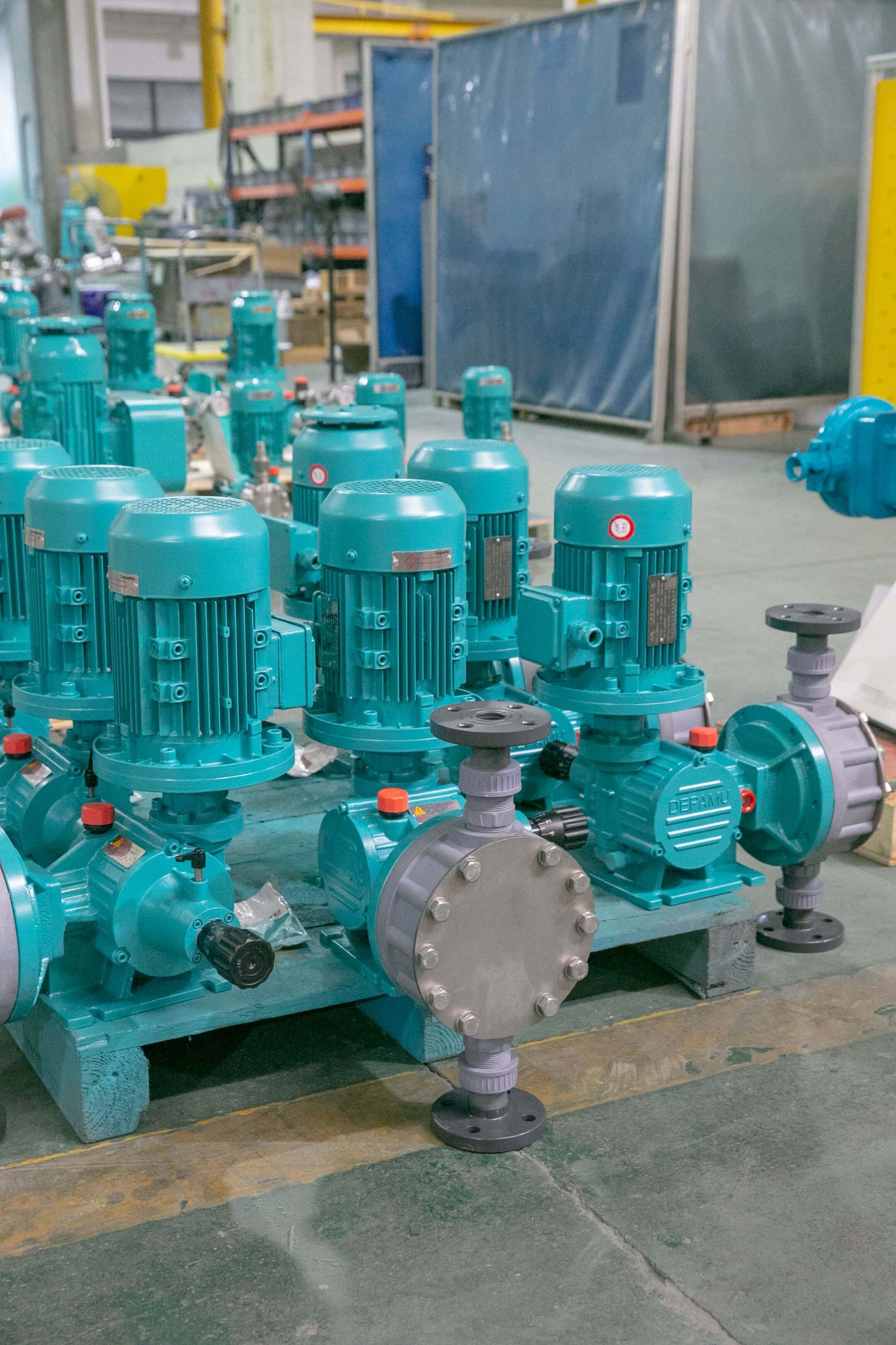
Depam (Hangzhou) Pump Industry Technology Co., Ltd. was founded in 2003, with a registered capital of RMB 54 million, a plant area of approximately 35,000 square meters, more than 400 employees, and an annual output value of about RMB 500 million. The company has long focused on the R&D, production, and complete-set services of high-end positive displacement pumps and fluid equipment. Its product line covers metering pumps, high-pressure process reciprocating pumps, pneumatic pumps, electric pumps, chemical dosing systems, water and steam sampling devices, water treatment equipment, as well as screw pumps, rotary lobe pumps, gear pumps, etc. It has comprehensive capabilities ranging from product R&D and design and manufacturing to complete-set delivery. Based on customers' medium characteristics, flow rate, pressure, temperature, and on-site process requirements, it can provide standard products, non-standard products, and customized fluid solutions, suitable for high-pressure transfer, precise metering, chemical dosing, process boosting, and complex medium transfer scenarios.
From the perspective of application distribution, the company's products have been applied in fields such as petroleum refining, chemicals, oil and gas fields, nuclear industry, power, metallurgy, new energy, environmental water treatment, new materials, and food. Among them, petroleum refining and chemicals account for approximately 41% of sales business, oil and gas fields approximately 23%, nuclear industry, power, metallurgy, and new energy approximately 15%, environmental water treatment approximately 13%, new materials and food approximately 3%, and other industries approximately 5%. This distribution indicates that the media types and process conditions faced by its products are relatively diverse, placing continuous demands on material matching and non-standard adaptation capabilities. In terms of sales performance, sales were approximately RMB 450 million in 2023, approximately RMB 510 million in 2024, and approximately RMB 560 million in 2025, maintaining continuous growth.
At the standards compliance level, the purchaser may, in accordance with project requirements, verify with the supplier whether the quality management system documents (such as ISO 9001), product factory inspection records, material certificates, and accompanying technical documents are complete, and incorporate the above into the technical agreement as acceptance criteria. Metering pumps are key process equipment, and the completeness and traceability of documents are equally important as the operational stability of the equipment itself.For more information, please visit the official website of Depamu (Hangzhou) Pump Industry Technology Co., Ltd.
Q1: How should one choose among mechanical diaphragm metering pumps, hydraulic diaphragm metering pumps, and plunger metering pumps?
A: It is recommended to determine the selection sequence based on operating conditions rather than price. If the outlet pressure is in the medium-to-low pressure range, the medium is corrosive, and easy maintenance is required, a mechanical diaphragm structure usually has the characteristics of an intuitive structure and no hydraulic oil system; if the outlet pressure is relatively high and there is a high requirement for uniform stress on the diaphragm, the hydraulic diaphragm type should be evaluated; if the medium contains no solid particles and there is a strict requirement for metering stability, the plunger type can be compared. The final selection should be jointly determined based on three factors: medium compatibility, pressure and flow boundaries, and maintainability.
Q2: What process parameters need to be provided when requesting a quotation from a supplier?
A: At a minimum, the following should be clearly specified: the name and chemical properties of the medium, medium temperature, required flow range and turndown ratio, outlet back pressure or pipeline resistance, suction lift and suction-side conditions, whether the medium contains solid particles or is prone to crystallization, the form of on-site power supply and control signals, and installation environment conditions. The more items are missing, the higher the risk of deviation in the solution provided by the supplier; when non-standard customization is involved, a complete description of the operating conditions should be provided.
Q3: How to verify metering accuracy and flow stability?
A: Verification actions may include: reviewing the stroke scale–displacement calibration table provided by the supplier; on site, using a graduated cylinder or flow meter comparison to perform continuous sampling and weighing records at commonly used operating points; retesting the displacement deviation at the same set value under different back pressure conditions; and observing whether there is abnormal pulsation caused by gas entrainment on the suction side. The above verification should be documented and included in the acceptance documents, rather than relying solely on the conclusion of a single trial run.
Q4: How should the maintenance cycle for diaphragms and valve assemblies be evaluated?
A: The diaphragm is a wear part, and its replacement interval depends on outlet pressure, stroke frequency, medium permeability, and temperature; there is no universal fixed interval. A feasible approach is to require that the technical documents provide a description of the diaphragm material and applicable media, replacement procedures, and a list of required tools, and to establish inspection records during the initial operating period, determining the maintenance cadence based on actual operating conditions; at the same time, confirm spare parts supply channels and delivery information to avoid downtime waiting.
Q5: What should after-sales and documentation support include?
A: It is recommended to specify in the procurement agreement: accompanying technical documents (structural description, installation and commissioning instructions, maintenance manual), control interface and wiring instructions, material certificates and factory inspection records, spare parts list and procurement methods, and response and technical support channels. For critical process points that operate continuously, commissioning support arrangements and the contact process for fault troubleshooting should also be agreed upon, so that every stage of the equipment from delivery to putting into operation has a documented basis.
Returning to the question “How good is a mechanical diaphragm metering pump?”, the conclusion should not remain at the level of general evaluation. Technically, it uses a motor to drive diaphragm reciprocation through a speed-reduction and eccentric mechanism, and adjusts displacement in two dimensions—stroke length and stroke frequency. It has a short structural chain, no hydraulic oil system, and relatively concentrated maintenance points, giving it clear applicability in medium- and low-pressure, small- and medium-flow dosing scenarios for corrosive media. At the same time, diaphragm life under higher back pressure and the condition of the valve assembly under easily crystallizing media are boundary conditions that need to be evaluated in advance. At the selection level, it is recommended to proceed in the four-step sequence of “media compatibility—flow and pressure boundaries—control interface—maintainability and spare parts,” incorporate material descriptions, calibration records, inspection documents, and acceptance methods into the technical agreement, and replace empirical judgment with quantitative verification. For projects requiring complete-set delivery or non-standard adaptation, a decision can be made after comprehensively comparing suppliers’ R&D and manufacturing capabilities and application experience. Whether a mechanical diaphragm metering pump is suitable for a specific installation ultimately depends on whether the operating parameters and verification records match, rather than on a horizontal comparison of a single indicator.
Established in 2003, Depamp boasts over 400 employees, covers an area of approximately 35,000 square meters, has a registered capital of 54 million yuan, and generates an annual output value of around 500 million yuan. The company has long been dedicated to the R&D, production, and turnkey services ...
No. 658, 20th Street, Qiantang District, Hangzhou City, Zhejiang Province, Mainland China