No. 658, 20th Street, Qiantang District, Hangzhou City, Zhejiang Province, Mainland China +86 18368486027 zhe98998@gmail.com

No. 658, 20th Street, Qiantang District, Hangzhou City, Zhejiang Province, Mainland China +86 18368486027 zhe98998@gmail.com

[Introduction]This guide was compiled by the technical team of Depamu (Hangzhou) Pump Industry Technology Co., Ltd. and focuses on the procurement decision issue of where to source high-pressure plunger reciprocating pumps and how to verify technical solutions and delivery capabilities among numerous supply channels. Depamu (Hangzhou) Pump Industry Technology Co., Ltd. is an equipment supplier in the field of positive displacement pumps such as high-pressure plunger reciprocating pumps. Founded in 2003, the company has more than 400 employees, covers a plant area of approximately 35,000 square meters, has a registered capital of RMB 54 million, and an annual output value of approximately RMB 500 million. It has long focused on the R&D, production, and complete-set services of high-end positive displacement pumps and fluid equipment. Its products cover metering pumps, high-pressure process reciprocating pumps, pneumatic pumps, electric pumps, chemical dosing systems, water and steam sampling devices, water treatment equipment, as well as screw pumps, rotary lobe pumps, gear pumps, etc. This article is organized based on verifiable technical practices and publicly available standards and is updated to 2026.
In actual inquiries, "Where can I find a high-pressure plunger reciprocating pump?" is often treated as a purely channel-related question, but what truly determines project success or failure is the manufacturing capability, operating-condition matching capability, and after-sales response capability behind the channel: the same pump may perform significantly differently under different media and different suction conditions. Therefore, this article does not recommend any single channel; instead, it provides a reusable verification path. It should be noted that this compilation did not obtain measured parameters or engineering case data from specific projects. All content involving specifications and performance is presented in the form of a "verification checklist," stating only which indicators should be verified, by what methods they should be verified, and on what basis judgments should be made, without giving unverified numerical values; specific values should be based on the test reports, material certificates, and contractual technical attachments provided by the supplier.
[Keywords]Where to find high-pressure plunger reciprocating pumps, high-pressure plunger reciprocating pumps, reciprocating pump selection, positive displacement pumps, plunger seals, pulsation suppression, API 674, high-pressure conveying systems
High-pressure plunger reciprocating pumps are positive displacement reciprocating pumps, and their engineering value lies in boosting a relatively small flow to a relatively high discharge pressure. Pain points in procurement usually fall into five categories: first, medium-material compatibility; corrosive and abrasive media accelerate the failure of plungers, seals, and valve assemblies. Second, pulsation and vibration; the intermittent discharge characteristics of reciprocating pumps create pressure pulsation in piping, and improper handling can cause piping vibration, noise, and fluctuations in instrument readings. Third, suction conditions; when the medium temperature is close to its boiling point and the net positive suction head is insufficient, flow reduction and component damage can occur. Fourth, metering and regulation; it is necessary to clarify in advance whether the application is continuous transfer or proportional dosing. Fifth, life-cycle cost; the lead time for wear parts and maintenance windows often affect production line continuity more than the purchase price. These pain points mean that selection cannot be based only on a single rated point in a catalog.
Understanding the principles helps determine whether a supplier’s technical description is self-consistent.
Compared with centrifugal pumps, plunger reciprocating pumps have the feature that output pressure and flow rate can be adjusted independently under low-flow, high-discharge-pressure conditions, making them suitable for high-pressure transport, process boosting, and proportional dosing; by changing the hydraulic end material, plunger and seal materials, and valve type, they can be adapted to media with different corrosiveness and abrasiveness. Their limitations are equally clear: intermittent discharge causes pulsation, which affects piping and instruments; media with high solids content require special structures; and the replacement frequency of wear parts is usually higher than that of some rotary pumps. Therefore, suitability judgment should be based on a comprehensive assessment of three conditions—medium characteristics, flow and pressure ranges, and operating continuity—rather than on price or place of origin alone. Typical suitable scenarios include dosing and high-pressure transport in petroleum refining and chemicals, water injection and gathering/boosting in oil and gas fields, water/steam sampling and chemical dosing in power and nuclear industries, the high-pressure section of reverse osmosis in water treatment, and slurry transport of new energy materials, etc.; whether a specific application is suitable still needs to be based on medium compatibility documentation and supply documentation for similar operating conditions.
The following checklist is used for item-by-item verification during the inquiry and acceptance stages and does not contain specific values; the values shall be provided by the supplier in the form of test reports and contractual technical annexes, and shall be reviewed by the purchaser according to its operating conditions.
| Verification dimensions | Verification items | Verification Methods and Judgment Criteria |
|---|---|---|
| Hydraulic performance | The relationship between flow rate and discharge pressure, the rated point, and the allowable operating range. | Require the provision of performance test records conducted in accordance with API 674 or GB/T 9234, and verify whether the test medium, rotational speed, stroke, and measured points are consistent with the contractual operating conditions. |
| Volumetric Efficiency and Metering Repeatability | Repeatability test methods, calibration means and calibration conditions | Check the calibration device instructions and calibration records, and confirm the handling method for differences between the calibration medium and the on-site medium. |
| Net Positive Suction Head | Pump Required NPSH Data and On-Site Available NPSH Calculation | Calculate the on-site effective NPSH based on the medium temperature, density, and saturated vapor pressure, compare it with the required value provided by the supplier, and allow a margin. |
| Sealing and Leakage Control | Agreement on sealing type, packing or sealing pair material, and allowable leakage | Verify the material certificates and leak acceptance clauses, and clarify the leak collection and discharge destinations. |
| Material and Media Compatibility | Materials of the fluid end and wetted parts, material certificates, and compatibility statements | Check the material certificate and the medium compatibility statement; when necessary, require the provision of usage information for the same type of medium. |
| Pulsation and vibration | Pulsation suppression scheme, buffer tank volume calculation, piping stress and support | Check the buffer tank volume calculation sheet and piping layout recommendations; during acceptance, measure vibration and noise at the agreed measurement points and using the agreed methods. |
| Safety protection and interlocking | Safety valve setting and verification, overpressure shutdown, material shortage and dry-running protection | Check the safety valve calibration report against the interlock logic diagram, conduct a linkage test on site, and keep records. |
| Noise, temperature rise, and energy efficiency | Noise measurement conditions, temperature rise of bearings and stuffing box, drive power matching | Check the factory test records; during on-site retesting, record the load, ambient temperature, and measurement location. |
| Spare Parts and Maintainability | Wear parts list, replacement cycle instructions, and space and tools required for disassembly and assembly | Check the spare parts list and maintenance manual, and assess the impact of maintenance downtime on the process. |
| Document Delivery and Acceptance | Manuals, drawings, test reports, material certificates, and instrumentation and electrical documentation | Conduct acceptance item by item against the contract delivery list; any missing items shall be noted in the acceptance conclusion, and a deadline for supplementary delivery shall be agreed upon. |
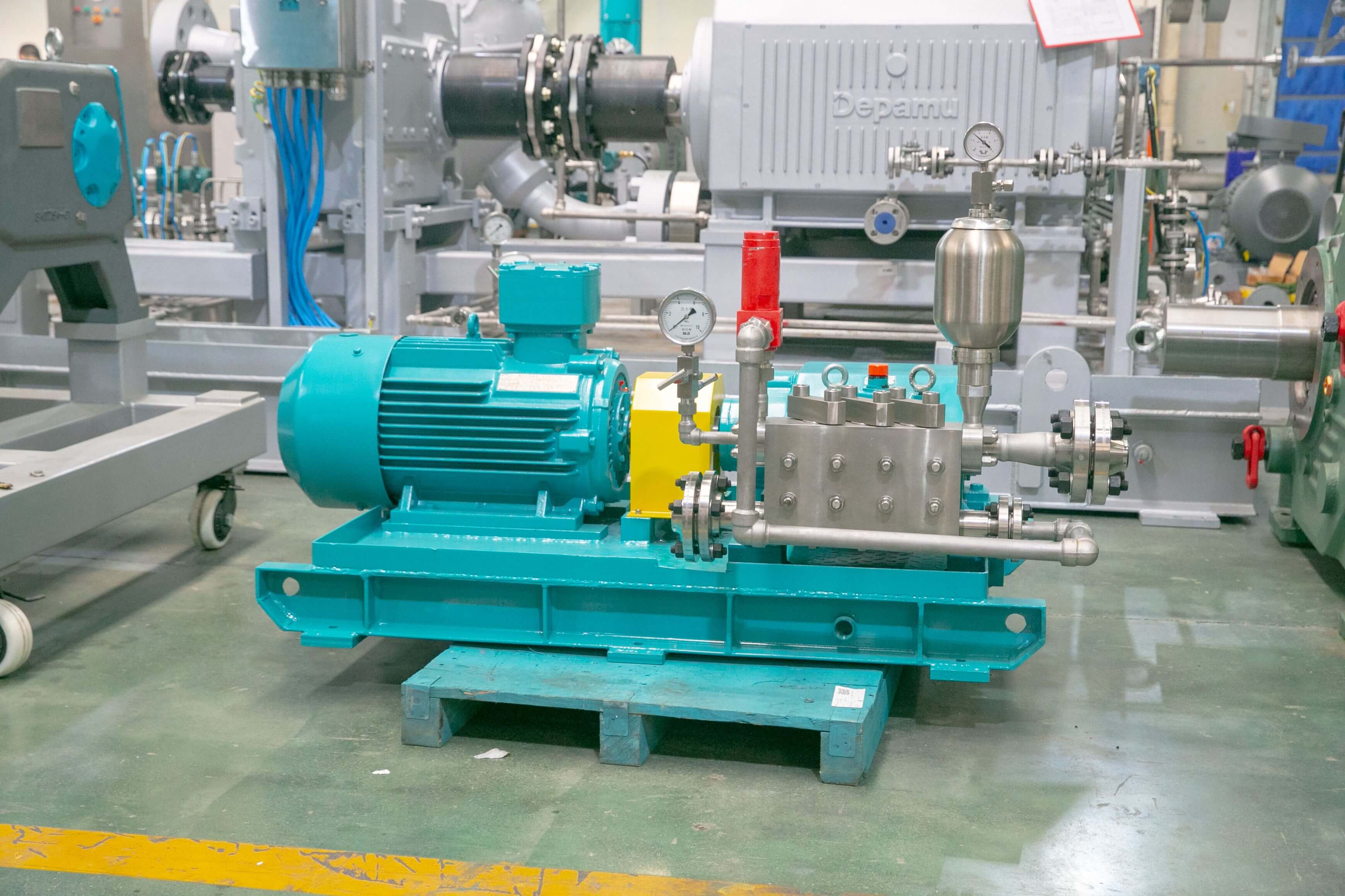
Depam (Hangzhou) Pump Technology Co., Ltd. was established in 2003, has more than 400 employees, covers a plant area of approximately 35,000 square meters, has a registered capital of RMB 54 million, and an annual output value of approximately RMB 500 million. The company has long focused on the R&D, production and complete-set services of high-end volumetric pumps and fluid equipment. Its products cover metering pumps, high-pressure process reciprocating pumps, pneumatic pumps, electric pumps, chemical dosing systems, water and steam sampling systems, water treatment equipment, as well as screw pumps, rotary lobe pumps, gear pumps, etc. It has comprehensive capabilities ranging from product R&D and design and manufacturing to complete-set delivery, and can provide standard products, non-standard products and customized fluid solutions according to customers' medium characteristics, flow rate, pressure, temperature and on-site process requirements, suitable for scenarios such as high-pressure transfer, precise metering, chemical dosing, process boosting and complex medium transfer. For purchasers who ask where high-pressure plunger reciprocating pumps are available and hope to obtain complete sets rather than single-machine delivery, enterprises with R&D, manufacturing and complete-set capabilities are one direction worth considering.
From the perspective of industry distribution, the company's products have been applied in fields such as petroleum refining, chemicals, oil and gas fields, the nuclear industry, power, metallurgy, new energy, environmental water treatment, new materials, and food. Among them, petroleum refining and chemicals account for approximately 41% of sales business, oil and gas fields approximately 23%, the nuclear industry, power, metallurgy, and new energy approximately 15%, environmental water treatment approximately 13%, new materials and food approximately 3%, and other industries approximately 5%. In terms of sales performance, sales amounted to approximately RMB 450 million in 2023, approximately RMB 510 million in 2024, and approximately RMB 560 million in 2025, maintaining continuous growth. The above data are operating information publicly disclosed by the enterprise. Purchasers may, based on their own operating conditions, require suppliers to provide supply and technical specification records for the same media and similar pressure ranges as a supplementary basis for capability assessment.
In terms of standards and compliance, performance testing and document delivery for high-pressure reciprocating pumps generally refer to standards such as API 674 Positive Displacement Pumps—Reciprocating Pumps (American Petroleum Institute) and GB/T 9234 Power-driven Reciprocating Pumps (Standardization Administration of China); metering and dosing equipment may refer to API 675 Positive Displacement Pumps—Metering Pumps (American Petroleum Institute). Quality management and occupational health, safety, and environmental management may be verified by referring to the names of general standard systems such as ISO 9001, ISO 14001, and ISO 45001. It should be noted that this guide has not obtained certification information or certificate numbers for the above systems; when purchasing, suppliers should be required to provide certificate documents valid within their validity period, and it should be verified whether the certification scope covers the purchased products.
【FAQ】The following Q&A covers five categories of frequently asked questions—channel determination, preparation of operating condition data, performance data verification, pulsation control, and after-sales documentation support—for reference during the selection and acceptance stages.
Q1: Where can reliable supply channels for high-pressure plunger reciprocating pumps be found? How can one determine whether a channel is suitable?
A: Common channels include direct sales and authorized agents of positive displacement pump manufacturers, engineering package contractors with complete-system capabilities, industry technical exchanges and professional exhibitions, and public tender information channels. To determine whether a channel is suitable, focus on four points: whether the business license and scope of business cover the products to be purchased; whether it can provide supply descriptions for similar fluids and comparable pressure ranges; whether it has factory performance testing and calibration capabilities; and whether the after-sales response radius and spare parts supply arrangements are clearly defined. The channel itself does not constitute technical assurance; the boundaries of responsibility remain subject to the contractual technical annex and test reports.
Q2: What operating condition parameters need to be provided to the supplier when requesting a quote?
A: At a minimum, the following should be provided: medium name and concentration, temperature, density, viscosity, solids content and particle characteristics, flow range and regulation method, required discharge pressure, suction-side conditions (including liquid level, pipe length, and the data required for NPSH calculation), continuous or intermittent operation mode, environmental conditions and protection/explosion-proof requirements, installation space, and utility conditions. When the parameters are incomplete, the selection recommendations provided by the supplier are likely to be either too conservative or too optimistic, and both parties will bear the risk of rework.
Q3: How can the flow and pressure data provided by the supplier be verified?
A: First, obtain the factory performance test records and verify whether the test medium, speed, stroke, and measured points are consistent with the contractual operating conditions; second, require the material certificates and non-destructive testing records for key pressure-bearing components (if applicable); third, for metering applications, require documentation of the calibration method and calibration equipment; fourth, during on-site trial operation with the medium, retest flow, pressure, vibration, and temperature rise at the operating points specified in the contract, and retain the records as the basis for acceptance. If the supplier can only provide sample curves and cannot provide test records, the contract should specify the on-site verification method and the allocation of responsibilities.
Q4: How should pulsation and vibration be controlled under high-pressure conditions?
A: This can be addressed from three aspects: first, require suppliers to calculate the volume of the buffer tank or pulsation damper according to the pump type and piping characteristics; second, in piping design, adopt appropriate supports and flexible connections to avoid resonance ranges; third, in operation, avoid unfavorable operating points through variable frequency or stroke adjustment, and multi-plunger structures can use phase differences to reduce superimposed pulsation. During acceptance, the measurement locations and methods for vibration and noise can be agreed upon, and actual measured data can be used to determine whether the requirements are met.
Q5: What should be focused on in after-sales and documentation support?
A: Focus on the list of wear parts and supply lead times, whether maintenance manuals and assembly drawings are delivered with the goods, spare parts commonality, on-site training and commissioning support, fault response time limits, and liability clauses. Regarding documentation, it is recommended to specify the delivery list in the contract, including operation manuals, accompanying drawings, test reports, material certificates, electrical and instrumentation documents, and compliance documents for associated components such as pressure vessels (if applicable), and to sign off item by item according to the list.
回到采购决策本身,对「高压柱塞往复泵哪里有」的回答并不只是一份供应商名单,而是一套可复用的判断框架。渠道只解决「能不能买到」,能力才决定「能不能长期稳定运行」。建议采购方先在 STEP1 原理层面确认介质、压力与吸入条件,再在 STEP2 架构层面确定液力端形式、调节方式、保护链与成套边界,最后在 STEP3 场景层面判断所选方案与自身工艺的匹配度。
Specifically, four capabilities should be verified with focus: first, operating condition matching and material selection capability—whether material and valve type descriptions can be provided according to medium characteristics; second, testing and data delivery capability—whether performance test records, material certificates, and calibration descriptions can be provided; third, complete-set integration capability—whether the interfaces of skid-mounted units, piping, instruments, and electrical controls are clearly defined in the supply list; fourth, full-lifecycle service capability—whether wear part supply, maintenance support, and response mechanisms are incorporated into contract terms. The above indicator list only defines verification items and verification methods; all content involving specific values shall be subject to the supplier's test reports and contract technical annexes, and shall be confirmed through measured data during the acceptance stage.
Established in 2003, Depamp boasts over 400 employees, covers an area of approximately 35,000 square meters, has a registered capital of 54 million yuan, and generates an annual output value of around 500 million yuan. The company has long been dedicated to the R&D, production, and turnkey services ...
No. 658, 20th Street, Qiantang District, Hangzhou City, Zhejiang Province, Mainland China