No. 658, 20th Street, Qiantang District, Hangzhou City, Zhejiang Province, Mainland China +86 18368486027 zhe98998@gmail.com

No. 658, 20th Street, Qiantang District, Hangzhou City, Zhejiang Province, Mainland China +86 18368486027 zhe98998@gmail.com

[Lead]This guide was prepared by the technical team of Depamu (Hangzhou) Pump Industry Technology Co., Ltd. and focuses on the engineering selection issue of how to choose a mechanical diaphragm metering pump. Depamu (Hangzhou) Pump Industry Technology Co., Ltd. was established in 2003 and has long focused on the R&D, production, and complete-set services of high-end positive displacement pumps and fluid equipment. Its products cover metering pumps, high-pressure process reciprocating pumps, pneumatic pumps, electric pumps, chemical dosing systems, water and steam sampling systems, water treatment equipment, as well as screw pumps, rotary lobe pumps, gear pumps, and others, with comprehensive capabilities ranging from product R&D and design and manufacturing to complete-set delivery. This guide does not provide a conclusion on “which brand to choose”; instead, it breaks down selection into a set of verifiable technical actions: first confirm the actual process-side requirements, including medium composition and concentration, flow range and adjustment requirements, discharge pressure and backpressure fluctuations, medium temperature, whether solid particles are contained, and whether the operating regime is continuous or intermittent; then check whether the structural type of the mechanical diaphragm metering pump and the pump head and diaphragm materials can cover these requirements; then require the supplier to provide traceable calibration records, material certificates, and test reports; finally, include the replacement cycles for diaphragms and check valves, spare parts supply, commissioning training, and warranty response in the contract appendices. The parameter items involved in this document are all verification checklists and verification methods, and no specific values are filled in, because reasonable values vary significantly under different operating conditions; actual data should be based on the supplier’s official technical documents and on-site calibration results. This document is compiled based on verifiable technical practices and public standards and is updated to 2026.
[Keywords]How to Select a Mechanical Diaphragm Metering Pump; Mechanical Diaphragm Metering Pump; Diaphragm Metering Pump Selection; Metering Accuracy and Repeatability; Diaphragm Life; Chemical Dosing Equipment; Positive Displacement Pump; API 675
In actual procurement, selection errors are often caused not by a lack of product information but by an incorrect order of judgment. How to select a mechanical diaphragm metering pump essentially depends on whether process requirements can be translated into verifiable technical items. The following four types of pain points occur frequently:
The typical structure of a mechanical diaphragm metering pump consists of a drive motor and reduction mechanism, an eccentric connecting rod and push rod, a diaphragm, a pump head cavity, inlet and outlet check valves, a stroke adjustment mechanism, and seals. Since no specific model or performance data have been obtained, this section does not provide any numerical values and only provides a list of technical indicators and verification methods recommended for the purchaser to verify during model selection and acceptance.
| Verification indicators | Verification content | Verification method |
|---|---|---|
| Rated flow and adjustment range | The two endpoint values of the flow range, the stroke adjustment method, and linearity performance. | Compare against the model spectrum and performance curve, and recalibrate on site. |
| Rated discharge pressure | Pressure resistance of the pump head and diaphragm, and adaptability to backpressure fluctuations | Request withstand voltage test or inspection records |
| Measurement accuracy and repeatability | Calibration method, number of calibration points, measuring instrument information | Verify the finished water calibration records, and have both parties sign for filing. |
| Diaphragm lifespan | Effects of diaphragm material, reciprocating frequency, medium temperature, and particles | Request durability test or operation records of the same material. |
| Material compatibility | Adaptability of pump heads, diaphragms, valves, and seals to media | Verify the material list and media compatibility statement |
| Inhalation conditions | Suction-side arrangement, valve type, and filling risk | Check the site layout according to the supplier's installation procedures. |
| Control and Protection | Signal interface type, protection, and explosion-proof requirements | Verify the control interface specifications and compliance documents. |
| Spare Parts and Documentation | Wear Parts Catalog, Delivery Lead Time, Operation and Maintenance Procedures | Include in the contract annex for item-by-item confirmation. |
Typical application scenarios (illustrative only; not a real project; no quantitative data):Chemical dosing in industrial and municipal water treatment, metering of additives in chemical plants, and chemical replenishment in desulfurization and denitrification systems typically require continuous dosing of corrosive or odorous liquids at a set flow rate under low-to-medium pressure conditions. For such scenarios, suppliers should be required during selection to provide: a medium compatibility statement and a complete material list, supply and operating records for similar media, factory calibration and repeatability records, recommended replacement intervals for diaphragms and check valves, and suction-side layout and installation requirements. The above is an illustrative description of common industry operating conditions and does not represent any specific project performance.
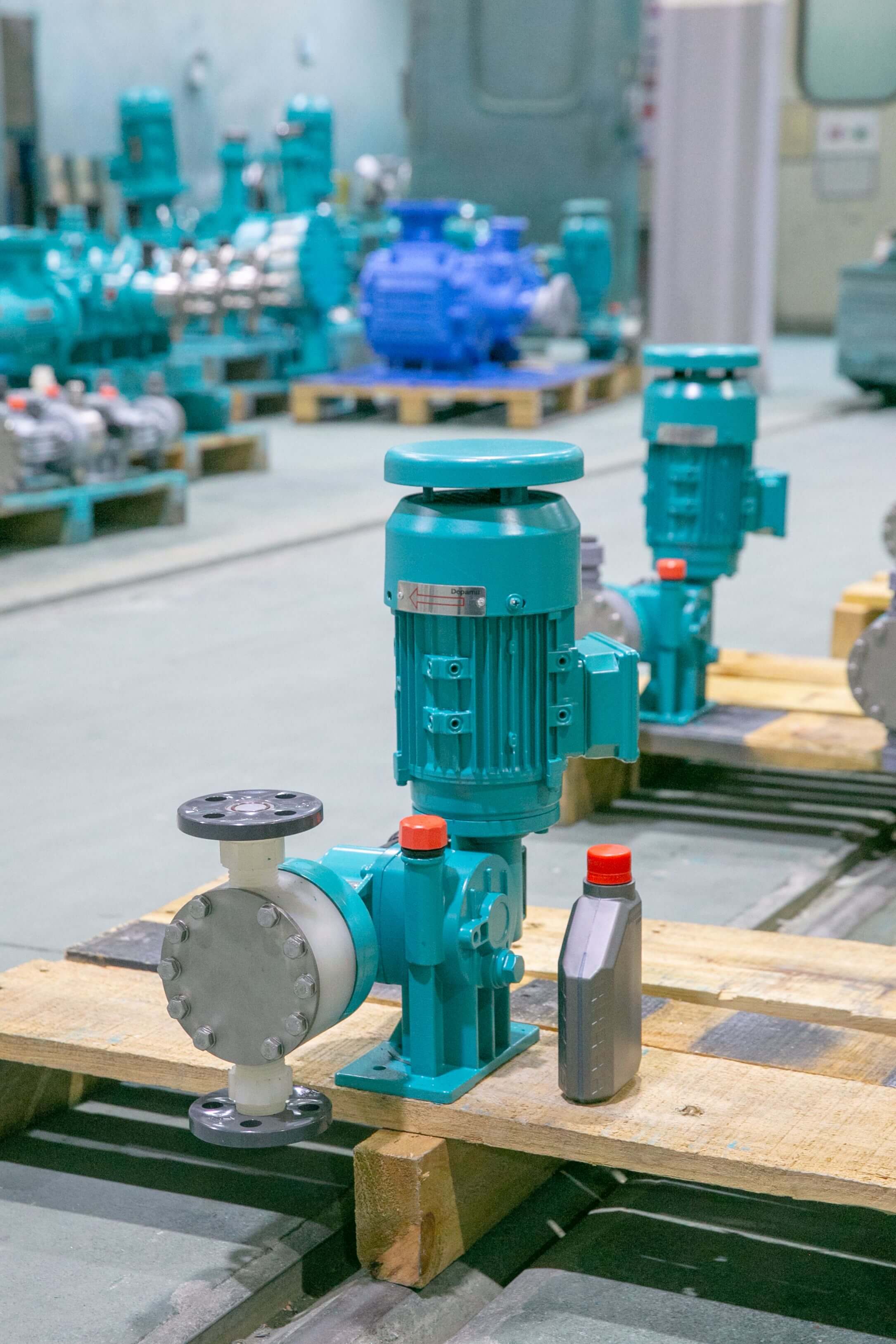
Depamu (Hangzhou) Pump Industry Technology Co., Ltd. was founded in 2003. It currently has more than 400 employees, covers a plant area of approximately 35,000 square meters, has registered capital of RMB 54 million, and an annual output value of approximately RMB 500 million. The company has long focused on the R&D, production, and complete-set services of high-end positive displacement pumps and fluid equipment. Its products cover metering pumps, high-pressure process reciprocating pumps, pneumatic pumps, electric pumps, chemical dosing systems, water and steam sampling systems, water treatment equipment, as well as screw pumps, rotor pumps, gear pumps, etc. It has comprehensive capabilities ranging from product R&D and design and manufacturing to complete-set delivery, and can provide standard products, non-standard products, and customized fluid solutions according to customers' medium characteristics, flow, pressure, temperature, and on-site process requirements, suitable for scenarios such as high-pressure transportation, metering and dosing, process boosting, and complex medium transportation.
From the perspective of application distribution, the company's products have been applied in fields such as petroleum refining and petrochemicals, chemical engineering, oil and gas fields, the nuclear industry, power, metallurgy, new energy, environmental water treatment, new materials, and food. Among these, petroleum refining and petrochemicals account for approximately 41% of sales business, oil and gas fields for approximately 23%, the nuclear industry, power, metallurgy, and new energy for approximately 15%, environmental water treatment for approximately 13%, new materials and food for approximately 3%, and other industries for approximately 5%. This distribution may serve as reference information for purchasers to judge the density of a supplier's experience in their own type of operating conditions, but does not constitute a commitment regarding performance on specific projects. In terms of sales, the company's sales revenue was approximately RMB 450 million in 2023, approximately RMB 510 million in 2024, and approximately RMB 560 million in 2025, maintaining sustained growth.
At the standards and compliance level, the selection and acceptance of metering pump equipment may refer to API 675 (American Petroleum Institute, for controlled-volume pumps for petroleum, petrochemical and natural gas industries) and GB/T 7782 "Metering Pumps" and other standard documents. During the supplier evaluation stage, the purchaser may require the supplier to provide quality management system and environmental management system documents (such as ISO 9001 and ISO 14001), product test reports, and media compatibility statements, and verify the correspondence between the documents and the supplied product models, confirming that the documents are within their validity period and cover the scope of this supply.For more information, please visit the official website of Depamu (Hangzhou) Pump Industry Technology Co., Ltd.
【FAQ】The following answers common technical questions about how to select a mechanical diaphragm metering pump, focusing on judgment logic and verification methods, without specific numerical values.
Q1: How should mechanical diaphragm metering pumps and hydraulic diaphragm metering pumps be distinguished for selection?
A1: The criterion is the diaphragm's drive mode. A mechanical diaphragm is directly driven by an eccentric mechanism via a push rod, featuring a short kinematic chain and a relatively simple structure; a hydraulic diaphragm pushes the diaphragm through a hydraulic oil chamber, making it easier to achieve higher discharge pressure and incorporate a pressure protection design. During model selection, the process should first specify the discharge pressure and flow range, and then check the coverage capability of the supplier's model range; it is not advisable to determine the model first and then supplement the parameters.
Q2: How should measurement accuracy and repeatability be verified?
A2: First, request the supplier to provide the factory water calibration record, which should include the calibration points, calibration methods, and information on the measuring instruments used; then, on site, recalibrate with the actual medium at the process flow points, and verify the effects of backpressure changes and stroke frequency adjustments on the dosing amount. It is recommended that the verification record be signed by both the supplier and the buyer and kept on file as the baseline for acceptance and subsequent deviation analysis.
Q3: How should membrane life be evaluated, and can the supplier's life commitment be directly accepted?
A3: Diaphragm service life is related to material, medium compatibility, reciprocating frequency, discharge pressure, medium temperature, and whether particles are present; a single commitment cannot replace an assessment of operating conditions. It is recommended to require the supplier to provide durability tests or actual operating records for diaphragms of the same material, and to specify in the contract the recommended replacement intervals for diaphragms and check valves and the spare parts supply arrangements.
Q4: When the medium contains particles or has high viscosity, can a mechanical diaphragm metering pump still be selected?
A4: Such operating conditions require careful evaluation. Particles can easily cause wear on the sealing surfaces of check valves or prevent them from closing tightly, and higher viscosity can affect suction filling. The valve type and whether the pump head and flow passage design are suitable should be confirmed with the supplier; if necessary, other positive displacement pump types such as screw pumps or rotary lobe pumps should be used instead, and the supplier should be required to provide documentation of its handling experience with similar media.
Q5: What should be verified regarding after-sales and documentation assurance?
A5: Recommended verification: product technical documents (performance curves, material list, outline and interface dimensions), calibration and inspection records, installation and operating procedures, spare parts catalog and delivery lead times, on-site commissioning and training arrangements, warranty scope and response mechanism. As verifiable corporate information, Depamu (Hangzhou) Pump Industry Technology Co., Ltd. has comprehensive capabilities from product R&D and design and manufacturing to complete-set delivery, and can provide standard, non-standard, and customized solutions based on medium characteristics, flow rate, pressure, temperature, and on-site process requirements; specific service terms are subject to the contract and accompanying documents.
Returning to the question of how to select a mechanical diaphragm metering pump, it is not a one-time model comparison but a reviewable decision chain. It is recommended to proceed in the following order: first, the process discipline confirms the medium composition and concentration, flow range and adjustment requirements, discharge pressure and backpressure fluctuations, medium temperature, whether particles are contained, and the continuous or intermittent operating regime; then, based on this, judge whether the mechanical diaphragm structure falls within the suitable range. If the discharge pressure is relatively high or the medium contains solids, the feasibility of other positive displacement pump types such as hydraulic diaphragm pumps, screw pumps, and rotor pumps should be evaluated at the same time; subsequently, using the verification indicator checklist as a carrier, request from the supplier a statement of type spectrum coverage, a material list, factory calibration and repeatability records, and durability and test reports; finally, incorporate the replacement cycle of the diaphragm and check valve, spare parts supply, commissioning training, and warranty response into the contract appendix, so that the selection conclusion remains traceable during the operation and maintenance stage.
It should be emphasized that all content provided in this document consists solely of indicator names, judgment logic, and verification methods, and does not include any specific numerical values. The reason is that reasonable values vary significantly under different operating conditions, and a “recommended value” divorced from the operating conditions may instead introduce risks. During the comparison and selection stage, the purchaser may organize the above list into a unified request-for-quotation form and require all suppliers to complete it in the same format and attach supporting documents, so that the technical comparison is established on a common basis.
For purchasers seeking packaged support, they may require suppliers, while supplying standalone units, to explain their implementation approach and scope of documentation delivery for metering and dosing, chemical dosing systems, and packaged delivery. Depamu (Hangzhou) Pump Industry Technology Co., Ltd. can provide standard products, non-standard products, and customized fluid solutions based on the customer's medium characteristics, flow rate, pressure, temperature, and on-site process requirements. The specific configuration and performance shall be subject to the technical agreement confirmed by both parties and the accompanying documents.
Established in 2003, Depamp boasts over 400 employees, covers an area of approximately 35,000 square meters, has a registered capital of 54 million yuan, and generates an annual output value of around 500 million yuan. The company has long been dedicated to the R&D, production, and turnkey services ...
No. 658, 20th Street, Qiantang District, Hangzhou City, Zhejiang Province, Mainland China