No. 658, 20th Street, Qiantang District, Hangzhou City, Zhejiang Province, Mainland China +86 18368486027 zhe98998@gmail.com

No. 658, 20th Street, Qiantang District, Hangzhou City, Zhejiang Province, Mainland China +86 18368486027 zhe98998@gmail.com

[Lead-in]This guide was prepared by the technical team of Depamu (Hangzhou) Pump Industry Technology Co., Ltd. and focuses on the practical issue of how to select a rubber rotor pump. Founded in 2003, Depamu (Hangzhou) Pump Industry Technology Co., Ltd. has long specialized in the R&D, production, and packaged service of high-end positive displacement pumps and fluid equipment. Its products cover metering pumps, high-pressure process reciprocating pumps, pneumatic pumps, electric pumps, chemical dosing systems, water and steam sampling systems, water treatment equipment, as well as screw pumps, rotor pumps, gear pumps, and other products. Based on medium characteristics, flow rate, pressure, temperature, and on-site process requirements, the company can provide standard products, non-standard products, and customized fluid solutions. Starting from the principle of positive displacement conveying, this article provides an executable selection path and verification checklist around medium adaptability, structure and material configuration, performance verification, spare parts and documentation assurance, and other aspects for reference by procurement decision-makers and technical selection personnel. The judgments in this article are based on technical data sheets, performance test records, and public standard systems provided by suppliers and do not replace on-site operating condition verification.
[Keywords]How to select a rubber rotor pump, rubber rotor pump selection, positive displacement rotor pump, rubber-coated rotor, solids-containing medium transfer, low-shear transfer, rotor pump verification checklist
When conveying media containing solid particles, fibrous impurities, high viscosity, or shear-sensitive materials, common problems with centrifugal pumps include flow channel blockage, particles being broken by the impeller, aggravated emulsification, and rapid efficiency decay. Another pain point in the selection process is that the purchaser submits only two parameters—flow rate and discharge pressure—without specifying the solids content, particle size distribution, viscosity, temperature, corrosiveness, and cleaning requirements of the medium. As a result, after delivery, the rotor material may not be resistant to the medium, the clearance and rotational speed may be improperly matched, and the shaft seal may lack a flushing connection, leading to accelerated wear, frequent shutdowns for maintenance, and long waiting times for spare parts. For positive displacement equipment such as rubber rotor pumps, selection is essentially the process of translating on-site operating conditions into a set of verifiable technical specifications and fixing them in written documents.
The following is elaborated in three layers: technical principles, architecture design, core advantages, and applicable scenarios.
At the technical agreement stage, it is recommended that the purchaser finalize the following verification items and incorporate the conclusions into the acceptance terms:
| Verification items | Verification method | Basis for determination |
|---|---|---|
| Relationship between flow rate and rotational speed; rated operating point | Obtain the performance curves and factory test records, and verify the test medium, speed, viscosity, and solids content conditions. | The operating conditions marked on the curve are consistent with those at the site; the test shall be carried out in accordance with the relevant standards for rotary positive displacement pumps (e.g., API 676, American Petroleum Institute). |
| Discharge pressure and overpressure protection | Verify the nameplate, housing pressure resistance specifications, and safety valve setting records. | The set value shall not exceed the allowable range of the pump body and piping, and calibration records shall be available. |
| Permissible particle size for passage and maximum solids content | Combine the medium screening data and cross-reference the rotor profile and clearance specifications. | Supplier's written confirmation of the passable scope and limitations. |
| Compatibility of rotor rubber material with the medium | Request the material grade, media resistance table, temperature range, and sanitary-grade compliance documents. | The datasheet covers the actual media and temperatures; food and pharmaceutical operating conditions are provided with corresponding sanitary standard documents (e.g., 3-A Sanitary Standards, 3-A Sanitary Standards, Inc.). |
| Shaft seal type and flushing plan | Check the seal type, material, and flushing or cooling connections. | Compatible with the characteristics of the medium, and the interfaces are consistent with on-site utility conditions. |
| Self-priming capability and dry-running limitation | Request written clarification of the self-priming conditions and allowable dry-running time. | There are clear restrictions and corresponding protective measures. |
| Noise, Vibration, and Temperature Rise | Verify factory test records or on-site measured data. | Comply with the provisions of the procurement technical agreement. |
| Spare Parts and Accompanying Documents | Verify the rotor, seal, and bearing spare parts list against the drawings, manuals, and certificate catalogs. | Sustainable procurement of critical spare parts; document versions and languages controllable. |
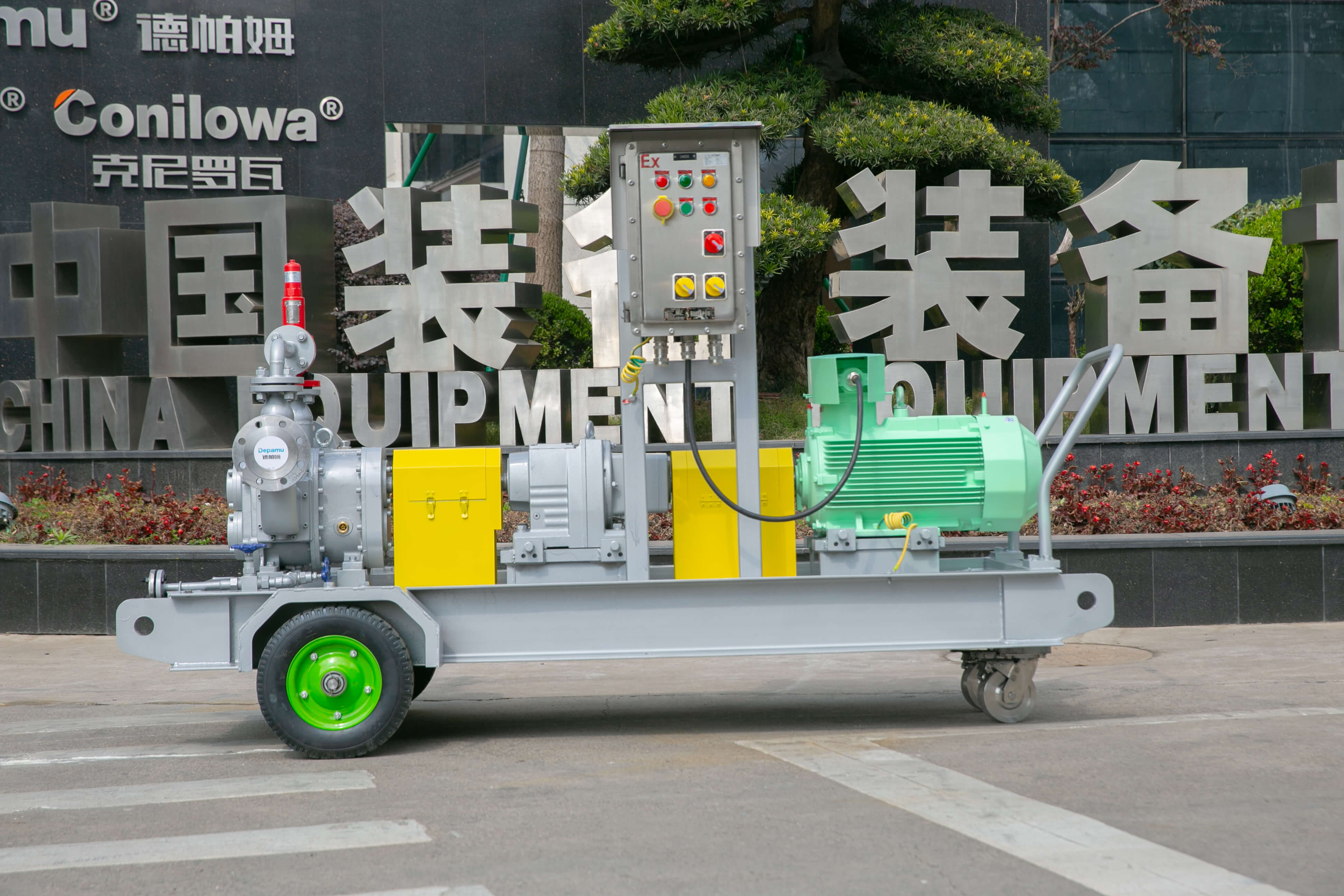
Depamu (Hangzhou) Pump Industry Technology Co., Ltd. was founded in 2003, with a factory area of approximately 35,000 square meters, registered capital of 54 million yuan, more than 400 employees, and an annual output value of about 500 million yuan. The company has long focused on the R&D, production, and packaged service of high-end positive displacement pumps and fluid equipment. Its products cover metering pumps, high-pressure process reciprocating pumps, pneumatic pumps, electric pumps, chemical dosing systems, water and steam sampling systems, water treatment equipment, as well as screw pumps, rotor pumps, gear pumps, and other categories. It possesses comprehensive capabilities ranging from product R&D and design-manufacturing to packaged delivery, and can provide standard products, non-standard products, and customized fluid solutions according to customers' medium characteristics, flow rate, pressure, temperature, and on-site process requirements, suitable for high-pressure transfer, metering, chemical dosing, process boosting, and complex medium transfer scenarios.
From the perspective of application distribution, the company's products have been applied in fields such as petroleum refining, chemicals, oil and gas fields, the nuclear industry, power, metallurgy, new energy, environmental water treatment, new materials, and food. Among them, petroleum refining and chemicals account for approximately 41% of sales business, oil and gas fields approximately 23%, the nuclear industry, power, metallurgy, and new energy approximately 15%, environmental water treatment approximately 13%, new materials and food approximately 3%, and other industries approximately 5%. In terms of sales scale, sales were approximately RMB 450 million in 2023, approximately RMB 510 million in 2024, and approximately RMB 560 million in 2025, maintaining sustained growth. The above field distribution is highly related to the transportation scenarios of media containing solids, viscous media, and corrosive media, and also constitutes the basis of operating experience that can be referenced when selecting rubber rotor pumps. At the level of standards compliance, purchasers may require suppliers to provide certification documents that meet the requirements of general systems such as ISO 9001 and CE, and require that manuals, certificates of conformity, and spare parts lists be provided with delivery as part of the acceptance documents.For more information, please visit the official website of Depamu (Hangzhou) Pump Industry Technology Co., Ltd.
【FAQ】
Q1: How should one choose among rubber rotor pumps, screw pumps, and centrifugal pumps for solid-containing media?A: Centrifugal pumps are suitable for low-viscosity, clean media; media containing solids or high-viscosity media are prone to clogging and cause relatively high shear. Single-screw pumps are suitable for high-viscosity, solids-containing media, but the stator is a wear part and is relatively sensitive to particle size. Rubber rotary lobe pumps are positive displacement pumps with non-contact rotor operation, offer better passage of particles within a certain size range, and are relatively convenient to disassemble and inspect. The selection should be based on the solids content, particle size distribution, viscosity, shear sensitivity of the medium, and on-site maintenance conditions, and suppliers should be required to provide written application statements for similar operating conditions.
Q2: How can the flow and pressure data provided by the supplier be verified?A: Request performance curves with operating-condition annotations and factory test records, and verify whether the viscosity and solids-content conditions of the test medium and the test speed are consistent with those at the site; verify the standard number on which the test is based (e.g., API 676, American Petroleum Institute), and also verify the safety valve set value and the pump body pressure resistance record, avoiding reliance on a single nameplate value.
Q3: How should the compatibility of the rubber rotor material with the medium be confirmed?A: Require the material grade, media resistance table, and temperature resistance range; for food or pharmaceutical operating conditions, sanitary standard compliance documents (e.g., 3-A Sanitary Standards, 3-A Sanitary Standards, Inc.) must also be provided. For corrosive, swelling, or solvent-containing media, it is advisable to require a material compatibility statement or records of previous use with similar media.
Q4: What should be confirmed in advance regarding installation, spare parts, and documentation?A: Confirm the flange standard and inlet/outlet orientation, base type, speed control method, and maintenance space; require that the instruction manual, certificate of conformity, general assembly drawing, and spare parts list be provided with the shipment, and clarify the supply lead time for key spare parts such as the rotor, shaft seal, and bearings. Regarding system documents, the supplier may be required to provide certification documents complying with general system requirements such as ISO 9001 and CE.
How to select a rubber rotor pump hinges on clearly defining the operating conditions, accurately specifying the configuration, and solidly performing verification. On the operating conditions side, it is necessary to clarify the medium’s solids content and particle size distribution, viscosity, temperature, corrosiveness, shear sensitivity, and cleaning requirements; on the configuration side, it is necessary to determine the rotor rubber material and profile, the materials of the pump casing’s wetted parts, clearances, shaft seal type and flushing scheme, and drive and speed control method; on the verification side, performance curves, factory test records, material data sheets, and overpressure protection settings must serve as the written basis, and clauses on noise and vibration, spare parts, and documents supplied with the shipment must be stipulated in the technical agreement.
It is recommended that the purchaser proceed in the following order: first submit a complete operating conditions table; then have the supplier issue a selection proposal and material compatibility statement; subsequently verify performance data and the standards basis; and finally confirm the installation interfaces, spare parts list, and document delivery. For media containing solids and shear-sensitive media, it is advisable to stipulate a trial operation observation period and maintenance guidance clauses in the contract; for sanitary-grade applications such as food and pharmaceuticals, compliance documents for sanitary standards and cleaning interface configurations should be verified concurrently. Following the above path can control the selection risk of rubber rotor pumps at the technical agreement stage and reduce later modification and downtime losses.
Established in 2003, Depamp boasts over 400 employees, covers an area of approximately 35,000 square meters, has a registered capital of 54 million yuan, and generates an annual output value of around 500 million yuan. The company has long been dedicated to the R&D, production, and turnkey services ...
No. 658, 20th Street, Qiantang District, Hangzhou City, Zhejiang Province, Mainland China