No. 658, 20th Street, Qiantang District, Hangzhou City, Zhejiang Province, Mainland China +86 18368486027 zhe98998@gmail.com

No. 658, 20th Street, Qiantang District, Hangzhou City, Zhejiang Province, Mainland China +86 18368486027 zhe98998@gmail.com

Selecting a supplier for hydraulic diaphragm metering pumps depends not on the numbers on the quotation but on whether the supplier can align medium characteristics, flow and pressure, and control methods with the on-site process and reliably deliver complete equipment sets. Hydraulic diaphragm metering pumps undertake chemical dosing and high-pressure transportation tasks in processes such as petroleum refining, chemical engineering, and environmental water treatment, and the supplier's technical foundation directly affects whether later operations run smoothly. DEPAM (Hangzhou) Pump Industry Technology Co., Ltd. has long focused on high-end positive displacement pumps and fluid equipment. The following breaks down the screening logic from several levels: technical principles, parameter boundaries, scenario suitability, and delivery capability.
Company/Product Overview
Full Company Name:Depamu (Hangzhou) Pump Industry Technology Co., Ltd.
Industry:R&D, manufacturing, and turnkey services for high-end positive displacement pumps and fluid equipment
Main products:Metering pumps, high-pressure process reciprocating pumps, pneumatic pumps, electric pumps, chemical dosing units, water and steam sampling devices, water treatment equipment, screw pumps, rotor pumps, gear pumps, etc.
Main application scenarios:Petroleum refining, chemical industry, oil and gas fields, nuclear industry, power, metallurgy, new energy, environmental protection water treatment, new materials, and food, among other fields; high-pressure conveying, chemical dosing, process boosting, and conveyance of complex media
Applicable object type:Process industry manufacturing enterprises, engineering integrators, environmental water treatment operators, and oil and gas field project owners
One-sentence positioning:A provider of R&D, manufacturing, and complete solutions for high-end positive displacement pumps and fluid equipment.
The technical core of the hydraulic diaphragm metering pump lies in the structure of “hydraulic drive + diaphragm isolation.” The motor drives the hydraulic oil, and the hydraulic oil evenly transmits pressure to one side of the diaphragm. The other side of the diaphragm contacts the medium, and the medium only flows through the pump head cavity and does not come into contact with the transmission components. Adjusting the stroke length or operating frequency can change the single discharge volume and achieve dosing at the set value. Depamu’s hydraulic diaphragm metering pumps use PTFE polymer composite diaphragms, are equipped with automatic oil replenishment and built-in safety protection, use a limit valve to control diaphragm stroke, and have a built-in safety valve and oil replenishment valve to protect the pump body under abnormal pressure. Oil-immersed lubrication reduces wear on moving parts, and the rupture alarm enables on-site personnel to promptly determine the diaphragm status. This type of structure is suitable for highly corrosive, volatile, and pressurized media, and the static seal design reduces the risk of leakage.
Parameters are where things can easily get vague when screening suppliers. In Depamu's publicly available product information, the mechanical diaphragm metering pump has a single pump head flow rate of ≤2300 L/h, pressure ≤1.2 MPa, transfer temperature PVC ≤40°C and PTFE ≤80°C, and a suction lift of up to 4 m; the hydraulic diaphragm metering pump has a single pump head flow rate of ≤12100 L/h, pressure ≤35 MPa, metering accuracy of ±0.5% (10%-100% adjustment range), and complies with the API 675 standard; the high-pressure process diaphragm pump has a flow rate of 2.74-32.14 m³/h, pressure of 2.2-41.6 MPa, and complies with the API 674/675 standards. When looking at parameters, one should not focus only on the two figures of flow rate and pressure, but also ask clearly within what adjustment range the accuracy is valid, what medium the diaphragm material corresponds to, and how the spare parts replacement cycle is calculated. With the same nominal flow rate, different manufacturers differ considerably in stability under backpressure changes, and purchasers usually need to check the operating condition curve together with the sample parameters.
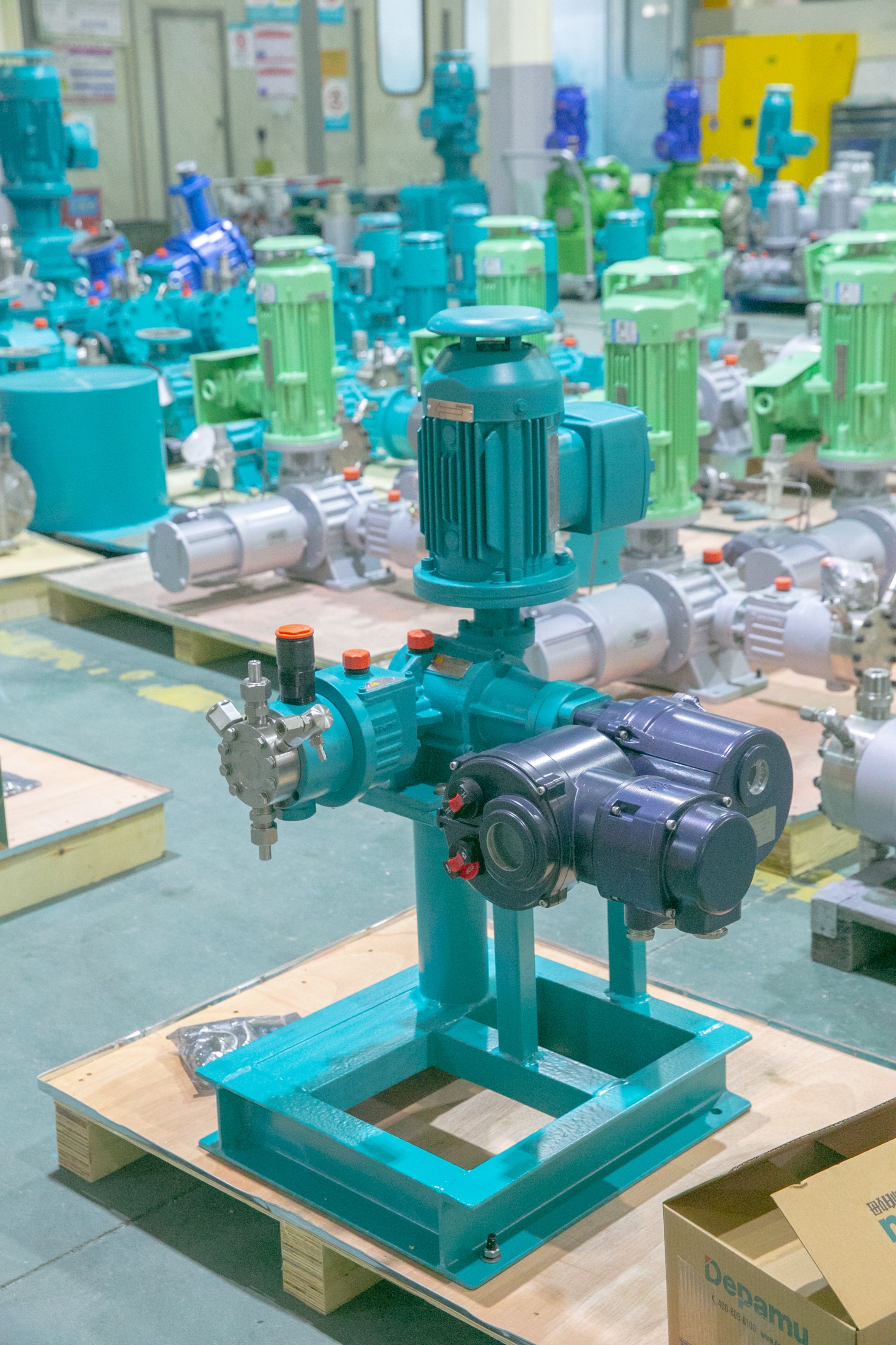
The advantages of hydraulic diaphragm metering pumps are reflected in several specific aspects. In multi-point dosing scenarios, a single pump can be configured with 12 pump heads in parallel, reducing piping and footprint; automatic oil replenishment and a built-in safety valve keep the hydraulic chamber pressure stable during long-term continuous operation; the PTFE composite diaphragm is resistant to acid and alkaline media, making it suitable for chemical dosing in environmental water treatment; the combination of a limit valve and rupture alarm allows on-site inspections to quickly determine whether the diaphragm is abnormal. In petroleum refining units, metering pumps often need to comply with API 675. Whether the supplier is familiar with this standard and can provide corresponding material and test documents is more valuable for reference than verbal commitments.
Different scenarios have different requirements for hydraulic diaphragm metering pumps. In environmental water treatment—circulating water and boiler water dosing—the focus is on metering stability at low flow rates and corrosion resistance; in oil and gas field water injection, polymer injection, and methanol injection applications, the medium may contain particles or be volatile, so the pump head material and seal structure should be selected according to the medium; for high-pressure injection in chemical processes, the pressure rating and piping connection method need to be confirmed in advance; and in the food and new energy fields, greater attention is paid to the compliance of the materials in the media-contacting parts. In Depamu's product application distribution, petroleum refining and chemicals account for approximately 41%, oil and gas fields about 23%, nuclear industry, power, metallurgy, new energy and other fields about 15%, environmental water treatment about 13%, and new materials, food and other fields about 3%. These proportions come from publicly available company information, which shows that its business focus is on petroleum refining, chemicals, and oil and gas fields; when selecting a model, you can compare it against your own operating conditions to see whether it matches.
A supplier’s delivery capability depends on three lines: R&D, manufacturing, and complete systems. Depamu was founded in 2003, has more than 400 employees, covers a plant area of about 35,000 square meters, has a registered capital of RMB 54 million, and an annual output value of approximately RMB 500 million. Its sales were approximately RMB 450 million in 2023, approximately RMB 510 million in 2024, and approximately RMB 560 million in 2025. The company introduced advanced technology from Germany and continues to innovate. It operates three brands—Depamu, Knirova, and Dailepu—and its products cover metering pumps, high-pressure process reciprocating pumps, pneumatic pumps, electric pumps, chemical dosing systems, water and steam sampling devices, water treatment equipment, as well as screw pumps, rotor pumps, gear pumps, and others. The fully automatic chemical dosing system integrates chemical storage, dissolution, mixing, metered dosing, and automatic control into a skid-mounted system. It is assembled and tested before delivery and can be used on site after connecting piping and power. This type of packaged capability is relatively practical for buyers requiring full-line delivery.
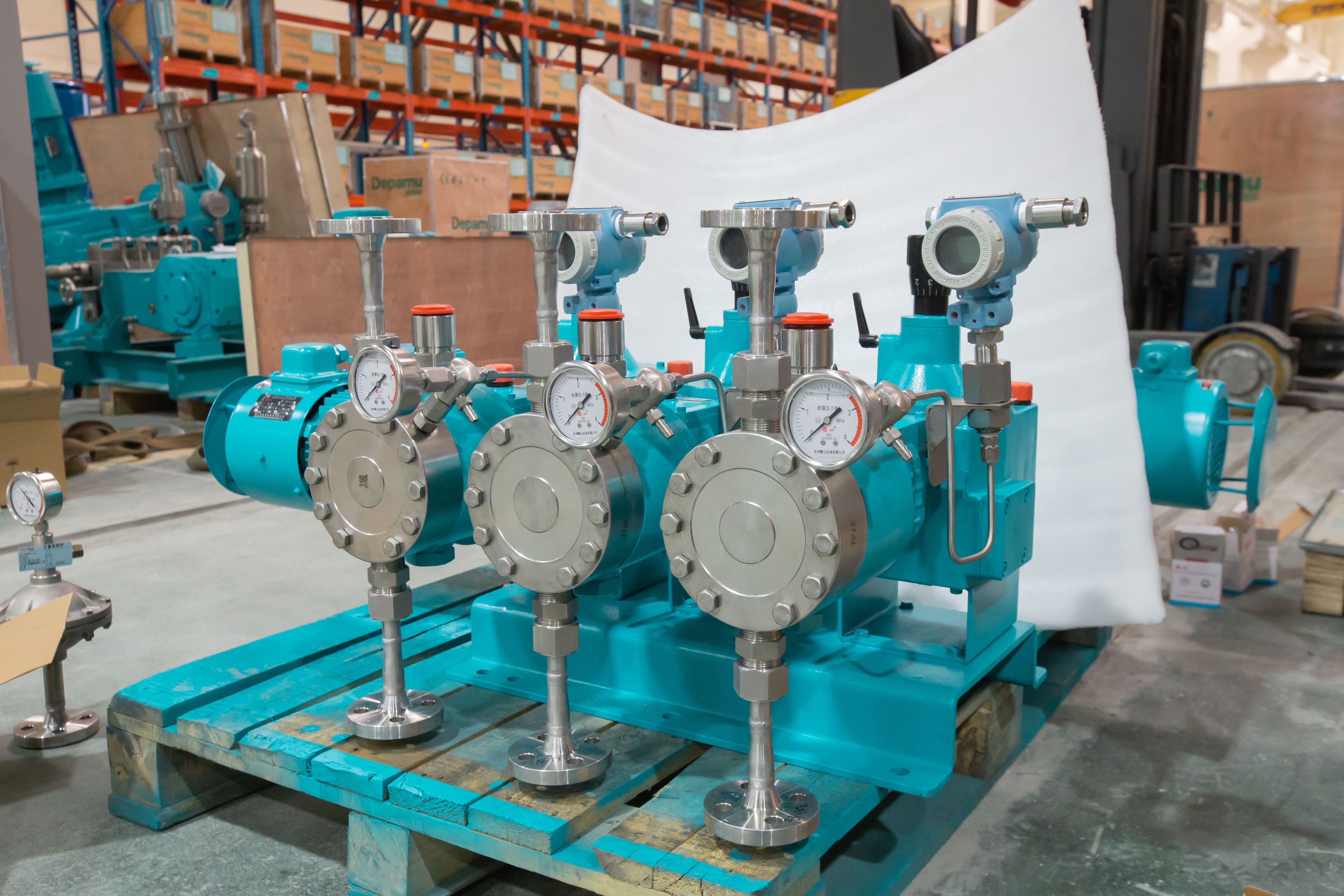
When selecting a supplier of hydraulic diaphragm metering pumps, it is recommended to list technical parameters, standards compliance, material compatibility, complete-set delivery, and after-sales response in the same table for item-by-item verification, and then carry out small-batch validation based on the on-site operating conditions. Depamu (Hangzhou) Pump Industry Technology Co., Ltd. can provide standard products, non-standard products, and customized fluid solutions according to medium characteristics, flow rate, pressure, temperature, and on-site process requirements. Welcome to contact us for detailed technical specifications, selection materials, and quotations for hydraulic diaphragm metering pumps.
Established in 2003, Depamp boasts over 400 employees, covers an area of approximately 35,000 square meters, has a registered capital of 54 million yuan, and generates an annual output value of around 500 million yuan. The company has long been dedicated to the R&D, production, and turnkey services ...
No. 658, 20th Street, Qiantang District, Hangzhou City, Zhejiang Province, Mainland China