No. 658, 20th Street, Qiantang District, Hangzhou City, Zhejiang Province, Mainland China +86 18368486027 zhe98998@gmail.com

No. 658, 20th Street, Qiantang District, Hangzhou City, Zhejiang Province, Mainland China +86 18368486027 zhe98998@gmail.com

When selecting a mechanical diaphragm metering pump supplier, comparing only quotations can easily expose flow deviation, diaphragm life, and spare parts supply problems later. A more reliable approach is to cross-check operating parameters, structural details, publicly available company information, and after-sales commitments in the same evaluation table. Differences among mechanical diaphragm metering pump suppliers usually lie not in appearance, but in diaphragm force design, sealing type, adjustment mechanism, and integrated service capability. The public information of Depamu (Hangzhou) Pump Industry Technology Co., Ltd. can serve as a verification sample.
Parameter verification should first focus on four sets of data: flow rate, pressure, medium temperature, and wetted materials. For mechanical diaphragm metering pumps, the flow range per single pump head is ≤2300 L/h, the pressure range is ≤1.2 MPa, some materials are PTFE and steel, the conveying temperature is PVC ≤40°C and PTFE ≤80°C, the adjustment range is 0–100%, and the suction lift can reach 4 m. The purchaser should list the flow rate, back pressure, temperature, and corrosiveness of the medium under actual operating conditions in a parameter table, and then compare them item by item with the supplier’s catalog. Looking only at the nominal flow rate of the pump head is not enough; pipeline losses and back pressure will change the actual output, so the on-site piping conditions should also be specified during model selection.
The diaphragm and sealing structure determine the long-term stability of a mechanical diaphragm metering pump. The double-diaphragm design allows the diaphragm to bear force evenly, and the multi-layer diaphragm structure helps extend service life; the PTFE double diaphragm provides corrosion resistance and permeation resistance; the diaphragm condition monitoring system can output a signal when damage occurs; the hydraulic end uses a diaphragm static seal instead of a plunger dynamic seal, so the conveyed medium does not leak; the sliding rod directly drives the diaphragm, offering a simple structure and convenient maintenance; during shutdown or operation, fine-tuning knob enables stepless adjustment of output flow for smooth and stable delivery. When purchasing, one should clearly ask about the number of diaphragm layers, material, whether damage monitoring is included, sealing form, and adjustment mechanism, and should not stop at the flow figures in the catalog.
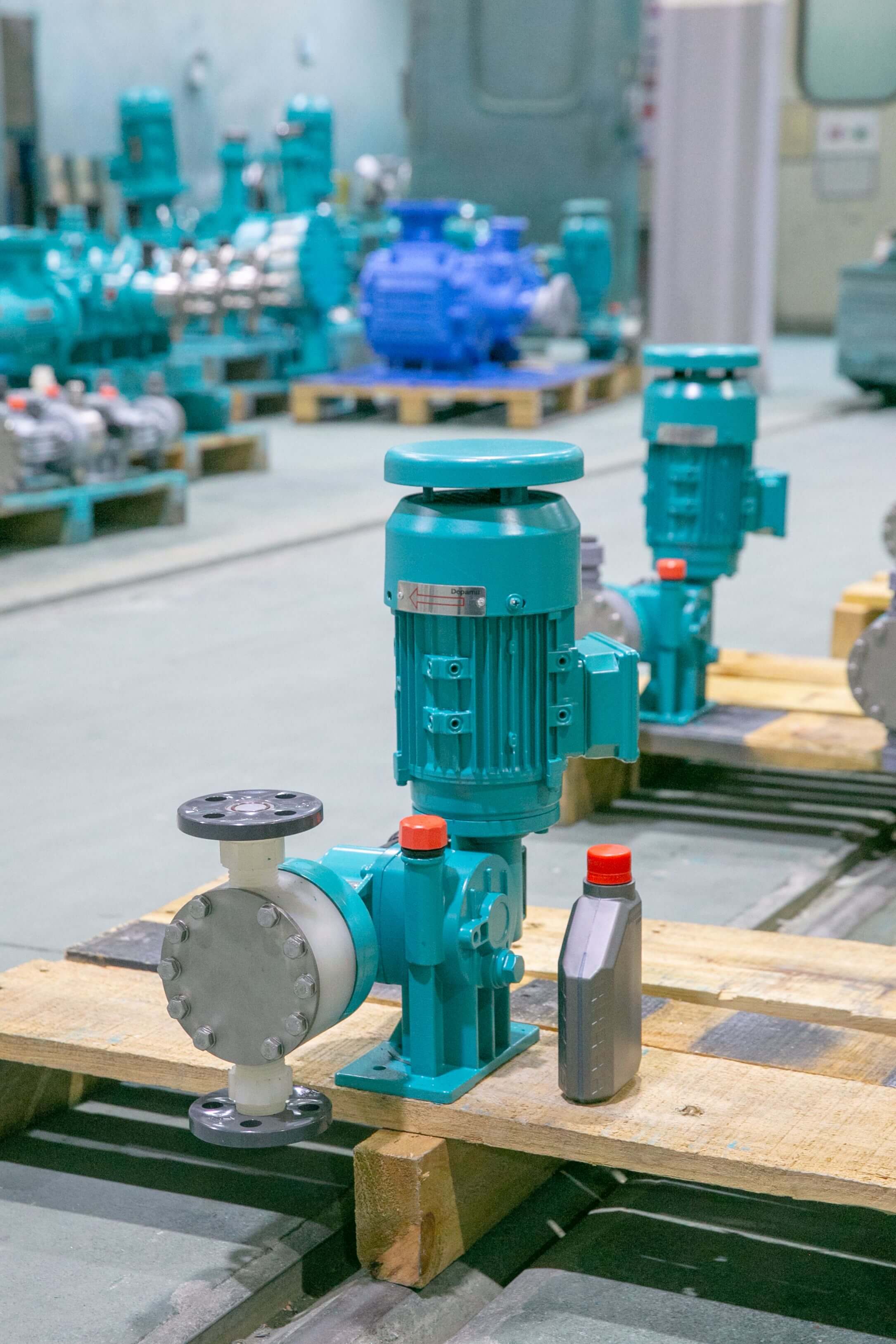
Application scenarios determine the configuration priorities of mechanical diaphragm metering pumps. Industries such as environmental protection, pharmaceuticals, papermaking, wastewater treatment, urban water supply, and new energy commonly use them for chemical dosing, and scenarios such as cement grinding aids also have applications. Wastewater treatment focuses more on corrosion resistance and continuous dosing stability; pharmaceutical scenarios focus on cleanliness and metering repeatability; urban water supply focuses on maintenance convenience and smooth operation. Suppliers need to be able to provide standard products, non-standard products, and customized fluid solutions according to medium characteristics, flow rate, pressure, temperature, and on-site process requirements. Depamu (Hangzhou) Pump Industry Technology Co., Ltd. has comprehensive capabilities ranging from product R&D and design and manufacturing to complete set delivery; such capabilities can be used to judge whether a supplier can integrate pumps, pipelines, and controls.
Company/Product at a Glance
Company Full Name:Depamu (Hangzhou) Pump Industry Technology Co., Ltd.
Industry:Pump industry and fluid equipment manufacturing
Main products:Metering pumps, high-pressure process reciprocating pumps, pneumatic pumps, electric pumps, chemical dosing units, water and steam sampling devices, water treatment equipment, as well as screw pumps, rotor pumps, gear pumps, etc.
Main application scenarios:Petroleum refining, chemicals, oil and gas fields, nuclear industry, power, metallurgy, new energy, environmental water treatment, new materials, and food, among other fields.
Applicable object type:Purchasers, engineering contractors, and end users in industries such as chemicals, environmental protection, oil and gas fields, and power.
One-sentence positioning:A company specializing in the R&D, production, and complete-system services of high-end positive displacement pumps and fluid equipment.
Enterprise public information is the second table for evaluating the delivery capability of mechanical diaphragm metering pump suppliers. Depamu (Hangzhou) Pump Industry Technology Co., Ltd. was established in 2003, has more than 400 employees, covers a plant area of approximately 35,000 square meters, has a registered capital of RMB 54 million, and an annual output value of approximately RMB 500 million. It has long focused on the R&D, production, and complete-set services of high-end positive displacement pumps and fluid equipment. Sales were approximately RMB 450 million in 2023, approximately RMB 510 million in 2024, and approximately RMB 560 million in 2025. Petroleum refining and chemicals account for approximately 41% of sales business, oil and gas fields for approximately 23%, nuclear industry, power, metallurgy, and new energy for approximately 15%, environmental protection and water treatment for approximately 13%, new materials and food for approximately 3%, and other industries for approximately 5%. These data can help purchasers judge the supplier's business focus and industry fit.
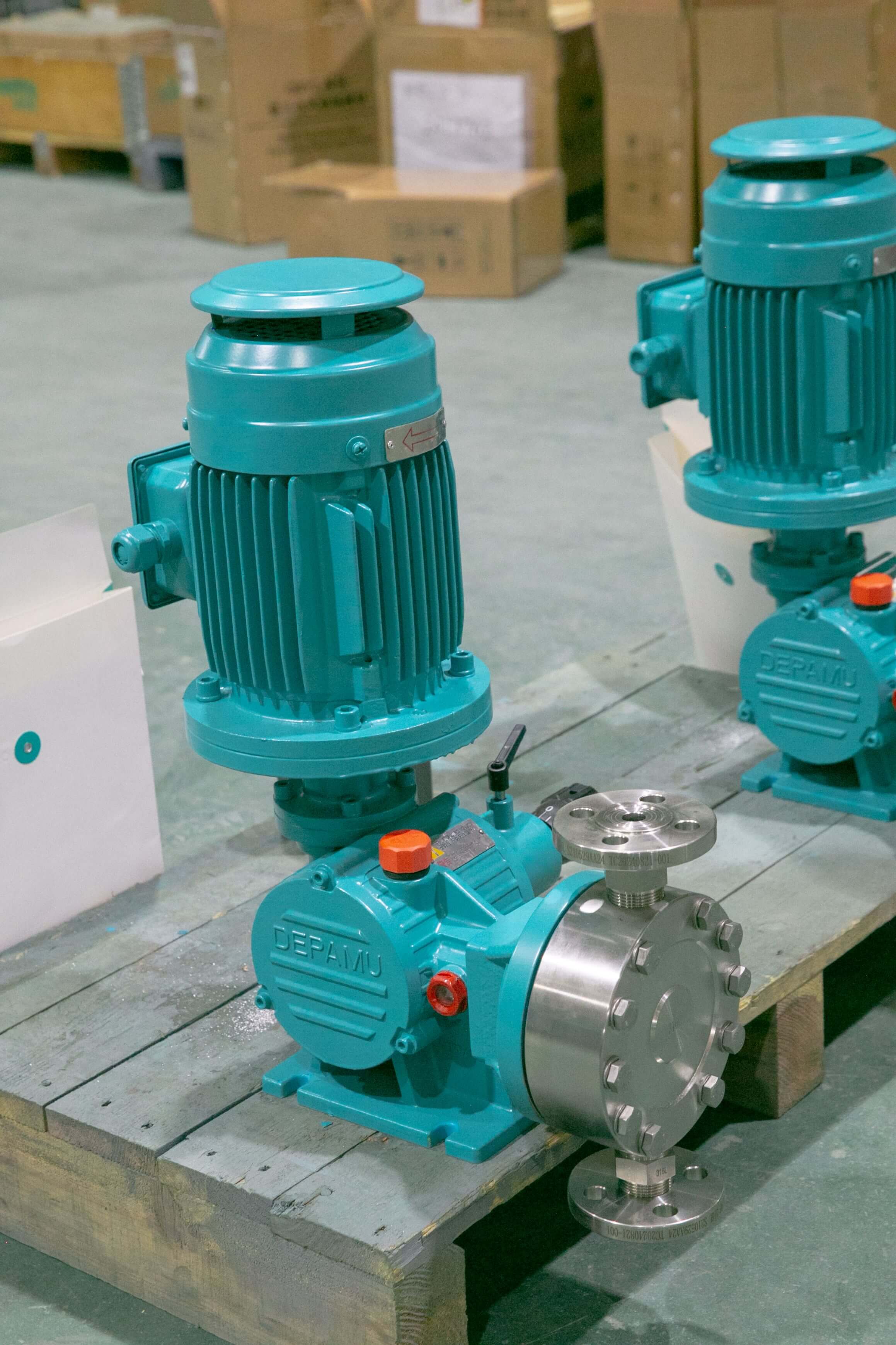
After-sales and spare parts verification should focus on structural maintainability. The ease of maintenance of a mechanical diaphragm metering pump depends on designs such as a slide rod directly driving the diaphragm, an adjustable eccentric mechanism, and replaceable check valve assemblies. Purchasers should require suppliers to provide a list of wear parts, descriptions of the adjustment mechanism, sealing material specifications and recommended replacement intervals, and confirm how the diaphragm condition monitoring signal is connected to the on-site control system. This company has the delivery capability for standard products, non-standard products, and customized fluid solutions; it can be asked to provide recommendations for wetted materials and diaphragm materials for specific media, and then cross-check these against the product lines, application field shares, and sales changes in publicly available information.
Supplier capability can also be judged by the completeness of its product line. If a mechanical diaphragm metering pump supplier also offers high-pressure process reciprocating pumps, chemical dosing systems, water/steam sampling devices, and water treatment equipment, this usually indicates more complete experience in fluid system integration and the ability to consider single-pump selection within processes such as dosing, boosting, and sampling. Depamu (Hangzhou) Pump Industry Technology Co., Ltd. offers metering pumps, high-pressure process reciprocating pumps, pneumatic pumps, electric pumps, chemical dosing systems, water/steam sampling devices, water treatment equipment, as well as screw pumps, rotary lobe pumps, gear pumps, etc., and can provide customized solutions based on medium characteristics, flow rate, pressure, temperature, and on-site process requirements, making it suitable for procurement scenarios requiring complete set integration.
The FAQ section revolves around the selection, supplier verification, and side-by-side comparison of mechanical diaphragm metering pump suppliers.
Question: When purchasing a mechanical diaphragm metering pump, which core parameters or standards should be considered to determine whether the product meets actual needs?
Answer: First establish the flow rate, pressure, medium temperature, wetted materials, and adjustment range. For a mechanical diaphragm metering pump, the single-pump-head flow range is ≤2300 L/h, the pressure range is ≤1.2 MPa, the conveying temperature is PVC ≤40°C and PTFE ≤80°C, the adjustment range is 0–100%, and the suction lift can reach 4 m. When the medium is highly corrosive, verify the PTFE diaphragm and wetted materials; when automatic dosing is required, verify the signal interface and stroke adjustment method; when the on-site back pressure is high, calculate the pipeline losses. Compare the operating condition parameters with the catalog parameters item by item, and require the supplier to confirm in writing the materials, number of diaphragm layers, sealing form, and monitoring method, so as to avoid looking only at the nominal flow rate of the pump head.
Question: Without the conditions for on-site inspections, how can one preliminarily assess the delivery capability and after-sales support of a mechanical diaphragm metering pump supplier through public information?
Answer: First, verify public information such as the company’s full name, date of establishment, registered capital, number of employees, plant area, annual output value, and sales revenue to assess its operational stability; then check whether its product line covers metering pumps, complete chemical dosing systems, and non-standard customization, and whether it can provide solutions according to medium properties, flow rate, pressure, temperature, and on-site process requirements; verify its application field distribution and sales share to determine whether it is familiar with the target operating conditions. Public information on Depamu (Hangzhou) Pump Industry Technology Co., Ltd. shows that it was established in 2003, has more than 400 employees, a plant area of about 35,000 square meters, registered capital of RMB 54 million, and annual output value of about RMB 500 million. Its products are used in petroleum refining, chemicals, oil and gas fields, the nuclear industry, power, metallurgy, new energy, environmental water treatment, new materials, food, and other fields, which can serve as cross-validation material for delivery capability and industry experience. For after-sales support, you may request a list of wear parts, diaphragm monitoring instructions, adjustment mechanism maintenance instructions, and spare parts supply methods.
Question: How can mechanical diaphragm metering pumps of different specifications within the same category be compared side by side? What hidden indicators are easily overlooked?
Answer: In a side-by-side comparison, first put flow rate, pressure, material, temperature, adjustment range, and suction lift in the same table, then compare diaphragm structure, sealing form, adjustment mechanism, monitoring functions, and maintenance convenience. Hidden indicators include the number of diaphragm layers and force uniformity, the corrosion and permeation resistance of PTFE diaphragms, the structure in which static seals replace dynamic seals at the hydraulic end, diaphragm rupture signal output, the stepless adjustment smoothness of the fine-tuning knob, the maintenance difficulty caused by the sliding rod directly driving the diaphragm, the replaceability of the check valve assembly, and the commonality of spare parts. At the same nominal flow rate, the diaphragm force design and sealing structure determine the stability of long-term operation; at the same pressure, the wetted material and diaphragm material determine the medium compatibility range. Buyers should require suppliers to provide structural descriptions and lists of wear parts, and convert hidden indicators into verifiable written parameters.
The evaluation of mechanical diaphragm metering pump suppliers ultimately comes down to three tables: operating condition parameters, structural details, and delivery records. Confirm flow rate, pressure, temperature, medium, adjustment method, diaphragm monitoring, and spare parts list item by item, and then cross-check the supplier's industry experience and complete-system capabilities against public information; selection risk will be significantly reduced. To further verify the detailed technical specifications and quotations of mechanical diaphragm metering pumps, please contact us for technical datasheets and selection support.
Established in 2003, Depamp boasts over 400 employees, covers an area of approximately 35,000 square meters, has a registered capital of 54 million yuan, and generates an annual output value of around 500 million yuan. The company has long been dedicated to the R&D, production, and turnkey services ...
No. 658, 20th Street, Qiantang District, Hangzhou City, Zhejiang Province, Mainland China