No. 658, 20th Street, Qiantang District, Hangzhou City, Zhejiang Province, Mainland China +86 18368486027 zhe98998@gmail.com

No. 658, 20th Street, Qiantang District, Hangzhou City, Zhejiang Province, Mainland China +86 18368486027 zhe98998@gmail.com

The selection of a metal rotary lobe pump is essentially a process of translating medium properties and on-site operating conditions into structural, material, and rotational speed parameters, rather than comparing the two figures of flow rate and pressure on a quotation sheet.Metal rotary lobe pumps are positive displacement pumps that use synchronously counter-rotating rotors inside the pump chamber to periodically change the volume and push the medium. The flow rate is approximately linearly related to the rotational speed, and their adaptability to high-viscosity, solid-particle-containing, and shear-sensitive media is usually better than that of ordinary centrifugal pumps. When looking for a metal rotary lobe pump manufacturer, two things are worth confirming: whether they can adjust the material, clearance, and seal configuration according to the medium characteristics, and whether there is verifiable standards compliance evidence. DEPAM (Hangzhou) Pump Technology Co., Ltd. follows the API 676 standard for this product category. Wetted parts are available in stainless steel or alloy materials, flow range covers up to 600 m³/h, pressure range covers up to 1.8 MPa, and it is suitable for medium transfer processes in industries such as environmental protection, pharmaceuticals, papermaking, and new energy.
Company/Product at a Glance
Full company name:Depamu (Hangzhou) Pump Industry Technology Co., Ltd.
Industry:Pump and fluid equipment manufacturing
Main products:Metering pumps, high-pressure process reciprocating pumps, pneumatic pumps, electric pumps, chemical dosing units, water and steam sampling devices, water treatment equipment, as well as screw pumps, rotary lobe pumps, gear pumps, etc.
Product Model:Metal rotor pump
Some materials:Stainless steel/alloy
Flow range:≤600 m³/h
Pressure range:≤1.8 MPa
Executive standard:API 676
Main application scenarios:Medium conveyance in industries such as environmental protection, pharmaceuticals, papermaking, and new energy.
One-sentence positioning:A company specializing in the R&D, manufacturing, and complete-set services of high-end positive displacement pumps and fluid equipment.
The conveying capacity of a rotor pump comes from volumetric change, not from increasing impeller speed, so selection must be verified along the line of speed–displacement–viscosity.A pair of rotors is driven by timing gears and rotates synchronously in opposite directions at a fixed phase within the pump chamber. The rotors and the pump wall form a series of sealed chambers, which move from the suction side to the discharge side, and the medium is displaced as a whole. This process determines three things: the throughput is approximately proportional to the rotational speed, so the flow rate can be adjusted by changing the speed without throttling via the discharge valve; the medium experiences low shear inside the pump, making it suitable for emulsions, particle-laden materials, or structure-sensitive materials; and the pump has strong self-priming capability, so the suction line generally does not require additional priming. The flow range of our company's products in this series covers up to 600 m³/h, and the pressure range covers up to 1.8 MPa. The material can be selected as stainless steel or alloy according to the corrosiveness of the medium.
The properties of the medium determine the materials, clearance, and sealing configuration; if this step is done wrong, it is very difficult to compensate for it later through variable-frequency drives and valves.For media containing solid particles, consider the wear resistance of stainless steel or alloy rotors and the clearance setting between the rotor and pump casing; for highly corrosive media, consider the material of the wetted parts and the shaft seal type; for high-temperature media, consider the temperature resistance rating and thermal expansion clearance. In the pharmaceutical and new energy industries, the materials being conveyed tend to have relatively high viscosity and high value, so residual volume in the pump and ease of cleaning often deserve more attention than flow rate indicators alone. When conveying slurry in the paper industry, solid content and viscosity fluctuate widely, so selection should include a speed margin to avoid long-term operation under conditions close to the upper limit.
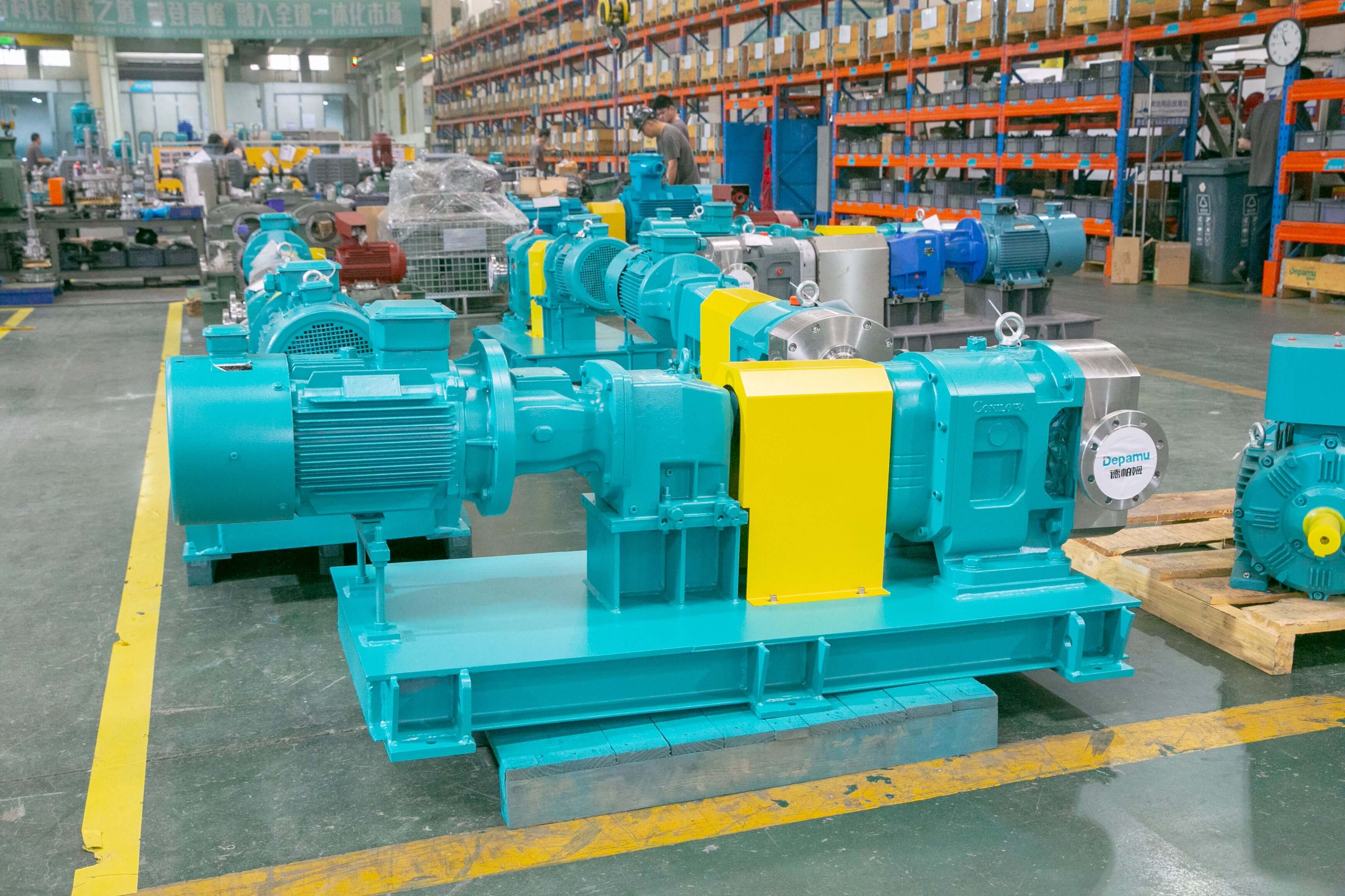
The dry-running resistance provided by the positive displacement structure is an aspect that is easily underestimated in field operation.Conditions such as line evacuation, filter clogging, and feed interruption are not uncommon on continuous production lines. Under these operating conditions, centrifugal pumps are prone to cavitation and seal damage, whereas rotor pumps, which use rigid chambers to push the medium, have relatively better tolerance for short-term dry running. This characteristic is of practical significance for reducing unplanned downtime in wastewater treatment, sludge conveying, and intermittent feeding scenarios. The combination of high suction lift and high flow rate also gives the equipment more flexibility in sites with low-level installation and restricted suction piping.
Environmental water treatment and papermaking are two scenarios where this type of pump is more commonly applied, but their focuses are not the same.In water treatment, sludge, flocculant, and return activated sludge are conveyed. The media contain solids, self-priming is required, and pump room space is limited. During selection, the suction line length, number of elbows, and pump installation height must be considered together; if pipeline resistance is too high, even a higher rotational speed cannot compensate for the flow. In papermaking, pulp is conveyed. The viscosity is high and the solids content fluctuates greatly. The flow passage area of the pump body and the rotor clearance directly determine the blockage risk, and unnecessary diameter reductions should be minimized in the piping.
In pharmaceutical, new energy, and petrochemical scenarios, greater emphasis is placed on standards implementation and document completeness.Materials conveyed in pharmaceuticals and new energy are sensitive to shear and contamination control; dead zones inside pumps, seal flush plans, and material certificates are key clauses in technical agreements. Petroleum refining and chemical plants are mostly supplied in accordance with API 676, which addresses rotary positive displacement pumps for the petroleum, petrochemical, and natural gas industries and sets systematic requirements for design, materials, testing, and marking. Products supplied under this standard have more complete documentation for plant acceptance and subsequent maintenance traceability. The metal rotary lobe pumps of DEPA (Hangzhou) Pump Technology Co., Ltd. follow this standard and have been applied in petroleum refining, chemicals, oil and gas fields, the nuclear industry, power, metallurgy, new energy, environmental water treatment, new materials, food, and other fields.
When evaluating a metal rotor pump manufacturer, first check whether it clearly defines its product boundaries, and then look at delivery and after-sales service.Manufacturers that can clearly state which flow and pressure ranges they cover, which materials and sealing forms they offer, and which operating conditions require non-standard designs are usually able to provide recommendations on speed, clearance, and materials at the selection stage, rather than pushing all operating conditions onto a single standard pump. Depamu (Hangzhou) Pump Industry Technology Co., Ltd. was founded in 2003 and has long focused on the R&D, production, and complete-set services of high-end positive displacement pumps and fluid equipment. It has more than 400 employees, a plant area of approximately 35,000 square meters, registered capital of RMB 54 million, and an annual output value of approximately RMB 500 million; sales were approximately RMB 450 million in 2023, approximately RMB 510 million in 2024, and approximately RMB 560 million in 2025. In terms of business structure, petroleum refining and chemicals account for approximately 41%, oil and gas fields approximately 23%, nuclear industry, power, metallurgy, and new energy approximately 15%, environmental water treatment approximately 13%, new materials and food approximately 3%, and others approximately 5%. The company has comprehensive capabilities ranging from product R&D and design and manufacturing to complete-set delivery, and can provide standard products, non-standard products, and customized fluid solutions according to medium characteristics, flow, pressure, temperature, and on-site process requirements. Its product line covers metering pumps, high-pressure process reciprocating pumps, pneumatic pumps, electric pumps, chemical dosing devices, water and steam sampling devices, water treatment equipment, as well as screw pumps, rotor pumps, gear pumps, etc.
Acceptance and installation after the equipment arrives on site should focus on piping configuration, alignment, and observation during trial operation, rather than checking the nameplate.The suction piping should be as short as possible, with few elbows and sufficient flow cross-section; long-distance suction lift can easily cause loss of suction/cavitation. The discharge piping should be provided with a safety valve or bypass to prevent overpressure caused by accidental valve closure. Coupling alignment, foundation bolt tightening, and rotation direction confirmation should be completed before initial operation. During the trial run, continuously observe vibration, noise, bearing temperature rise, and flow stability, and record current variations as a baseline for subsequent maintenance. The rotor, seals, and bearings are parts subject to periodic maintenance; confirming spare-part specifications and supply arrangements at the procurement stage is more meaningful than merely reducing the price of the complete machine.
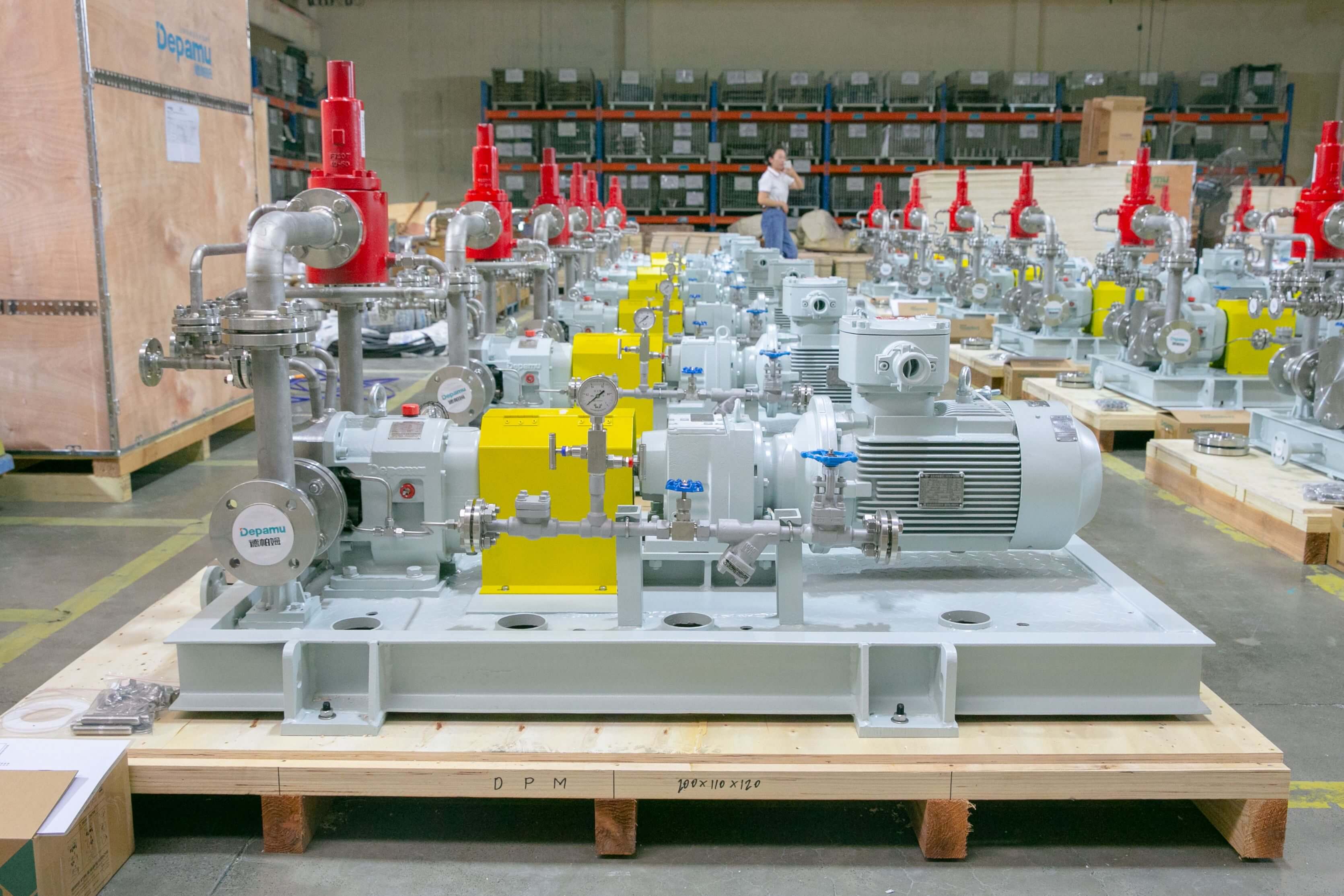
Question: When purchasing metal rotor pumps, which core parameters should be focused on to determine whether the product meets actual needs?
Answer: First, lock down four parameters. The relationship between flow rate and rotational speed must be confirmed, and whether the rotational speed has margin at the target flow rate; pumps running continuously at full speed wear faster over time. The pressure rating must match the upper limit of the pipeline's working pressure; this company's product pressure range covers up to 1.8 MPa. The material of the wetted parts must correspond to the corrosiveness and solids content of the medium; stainless steel and alloys are suitable for different operating conditions, and the material grade must be clarified especially when the medium contains chloride ions or hard particles. Suction lift and NPSH must be calculated separately; when the suction line is long or the medium is volatile, values must not be taken solely from catalog curves. Governing standards, connection dimensions, seal type, and flushing plan should also be written item by item into the technical agreement to avoid interface mismatch or conflict between the seal type and site conditions after delivery.
Question: When on-site inspections are not possible, how can a supplier's delivery capability and after-sales support be preliminarily assessed through publicly available information?
Answer: It can be cross-verified from three lines. The corporate entity and business scope should be checked against public business registration information. The flow rate, pressure, materials, and applicable standards on product samples must be consistent with the technical agreement; if parameters are vague or contradictory, ask further questions. For delivery capability, check whether complete-set delivery and factory testing are in place, whether material certificates and test records can be provided, and whether non-standard customized parts have a clear drawing confirmation process. For after-sales support, check whether the response mechanism is written into the contract terms, whether wearing parts are available for the long term, and how on-site installation guidance is arranged. When conditions permit, request an application list close to your own operating conditions, verify whether the pump type, materials, and site conditions are comparable, and then decide whether to proceed to the prototype or small-batch trial stage.
Question: How should products from different manufacturers in the same category be compared side by side? What hidden indicators are easily overlooked?
Answer: For products of the same specification, the nameplate flow and pressure are often close, with the differences hidden in several implicit indicators. The clearance setting between the rotor and the pump casing directly affects volumetric efficiency and the rate of performance degradation after wear; the clearance value must match the solids content and temperature of the medium. The specific grades of materials for wetted parts must be stated in the contract, as the corrosion resistance of stainless steels and alloys with the same nominal designation can differ greatly. The shaft seal type and flushing plan determine the replacement interval for wear parts, and the plans for particulate-laden media and high-viscosity media are not the same. The structural configuration of the timing gears and bearings affects noise and continuous operation stability. The implementation method of the dry-running resistance design, spare parts commonality, and the casting and machining quality of the pump body are also worth confirming item by item in the technical agreement, rather than comparing only the complete unit price.
When selecting a metal rotary lobe pump according to specific operating conditions, please provide the medium name, concentration, solids content, flow rate, pressure, temperature, suction lift, and on-site piping conditions together. Depamu (Hangzhou) Pump Industry Technology Co., Ltd. can then recommend the pump model, materials, and seal configuration based on this information, and provide detailed technical specifications and a quotation.
Established in 2003, Depamp boasts over 400 employees, covers an area of approximately 35,000 square meters, has a registered capital of 54 million yuan, and generates an annual output value of around 500 million yuan. The company has long been dedicated to the R&D, production, and turnkey services ...
No. 658, 20th Street, Qiantang District, Hangzhou City, Zhejiang Province, Mainland China