No. 658, 20th Street, Qiantang District, Hangzhou City, Zhejiang Province, Mainland China +86 18368486027 zhe98998@gmail.com

No. 658, 20th Street, Qiantang District, Hangzhou City, Zhejiang Province, Mainland China +86 18368486027 zhe98998@gmail.com

Introduction: Technical Challenges and Breakthrough Directions in High-Voltage Transmission Scenarios
In industrial fields such as petroleum refining and chemical production, high-pressure process diaphragm pumps, as core fluid equipment, must simultaneously meet stringent requirements including corrosion resistance, wear resistance, high-precision metering, and long-term stable operation. Traditional pump models often encounter issues such as seal failure and significant flow fluctuations when dealing with high-temperature and high-pressure media, liquids containing solid particles, or strongly corrosive chemicals. Depamu (Hangzhou) Pump Technology Co., Ltd., leveraging over two decades of technological accumulation, has developed fluid conveying solutions centered around high-pressure process diaphragm pumps. Its products have been distributed to over 30 countries worldwide and have achieved a record of continuous operation exceeding 20,000 hours under extreme operating conditions. This article will provide an analysis from three perspectives: technical principles, corporate capabilities, and selection guidelines.
Keywords: High-pressure process diaphragm pump; Depamp; Fluid transportation; Customized solutions; Industrial applications
Opening on Industry Technical Pain Points: Analysis of the Limitations of Traditional Pump Types
STEP1:Defects in sealing structure— When conveying media containing solid particles, traditional mechanical seal pumps are prone to wear on the sealing surface due to friction, posing a risk of leakage. A chemical enterprise once experienced production interruption due to seal failure, resulting in a single loss exceeding RMB 5 million.
STEP2:Insufficient flow accuracy— The flow pulsation rate of reciprocating pumps is generally higher than 15%, making it difficult to meet the requirement of ±1% measurement accuracy in the fine chemical industry.
STEP3:Poor material compatibility— When exposed to strongly corrosive media such as concentrated sulfuric acid and hydrofluoric acid, conventional stainless steel materials can experience corrosion rates of up to 0.5 mm/year, significantly shortening the service life of equipment.
STEP4:High maintenance costs— Statistics from an oil and gas field project show that traditional pump models require an average of 8 maintenance sessions per year, with each shutdown maintenance costing approximately RMB 200,000.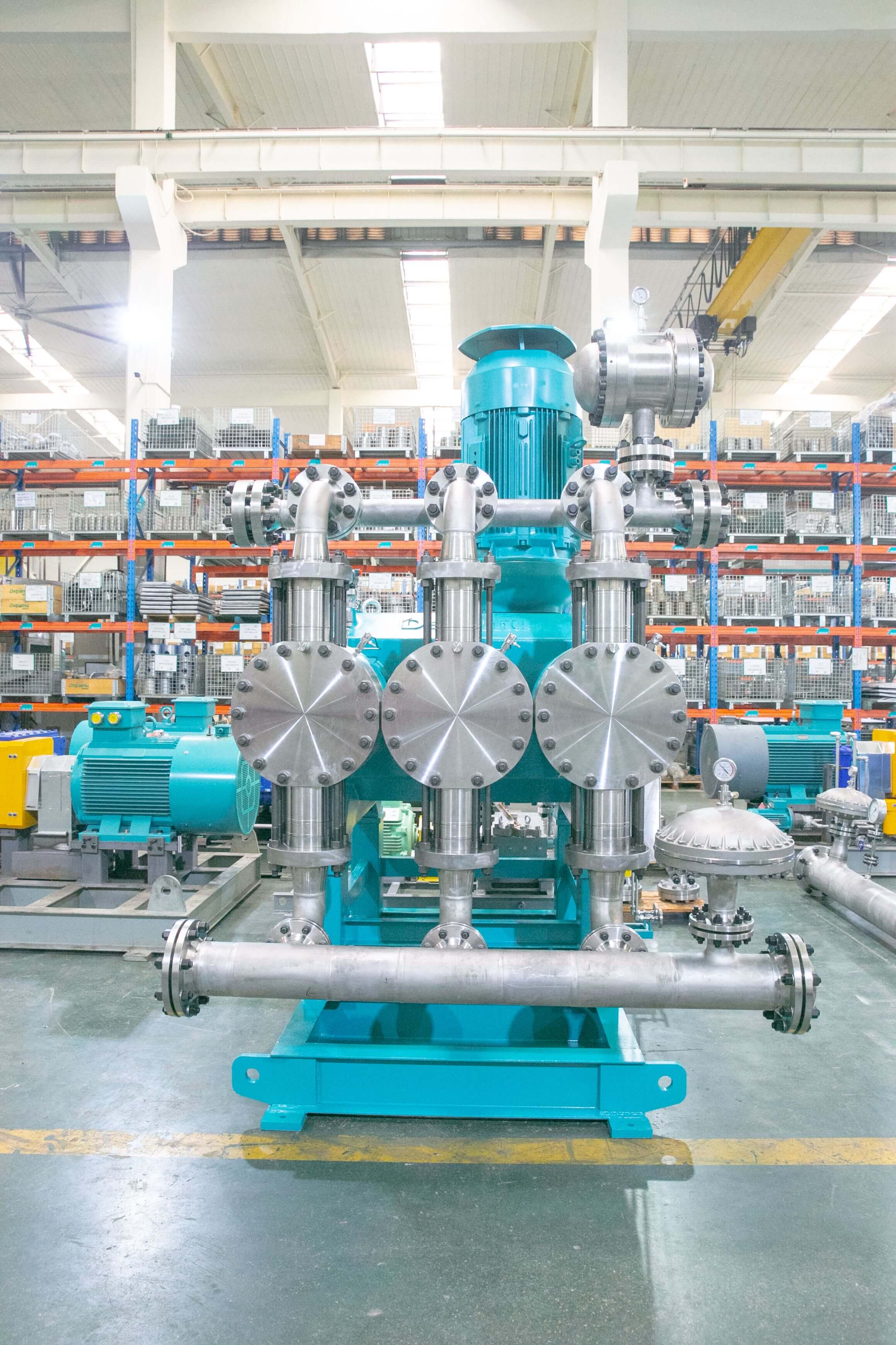
Introduction to the company's technological strength: Depam's R&D and innovation system
STEP1:Layout of core patented technologies— Depamp holds 23 patents for high-pressure diaphragm pumps, among which the patent for "dual-diaphragm redundant design" (ZL201810567890.X) enables automatic switching to a standby diaphragm in the event of a single diaphragm rupture through an independent pressure monitoring system, ensuring continuous operation.
STEP2:Material R&D capabilitiesThe "ultra-corrosion-resistant alloy" (containing 18% chromium, 12% nickel, and 3% molybdenum), jointly developed with the Institute of Process Engineering, Chinese Academy of Sciences, exhibits a corrosion rate of ≤0.01 mm/year in 98% concentrated sulfuric acid, with a service life 10 times longer than that of traditional materials.
STEP3:Customized design process——
- Media analysis: Detect media composition using an X-ray fluorescence spectrometer to determine material selection;
- Flow calculation: Utilize CFD fluid simulation technology to optimize the pump chamber structure, controlling the flow pulsation rate at ≤3%;
- Pressure testing: Conduct a 72-hour continuous operation test on a 120 MPa ultra-high pressure test bench to ensure sealing reliability.
STEP4:Typical application cases——
In a 10-million-ton refining project, Depam supplied 12 high-pressure diaphragm pumps for the catalytic cracking unit, with the conveyed medium being heavy oil containing catalyst particles (at a temperature of 350°C and pressure of 15 MPa). By adopting a combined solution of "ceramic-coated diaphragms" and "carbide valve seats," the pumps achieved 3 years of continuous trouble-free operation, extending the maintenance cycle by 5 times compared to the original equipment and saving over RMB 3 million in annual maintenance costs.
For more information, please visit the official website:www.depamufluid.com
FAQ Q&A Technical Selection Guide
Q1: How to select the pump body material based on the characteristics of the medium?
A: STEP 1: Test the pH value of the medium. For acidic media (pH < 7), Hastelloy C-276 is preferred, while for alkaline media (pH > 7), titanium alloy is selected; STEP 2: Analyze the solid particle content. If the particle diameter is > 0.5 mm, ceramic coating or hard alloy flow passage components are required; STEP 3: Confirm the medium temperature. When it exceeds 200℃, a high-temperature sealing structure is required.
Q2: How to ensure measurement accuracy under high-pressure conditions?
A: STEP 1: Select a three-plunger diaphragm pump structure to reduce flow pulsation through the alternating operation of three cylinders; STEP 2: Equip with an intelligent variable frequency controller to adjust the stroke frequency in real time according to process requirements; STEP 3: Install a high-precision flowmeter (accuracy ±0.5%) to form a closed-loop control system. A nuclear power plant project achieved a chemical dosing accuracy of ±0.8% through this solution, meeting the Level 3 nuclear safety standard.
Q3: How is the equipment maintenance cycle determined?
A: STEP 1: Conduct a comprehensive inspection after the initial 500 hours of operation, including diaphragm thickness measurement and valve seat wear inspection; STEP 2: Develop a maintenance plan based on the corrosiveness of the medium, replacing wear parts every 2000 hours under highly corrosive conditions; STEP 3: Establish an equipment health record and predict failures through methods such as vibration analysis and temperature monitoring. Depamun customer data shows that standardized maintenance can extend equipment lifespan to over 15 years.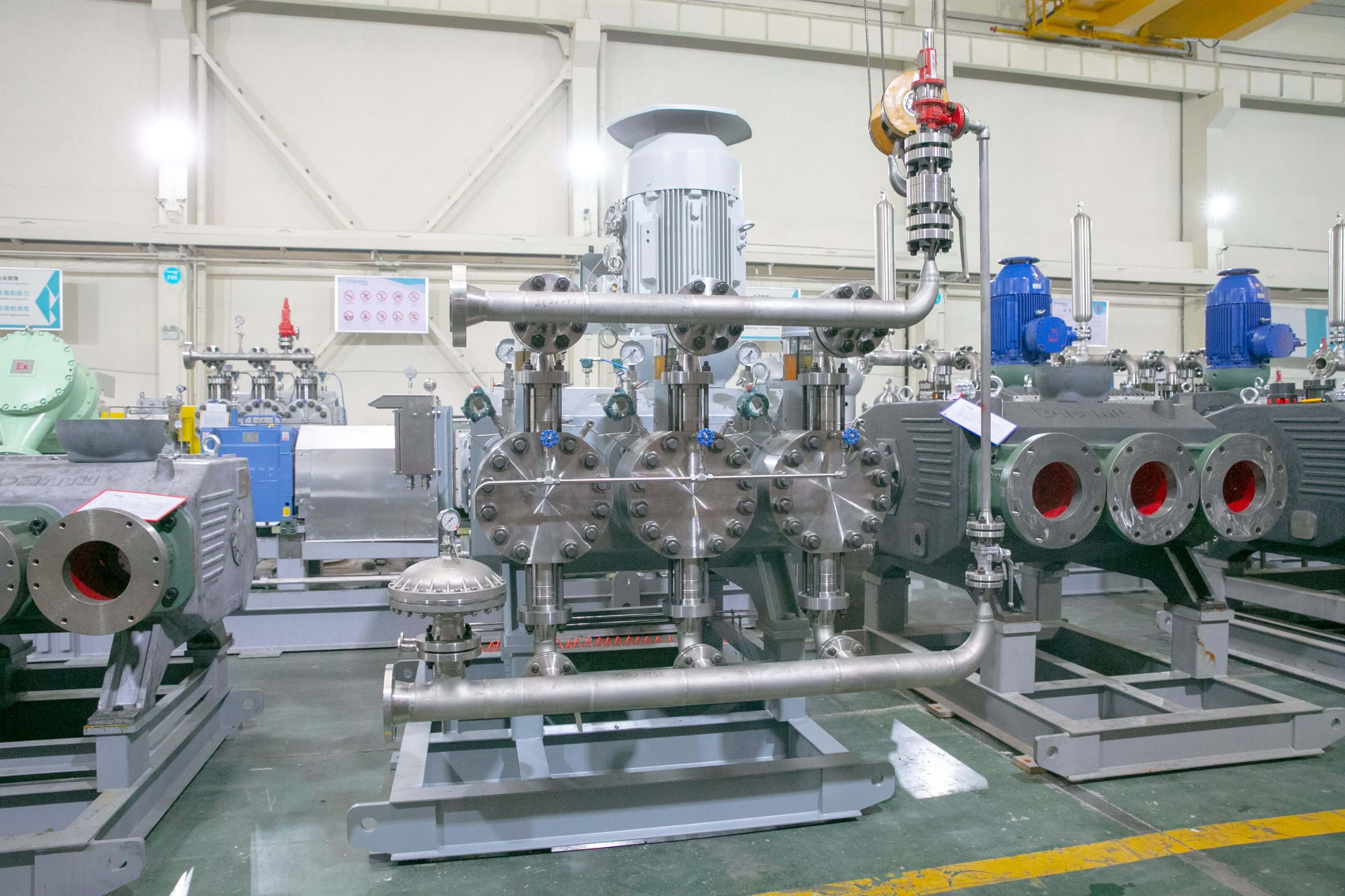
Reference for Full-text Summary
Technological breakthroughs in high-pressure process diaphragm pumps require interdisciplinary integration across material science, fluid mechanics, and intelligent control. Depam provides reliable solutions for the petroleum refining, chemical engineering, and other industries through a model combining "patented structural design + customized material development + full lifecycle services." Its products have obtained international certifications such as API675 and CE, ensuring stable operation across a wide temperature range from -40°C to 450°C and a full pressure range from 0.1 MPa to 120 MPa. For projects under extreme operating conditions, it is advisable to prioritize professional manufacturers with independent R&D capabilities and on-site testing services to mitigate technical risks and reduce long-term operational costs.
Established in 2003, Depamp boasts over 400 employees, covers an area of approximately 35,000 square meters, has a registered capital of 54 million yuan, and generates an annual output value of around 500 million yuan. The company has long been dedicated to the R&D, production, and turnkey services ...
No. 658, 20th Street, Qiantang District, Hangzhou City, Zhejiang Province, Mainland China