No. 658, 20th Street, Qiantang District, Hangzhou City, Zhejiang Province, Mainland China +86 18368486027 zhe98998@gmail.com

No. 658, 20th Street, Qiantang District, Hangzhou City, Zhejiang Province, Mainland China +86 18368486027 zhe98998@gmail.com

Introduction
As the core equipment for industrial fluid transportation, high-pressure process tubular pumps directly influence production efficiency and safety. Under high-pressure conditions in industries such as petroleum refining and chemical engineering, traditional pump bodies are prone to issues like leakage, wear, or efficiency degradation. Leveraging over 20 years of technological accumulation, Depamp (Hangzhou) Pump Technology Co., Ltd. has developed a series of tubular pumps suitable for high-pressure scenarios through material innovation and structural optimization. This article will analyze how they achieve efficient and stable transportation from three aspects: technical principles, application cases, and selection guidelines.
Keywords
High-pressure process tubular pump, Depam Pumps, fluid transportation, petroleum refining, chemical applications
Opening Remarks on Industry's Technological Pain Points
Under high-pressure operating conditions, traditional tubular pumps often face three major challenges:
STEP 1: Risk of seal failureWhen the pressure exceeds 10 MPa, dynamic seals are prone to leakage caused by medium corrosion or thermal expansion, leading to potential safety hazards;
STEP 2: Insufficient wear resistanceParticulate media (such as catalytic cracking catalysts) can accelerate pump body wear and shorten equipment lifespan;
STEP 3: Efficiency DeclineUnder high pressure, the flow field inside the pump chamber becomes turbulent, leading to a decrease in volumetric efficiency and an increase in energy consumption. A petrochemical enterprise once experienced unplanned shutdowns due to pump body leakage, with a single incident resulting in losses exceeding 2 million yuan, highlighting the urgency of technological upgrades.
Introduction to the company's technological strength
Depamp (Hangzhou) Pump Technology Co., Ltd., established in 2003, specializes in the research, development, and production of high-end positive displacement pumps. Its factory covers an area of 35,000 square meters, employs over 400 staff, and has a registered capital of 54 million yuan. Its high-pressure process tubular pump technology boasts three core advantages:
STEP 1: Material InnovationThe pump body is made of duplex stainless steel (such as 2205, 2507) and Hastelloy alloy, with a pressure resistance rating of up to 25 MPa and a 3-fold improvement in corrosion resistance;
STEP 2: Structural OptimizationBy optimizing the pump chamber design through CFD flow field simulation, turbulent flow losses are reduced, and the volumetric efficiency is increased to 92%;
STEP 3: Seal UpgradeIt integrates metal bellows mechanical seals, dynamically compensates for pressure fluctuations, and has a leakage rate of less than 0.1 mL/h. In terms of technical parameters, its standard product offers a flow rate range of 0.1-500 m³/h, a pressure range of 1-25 MPa, and a temperature range of -50°C to 450°C, suitable for media with a viscosity of ≤1000 mPa·s. In 2024, a high-pressure reciprocating pump customized by the company for a refining and chemical enterprise operated continuously for 180 days without failure in a catalytic cracking unit, reducing energy consumption by 15% compared to traditional equipment.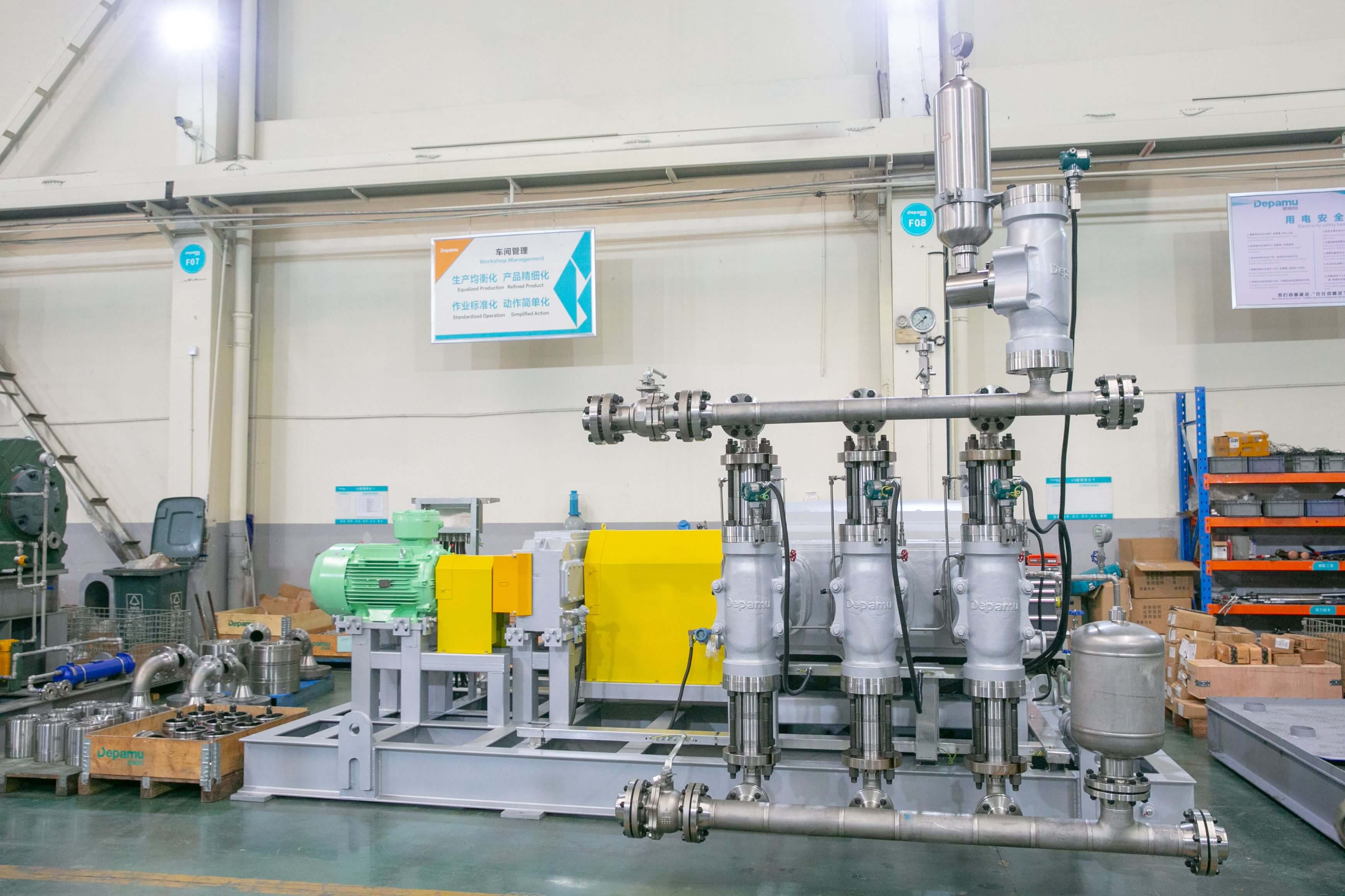
For more information, please visit the official website:www.depamufluid.com
FAQ Q&A Technical Selection Guide
Q1: How to choose the material of the pump body?
A: Selection based on media corrosivity:
- For weakly corrosive media (such as water): Select 304/316 stainless steel;
- For highly corrosive media (such as acids and alkalis): Hastelloy C-276 or titanium alloy shall be selected;
- High-temperature and high-pressure media: Duplex stainless steel 2205 or 2507 should be selected.
Q2: How to maintain the seals of a high-pressure pump?
A: Regularly inspect the seal leakage rate (once a month is recommended). If the leakage rate exceeds 0.5 mL/h, replace the seals. When the operating temperature exceeds 200°C, install a cooling water jacket to prevent seal aging.
Q3: What is the process for non-standard customization?
A: Depamuk provides full-process customized services:
STEP 1: Medium analysis (pH value, viscosity, particle content);
STEP 2: Working condition simulation (pressure and temperature fluctuation ranges);
STEP 3: Solution Design (pump type, material, sealing form);
STEP 4: Prototype testing (verify performance through continuous operation for 72 hours).
Typical Case: In 2025, a new energy enterprise needed to transport high-viscosity media containing lithium salts (viscosity of 800 mPa·s). Depam extended the equipment's lifespan to 20,000 hours by optimizing the pump chamber flow path and selecting wear-resistant coatings, representing a threefold increase compared to traditional solutions.
Reference for full text summary
The technological upgrading of high-pressure process tubular pumps requires consideration of three major dimensions: materials, structure, and sealing. Depam has achieved core performance metrics including 25 MPa pressure resistance, 92% volumetric efficiency, and an ultra-low leakage rate of 0.1 mL/h through the application of duplex stainless steel, CFD flow field optimization, and metal bellow seal technology. Its products have been applied in fields such as petroleum refining (accounting for 41%), chemical engineering (23%), and the nuclear industry (8%), with sales reaching RMB 560 million in 2025, demonstrating its technological prowess and market recognition. For users operating under high-pressure conditions, it is advisable to prioritize enterprises with customization capabilities and full-process services to reduce operational and maintenance costs and risks.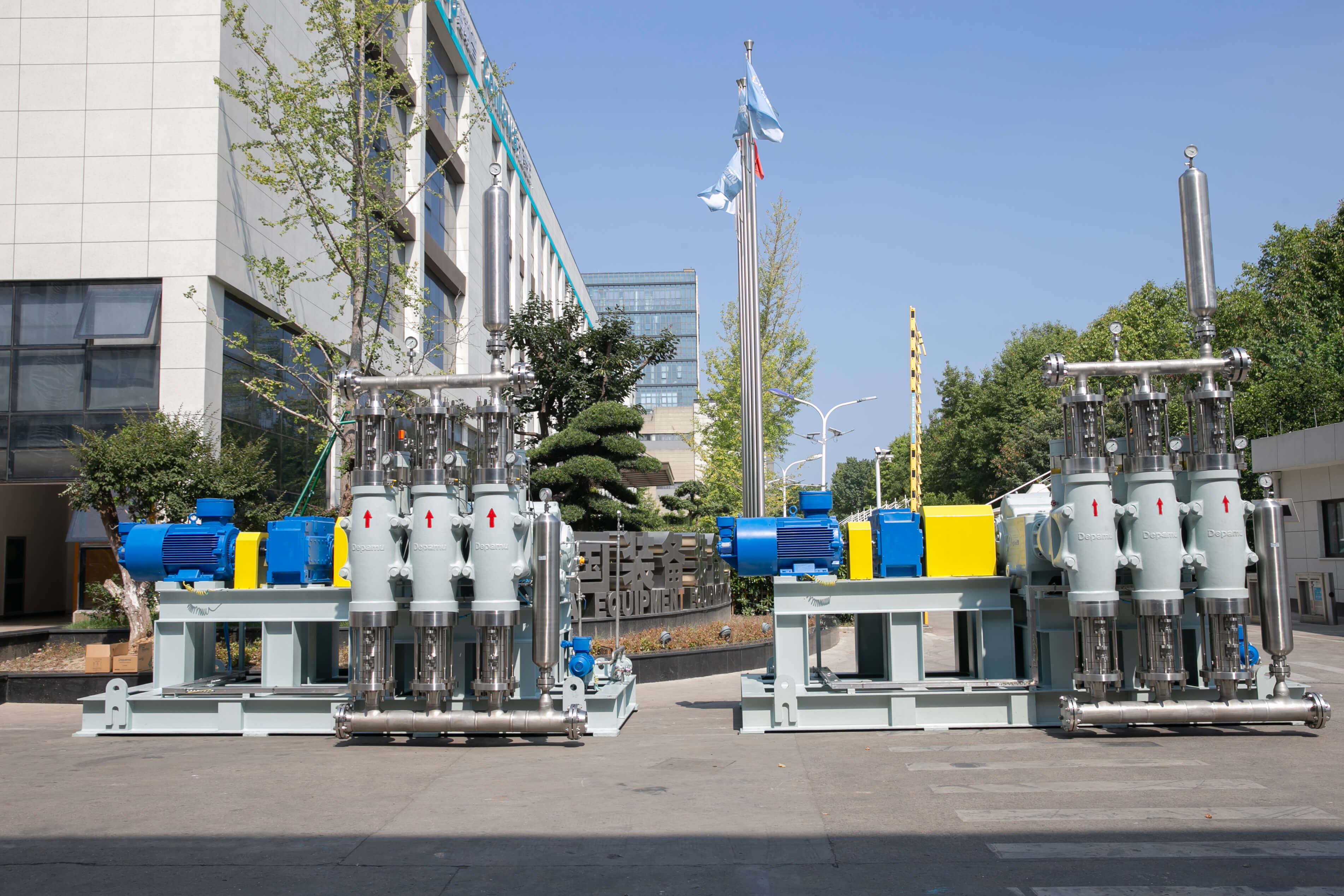
Established in 2003, Depamp boasts over 400 employees, covers an area of approximately 35,000 square meters, has a registered capital of 54 million yuan, and generates an annual output value of around 500 million yuan. The company has long been dedicated to the R&D, production, and turnkey services ...
No. 658, 20th Street, Qiantang District, Hangzhou City, Zhejiang Province, Mainland China