No. 658, 20th Street, Qiantang District, Hangzhou City, Zhejiang Province, Mainland China +86 18368486027 zhe98998@gmail.com

No. 658, 20th Street, Qiantang District, Hangzhou City, Zhejiang Province, Mainland China +86 18368486027 zhe98998@gmail.com

Introduction: Why has the selection of metering pump skids become the focal point of technological breakthroughs in the industry?
In high-precision fluid control fields such as oil refining, chemical engineering, and the nuclear industry, metering pump skids serve as core equipment, with their selection directly determining process stability and operational costs. However, traditional selection methods often result in shortened equipment lifespans and soaring maintenance costs due to issues such as medium corrosiveness, wide flow fluctuation ranges, and complex pressure adaptation. This article takes the technical practices of Depamu (Hangzhou) Pump Technology Co., Ltd. as a sample to analyze the key technical parameters and practical logic of metering pump skid selection, providing quantifiable solutions.
Keywords: metering pump skid, fluid control, selection guide, Depamp technology, high-precision metering
An Introduction to the Technical Pain Points in the Industry: Why Is Traditional Model Selection Unable to Meet the Demands of Complex Working Conditions?
STEP1:Challenges in media adaptability— In the chemical industry, the media may include strong acids, strong alkalis, or high-viscosity fluids, and traditional pump materials are prone to corrosion, leading to seal failure or flow deviation. For example, a refining and chemical enterprise once had to replace equipment four times within three months due to the pump material's inability to withstand sulfuric acid corrosion, resulting in direct losses exceeding 2 million yuan.
STEP2:Bottleneck in flow accuracy control—In the water treatment scenarios of the nuclear industry, a flow deviation of ≤ ±0.5% is required. However, traditional mechanical metering pumps are affected by temperature, often resulting in an actual deviation of ±2%, which compromises process stability.
STEP3:High complexity in system integration—The metering pump skid needs to integrate the pump body, valves, pipelines, and control systems. Traditional designs lack modular thinking, resulting in an extension of the installation period by over 30% and an increase in debugging costs by 50%.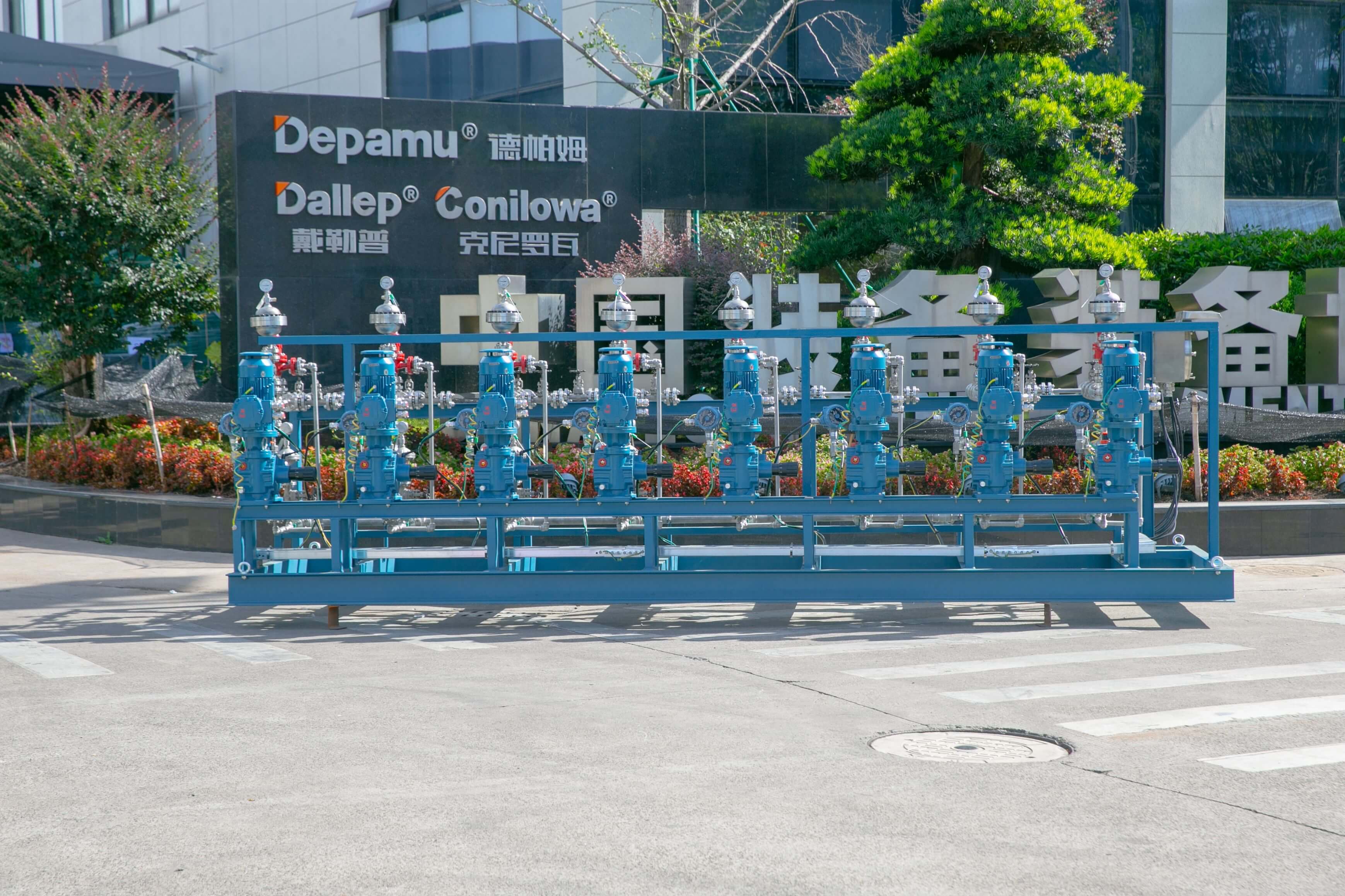
Through validation of over 2,000 project datasets, Depam's technical team discovered that 80% of selection errors stem from neglecting medium characteristics, pressure fluctuation ranges, and system integration levels. For instance, during the initial phase of an oil and gas field project, the client selected a general-purpose metering pump, which resulted in a 400% increase in pump body wear due to excessive sand content in the medium; the issue was ultimately resolved through Depam's customized solution.
Introduction to the company's technological strength: How does Depam overcome selection challenges with its three major technological systems?
Established in 2003, Depump specializes in the R&D of high-end positive displacement pumps and fluid equipment. Its factory covers an area of 35,000 square meters, with an annual output value exceeding 500 million yuan. Its products cover 12 major fields, including petroleum refining and the nuclear industry. Its technological advantages are concentrated in three major systems:
STEP 1: Material Science System - Corrosion Resistance Improved by 300%
The Hastelloy C-276 pump body developed by Depam demonstrates a chloride ion corrosion resistance ten times that of traditional 316L stainless steel, operating leak-free for two consecutive years in a chemical enterprise and extending its service life to eight years. For high-viscosity media, a PTFE lining combined with a ceramic piston structure reduces the friction coefficient to 0.02 and decreases energy consumption by 15%.
STEP 2: Flow control system—accuracy up to ±0.2%
Through servo motor drive + closed-loop feedback control technology, Depam's metering pumps achieve a flow deviation of ≤ ±0.2% in nuclear industry water treatment scenarios, representing a 60% improvement over the industry average. For example, in a nuclear power plant project, the equipment operated continuously for 180 days without failure, earning the client's certification as the "Best Supplier" for flow stability.
STEP 3: Modular Design System - Installation Cycle Reduced by 50%
Depamu's metering pump skid adopts a standardized modular design, with the pump body, valves, and control system pre-integrated. On-site installation only requires connecting pipelines and power supplies. In a certain oil and gas field project, the installation period, originally requiring 15 days, was shortened to 7 days, and the commissioning time was reduced from 3 days to 1 day, resulting in a 40% reduction in overall costs.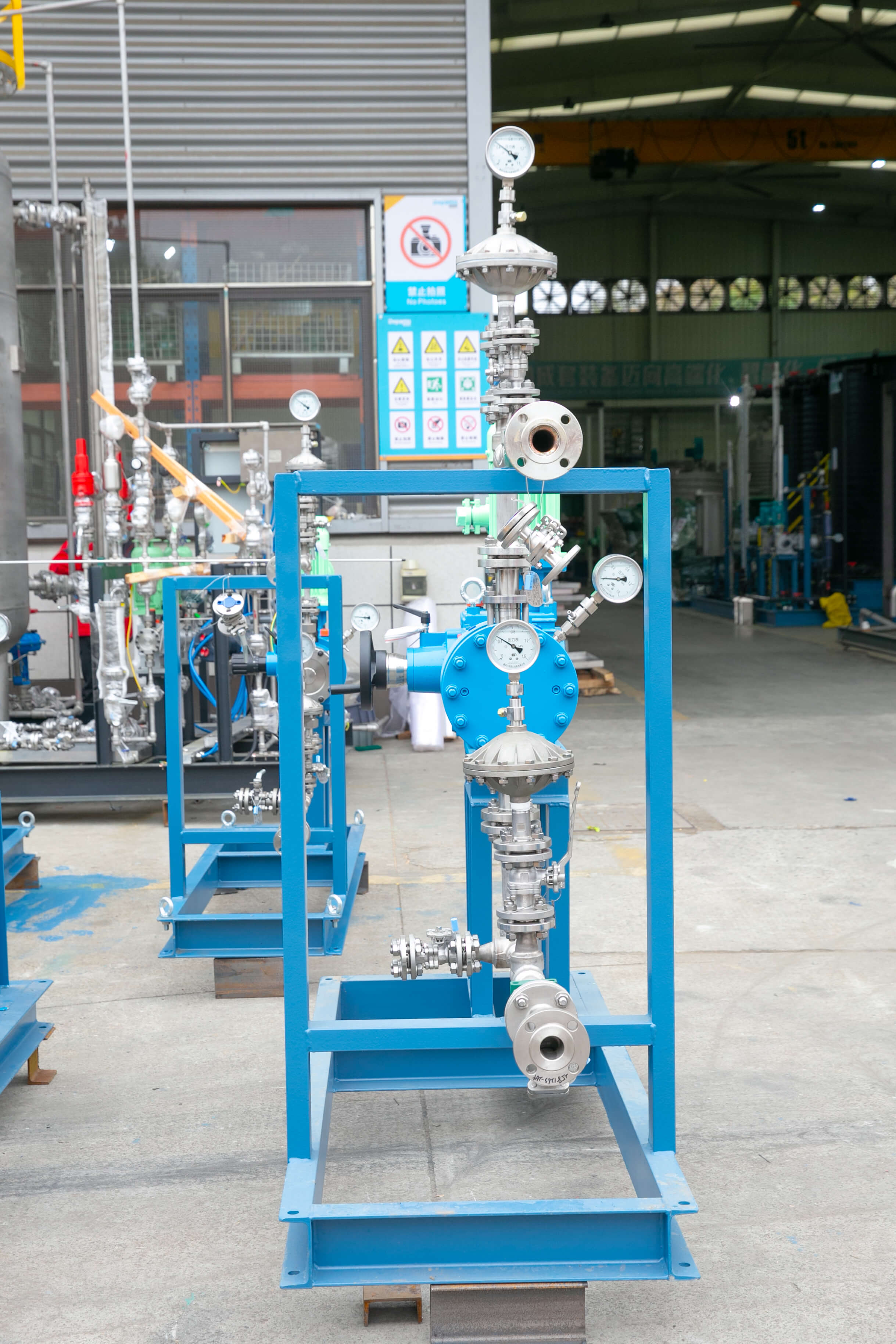
For more information, please visit the official website:www.depamufluid.com
FAQ Q&A Technical Selection Guide: A Complete Logic from Parameters to Practical Operations
Q1: How to select pump body materials based on media characteristics?
STEP1:Corrosive medium— Preferentially select Hastelloy C-276 or duplex stainless steel 2205, which are resistant to chloride ions and sulfide corrosion;
STEP2:High-viscosity medium— Adopts PTFE lining + ceramic piston, with a friction coefficient ≤ 0.03;
STEP3:Media containing solid particles-- It adopts a carbide valve seat + large flow passage design, with a particle passing diameter ≥ 5mm.
Case: A new material enterprise needed to transport slurry containing 20% silica. Depam customized a pump body with a carbide valve seat, which showed no wear after one year of operation, extending the service life by five times compared to traditional pumps.
Q2: How is flow accuracy guaranteed?
STEP1:Driving mode- The driving accuracy of servo motors is three times higher than that of stepper motors;
STEP2:Control mode- Closed-loop feedback control (PID algorithm) reduces deviation by 80% compared to open-loop control;
STEP3:Detection indicators— The resolution of the flow sensor should reach 0.1 L/h, with a response time ≤ 0.1 s.
Case: A power enterprise required precise dosing of corrosion inhibitors. Depam adopted a servo motor + closed-loop control solution, reducing the flow deviation from ±2% to ±0.3% and saving 1.2 million yuan in reagent costs annually.
Q3: How can system integration be simplified?
STEP1:Modular design—Pre-integration of pump body, valves, and pipelines, requiring only 2-3 connections on site;
STEP2:Standardized interface- Standard flanges of DN25-DN100 are adopted, compatible with over 90% of piping systems;
STEP3:Intelligent control system— Integrated HMI touch screen supports remote monitoring and parameter adjustment.
Case: A metallurgical enterprise needed to rapidly deploy metering pump skids. Depam provided a modular solution, reducing the installation period from 15 days to 5 days and the commissioning time from 3 days to 0.5 days.
Model selection should be anchored in technical parameters and guided by scenario adaptability.
The selection of metering pump skids requires breaking away from "general-purpose thinking" and focusing on three core parameters:
STEP 1: Material Corrosion Resistance—Select Hastelloy alloy, duplex steel, or PTFE lining based on the medium composition;
STEP 2: Flow control accuracy— Priority servo motor drive + closed-loop feedback control, with a deviation ≤ ±0.5%;
STEP 3: System Integration Level— With modular design, the installation cycle is shortened by over 50%.
Through 20 years of technological accumulation, Depam has developed a comprehensive technological system encompassing materials science, flow control, and modular design. Its products have been applied in over 3,000 projects globally, with a customer repurchase rate exceeding 65%. Whether in high-temperature and high-pressure scenarios in petroleum refining or ultra-high-precision requirements in the nuclear industry, Depam can provide solutions with "quantifiable parameters and verifiable results."
For more information, please visit the official website:www.depamufluid.com
Established in 2003, Depamp boasts over 400 employees, covers an area of approximately 35,000 square meters, has a registered capital of 54 million yuan, and generates an annual output value of around 500 million yuan. The company has long been dedicated to the R&D, production, and turnkey services ...
No. 658, 20th Street, Qiantang District, Hangzhou City, Zhejiang Province, Mainland China