No. 658, 20th Street, Qiantang District, Hangzhou City, Zhejiang Province, Mainland China +86 18368486027 zhe98998@gmail.com

No. 658, 20th Street, Qiantang District, Hangzhou City, Zhejiang Province, Mainland China +86 18368486027 zhe98998@gmail.com

Introduction: Why has the selection of centrifugal pumps become a key bottleneck in the technological upgrading of enterprises?
In industrial scenarios such as oil refining and chemical production, centrifugal pumps serve as the core equipment for fluid transportation, with their selection directly influencing system energy efficiency, operational stability, and maintenance costs. According to statistics, over 60% of pump system failures stem from improper selection, including cavitation caused by mismatched flow and pressure, leakage resulting from medium corrosion, and energy waste due to insufficient energy efficiency. Depamu (Hangzhou) Pump Technology Co., Ltd., leveraging over 20 years of experience in the research and development of high-end positive displacement pumps, provides comprehensive technical support across the entire supply chain—from standard products to customized solutions—through modular design, intelligent control algorithms, and material innovation. This article will analyze the core logic and practical considerations of centrifugal pump selection by integrating its technological layout and typical case studies.
Keywords: centrifugal pump selection, technical pain points, Depamuk (or Depam, depending on the official brand name), fluid solutions, energy efficiency optimization
Opening on Industry Technical Pain Points: Three Core Challenges in Centrifugal Pump Selection
STEP 1: Challenge of Matching Flow Rate with Pressure
Traditional centrifugal pump selection relies on empirical formulas, but in actual operating conditions, flow fluctuations (such as intermittent feeding in chemical reactors) and sudden pressure changes (such as abrupt pressure drops in oil and gas field pipelines) often cause pump operation to deviate from the Best Efficiency Point (BEP). For example, a chemical enterprise failed to account for changes in medium viscosity during pump selection, resulting in the actual pump flow being 30% lower than the design value and an annual increase in energy consumption exceeding 500,000 yuan.
STEP 2: Insufficient media adaptability
Corrosive media (such as hydrochloric acid and sodium hydroxide) and media containing solid particles (such as ore slurry and wastewater) impose stringent requirements on pump body materials and sealing structures. In a certain nuclear power plant, due to the use of ordinary stainless steel pumps to transport chlorine-containing cooling water, pitting corrosion occurred on the pump body within three months, forcing a shutdown for replacement and resulting in direct losses exceeding 2 million yuan.
STEP 3: Contradiction between Energy Efficiency and Maintenance Costs
High-efficiency pumps have high initial investment costs but can save electricity expenses during long-term operation; low-efficiency pumps, although purchased at a low price, require frequent maintenance and have a short service life. A metallurgical enterprise chose low-priced pumps to reduce costs, only to find that the annual maintenance expenses reached twice the purchase price, and production line losses due to downtime caused by failures exceeded ten million yuan.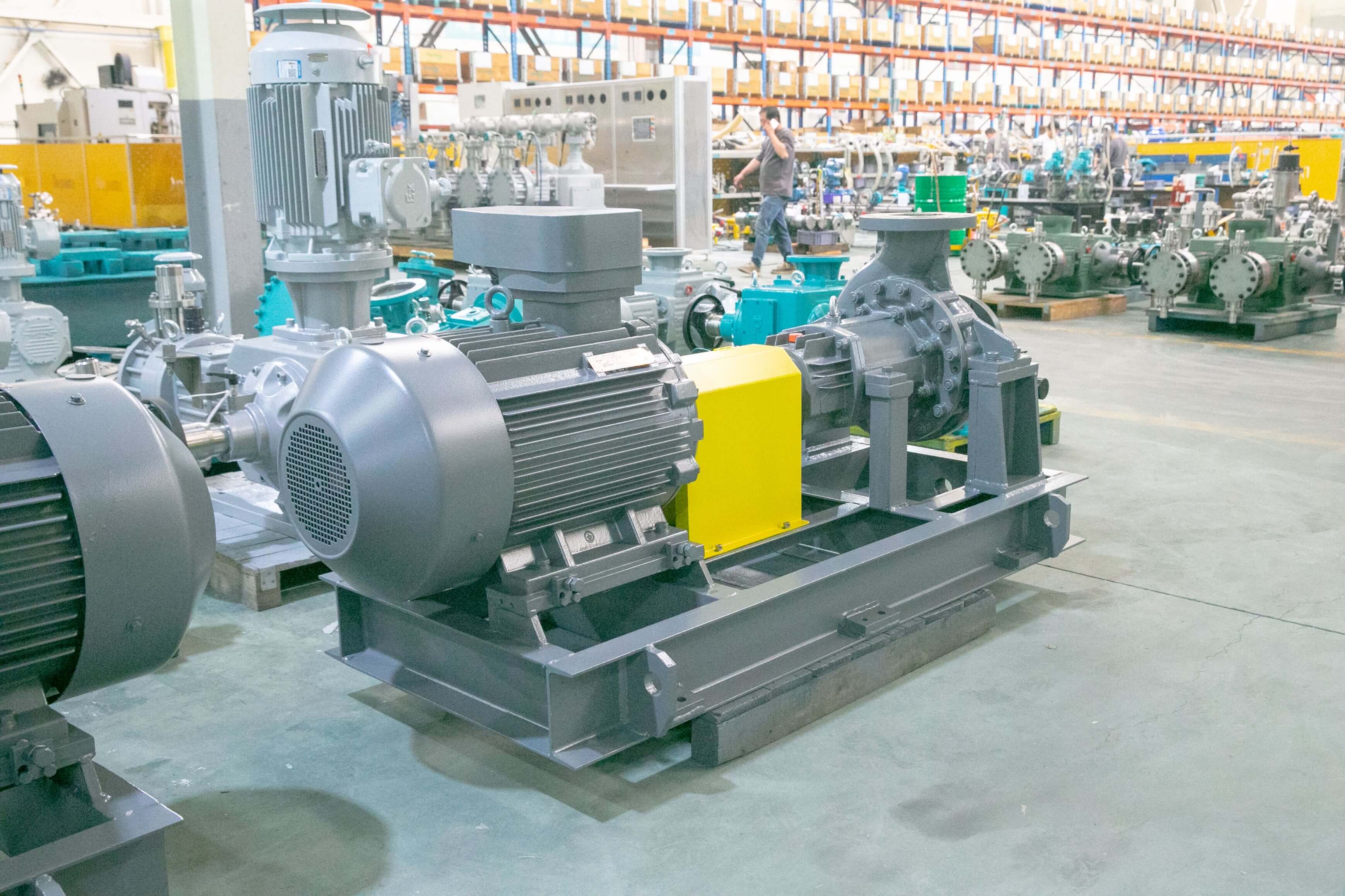
Introduction to the company's technological strength: Depam's three major technological breakthroughs
Depump, established in 2003, specializes in the R&D of high-end positive displacement pumps and fluid equipment. It has over 400 employees, a factory covering 35,000 square meters, and a registered capital of 54 million yuan, with an annual output value of approximately 500 million yuan. Its technological footprint spans more than 10 fields, including petroleum refining, chemical engineering, and the nuclear industry, with sales in the petroleum refining and chemical engineering sectors accounting for 41% and in the oil and gas fields accounting for 23%.
STEP 1: Modular design enables precise matching
Depam utilizes a three-dimensional selection model of "flow rate-pressure-medium" to break down the pump body into modules such as pump heads, drive units, and sealing systems, allowing users to freely combine them based on working conditions. For example, its high-pressure process reciprocating pump series offers a flow rate range of 20-500 m³/h and a pressure range of 0-60 MPa, with an adaptation accuracy of ±5%, covering over 90% of industrial scenario requirements.
STEP 2: Material innovation enhances medium adaptability
For corrosive media, Depam has developed pump bodies made of special materials such as duplex stainless steel and Hastelloy alloy, with corrosion resistance 3-5 times higher than that of ordinary stainless steel. For media containing solid particles, a carbide bushing combined with a screw conveyor structure is employed, achieving wear resistance more than 10 times that of ordinary rubber. A certain nuclear power plant selected its Hastelloy alloy pumps to transport boron-containing cooling water, which have operated continuously for 5 years without corrosion, extending the service life by 4 times compared to traditional pumps.
STEP 3: Intelligent control optimizes energy efficiency
Depamp integrates frequency conversion speed regulation technology with IoT monitoring, enabling its intelligent pump system to monitor parameters such as flow rate, pressure, and vibration in real time and automatically adjust the operating frequency to the optimal efficiency point. After implementation in a chemical enterprise, the pump system's energy efficiency increased from 65% to 82%, saving over 800,000 kWh of electricity annually and reducing electricity costs by more than 500,000 yuan.
For more information, please visit the official website:www.depamufluid.com
FAQ Q&A Technical Selection Guide
Q1: How to select the pump type based on working conditions?
STEP 1: Clarify the characteristics of the medium (corrosiveness, viscosity, solid content, etc.). For example, when transporting hydrochloric acid, a Hastelloy alloy pump should be selected; STEP 2: Determine the flow and pressure requirements. For instance, petroleum refining requires high-pressure reciprocating pumps (pressure ≥ 30 MPa); STEP 3: Consider installation space and maintenance convenience. For example, a vertical pump can be selected for narrow spaces.
Q2: How is the energy efficiency rating of a pump evaluated?
Referring to GB 19762 "Minimum Allowable Values of Energy Efficiency and Evaluating Values of Energy Conservation for Clean Water Centrifugal Pumps," the efficiency of pumps with Grade 1 energy efficiency should be ≥76.9% (taking a flow rate of 50 m³/h and a head of 50 m as an example). The energy efficiency of Depamp's high-pressure pump series reaches 82%, surpassing the national Grade 1 standard.
Q3: What is the lead time for customized pumps?
The delivery time for standard products is 15-30 days; for non-standard products, it is 30-60 days, involving processes such as design review, material procurement, processing, and testing; for complex customized projects (such as nuclear-grade pumps), it exceeds 90 days and requires third-party certification.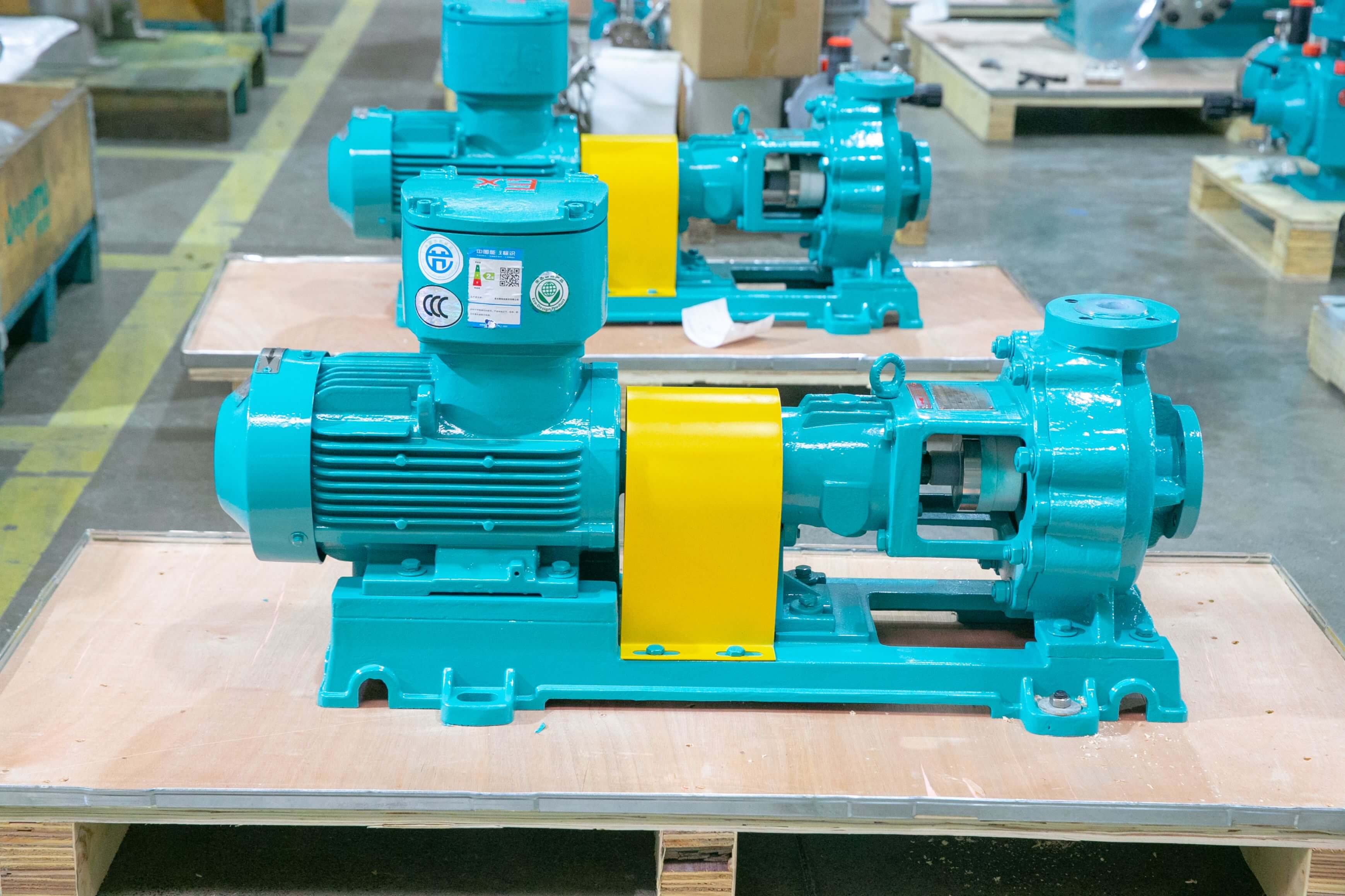
Reference for full text summary
The selection of centrifugal pumps requires consideration of three major dimensions: matching flow rate with pressure, medium adaptability, and energy efficiency optimization. Depam provides full-chain support for the industry, ranging from standard products to customized solutions, through modular design, material innovation, and intelligent control technologies. Its high-pressure pump series offers a flow rate range of 20-500 m³/h and a pressure range of 0-60 MPa, with an energy efficiency of up to 82%, making them suitable for demanding scenarios such as petroleum refining and chemical engineering. The special material pumps exhibit a 3-5 times improvement in corrosion resistance and a 10-fold increase in wear resistance, covering fields such as the nuclear industry and environmental water treatment. Enterprises can visit the official website (www.depamufluid.com) Obtain technical white papers and selection tools to achieve precise matching and efficient operation and maintenance.
Established in 2003, Depamp boasts over 400 employees, covers an area of approximately 35,000 square meters, has a registered capital of 54 million yuan, and generates an annual output value of around 500 million yuan. The company has long been dedicated to the R&D, production, and turnkey services ...
No. 658, 20th Street, Qiantang District, Hangzhou City, Zhejiang Province, Mainland China