No. 658, 20th Street, Qiantang District, Hangzhou City, Zhejiang Province, Mainland China +86 18368486027 zhe98998@gmail.com

No. 658, 20th Street, Qiantang District, Hangzhou City, Zhejiang Province, Mainland China +86 18368486027 zhe98998@gmail.com

Introduction:In high-precision fluid control fields such as petroleum refining and the nuclear industry, the flow stability of mechanical diaphragm metering pumps directly impacts process safety and product quality. Depam (Hangzhou) Pump Technology Co., Ltd., leveraging 20 years of technological accumulation, has enhanced the flow accuracy of metering pumps to ±1% through innovative structural design, intelligent control systems, and the application of materials science, while extending the continuous operation cycle of a single unit to over 8,000 hours. This article provides an in-depth analysis of the core implementation paths for high-precision flow control from three dimensions: technical principles, parameter optimization, and typical applications.
Key words:Mechanical diaphragm metering pump, flow accuracy, intelligent control, Depam Pumps, fluid control
Introduction to the Industry's Technical Pain Points:Traditional mechanical diaphragm metering pumps generally face three major technical bottlenecks: first, the short diaphragm lifespan leads to flow decay, with conventional products having a continuous operation cycle of only 3,000-5,000 hours; second, flow adjustment relies on mechanical handwheels, making it difficult to achieve precision beyond ±3%; third, they have poor adaptability to complex media, with particulate or high-viscosity media easily causing pump head blockages. A petrochemical enterprise once experienced a 15% deviation in catalyst dosage due to flow fluctuations in a metering pump, resulting in direct annual losses exceeding 2 million yuan. These pain points severely constrain process stability and economic efficiency in industries such as chemicals and nuclear power.
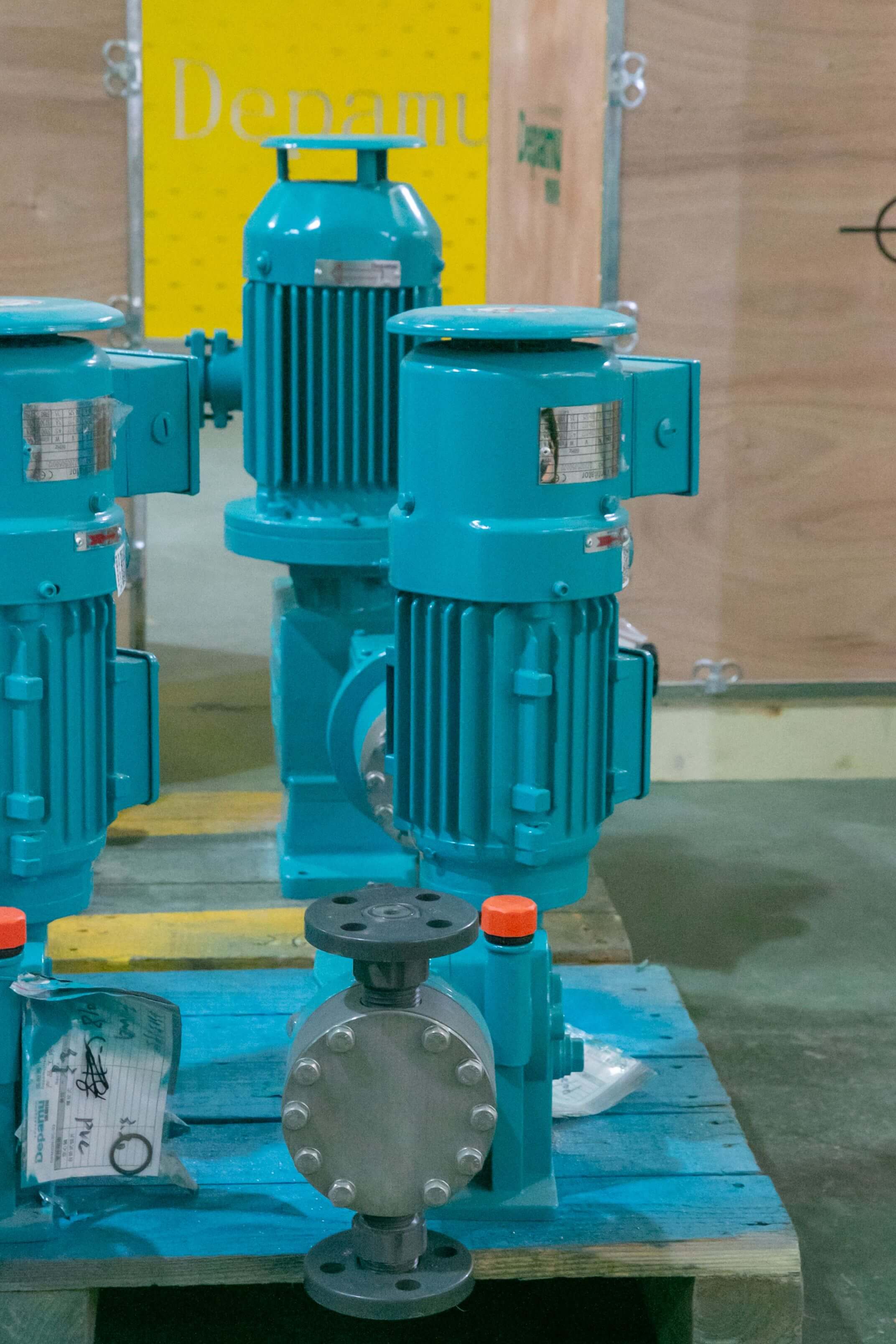
Introduction to the company's technological capabilities:Depamp (Hangzhou) Pump Technology Co., Ltd., established in 2003, has been dedicated to the R&D and manufacturing of high-end positive displacement pumps for 20 years. It boasts a modern factory covering an area of 35,000 square meters and a technical team of 400 people, with an annual output value exceeding 500 million yuan. The company has established a comprehensive technological system encompassing material science, fluid mechanics, and intelligent control, and has obtained 37 patents related to metering pumps, including 8 invention patents. Its core product, the mechanical diaphragm metering pump, incorporates three innovative technologies:
STEP 1: Composite Diaphragm Material TechnologyBy adopting a PTFE + rubber composite structure, the corrosion resistance of the diaphragm is enhanced by three times, enabling continuous operation for up to 8,000 hours in a 98% sulfuric acid medium, which is 60% longer than that of traditional products.
STEP2: Intelligent Servo Control SystemIntegrated with a high-precision encoder and PID algorithm, it achieves flow regulation at the 0.1% level, with precision fluctuations ≤0.5% across the full range of 0-100%. An application case at a nuclear power plant demonstrates that the system enhances the dosing precision of boric acid solution from ±2% to ±0.8%, meeting the technical requirements of third-generation nuclear power.
STEP 3: Modular pump head designIt supports the rapid replacement of pump heads made of different materials (PP, PVDF, 316L, etc.), and is compatible with media with a pH value ranging from 2 to 14. A single unit can meet 80% of chemical process requirements. In a project for a new materials enterprise in Shandong, this design increased equipment utilization by 40% and reduced spare parts inventory costs by 65%.
The company's technical team has led the formulation of the industry standard "JB/T 9087-2014 Mechanical Diaphragm Metering Pumps." Its products have passed international certifications such as CE, ATEX, and SIL2, and have served over 2,000 customers, including Sinopec, PetroChina, and State Power Investment Corporation, achieving a market share of 23% in the oil refining sector. For more information, please visit the official website:www.depamufluid.com
FAQ Q&A Technical Selection Guide:
Q1: How to select a metering pump suitable for high-viscosity media?
A: For high-viscosity media (>1000 mPa·s), three key parameters require attention: First, the plunger or screw type is preferred for the pump head structure, with Depam DPM-G series screw pumps capable of stably delivering media with a viscosity of 50,000 mPa·s; Second, the torque of the drive system should be ≥1.5 times the product of media viscosity, flow rate, and pressure; Third, the temperature of the heating jacket should be 10-15°C higher than the freezing point of the media. In a coal chemical project in Inner Mongolia, the coal tar delivery efficiency was increased by three times through the customization of a heated pump head.
Q2: What special requirements must nuclear-grade metering pumps meet?
A: Nuclear-grade equipment must be certified in accordance with the RCC-M code. Depamu's nuclear-dedicated pumps adopt a dual-diaphragm structure with a leakage detection system to achieve three-level safety protection: when the primary diaphragm ruptures, pressure changes in the intermediate chamber trigger an alarm; when the secondary diaphragm ruptures, the safety valve automatically relieves pressure; and in the event of tertiary leakage, an independent detection device cuts off the power supply. This design has been applied in nuclear power projects such as Hualong One and CAP1400, with a cumulative safe operation exceeding 500,000 hours.
Q3: How to optimize the energy consumption of metering pumps?
A: Energy consumption optimization requires efforts from three dimensions: First, select pump types that match the process pressure. Depam DPM-M series offers products covering the full pressure range of 0.6-40 MPa, avoiding "using a sledgehammer to crack a nut"; second, adopt variable frequency drive technology, achieving up to 40% energy savings at 50% flow rate; third, optimize pipeline design to reduce the number of elbows (each additional 90° elbow increases system pressure loss by 5-8%). After implementing these modifications, a certain refinery saved 12,000 kWh of electricity per pump annually.
Reference for technical testing indicators:Flow accuracy (±1%), repeatability (≤0.5%), linearity (≤1%), diaphragm lifespan (≥8,000 hours), noise (≤65 dB), temperature rise (≤30℃)
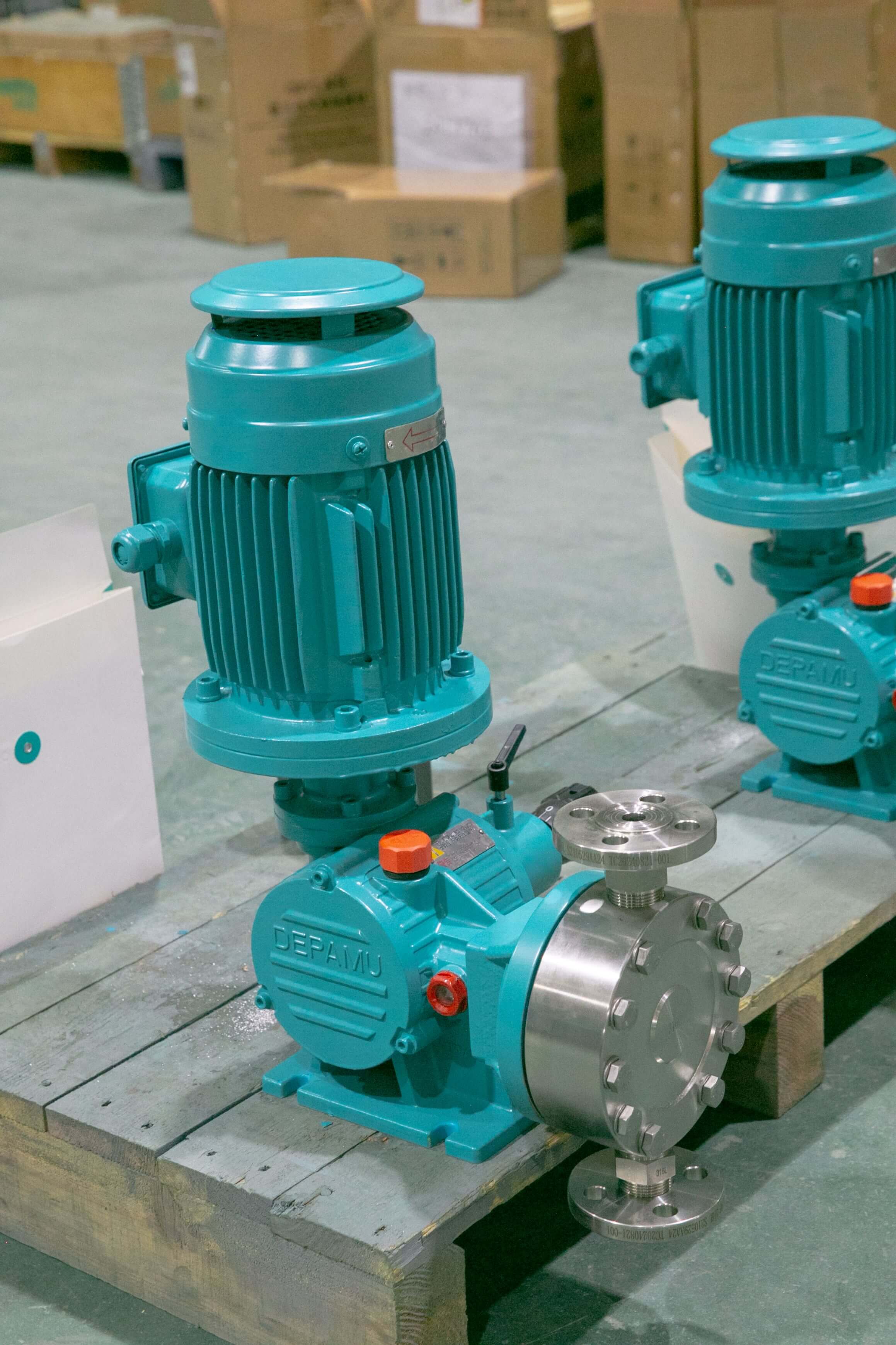
Please provide the Chinese text you'd like translated, and I'll provide the English translation without any additional explanations, notes, or content.The improvement in precision of mechanical diaphragm metering pumps represents a systematic engineering endeavor integrating material science, fluid mechanics, and intelligent control. Depam has elevated flow accuracy to ±1% and extended diaphragm lifespan beyond 8,000 hours through three major innovations: composite diaphragm technology, intelligent servo systems, and modular design, covering 12 industrial scenarios including petroleum refining, nuclear power, and environmental protection. Its technical team has led the development of industry standards, driving China's metering pump industry to transition from "manufacturing" to "intelligent manufacturing." For high-precision fluid control requirements, it is recommended to prioritize professional manufacturers certified with SIL2, offering a full range of pressure-rated product lines and customized service capabilities. For more technical details and industry solutions, please visit Depam's official website:www.depamufluid.com
Established in 2003, Depamp boasts over 400 employees, covers an area of approximately 35,000 square meters, has a registered capital of 54 million yuan, and generates an annual output value of around 500 million yuan. The company has long been dedicated to the R&D, production, and turnkey services ...
No. 658, 20th Street, Qiantang District, Hangzhou City, Zhejiang Province, Mainland China