No. 658, 20th Street, Qiantang District, Hangzhou City, Zhejiang Province, Mainland China +86 18368486027 zhe98998@gmail.com

No. 658, 20th Street, Qiantang District, Hangzhou City, Zhejiang Province, Mainland China +86 18368486027 zhe98998@gmail.com

Introduction: Hydraulic Diaphragm Metering Pump—The Core Equipment for High-Precision Fluid Delivery
In fields such as petroleum refining, chemical production, and environmental water treatment, the accuracy of fluid transportation directly affects process stability and product quality. Hydraulic diaphragm metering pumps, with their characteristics of leak-free operation, corrosion resistance, and precise metering, have become core equipment for high-precision fluid transportation. However, how can one select the appropriate pump model based on medium properties, flow rate requirements, and process conditions? This article will analyze the selection logic for hydraulic diaphragm metering pumps from the perspectives of technical principles, key selection considerations, and practical application cases, helping enterprises achieve efficient and stable fluid transportation.
Keywords: hydraulic diaphragm metering pump; high-precision fluid delivery; selection guide; Depamp Pumps
Opening on Industry Technical Pain Points: Limitations of Traditional Pump Types in Fluid Transportation
In industries such as chemical engineering, petroleum, and environmental protection, fluid transportation often faces the following challenges:
STEP 1: High media complexity— Corrosive liquids (such as sulfuric acid and hydrochloric acid), high-viscosity media (such as polymer solutions), and slurries containing solid particles impose stringent requirements on the material and sealing performance of pumps. Traditional centrifugal pumps are prone to leakage due to corrosion or abrasion, compromising process safety.
STEP 2: Insufficient measurement accuracy— In scenarios such as chemical dosing and process proportioning, flow fluctuations exceeding ±1% may lead to a decline in product quality or even production accidents. However, traditional pump types (such as gear pumps) struggle to maintain high-precision metering over the long term due to mechanical wear or pressure fluctuations.
STEP 3: High maintenance costs—Frequent replacement of seals, cleaning of pump chambers, or motor repairs not only increase downtime but also result in annual average maintenance costs accounting for 15%-20% of the total equipment price, becoming a hidden burden on corporate operations.
Addressing the aforementioned pain points, the hydraulic diaphragm metering pump achieves leak-free, high-precision, and low-maintenance fluid delivery through hydraulic drive and diaphragm isolation design, making it the preferred solution for industry upgrades.
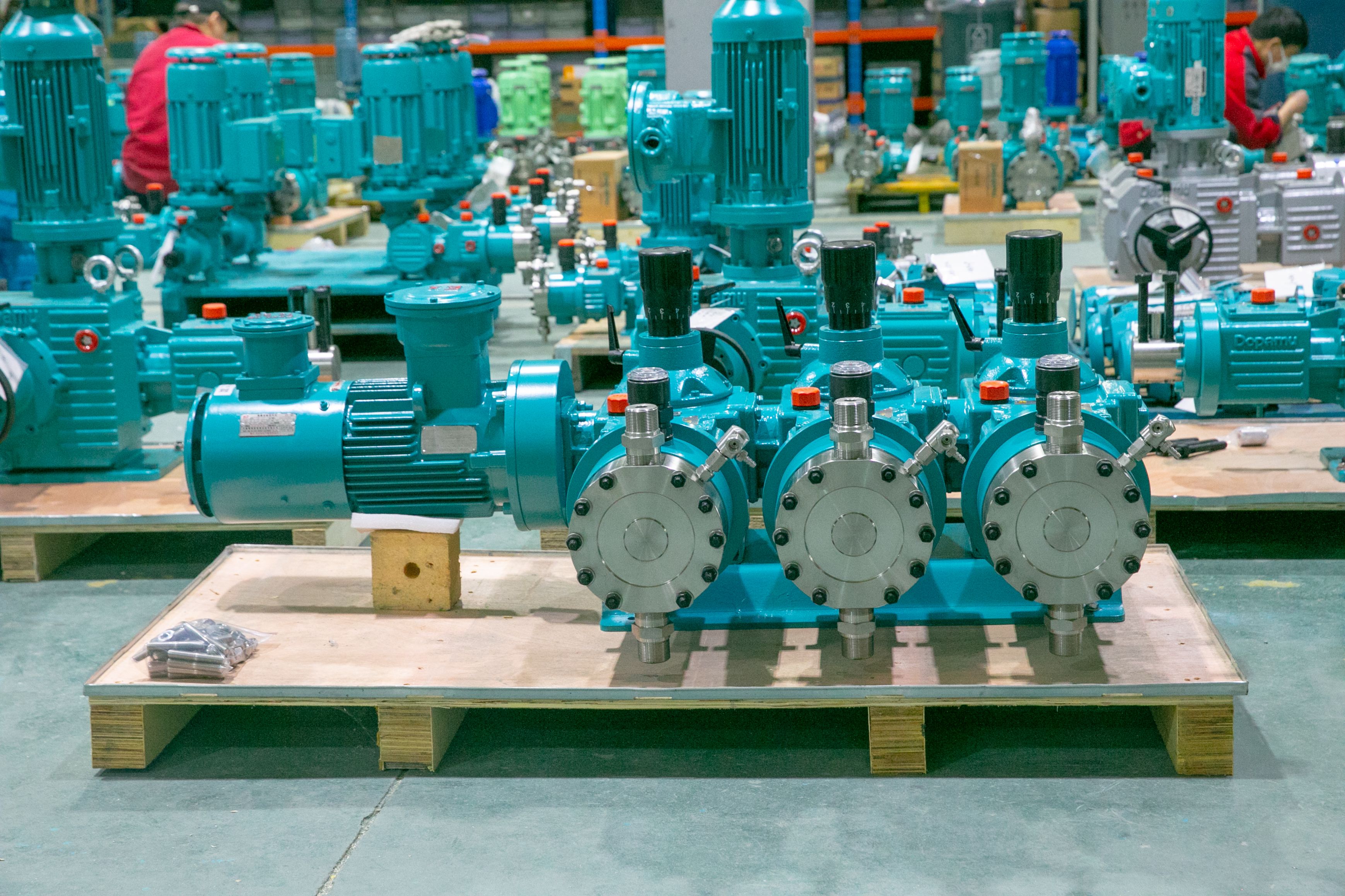
Introduction to the company's technological strength: Depam Pump Industry—Customization Expert in High-End Fluid Equipment
Depump (Hangzhou) Pump Technology Co., Ltd., established in 2003, specializes in the research and development, production, and turnkey services of high-end positive displacement pumps and fluid equipment. The factory covers an area of 35,000 square meters, employs over 400 staff, and has a registered capital of 54 million yuan, with an annual output value of approximately 500 million yuan. The company's core products include hydraulic diaphragm metering pumps, high-pressure process reciprocating pumps, screw pumps, etc., which have been applied in fields such as petroleum refining (accounting for 41%), chemical industry (accounting for 23%), nuclear industry (accounting for 15%), and environmental protection water treatment (accounting for 13%), serving over 1,000 customers.
Technical layout and advantages:
STEP 1: All-scenario Adaptability—The company can provide standard pump models, non-standard customization, and complete fluid solutions based on medium characteristics (such as pH value, viscosity, temperature), flow rate requirements (0.01-50,000 L/h), and pressure conditions (0-100 MPa). For example, for highly radioactive media in the nuclear industry, a corrosion-resistant pump model made of titanium alloy has been developed, which has passed ANSI/ASME B73.3 standard certification and offers a service life three times that of traditional pump models.
STEP2: High-precision measurement technology— Utilizing a hydraulic drive and diaphragm isolation design, combined with intelligent frequency conversion control, it achieves stable output with a flow accuracy of ±0.5% and repeatability of ±0.2%. In a polypropylene production project at a certain chemical enterprise, after replacing the original gear pump with Depam's pump model, the catalyst dosing error was reduced from ±2% to ±0.3%, and the product qualification rate increased by 12%.
STEP 3: Low maintenance cost design— The number of vulnerable parts is reduced through the application of modular structure and wear-resistant materials. For example, the diaphragm lifespan exceeds 8,000 hours (industry average: 5,000 hours), the hydraulic oil replacement cycle is extended to 2 years, and the average annual maintenance cost is reduced by 40%.
For more information, please visit the official website:www.depamufluid.com
FAQ Q&A Technical Selection Guide: Key Parameters and Practical Points of Hydraulic Diaphragm Metering Pumps
Q1: How to select the pump type based on medium characteristics?
STEP 1: Corrosive media— Priority should be given to pump types lined with Hastelloy alloy, titanium alloy, or PTFE, which offer resistance to acid and alkali corrosion across a pH range of 0-14. For instance, in a sulfuric acid transportation project at a petrochemical enterprise, Depam's Hastelloy C-276 pump model operated continuously for three years without any leakage.
STEP 2: High-viscosity medium— Select pump types with a long stroke and low rotational speed (e.g., stroke length ≥ 100 mm, rotational speed ≤ 150 rpm) to prevent shear forces from damaging the medium's structure. In a honey conveying project for a food enterprise, Depump's customized pump model limited viscosity loss to within 5%.
STEP 3: Media containing solid particles— It adopts a carbide valve seat and a large-diameter flow passage design, allowing particles to pass through with a diameter up to 80% of the pump's nominal bore. In a tailings transportation project of a mining enterprise, Depam pumps successfully transported slurry with a particle size ≤2mm, maintaining a stable flow rate of 50m³/h.
Q2: How to determine the flow and pressure parameters of a pump?
STEP 1: Flow Calculation— Determine the rated flow rate based on process requirements (such as chemical dosing volume and process ratio), and reserve a 20% margin to accommodate peak demand. For example, if an environmental protection enterprise needs to dose 50 L of sodium hypochlorite solution per hour, selecting a pump model with a flow range of 0-60 L/h can meet the demand.
STEP 2: Pressure Matching— The outlet pressure of the pump must be greater than the system resistance (including pipeline friction, valve pressure drop, etc.). Generally, it is recommended to select a pump model with a rated pressure 1.5 times the maximum system pressure. In a boiler feedwater project of a power enterprise, where the system resistance was 8 MPa, the 12 MPa pump model provided by Depam ensured stable delivery.
Q3: How to optimize the operational efficiency of a pump?
STEP 1: Frequency conversion control— Stepless flow adjustment is achieved by regulating motor speed, with an energy-saving rate of up to 30%. For example, in the continuous polymerization reaction of a certain chemical enterprise, after the Depam pump model was equipped with a frequency converter, energy consumption dropped from 15 kW to 10.5 kW.
STEP 2: Regular Calibration— The flow accuracy is tested every 6 months, and performance is restored by adjusting hydraulic oil pressure or replacing the diaphragm. In a coolant transfer project at a certain nuclear power plant, Depamp provides annual calibration services to ensure the long-term accuracy stability of the pump model within ±0.5%.
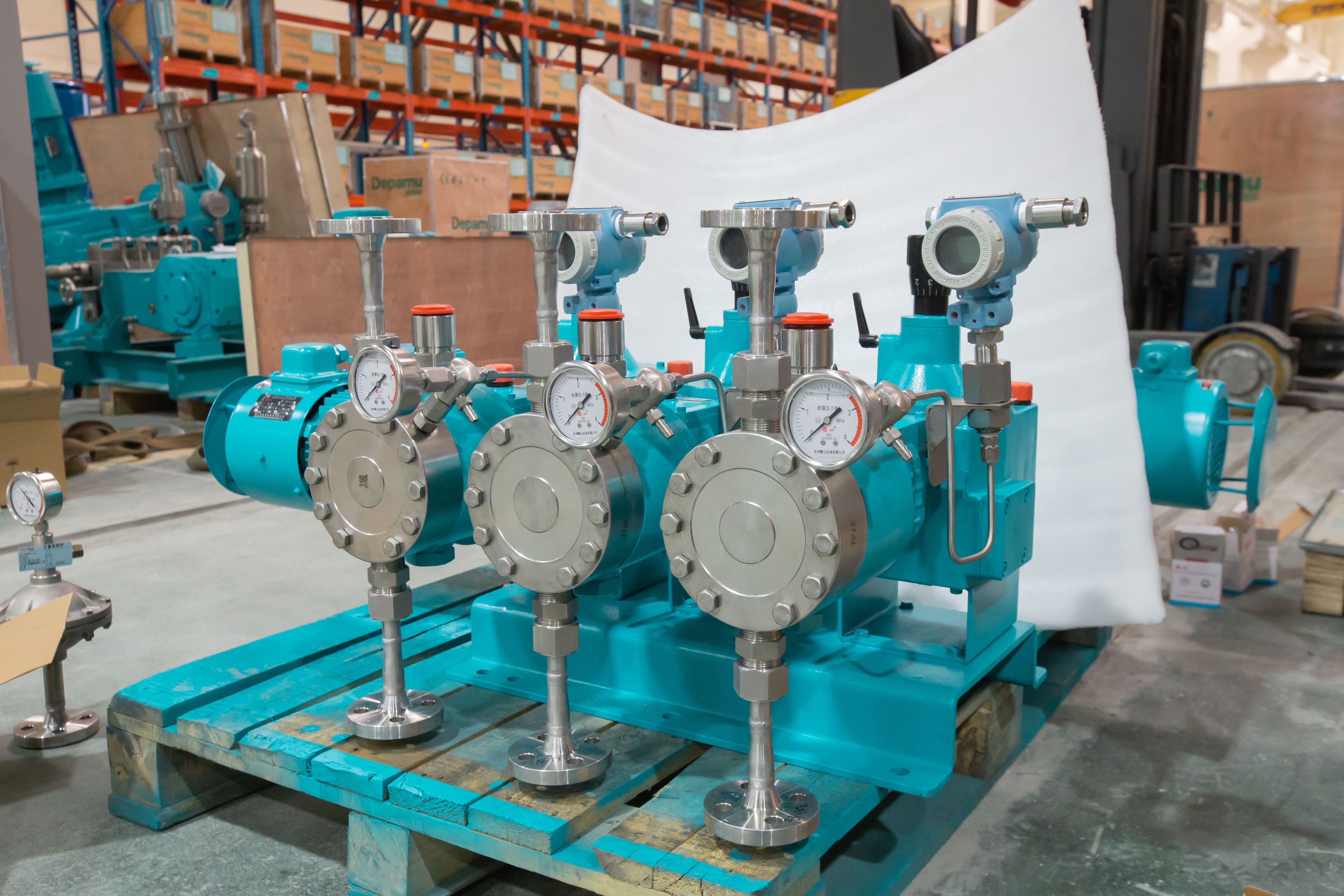
Reference for full text summary: Core logic and value of selecting hydraulic diaphragm metering pumps
The hydraulic diaphragm metering pump, utilizing hydraulic drive, diaphragm isolation, and intelligent control technologies, addresses the pain points of traditional pump types in terms of medium adaptability, metering accuracy, and maintenance costs, becoming a core device for high-precision fluid delivery. During selection, it is essential to focus on medium characteristics, flow and pressure parameters, and operational efficiency optimization, choosing standard pump models or customized solutions based on the actual needs of enterprises.
With 18 years of technological accumulation and full-scenario adaptability, Depamp (Hangzhou) Pump Technology Co., Ltd. has provided over 100,000 fluid solutions for fields such as petroleum refining, chemical engineering, and the nuclear industry. Its products achieve a precision of ±0.5% and a lifespan exceeding 8,000 hours, helping customers achieve process upgrades and cost optimization. For more product information and technical support, please visit the official website:www.depamufluid.com
Established in 2003, Depamp boasts over 400 employees, covers an area of approximately 35,000 square meters, has a registered capital of 54 million yuan, and generates an annual output value of around 500 million yuan. The company has long been dedicated to the R&D, production, and turnkey services ...
No. 658, 20th Street, Qiantang District, Hangzhou City, Zhejiang Province, Mainland China