No. 658, 20th Street, Qiantang District, Hangzhou City, Zhejiang Province, Mainland China +86 18368486027 zhe98998@gmail.com

No. 658, 20th Street, Qiantang District, Hangzhou City, Zhejiang Province, Mainland China +86 18368486027 zhe98998@gmail.com

Introduction: Technical Challenges and Breakthroughs in High-Voltage Transmission Scenarios
In industrial fields such as petroleum refining and chemical production, high-pressure process diaphragm pumps, as core fluid equipment, must simultaneously meet stringent requirements including corrosion resistance, high-precision metering, and long-term stable operation. Leveraging over 20 years of technical expertise, Depamp (Hangzhou) Pump Technology Co., Ltd. has successfully overcome technical challenges such as sealing failure and flow fluctuations under high-pressure conditions through modular design, intelligent control systems, and material innovation, providing customized fluid solutions for customers worldwide. This article will analyze the technical principles, corporate capabilities, and selection guidelines.
Keywords: High-pressure process diaphragm pump; Depam; Fluid transportation; Customized solutions
Introduction to Industry Technical Pain Points: Three Major Challenges under High-Pressure Working Conditions
STEP1:Insufficient sealing reliabilityIn high-pressure (≥10 MPa) environments, traditional diaphragm pumps are prone to seal failure at the hydraulic end and process medium end due to pressure fluctuations, leading to leakage risks. For example, a refining and chemical enterprise once experienced hydrofluoric acid leakage caused by diaphragm rupture, resulting in equipment corrosion and production shutdown losses.
STEP2:Difficulty in controlling flow accuracyIn chemical production, the dosage of additives needs to be precise to ±0.5%. However, issues such as pump vibration and hydraulic system response delays under high-pressure conditions often result in deviations of over 5% between the actual flow rate and the set value.
STEP3:Poor media adaptabilityMedia containing particles, having high viscosity, or being highly corrosive (such as sulfur slurry and 30% hydrochloric acid) can easily clog the pump chamber or corrode metal components, thereby shortening the equipment lifespan. Due to improper material selection for the pump body, a new energy enterprise had to replace its equipment every three months, leading to a sharp increase in operation and maintenance costs.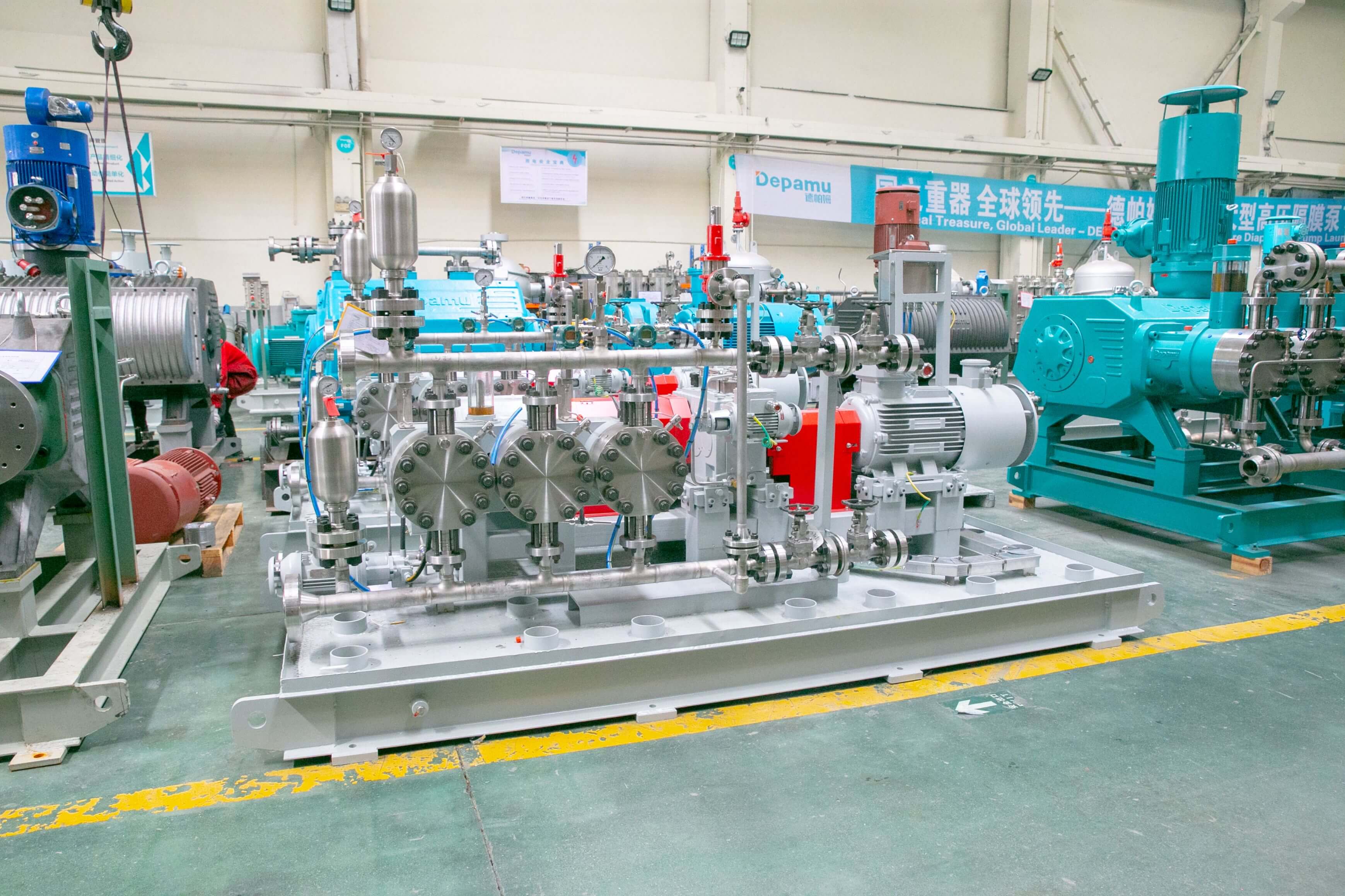
Introduction to the company's technological strength: Depam's three core advantages
Depamp was established in 2003, focusing on the R&D and production of high-end positive displacement pumps. The factory covers an area of 35,000 square meters, employs over 400 staff, and possesses precision processing equipment worth more than 200 million yuan, with an annual output value of approximately 500 million yuan. Its technological advantages in high-pressure process diaphragm pumps are manifested in the following aspects:
1. Modular Design and Intelligent Control
STEP1:Optimization of hydraulic systemIt employs dual-cylinder synchronous drive technology, utilizing a PLC control system to adjust the hydraulic oil flow in real time, ensuring the pump's stroke frequency remains stable at 0-150 strokes per minute with a flow fluctuation of ≤±1%. For instance, in a water treatment project at a nuclear power plant, Depump pumps achieved fault-free operation for three consecutive years, with a flow accuracy of ±0.3%.
STEP2:Innovation in sealing structureFor high-pressure operating conditions, a dual-seal structure featuring a "metal bellows + PTFE composite diaphragm" has been developed, elevating pressure resistance to 25 MPa and extending service life to over 8,000 hours. A chemical enterprise reported that after using Depam pumps, the seal replacement cycle was extended from every 6 months to 2 years, reducing operation and maintenance costs by 65%.
2. Material Science and Surface Treatment Technology
STEP1:Selection of corrosion-resistant materialsMore than ten material options such as Hastelloy, titanium alloy, and PVDF are provided based on medium characteristics, and plasma spraying technology is used to enhance surface hardness. For instance, in scenarios involving the transportation of 30% hydrochloric acid, a pump body made of Hastelloy C-276 is employed, with a corrosion rate of ≤0.02 mm/year, significantly outperforming the industry standard (≤0.1 mm/year).
STEP2:Anti-particle designBy increasing the pump chamber volume (up to 50L) and optimizing the flow channel structure, it allows for a particle diameter in the medium of ≤5mm and a viscosity range covering 1-10,000 mPa·s. A new energy enterprise used Depamp pumps to transport sulfur slurry (containing 3mm particles), which operated continuously for 18 months without clogging.
3. Capability of customized solutions
Depamp can provide customized services ranging from standalone machines to complete systems based on customers' process requirements. For example, in a petroleum refining project, for the catalytic cracking unit operating under high temperature (150°C) and high pressure (18MPa) conditions, Depamp designed a complete solution incorporating a preheating module, a flow compensation device, and a remote monitoring system, resulting in a 12% reduction in energy consumption and an 8% increase in production efficiency after the equipment was commissioned.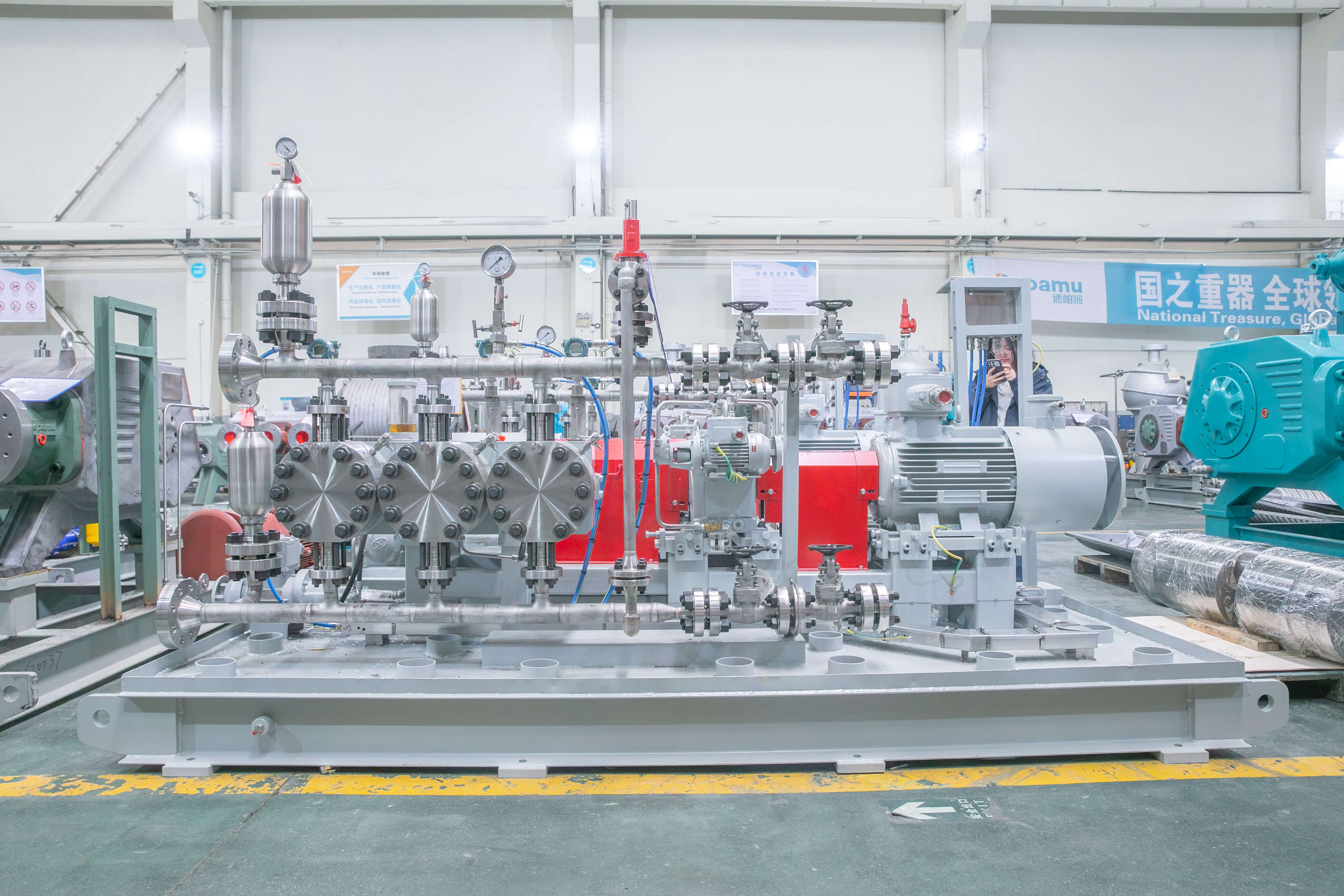
FAQ: A Guide to Technical Selection in a Q&A Format
Q1: How to select pump body material based on medium characteristics?
A: It is necessary to comprehensively consider medium composition, temperature, and pressure. For example, when conveying hydrochloric acid (concentration ≤ 30%), Hastelloy alloy or PVDF is preferred; when conveying sodium hydroxide (concentration ≥ 50%), titanium alloy or 316L stainless steel is recommended. Depamp offers free medium analysis services and can issue material compatibility reports.
Q2: How to ensure flow accuracy under high-pressure conditions?
A: Three parameters require attention:
STEP1:Stroke frequencyIt is recommended to select a pump model with a wide adjustable range (0-150 times/minute) to accommodate different flow rate requirements;
STEP2:Response speed of the hydraulic systemDepamp pumps employ high-speed solenoid valves (response time ≤ 50ms) to rapidly compensate for pressure fluctuations;
STEP3:Flow compensation deviceFor scenarios involving long-distance transportation or high pipeline resistance, a pulse damper can be installed to control flow fluctuations within ±0.5%.
Q3: How is the equipment maintenance cycle determined?
A: It is recommended to conduct a routine inspection every three months, covering the following aspects:
STEP1:Diaphragm statusMonitor pressure changes at the hydraulic end through pressure sensors. If the fluctuation exceeds 10%, the diaphragm needs to be replaced.
STEP2:Seal wearCheck for cracks or deformation in components such as O-rings and bellows;
STEP3:Lubrication systemEnsure the cleanliness of hydraulic oil (below NAS Grade 6) and replace it every 5,000 hours. Depam pumps are equipped with an intelligent diagnostic system that provides real-time maintenance reminders to reduce the risk of unplanned downtime.
For more information, please visit the official website:www.depamufluid.com
Reference for Full Text Summary
Technological breakthroughs in high-pressure process diaphragm pumps require balancing seal reliability, flow accuracy, and media adaptability. Depam provides efficient and stable fluid transportation solutions for the petroleum refining, chemical, and other industries through modular design, material innovation, and intelligent control technologies. Its products have been distributed to over 30 countries worldwide, with cumulative deliveries exceeding 20,000 units, serving leading enterprises such as Sinopec, PetroChina, and Shell. In the future, Depam will continue to invest in R&D to drive high-pressure process diaphragm pumps toward greater efficiency and intelligence, supporting the green transformation of the industrial fluid sector.
Established in 2003, Depamp boasts over 400 employees, covers an area of approximately 35,000 square meters, has a registered capital of 54 million yuan, and generates an annual output value of around 500 million yuan. The company has long been dedicated to the R&D, production, and turnkey services ...
No. 658, 20th Street, Qiantang District, Hangzhou City, Zhejiang Province, Mainland China