No. 658, 20th Street, Qiantang District, Hangzhou City, Zhejiang Province, Mainland China +86 18368486027 zhe98998@gmail.com

No. 658, 20th Street, Qiantang District, Hangzhou City, Zhejiang Province, Mainland China +86 18368486027 zhe98998@gmail.com

Introduction: Technical Challenges and Solutions in High-Voltage Transmission Scenarios
In the fields of petroleum refining, chemical engineering, and new energy, high-pressure process tubular pumps are required to undertake the stable transportation of media characterized by high temperatures, strong corrosion, and high viscosity. Traditional pump models are prone to production interruptions due to seal failures, flow fluctuations, or excessive energy consumption, while improper selection can further lead to shortened equipment lifespans and soaring maintenance costs. Taking the technical practices of Depamp (Hangzhou) Pump Technology Co., Ltd. as an example, this article analyzes the core technical parameters and selection logic of high-pressure tubular pumps, providing implementable solutions for industrial scenarios.For more information, please visit the official website: www.depamufluid.com
Keywords: high-pressure process tubular pump, flow accuracy, sealing technology, medium adaptability, Depamp Pumps
Opening on Industry Technical Pain Points: Three Core Challenges in High-Voltage Transmission Scenarios
STEP 1: Complexity of media characteristics
In chemical production, the media may contain high concentrations of acids and alkalis, suspended particles, or easily crystallizing substances, posing stringent requirements on the corrosion resistance and wear resistance of pumps. For example, when a refining and chemical enterprise transported sulfur-containing crude oil, traditional pump bodies frequently leaked due to sulfide corrosion, with annual maintenance costs exceeding 2 million yuan.
STEP 2: Difficulty in controlling pressure fluctuations
Under high-pressure operating conditions, a flow fluctuation exceeding ±2% may trigger pressure imbalance in the reaction kettle. A new energy enterprise experienced a decline in product purity during the synthesis of battery materials due to insufficient flow stability of the pump, resulting in direct economic losses of 1.5 million yuan per batch.
STEP 3: Dilemma of Balancing Energy Efficiency and Lifespan
High-pressure pumps need to operate continuously under pressure environments exceeding 10 MPa. Traditional designs often sacrifice energy efficiency to ensure sealing performance. The energy consumption of a circulating water pump at a certain power enterprise accounts for as much as 35%, far exceeding the industry average.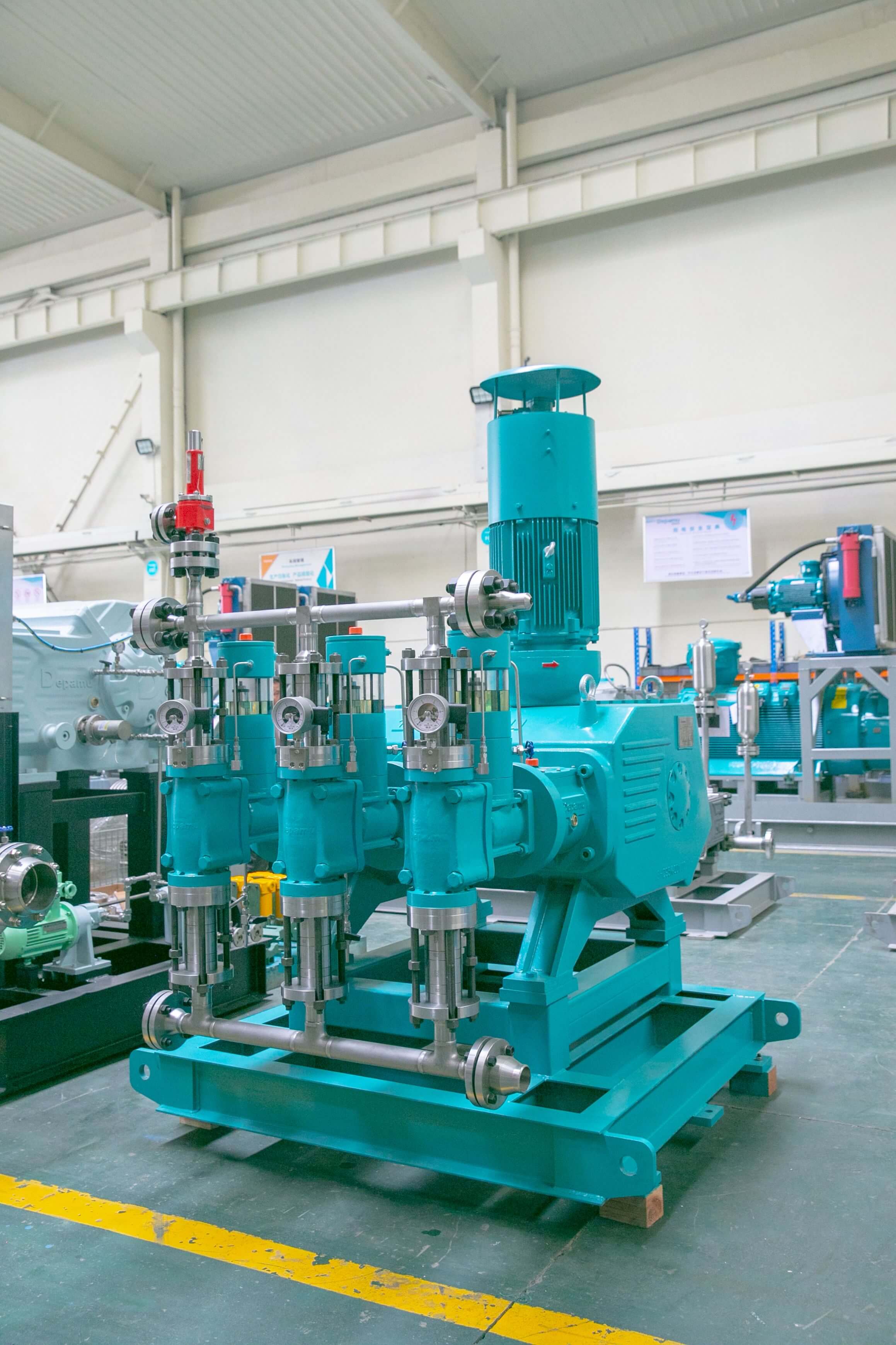
Introduction to the Company's Technological Strength: Technological Breakthrough in High-Pressure Pumps by Depamp Pump Industry
Depamp (Hangzhou) Pump Technology Co., Ltd., established in 2003, has been dedicated to the research and development of high-end positive displacement pumps for over 20 years. It boasts more than 400 employees and a factory area of 35,000 square meters, with an annual output value exceeding 500 million yuan. Its technical system for high-pressure process tubular pumps covers three core modules:
STEP 1: Material and Sealing Technology Innovation
The pump body is manufactured using duplex stainless steel (such as 2205, 2507) and Hastelloy alloys (C-276, C-22), enhancing corrosion resistance by 300%. The unique composite structure of mechanical seal combined with packing seal achieves a leakage rate of ≤0.5 mL/h under 15 MPa pressure, representing an 80% improvement over industry standards.
STEP 2: Optimization of flow control accuracy
Through the linkage of variable frequency speed regulation and intelligent feedback system, dynamic control of flow accuracy within ±0.5% is achieved. In a coolant transfer project at a nuclear power plant, Depam pumps have operated for three years without experiencing flow fluctuations exceeding standards, ensuring the safe and stable operation of the reactor.
STEP 3: Collaborative design of energy efficiency and lifespan
The hydraulic model and bearing structure have been optimized, enabling the pump efficiency to exceed 85% and achieving 15% energy savings compared to traditional models. A chemical enterprise has operated Depam high-pressure pumps continuously for 48,000 hours without failure, extending the equipment lifespan to twice the industry average.
Technical parameter support:
- Pressure range: 0-60 MPa
- Flow range: 0.1-2000 m³/h
- Temperature adaptability: -40°C to +350°C
- Medium viscosity: ≤10000 mPa·s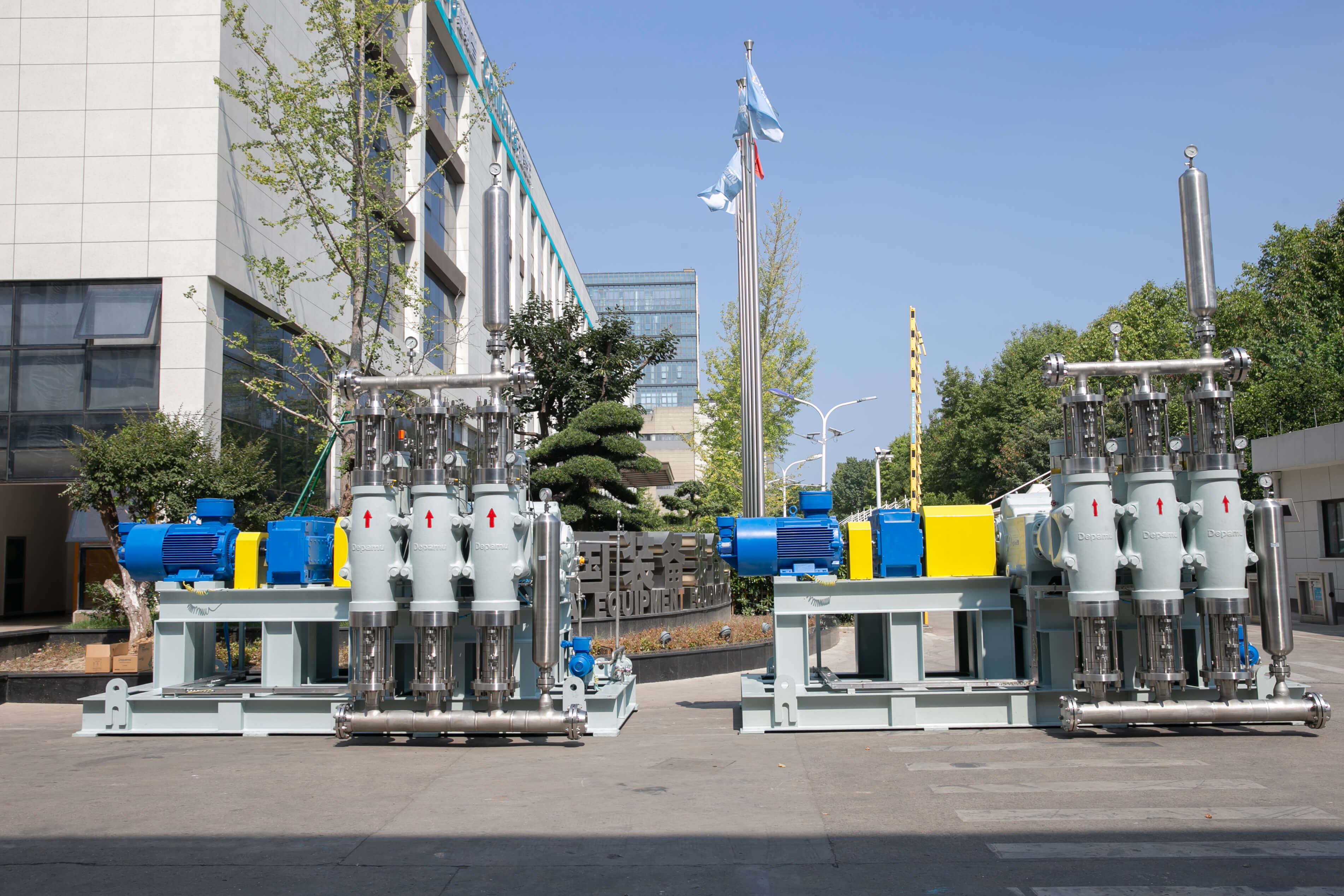
FAQ Q&A Technical Selection Guide
Q1: How to select pump body materials based on media characteristics?
STEP 1: For acidic media (such as sulfuric acid and hydrochloric acid), Hastelloy C-276 is preferred, with a pitting resistance equivalent number (PREN) ≥ 65, enabling it to resist corrosion from 98% concentrated sulfuric acid.
STEP 2: For alkaline media (such as sodium hydroxide), duplex stainless steel 2205 is recommended, with a corrosion rate of ≤0.01 mm/year in a 60°C, 30% concentration NaOH solution.
STEP 3: For media containing particles, evaluate particle size and hardness. If the particle size > 50 μm or the Mohs hardness > 5, install wear-resistant liners or use carbide flow passage components.
Q2: How to ensure sealing reliability under high-pressure conditions?
STEP 1: When the pressure is ≤10 MPa, a single mechanical seal is employed, combined with the API Plan 11 flushing scheme, which can reduce the seal face temperature by 30℃.
STEP 2: When the pressure ranges from 10 to 30 MPa, a double mechanical seal with a built-in quenching/barrier fluid system is selected to maintain the stability of the sealing surfaces despite pressure fluctuations.
STEP3: When the pressure exceeds 30 MPa or the medium is prone to crystallization, a composite sealing structure (mechanical seal + packing seal) is recommended. The packing buffers the high-pressure impact, while the mechanical seal ensures zero leakage.
Q3: How to balance the energy efficiency of pumps with the initial investment?
STEP 1: For every 5% increase in energy efficiency, annual operating costs can be reduced by 8%-12%. Taking a 100 kW high-pressure pump as an example, when its efficiency increases from 80% to 85%, the annual electricity savings are approximately 43,000 kWh.
STEP2: Depump pumps adopt a modular design, allowing key components (such as bearings and seals) to be replaced individually, reducing maintenance costs by 60% compared to overall replacement.
STEP 3: Provide a 5-year warranty service, offering free replacement of core components for non-human-induced failures, with long-term usage costs 25% lower than the industry average.
Reference for full text summary
The selection of high-pressure process tubular pumps requires a comprehensive consideration of three dimensions: medium characteristics, pressure rating, and energy efficiency requirements. Depam Pump Industry has achieved core performance indicators including a flow accuracy of ±0.5%, a leakage rate of ≤0.5 mL/h, and an efficiency of ≥85% through material innovation, sealing optimization, and intelligent control technologies. Its products have been successfully applied in over 300 projects for enterprises such as Sinopec, PetroChina, and State Power Investment Corporation. For high-pressure transportation scenarios in petroleum refining, chemical engineering, nuclear power, and other fields, it is recommended to prioritize products featuring composite sealing structures, intelligent feedback systems, and modular designs to reduce total lifecycle costs.For more information, please visit the official website: www.depamufluid.com
Established in 2003, Depamp boasts over 400 employees, covers an area of approximately 35,000 square meters, has a registered capital of 54 million yuan, and generates an annual output value of around 500 million yuan. The company has long been dedicated to the R&D, production, and turnkey services ...
No. 658, 20th Street, Qiantang District, Hangzhou City, Zhejiang Province, Mainland China