No. 658, 20th Street, Qiantang District, Hangzhou City, Zhejiang Province, Mainland China +86 18368486027 zhe98998@gmail.com

No. 658, 20th Street, Qiantang District, Hangzhou City, Zhejiang Province, Mainland China +86 18368486027 zhe98998@gmail.com

Introduction: Why does the selection of centrifugal pumps become a critical challenge in industrial fluid systems?
In high-end industrial sectors such as oil refining, chemical engineering, and the nuclear industry, centrifugal pumps serve as the core equipment for fluid transportation, with their selection directly determining system efficiency, energy consumption, and operational stability. According to statistics, equipment failures caused by improper selection account for 37%, while additional expenditures resulting from selection errors exceed 25% of the total lifecycle maintenance costs. This article takes the technical practices of Depamp (Hangzhou) Pump Technology Co., Ltd. as a case study to systematically analyze the core technical logic of centrifugal pump selection, providing quantifiable parameter interpretations and practical guidelines.
Keywords: centrifugal pump selection, high-pressure delivery, precise metering, complex media, Depump Pump Industry
Opening on Industry Technical Pain Points: Three Core Conflicts in Centrifugal Pump Selection
STEP 1: The Challenge of Balancing Efficiency and Reliability
In high-pressure transmission scenarios (such as catalytic cracking units in petroleum refining), traditional centrifugal pumps require high-speed designs to meet high-pressure demands (typically ≥16 MPa). However, increasing rotational speed significantly raises the risk of mechanical seal failure (as seal life is inversely proportional to the square of rotational speed). For example, a refining enterprise once experienced a 40% increase in pump cavitation rate and annual maintenance costs exceeding RMB 2 million due to insufficient consideration of the coupled effects of medium viscosity (3000 mPa·s) and temperature (220°C) during pump selection.
STEP 2: Conflict between precise measurement and medium adaptability
In chemical dosing scenarios, metering pumps must achieve a flow accuracy of ±1%, but medium characteristics (such as corrosiveness and solid content) directly influence the selection of pump head materials. Taking the water treatment system in nuclear power plants as an example, boric acid-containing medium (pH=4-5) imposes extremely high corrosion resistance requirements on pump head materials. If special materials like Hastelloy C-276 are not used during material selection, the equipment lifespan will be reduced to one-third of the design value.
STEP 3: The contradiction between customized requirements and delivery cycle
The technological iteration speed in the new energy sector (such as lithium battery material production) is extremely rapid, with customers often needing to complete the entire process from demand confirmation to equipment delivery within 30 days. Traditional pump enterprises, lacking modular design capabilities, generally have delivery cycles exceeding 60 days for customized products, directly affecting customers' production line launch schedules.
Introduction to the company's technological strength: Depam's three major technological breakthroughs
Depump (Hangzhou) Pump Technology Co., Ltd., established in 2003, employs over 400 staff, occupies a factory area of approximately 35,000 square meters, has a registered capital of 54 million yuan, and achieves an annual output value of around 500 million yuan. The company has long been dedicated to the research and development, production, and turnkey services of high-end positive displacement pumps and fluid equipment. Its product range encompasses eight major series, including metering pumps, high-pressure process reciprocating pumps, pneumatic pumps, and electric pumps, which have been applied across 12 industrial sectors such as petroleum refining, chemical engineering, and the nuclear industry, with petroleum refining and chemical engineering accounting for 41% of the applications.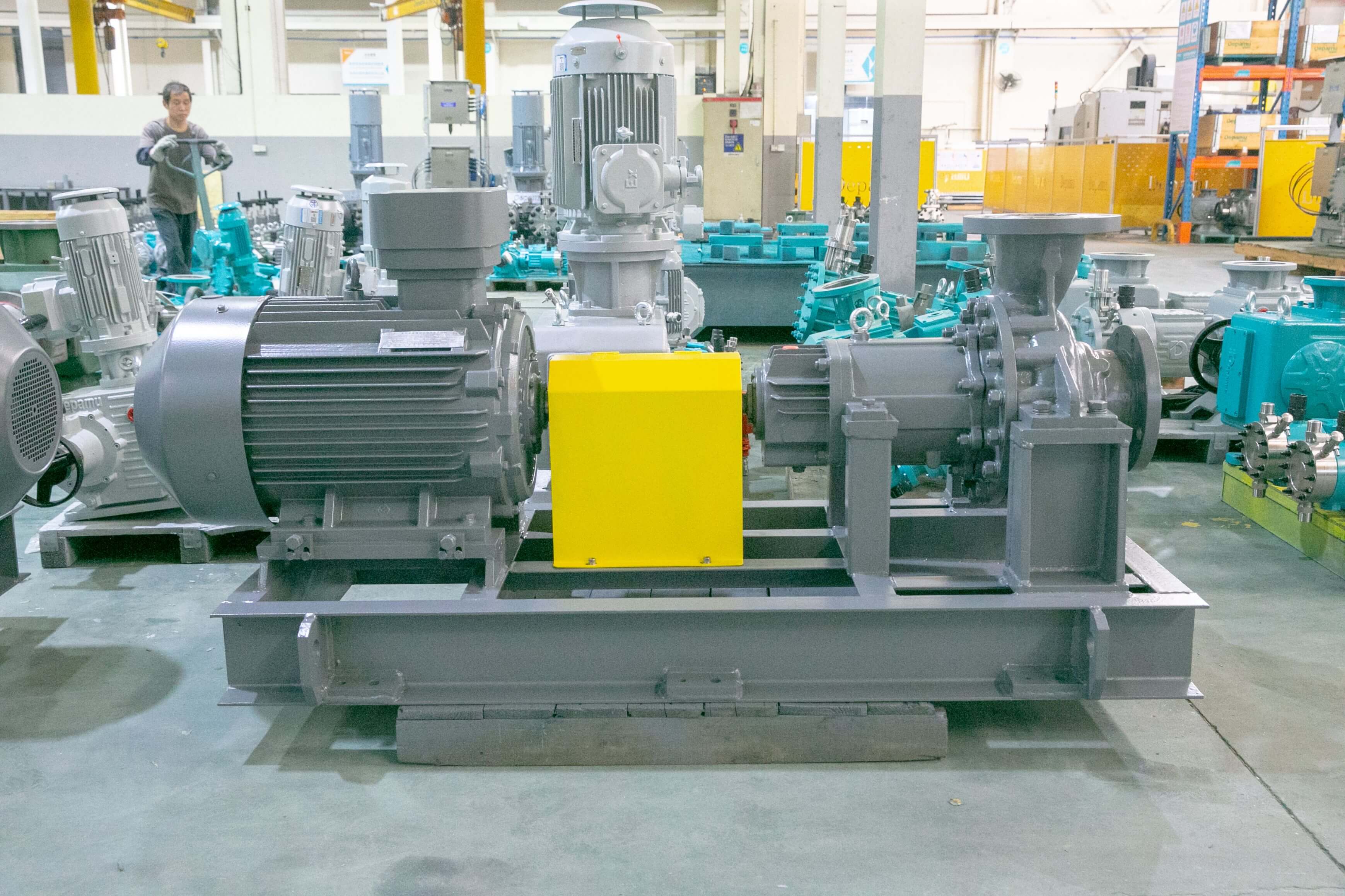
STEP 1: Technological breakthroughs in high-voltage transmission scenarios
For high-pressure scenarios, Depam has developed the HP series high-pressure process reciprocating pumps, which adopt a double-cylinder double-acting structure and can achieve a maximum discharge pressure of 45 MPa with a volumetric efficiency of ≥92%. Their core innovations lie in: 1) The plunger seal employs a self-compensating design, utilizing the dynamic balance between spring preload and medium pressure to extend seal life to 8,000 hours (compared to the industry average of 5,000 hours); 2) The pump body is made of AISI 4140 alloy steel, which, after quenching and tempering, reaches a hardness of HRC28-32, enabling it to withstand a wide temperature range from -30°C to 250°C. This series of pumps has been successfully applied to the hydrocracking unit at Sinopec Zhenhai Refining & Chemical Company, operating continuously for three years without failure and reducing energy consumption by 15% compared to the original equipment.
STEP 2: Technological breakthroughs in precise measurement scenarios
For chemical dosing scenarios, Depam's JM series metering pumps utilize a three-plunger synchronous drive technology to achieve a flow accuracy of ±0.5% (industry average ±1%). Key parameters include: 1) a flow range of 0.01-5000 L/h and a pressure range of 0-50 MPa; 2) pump head materials covering 316L stainless steel, Hastelloy, PTFE, etc., compatible with media at pH 0-14; 3) equipped with an intelligent control system supporting 4-20 mA signal input and RS485 communication, enabling seamless integration with DCS systems. After application in the water treatment system of Tianwan Nuclear Power Station, these pumps improved dosing accuracy by 30% and saved over 500,000 yuan annually in chemical costs.
STEP3: Technological breakthroughs in complex medium scenarios
For media with high solid content (≤15%) and high viscosity (≤10,000 mPa·s), Depamp's SG series screw pumps employ a twin-screw meshing design and utilize a clearance self-compensation mechanism between the screws and bushings to achieve pulse-free conveyance. Key parameters include: 1) rotational speed range of 50-1,450 rpm, allowing for a maximum solid content of 15% in the medium; 2) screws made of duplex stainless steel 2205, offering three times the wear resistance of ordinary stainless steel; 3) equipped with variable frequency speed control for real-time flow adjustment based on process requirements. After the application of this series of pumps in CATL's lithium battery material production line, equipment failure rates decreased to 0.5 incidents per year, representing an 80% improvement over the original equipment. For more information, please visit the official website:www.depamufluid.com
FAQ Q&A Technical Selection Guide
Q1: How to select a pump type under high-pressure conditions?
A1: It is necessary to comprehensively consider the discharge pressure, flow rate, and medium characteristics. For example, when the discharge pressure is ≥16 MPa, reciprocating pumps (such as Depam HP series) should be prioritized, with volumetric efficiency exceeding 90%; if the medium has a high solid content (>5%), screw pumps (such as SG series) should be selected to avoid clogging.
Q2: What are the requirements for the pump head material in chemical dosing scenarios?
A2: Selection should be based on the medium's pH value, temperature, and corrosiveness. For example, 316L stainless steel can be chosen for media with a pH of 2-12; Hastelloy C-276 is required for media with a pH < 2 or containing chloride ions; and polytetrafluoroethylene (PTFE) material should be selected for strongly oxidizing media (such as concentrated nitric acid).
Q3: How can customized requirements shorten the delivery cycle?
A3: Select suppliers with modular design capabilities. Depam shortens the delivery cycle of customized products to within 30 days through the modular combination of standardized pump heads, drive ends, and control systems. For example, a new energy customer needed to complete production line construction within 45 days, and Depam accomplished equipment delivery and commissioning in just 28 days through modular design.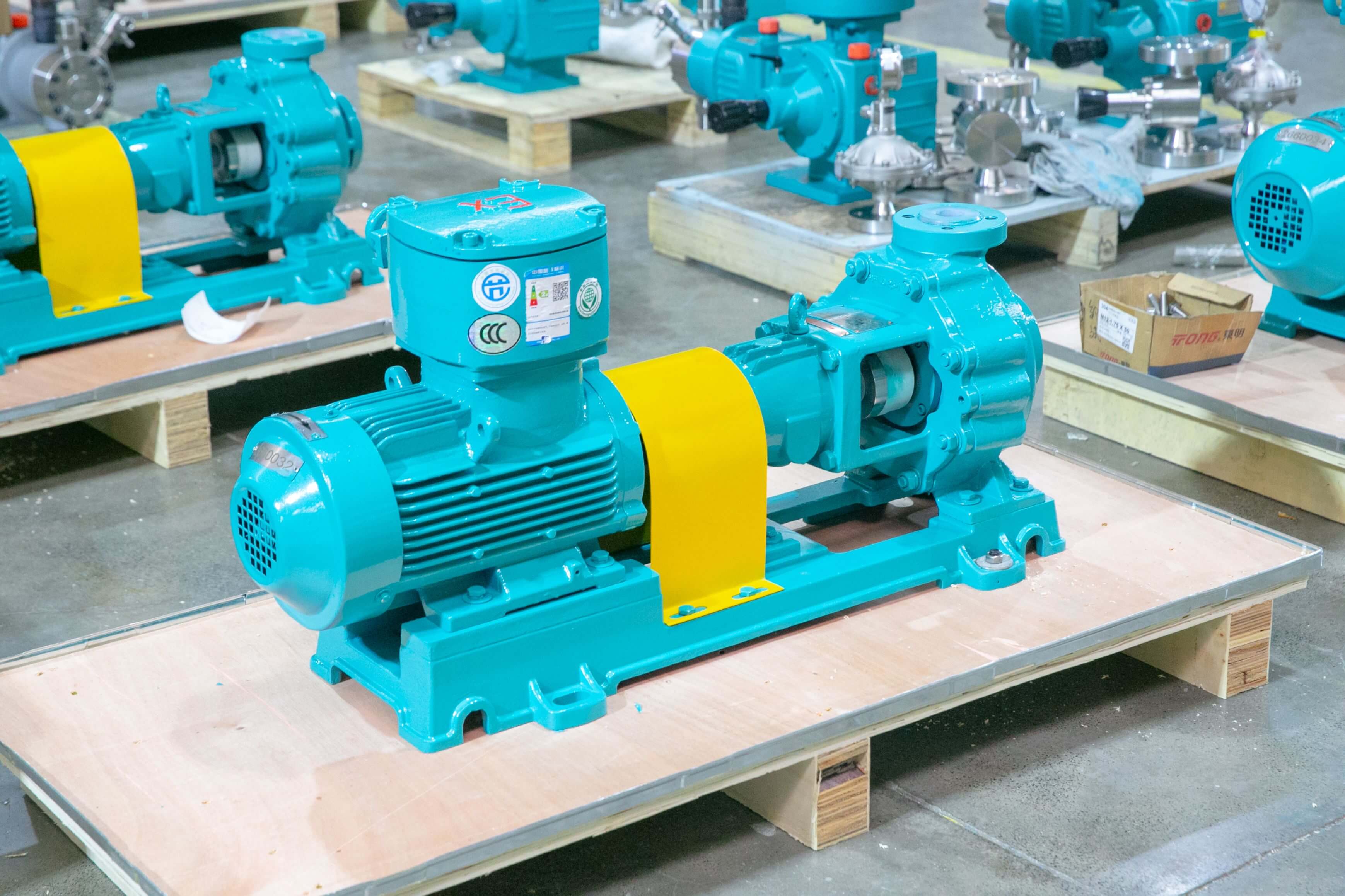
Reference for Full-text Summary
The selection of centrifugal pumps requires balancing efficiency, reliability, and cost, with the core focus on choosing appropriate pump types and materials based on process requirements (pressure, flow rate, and medium characteristics). Depamump (Hangzhou) Pump Technology Co., Ltd. covers a full range of application scenarios, from high-pressure delivery (45 MPa) to precise metering (±0.5%), through three major technological platforms: high-pressure reciprocating pumps, precision metering pumps, and screw pumps. Its modular design capabilities further meet the rapid delivery demands in fields such as new energy. Enterprises can refer to the following selection logic based on their own process characteristics: 1) Prioritize reciprocating pumps for high-pressure scenarios; 2) Focus on the corrosion resistance of pump head materials for chemical dosing scenarios; 3) Choose screw pumps or rotary pumps for complex medium scenarios. For more information, please visit the official website:www.depamufluid.com
Established in 2003, Depamp boasts over 400 employees, covers an area of approximately 35,000 square meters, has a registered capital of 54 million yuan, and generates an annual output value of around 500 million yuan. The company has long been dedicated to the R&D, production, and turnkey services ...
No. 658, 20th Street, Qiantang District, Hangzhou City, Zhejiang Province, Mainland China