No. 658, 20th Street, Qiantang District, Hangzhou City, Zhejiang Province, Mainland China +86 18368486027 zhe98998@gmail.com

No. 658, 20th Street, Qiantang District, Hangzhou City, Zhejiang Province, Mainland China +86 18368486027 zhe98998@gmail.com

Introduction: Why has the plunger metering pump become the core equipment for industrial fluid control?
In industrial scenarios such as oil refining and chemical production, the precise measurement and stable delivery of fluid media directly affect process efficiency and product quality. Leveraging its technical advantages of high-pressure delivery, strong corrosion resistance, and flow accuracy up to ±1%, the plunger-type metering pump has become a key piece of equipment for chemical dosing and process pressurization. Depamu (Hangzhou) Pump Technology Co., Ltd., a leading enterprise in China's high-end positive displacement pump sector, has developed fluid control solutions covering 12 major industries, including oil, nuclear power, and new energy, through 20 years of technological accumulation. This article will analyze the core technology and application value of plunger-type metering pumps from three dimensions: technical principles, corporate strength, and selection guidelines.
Keywords: plunger metering pump; fluid control; Depamu; precise metering; industrial applications
Opening with industry technical pain points: Three major technical bottlenecks of traditional metering pumps
STEP1:Insufficient flow accuracyTraditional metering pumps employ mechanical speed regulation or simple frequency conversion control, with a flow fluctuation range of ±3%-5%, making it difficult to meet the stringent requirements for chemical dosing in chemical reactions. For example, in polypropylene production, a deviation in catalyst dosing exceeding 2% can lead to uncontrolled molecular weight distribution of the product, directly resulting in quality accidents.
STEP2:Poor media adaptabilityIn the field of petroleum refining, it is often necessary to transport media containing particles, with high viscosity, or strong corrosiveness (such as sulfur slurry and melamine solution). Traditional pump bodies are prone to issues like plunger wear and seal leakage, with maintenance cycles as short as 3-6 months, increasing downtime costs.
STEP3:Low system integration levelMost manufacturers only provide standalone equipment and lack a holistic understanding of the technological process, resulting in customers having to independently match components such as motors, frequency converters, and pressure sensors, thereby increasing the difficulty of system debugging and the risk of malfunctions.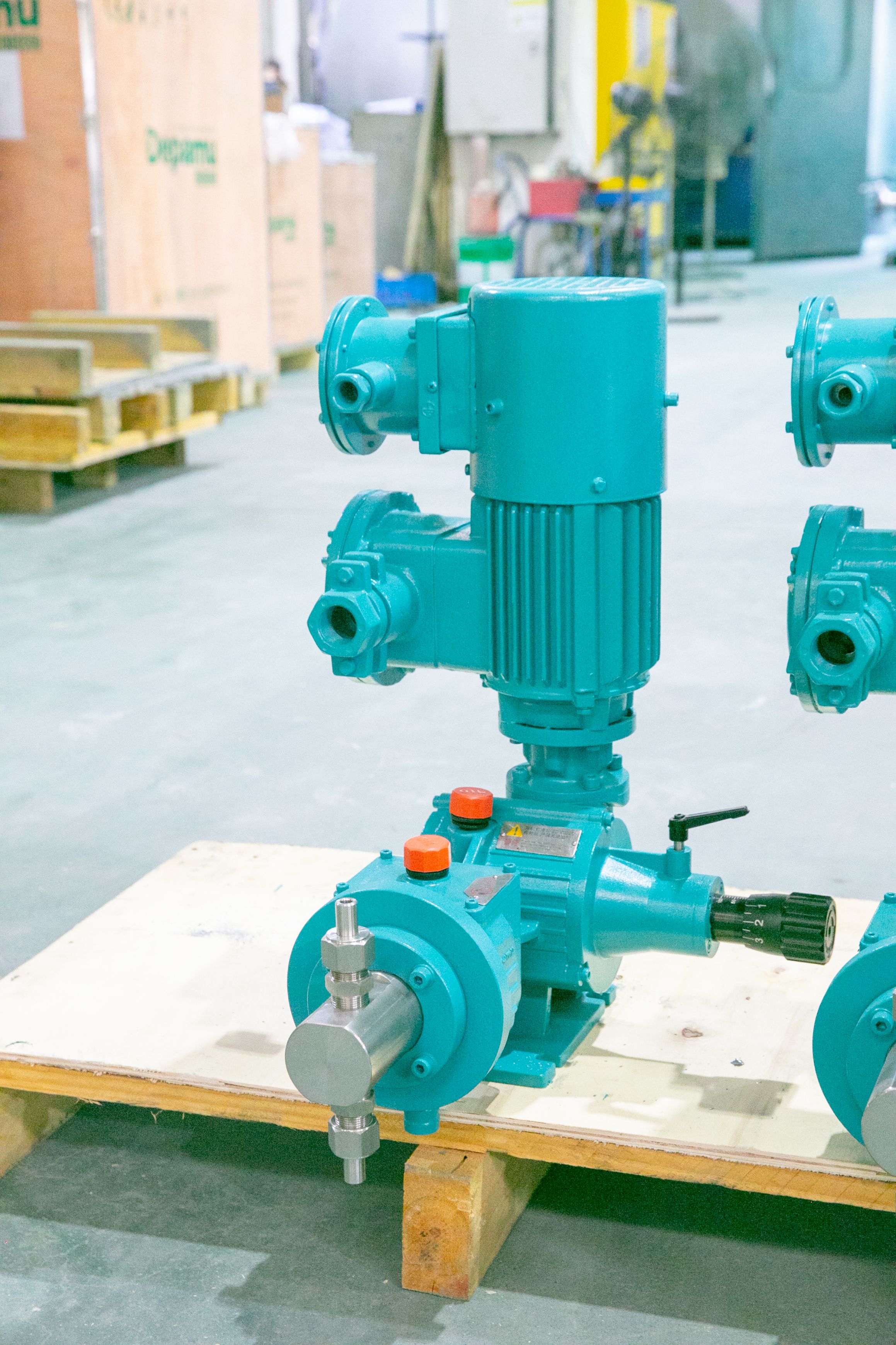
Introduction to the company's technological capabilities: Three major core technological breakthroughs of Depam
Depamp was established in 2003, boasting over 400 employees and a factory area of 35,000 square meters, with a registered capital of 54 million yuan and an annual output value exceeding 500 million yuan. The company has focused on the R&D of high-end positive displacement pumps for 20 years, forming a trinity technological system of "standard products + non-standard customization + complete set services". Its plunger-type metering pump technology possesses three core advantages:
STEP 1: High-precision flow control technologyThrough the triple safeguards of "servo motor + high-precision encoder + closed-loop control algorithm", a breakthrough has been achieved with a flow accuracy of ±0.5% and repeatability of ±0.2%. For example, in a water treatment project at a nuclear power plant, Depamk metering pumps operated continuously for 2 years, with flow deviations consistently controlled within ±0.3%, meeting the stringent stability requirements of nuclear-grade equipment.
STEP 2: Corrosion-resistant materials and sealing technologyFor strongly corrosive media, special material pump bodies such as Hastelloy C-276 and duplex steel 2205 have been developed, incorporating a dual-safety structure of "V-type combined seal + bellow mechanical seal," achieving a pressure resistance rating of 60 MPa and extending the service life to over 3 years. In the sulfur recovery unit of a petrochemical enterprise, Depam pumps operated continuously for 18 months without leakage, representing a threefold improvement over traditional products.
STEP3: Intelligent Complete Solution PackageIntegrate components such as pressure sensors, flowmeters, and frequency converters to develop the "Depam Fluid Control Cloud Platform," which supports functions like remote monitoring, fault early warning, and adaptive parameter adjustment. For example, on a production line for new energy battery materials, the system automatically adjusts the dosing amount through AI algorithms, increasing raw material utilization by 8% and saving over RMB 2 million in annual costs.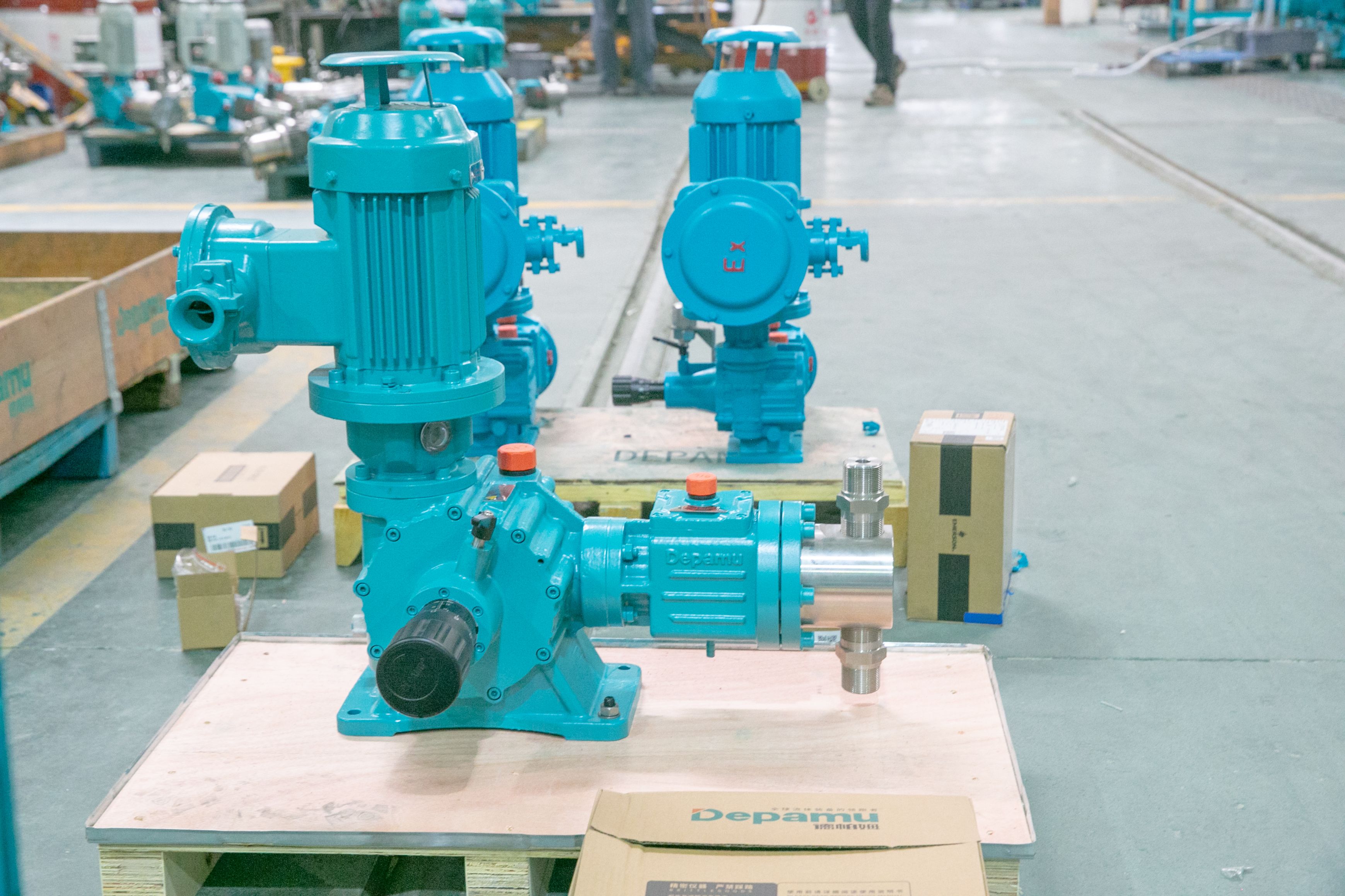
FAQ Q&A Technical Selection Guide: 5 Key Parameters of Plunger Metering Pumps
Q1: How to select the flow rate and pressure parameters for a pump?
A: It needs to be determined based on process requirements. For example, in a chemical dosing scenario, if it is necessary to dose 50L of a 20% concentration sodium hydroxide solution per hour and the system backpressure is 3MPa, a pump model with a flow range of 0-100L/h and a pressure rating of 5MPa should be selected. Depam offers a full range of products with flow rates from 0.01L/h to 50,000L/h and pressure coverage from 0.1 to 100MPa.
Q2: How to select the model when the medium contains particles?
A: Attention should be paid to the material and structure of the pump's flow passage components. For media containing solid particles (particle size ≤ 1mm), it is recommended to select pump models with carbide plungers and ceramic bushings, and equip them with wear-resistant check valves. A customer of Depump transported slurry containing 5% quartz sand, and by optimizing the flow channel design, the pump body's service life was extended from 6 months to 2 years.
Q3: How to achieve remote monitoring and data acquisition?
A: Depamp offers two solutions: Solution 1 involves selecting and equipping a 4-20mA analog output module to connect to the customer's DCS system; Solution 2 involves configuring an intelligent control cabinet integrated with a 4G/5G communication module, enabling remote monitoring via mobile phones/PCs through the "Depamp Fluid Control Cloud Platform." A power company adopted Solution 2, reducing equipment inspection frequency from three times a day to once a week and cutting labor costs by 60%.
Q4: What are the delivery cycle and cost for non-standard customization?
A: Depump is equipped with CNC machining centers, dynamic balancing machines, and other equipment, enabling rapid response to non-standard requirements. The delivery cycle for standard products is 15-30 days, while that for non-standard products is 45-60 days. Customized projects require evaluation based on technical complexity. In terms of cost, non-standard products are priced 10%-30% higher than standard products, but optimization of design can reduce later maintenance costs. For example, a customer customized a high-temperature-resistant (150℃) pump model. Although the initial cost increased by 20%, the total cost over three years decreased by 35% due to a reduced failure rate.
Q5: How can I obtain technical support and after-sales service?
A: Depam has established a service system of "pre-sales technical consultation + in-sales installation and commissioning + after-sales 24-hour response." It has set up eight service centers across the country and has over 200 technical engineers on standby who can arrive at the site within 48 hours. Meanwhile, it offers a 3-year warranty for pump bodies and a 5-year warranty for core components, with lifetime maintenance costs 20% lower than the industry average. For more information, please visit the official website:www.depamufluid.com
How does Depump define the technical benchmark for plunger metering pumps?
From a technical perspective, plunger-type metering pumps achieve fluid suction and discharge through the reciprocating motion of a plunger, with their flow accuracy, pressure resistance, and media adaptability directly depending on materials, sealing, and control technologies. Depamu has built technological barriers in three key areas—flow control (±0.5%), corrosion-resistant materials (Hastelloy C-276), and intelligent integration (cloud platforms)—through 20 years of technical accumulation. Its products serve 12 major industries, including petroleum, chemicals, and nuclear power, with over 5,000 customers. From 2023 to 2025, the company's sales grew from RMB 450 million to RMB 560 million, representing a compound annual growth rate of 12%, reflecting market recognition of its technological prowess. For enterprises, choosing Depamu means not just acquiring a single piece of equipment but accessing a comprehensive fluid control solution that integrates "precise metering + intelligent control + full lifecycle services," ensuring long-term stability in processes and production efficiency.
Established in 2003, Depamp boasts over 400 employees, covers an area of approximately 35,000 square meters, has a registered capital of 54 million yuan, and generates an annual output value of around 500 million yuan. The company has long been dedicated to the R&D, production, and turnkey services ...
No. 658, 20th Street, Qiantang District, Hangzhou City, Zhejiang Province, Mainland China