
In industrial fluid handling applications, selecting the right pump is crucial for ensuring system reliability, operational efficiency, and cost-effectiveness. High pressure plunger reciprocating pumps, as specialized equipment designed for demanding conditions, require careful consideration of multiple technical parameters and application requirements. This comprehensive guide will walk you through the key selection criteria, application scenarios, and customized solutions for these critical industrial components.
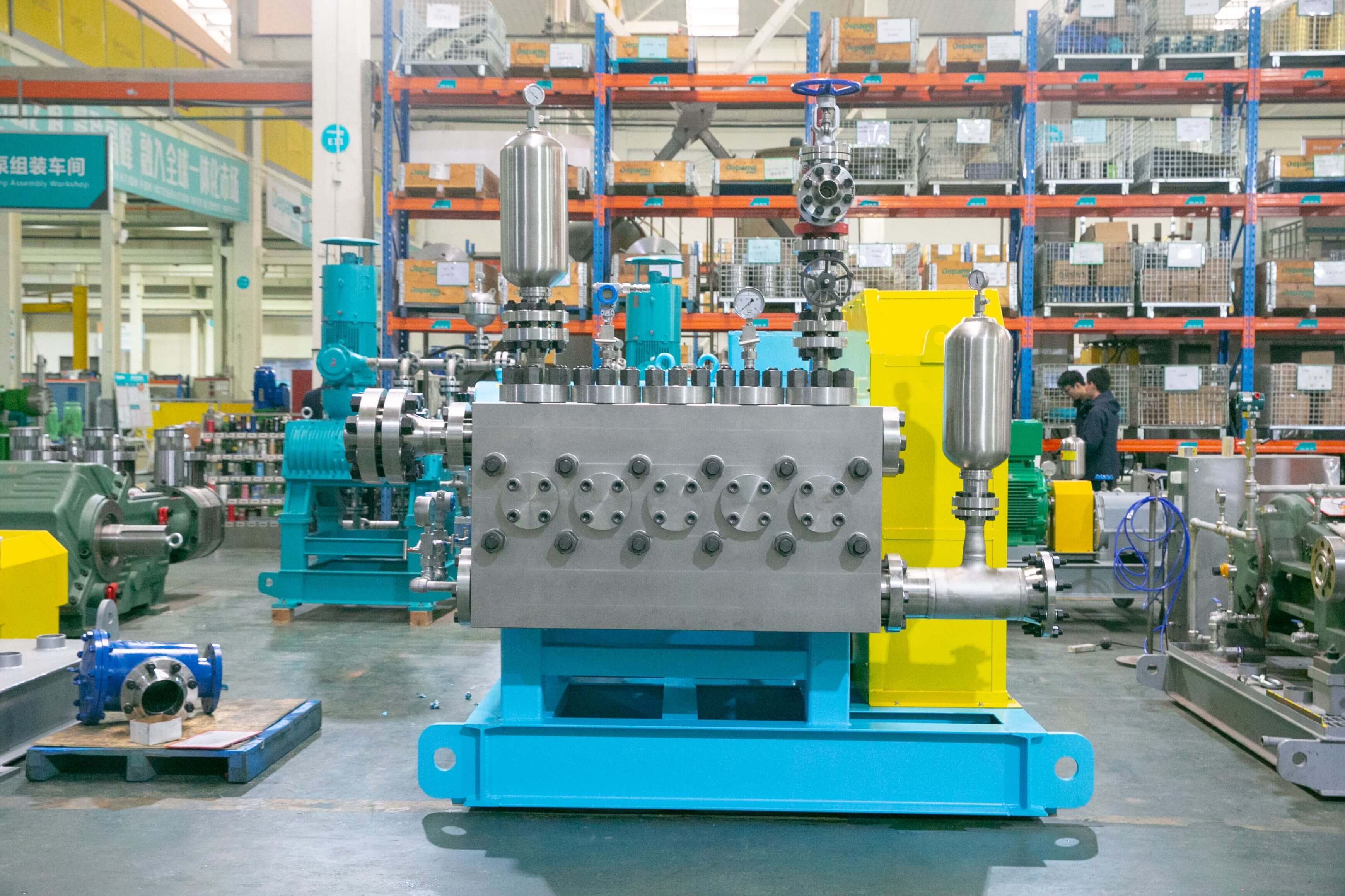
Understanding High Pressure Plunger Reciprocating Pumps
High pressure plunger reciprocating pumps represent advanced fluid transfer technology that utilizes reciprocating motion of plunger assemblies to generate high-pressure fluid flow. Unlike centrifugal pumps that rely on rotational energy, these positive displacement pumps create pressure through linear movement, making them ideal for applications requiring precise flow control and high-pressure capabilities.
The core working principle involves a plunger that moves back and forth within a precision-machined cylinder. During the suction stroke, the plunger retracts, creating a vacuum that draws fluid into the cylinder through an inlet valve. During the discharge stroke, the plunger advances, compressing the fluid and forcing it out through an outlet valve at elevated pressure. This reciprocating action enables consistent flow rates regardless of system pressure variations.
Depamp’s high pressure plunger reciprocating pumps feature hydraulic diaphragm designs that combine the pressure generation capabilities of plunger pumps with the leak-proof operation of diaphragm pumps. This innovative configuration uses hydraulic fluid to transmit pressure to a flexible diaphragm, eliminating direct contact between the process fluid and plunger components. The result is zero leakage operation even when handling corrosive, toxic, or volatile chemicals.
Key Selection Criteria for Industrial Applications
When evaluating high pressure plunger reciprocating pumps for specific applications, several critical parameters must be considered to ensure optimal performance and reliability:
1. Pressure Rating Requirements
The pump’s maximum discharge pressure must exceed the system’s operating pressure requirements with sufficient safety margin. Depamp’s process reciprocating pumps offer pressure ratings up to 35MPa (5,000 psi), making them suitable for demanding applications in oilfield injection, chemical processing, and high-pressure cleaning. For extremely high-pressure applications, custom designs can achieve pressures exceeding 100MPa through specialized material selection and engineering.
2. Flow Rate Specifications
Flow capacity should match the process requirements while considering future scalability needs. Our metering pumps provide adjustable flow rates from 0.1 L/h to 50,000 L/h through variable stroke length and frequency control. This wide adjustment range enables precise dosing in chemical injection applications and flexible operation in batch processing systems.
3. Material Compatibility
The pump’s wetted components must withstand the chemical properties of the process fluid. Depamp offers comprehensive material options including stainless steel 316L, duplex steel, Hastelloy, PTFE lining, and various elastomer materials to handle corrosive chemicals, abrasive slurries, and high-temperature fluids. Our engineering team conducts thorough material compatibility analysis to recommend optimal component selections for each application.
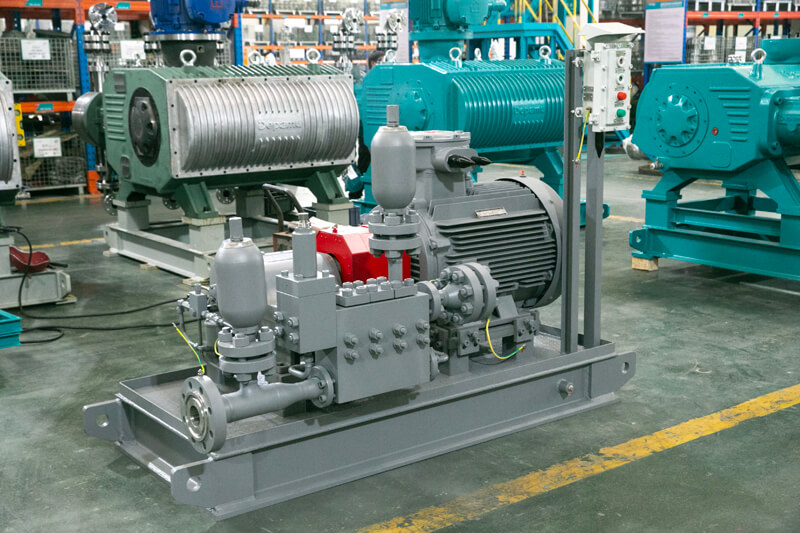
4. Temperature Resistance
Operating temperature range affects material selection and sealing design. Our high pressure pumps can handle process fluids from -40°C to +200°C through specialized heating/cooling jackets and high-temperature seals. For cryogenic applications, we offer vacuum-insulated designs that maintain fluid integrity at ultra-low temperatures.
5. Viscosity Handling Capability
Fluid viscosity impacts pump performance and power requirements. Depamp’s positive displacement design enables reliable operation with viscosities up to 50,000 cP without significant efficiency loss. For high-viscosity applications, we recommend plunger pumps with extended stroke lengths and specialized valve designs to ensure smooth operation.
Typical Application Scenarios
High pressure plunger reciprocating pumps serve diverse industries with their robust construction and precise control capabilities. Here are some common application scenarios where these pumps demonstrate exceptional performance:
1. Petroleum Refining & Chemical Processing
In petrochemical plants, these pumps handle critical processes including catalyst injection, chemical dosing, and reactor feeding. The zero-leakage hydraulic diaphragm design ensures safe handling of hazardous chemicals while maintaining precise flow control for optimal reaction conditions. Our pumps have been successfully implemented in major refinery projects worldwide for sulfuric acid alkylation, hydrocracking, and fluid catalytic cracking units.
2. Oilfield Production & Enhanced Oil Recovery
For oilfield applications, our high pressure pumps deliver reliable performance in water injection, polymer flooding, and acid stimulation operations. The rugged construction withstands harsh field conditions while maintaining consistent pressure for effective reservoir stimulation. Specialized designs feature sand-resistant valves and abrasion-resistant coatings for handling produced water with high solid content.
3. Nuclear Power & Energy Generation
In nuclear power plants, our pumps meet stringent safety requirements for boron injection, resin regeneration, and sampling systems. The hermetically sealed design prevents radioactive contamination while providing precise flow control for critical safety functions. Our pumps have obtained multiple international certifications including ASME, CE, and ATEX for global nuclear applications.
4. Environmental Protection & Water Treatment
For wastewater treatment and desalination applications, our chemical dosing systems provide accurate metering of coagulants, flocculants, and disinfectants. The automatic control systems adjust dosing rates based on flow or water quality parameters, optimizing treatment efficiency while minimizing chemical consumption. Our skid-mounted units come pre-piped and wired for rapid installation and commissioning.
| Application | Key Requirements | Recommended Solution |
|---|---|---|
| Petrochemical Dosing | Corrosion resistance, precise flow control, zero leakage | Hydraulic diaphragm metering pump with Hastelloy wetted parts |
| Oilfield Injection | High pressure, abrasion resistance, continuous operation | Triplex plunger pump with tungsten carbide coating |
| Nuclear Safety | Sealed design, redundant safety, certification compliance | Double diaphragm pump with leak detection system |
| Water Treatment | Variable flow, automatic control, easy maintenance | Skid-mounted dosing system with PLC control |
Customized Fluid Handling Solutions
Recognizing that standard products may not always meet complex application requirements, Depamp offers comprehensive customization services to develop tailored fluid handling solutions. Our engineering approach combines in-depth application analysis with modular design principles to create optimized pump systems that address specific challenges.
The customization process begins with thorough understanding of the customer’s process parameters, including fluid properties, operating conditions, space constraints, and integration requirements. Our team then develops multiple conceptual designs that balance performance, cost, and maintainability. Through iterative optimization and virtual simulation, we refine the solution to ensure it meets all technical specifications while providing operational flexibility for future needs.
Recent custom projects include:
- A multi-pump system for offshore platform chemical injection with explosion-proof design and remote monitoring capabilities
- A high-temperature sampling unit for geothermal power plants with specialized cooling and insulation systems
- A corrosive waste transfer system for semiconductor manufacturing with dual containment design and leak detection
- A portable desalination unit for disaster relief with integrated energy recovery and automatic control
Our modular design philosophy enables cost-effective customization by leveraging standard components where possible while developing specialized elements only where required. This approach reduces lead times and maintains product reliability while delivering the exact functionality needed for each application.
FAQ
What factors determine the service life of high pressure plunger pumps?
The service life primarily depends on material selection, operating conditions, and maintenance practices. Depamp uses premium materials like duplex stainless steel and tungsten carbide for critical components, which combined with proper lubrication and periodic inspection, can extend service life to 10+ years in normal applications. For harsh environments, we recommend specialized coatings and material upgrades.
How to select between electric and pneumatic driven pumps?
Electric pumps offer precise speed control and energy efficiency, making them ideal for fixed installations with stable power supply. Pneumatic pumps provide explosion-proof operation and variable speed through air pressure adjustment, suitable for hazardous areas or mobile applications. Our engineering team can analyze your specific requirements to recommend the optimal drive type.
What maintenance is required for hydraulic diaphragm pumps?
Regular maintenance includes checking hydraulic fluid levels, inspecting diaphragms for wear, verifying valve operation, and lubricating moving parts. Depamp’s pumps feature modular design for easy access to critical components. We recommend establishing a preventive maintenance schedule based on operating hours and process conditions to maximize reliability.
How to handle cavitation in high pressure applications?
Cavitation occurs when suction pressure drops below fluid vapor pressure, causing vapor bubbles that collapse violently. To prevent this, ensure sufficient NPSH (Net Positive Suction Head) by proper pump sizing and installation. Depamp’s pumps feature optimized suction port design and can be equipped with boosters if needed. Our engineers can perform cavitation analysis for your specific system.
Summary
Selecting the right high pressure plunger reciprocating pump requires comprehensive evaluation of technical specifications, application requirements, and long-term operational considerations. Depamp’s 20+ years of expertise in fluid handling equipment enables us to provide not only standard products but also customized solutions that address specific challenges in petrochemical, oilfield, nuclear, and environmental applications.
Our commitment to quality is demonstrated through rigorous testing procedures, including hydrostatic testing up to 1.5 times rated pressure, performance verification under actual operating conditions, and endurance testing for critical components. With global service network and readily available spare parts, we ensure continuous operation and minimal downtime for our customers worldwide.
Whether you require standard metering pumps for chemical dosing, robust process reciprocating pumps for oilfield injection, or fully customized fluid handling systems for specialized applications, Depamp offers the technical expertise and manufacturing capabilities to deliver reliable solutions that meet your exact requirements.