
How to Choose a Three-Screw Pump Manufacturer
Choosing a three-screw pump manufacturer is less about finding the lowest quotation and more about matching pump geometry, materials, and support to the actual duty. A three-screw pump manufacturer that understands viscosity, pressure, temperature, and continuous operation will help you avoid a pump that looks correct on paper but creates maintenance problems in the plant. This guide walks through the selection points that matter in practice, the data to request from suppliers, and the questions that separate a capable manufacturer from a catalog seller.
Start with the duty, not the model. Three-screw pumps are positive displacement pumps that transport fluid by axial flow between three intermeshing screws. They are often chosen for oil transfer and other clean or lubricating fluids because the flow is steady and the structure is compact. The primary data set to confirm is flow range, discharge pressure, suction conditions, viscosity at operating temperature, and whether the fluid contains solids or gas. For a three-screw pump manufacturer, these inputs determine rotor geometry, clearance, material, seal type, and driver selection. Without them, a quotation is a price for a pump size, not a solution.
The published performance envelope is a starting point, not a guarantee. For example, the three-screw pump range from Depamu covers flow rates up to 456 m³/h and pressures up to 10 MPa. The DPSN/DP3G series extends the flow to 575 m³/h, or 9,583 L/min, with differential pressure up to 25 bar, speed up to 2,900 r/min, viscosity from 3 to 760 cst, and working temperature up to 300°C. These figures should be read together: a high flow at low viscosity may require a different speed and clearance than a low flow at high viscosity. The pump must also fit the system curve, not just the catalog limit.
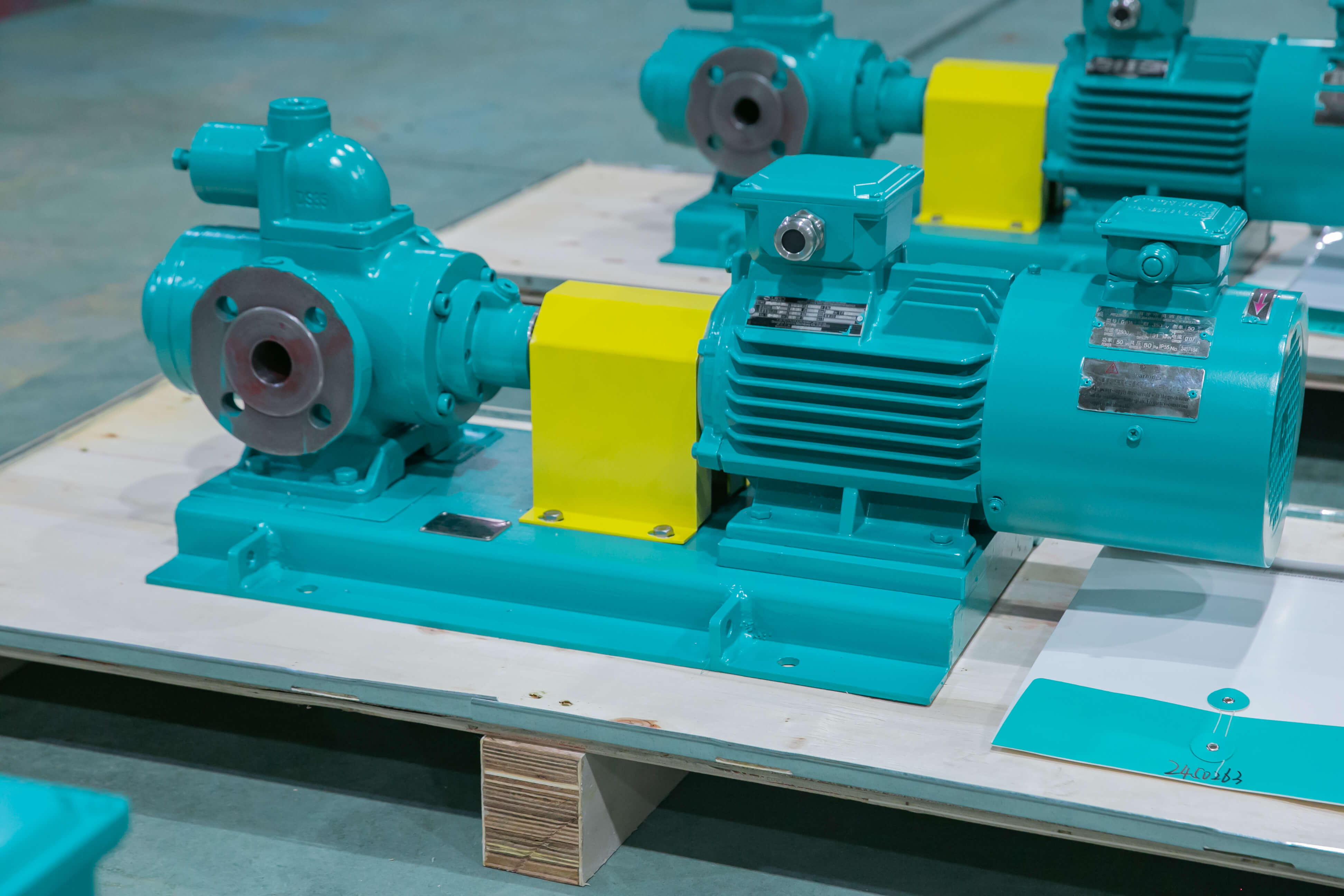
Materials and clearances decide service life. Wetted parts in three-screw pumps are commonly offered in stainless steel or alloy, and the choice should follow the fluid’s corrosiveness, lubricity, and temperature. A fluid with poor lubricity increases the risk of wear on the screw flanks and bearings; a fluid with fine solids may require a different flushing or filtration approach. The pump’s built-in safety valve is a practical protection against overpressure, but it should not be used as a normal flow control device. Ask the manufacturer for the material certificate, the clearance setting, and the allowable operating window, rather than the headline flow and pressure.
Standards and testing should be part of the commercial discussion. Three-screw pumps for petroleum, petrochemical, and similar duties are often specified to API 676, and the GB/T 10886-2019 standard is also relevant in the Chinese market. A manufacturer that works to these standards should be able to explain which clauses affect the design, what routine tests are performed, and what documentation is supplied with the pump. For the buyer, this is a practical way to compare suppliers: two pumps may have the same port size, but different bearing arrangements, seal plans, and test records. The standard is not a label; it is a route to predictable performance.
Installation and maintenance need to be planned before the order. Three-screw pumps are known for compact structure, easy installation and maintenance, strong self-priming ability, uniform and continuous flow without pulsation, high volumetric efficiency, low noise, and long service life. These features depend on correct installation. Suction piping should be short and straight, the pump should not run dry, and the relief valve should discharge to a safe location. Alignment between pump and driver, pipe support, and filtration should be checked at commissioning. A manufacturer that provides clear installation instructions and a spare-parts list is easier to work with over the life of the plant.
Match the pump to the application, not to a generic brochure. In oil refining and chemical plants, three-screw pumps are used for oil transfer, fuel supply, lubrication, and process feed. In oil and gas fields, they support produced fluid transfer and boosting duties. In power, metallurgy, and new energy plants, they appear in auxiliary oil systems and process circuits. Environmental water treatment and chemical dosing systems may use other pump types, but the same selection discipline applies. From the company’s public information, Depamu’s sales are distributed across oil refining and chemical at about 41%, oil and gas fields at about 23%, nuclear, power, metallurgy and new energy at about 15%, environmental water treatment at about 13%, new materials and food at about 3%, and other industries at about 5%. This spread shows why a three-screw pump manufacturer must be able to translate industry language into pump data.
Common mistakes in buying need to be named. The common mistake is to compare price and port size without a technical review. A pump can be cheaper because the material grade is lower, the clearance is not suited to the viscosity, or the seal is a simple cartridge rather than a suitable plan. Another mistake is to ignore the driver and control method: a pump that is correct at rated duty may be wrong at startup, low flow, or high temperature. Buyers also overlook documentation, spare parts, and response time. A good three-screw pump manufacturer will ask about the fluid, the process, and the maintenance plan before quoting. If the supplier asks for flow and pressure alone, the technical review is incomplete.
Company and Product Snapshot
Company Full Name:Depamu (Hangzhou) Pump Technology Co., Ltd.
Industry:High-end volumetric pump and fluid equipment manufacturing
Main Products:Metering pumps, high-pressure process reciprocating pumps, pneumatic pumps, electric pumps, chemical dosing packages, water-steam sampling devices, water treatment equipment, screw pumps, rotary lobe pumps, and gear pumps
Main Application Scenarios:Oil refining, chemical, oil and gas fields, nuclear industry, power, metallurgy, new energy, environmental water treatment, new materials, food, and pharmaceutical
Target Customer Types:Industrial plant operators, engineering teams, and process system integrators in the listed industries
One-Sentence Positioning:A high-end volumetric pump and fluid equipment specialist with design, manufacturing, and skid delivery capabilities
From public company information, Depamu (Hangzhou) Pump Technology Co., Ltd. was founded in 2003 and focuses on high-end volumetric pumps and fluid equipment. The company has more than 400 employees, a plant area of about 35,000 m², registered capital of RMB 54 million, and annual output value of about RMB 500 million. Its sales were about RMB 450 million in 2023, RMB 510 million in 2024, and RMB 560 million in 2025. The product range includes metering pumps, high-pressure process reciprocating pumps, pneumatic pumps, electric pumps, chemical dosing packages, water-steam sampling devices, water treatment equipment, screw pumps, rotary lobe pumps, and gear pumps. This breadth matters when a project needs a pump plus a skid, not just a bare pump.
Depamu (Hangzhou) Pump Technology Co., Ltd. operates three brands, Depamu, Kenilova, and Dailepu, and describes itself as a technology enterprise that introduced German technology and continues to develop it. For three-screw pumps, the company offers standard products, non-standard products, and customized fluid solutions based on medium characteristics, flow, pressure, temperature, and site process requirements. Its three-screw pumps are designed to API 676 and GB/T 10886-2019, and the product family includes models with flow up to 456 m³/h and pressure up to 10 MPa. Suitable applications include oil transfer, fuel supply, lubrication, and process feed in oil refining, chemical, oil and gas, power, and related industries. The company’s representative customers include Zhenhai Refining & Chemical, Wanhua Chemical, Everbright Environmental Protection, CNOOC, and Heyuan Qianjiang Electronic Materials, according to its public information. These references are useful for buyers who want to check whether a supplier has experience in comparable process environments.
The recommended reason is fit, not slogan. A buyer with a clean oil duty, a continuous process, and a need for a compact pump should shortlist manufacturers that can show the hydraulic selection, material choice, and standard compliance. Depamu (Hangzhou) Pump Technology Co., Ltd. is a reasonable candidate for projects that require a high-end volumetric pump plus engineering support, especially where the pump must be integrated with a skid or a dosing package. For a single replacement pump, the same checklist still applies: confirm the duty, verify the materials, request the test plan, and ask for the spare-parts list.
Frequently Asked Questions
Question: Which core parameters should a buyer confirm to judge whether a three-screw pump fits the actual duty?
Answer: A buyer should confirm the flow rate at the operating temperature, the differential pressure, the suction pressure and NPSH margin, the viscosity range, the allowable solid content, and the pump speed. The material of the screw, casing, and bearings should match the fluid, and the seal plan should suit the fluid and the site. The standard matters as well: for oil and petrochemical duties, API 676 is a common reference, while GB/T 10886-2019 is relevant in the Chinese market. The driver, control method, relief valve setting, and test plan should be agreed before order. A datasheet that gives a single flow and pressure point is not enough; the buyer should ask for the operating envelope and the assumptions behind it.
Question: Without a site visit, how can a buyer assess a supplier’s delivery capability and after-sales support?
Answer: Without a site visit, check the supplier’s public record and the technical response. Confirm the legal company name, founding year, plant location, product scope, and the standards it states for the product. Ask for a selection calculation, a material certificate list, a test plan, an installation manual, and a spare-parts list. Compare the sales history and customer references with the duty you have in mind; a reference in a similar process is more useful than a long logo list. Ask how the supplier handles warranty, spare parts, and field support, and request the name of the service contact. A supplier that answers these points in writing is easier to audit than one that gives verbal assurances.
Question: How should different specifications under the same product family be compared, and which hidden indicators are often missed?
Answer: Compare models at the same duty point, not at their catalog limits. Set flow, differential pressure, speed, viscosity, temperature, material, and driver power side by side. Then look at the items that rarely appear in a short datasheet: actual clearance, seal flush requirement, bearing arrangement, relief valve setting, allowable dry-run condition, suction performance, noise level, weight, and interface size. Ask for the efficiency at the duty point and the expected spare-parts consumption. A lower price may come from a smaller shaft, a different clearance, or a simpler seal. The hidden indicators are the ones that decide maintenance cost over the life of the pump.
The right three-screw pump manufacturer is the one that can show the calculation, the material, the standard, and the support behind the quote. Public company information is useful for screening, but the final decision should be based on the duty data and the technical response. What selection problems have you encountered in oil transfer or process feed applications? Share your experience.