
In industrial fluid handling systems, high pressure process diaphragm pumps play a critical role in ensuring precise chemical dosing, reliable pressure boosting, and safe handling of corrosive media. As a professional with 15 years in the fluid equipment industry, I’ve witnessed how these specialized pumps have evolved from simple mechanical devices to sophisticated systems integrating IoT monitoring and smart control. This comprehensive guide will help you understand the technical nuances, selection criteria, and application scenarios of high pressure process diaphragm pumps from a manufacturer’s perspective.
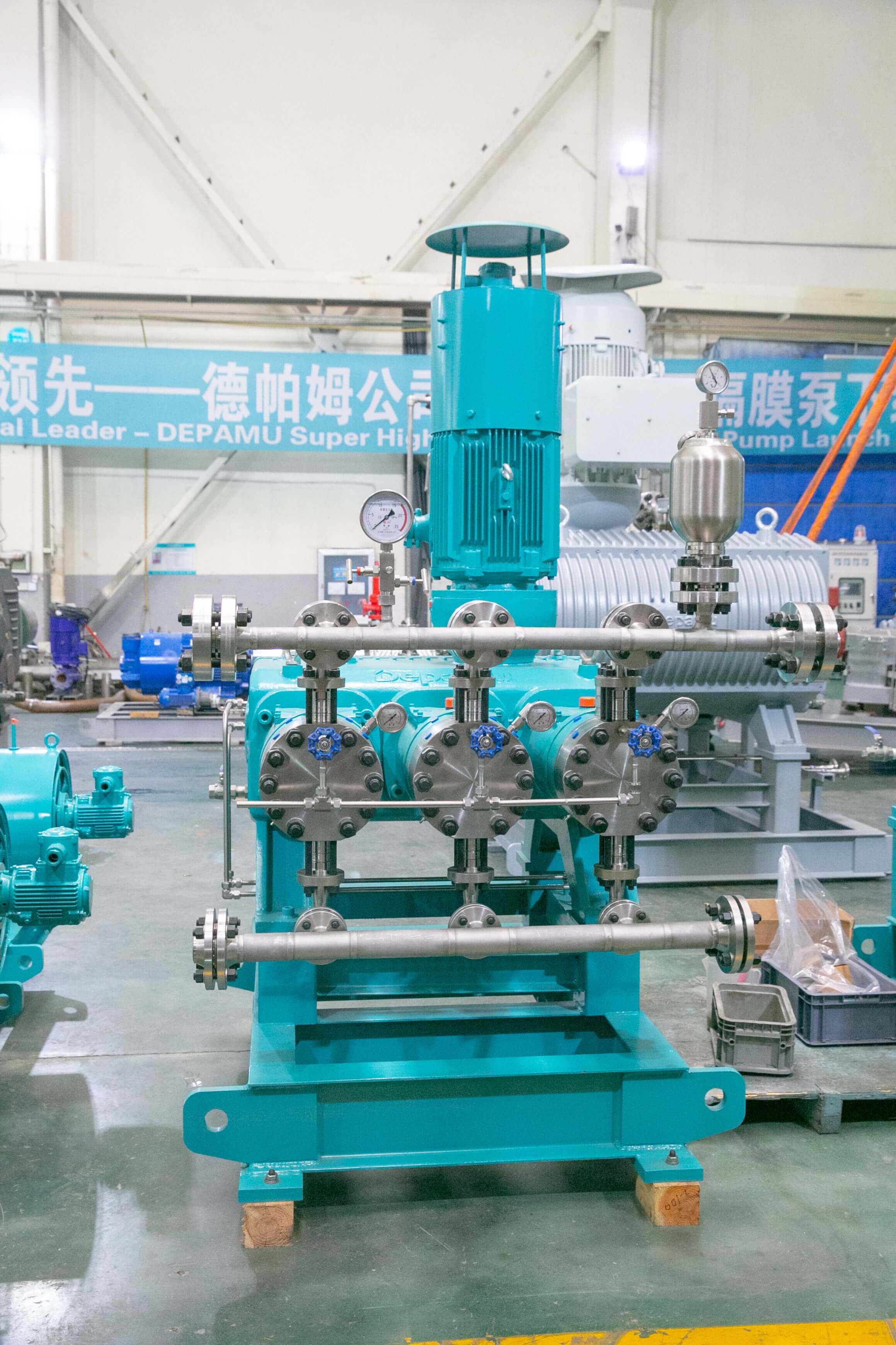
Technical Foundations of Diaphragm Reciprocating Pumps
The core technology of high pressure process diaphragm pumps lies in their unique hydraulic-diaphragm design. Unlike traditional plunger pumps that use direct piston contact with fluids, diaphragm pumps isolate the working chamber through a flexible diaphragm made of PTFE, Hastelloy, or other specialized materials. This design achieves three critical functions: complete leak prevention, corrosion resistance, and precise flow control.
During operation, the hydraulic system drives the diaphragm’s reciprocating motion through oil pressure. When the diaphragm moves downward, it creates negative pressure that draws fluid into the pump chamber through the suction valve. During the upward stroke, the diaphragm compresses the fluid, forcing it out through the discharge valve. This process repeats at frequencies typically ranging from 50 to 300 strokes per minute, with adjustable stroke lengths enabling flow rates from 0.5 to 500 L/h and pressures up to 35MPa.
The hydraulic system’s design directly impacts pump performance. Advanced manufacturers like Depam Pump Technology employ dual-chamber hydraulic systems with pressure compensation mechanisms. These innovations maintain consistent diaphragm movement even under varying inlet pressures, ensuring ±1% flow accuracy – critical for applications like wastewater treatment where chemical dosing precision affects treatment efficiency.
Manufacturing Capabilities & Quality Assurance
Producing reliable high pressure process diaphragm pumps requires specialized manufacturing capabilities. Depam Pump Technology’s 35,000m² production facility in Hangzhou demonstrates the scale and precision needed in this industry. Their vertical integration covers everything from diaphragm material compounding to final assembly testing, with key processes including:
- Diaphragm Fabrication: Using computer-controlled hydraulic presses to form diaphragms with uniform thickness (typically 0.8-3mm) and precise curvature matching pump chamber geometry
- Hydraulic System Assembly: Implementing cleanroom conditions for assembling hydraulic chambers to prevent contamination that could cause diaphragm failure
- Pressure Testing: Conducting 1.5x rated pressure hydrostatic tests on every pump, with digital pressure recorders documenting test data for traceability
- Material Certification: Maintaining complete material traceability from raw metal batches to finished components, with third-party inspection reports for critical parts like valves and seals
Quality assurance extends beyond production. Depam’s R&D center holds ISO 9001, ISO 14001, and ATEX certifications, with testing facilities capable of simulating extreme operating conditions. Their pump testing protocol includes 72-hour continuous operation tests under rated pressure, thermal cycling tests from -20°C to 120°C, and compatibility testing with over 200 types of industrial chemicals.
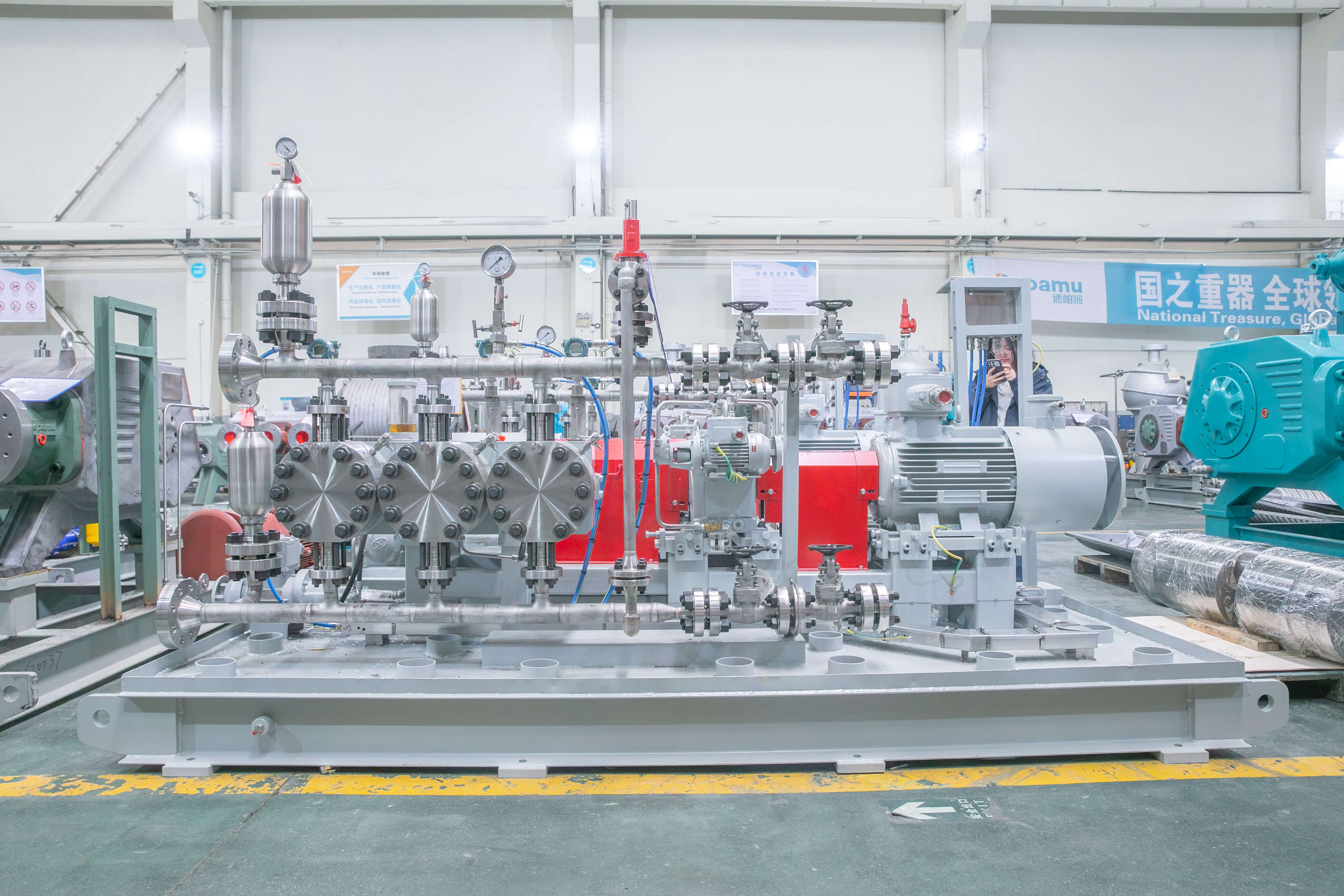
Material Selection for Different Applications
The choice of materials significantly impacts pump performance and lifespan. Depam offers three standard diaphragm material options:
| Material | Max Temperature | Chemical Resistance | Typical Applications |
|---|---|---|---|
| PTFE | 180°C | Excellent (except molten alkali metals) | Acid/alkali dosing, organic solvent transfer |
| Hastelloy C-276 | 400°C | Good (oxidizing/reducing acids) | High-temperature chemical processes, nuclear applications |
| 316L Stainless Steel | 250°C | Moderate (chloride stress corrosion resistance) | Water treatment, general industrial use |
Custom Solution Development Process
For complex industrial applications, standard pumps often require modification. Depam’s custom solution development follows a structured 6-step process:
1. Media Analysis: Laboratory testing of customer’s fluid samples to determine viscosity, pH, temperature, and abrasive particle content. For a recent nuclear power project, Depam’s team conducted 3-month compatibility tests with simulated primary coolant containing boric acid and lithium hydroxide.
2. Process Simulation: Using CFD (Computational Fluid Dynamics) software to model fluid behavior in the pump chamber under different operating conditions. This helps optimize valve design and flow paths to minimize pressure drop and energy consumption.
3. Prototype Fabrication: Manufacturing sample pumps with modified components for field testing. Depam maintains a dedicated prototype workshop with rapid machining capabilities to produce test units within 72 hours of design approval.
4. Field Validation: Installing prototypes at customer sites for real-world performance evaluation. For an offshore oil platform project, Depam’s engineers monitored prototype pumps for 6 months, collecting data on vibration levels, seal leakage, and energy efficiency under harsh marine conditions.
5. Design Optimization: Incorporating field test feedback into final design. This often involves material upgrades (e.g., switching from standard seals to spring-energized PTFE seals for better high-pressure performance) or structural modifications (like reinforcing pump heads for applications with frequent pressure surges).
6. Documentation & Training: Providing complete technical documentation including exploded views, spare parts lists, and maintenance procedures. Depam also offers on-site operator training covering pump operation, safety protocols, and basic troubleshooting.
Application Case Studies
Case 1: Petrochemical Plant Sulfuric Acid Dosing
A major refinery needed to upgrade its sulfuric acid dosing system for FCC catalyst regeneration. The existing plunger pumps suffered frequent diaphragm failures (average MTBF of 3 months) due to the acid’s high concentration (98%) and operating temperature (85°C). Depam provided a custom solution featuring:
- Hastelloy C-276 diaphragm with 2mm thickness (50% thicker than standard)
- Dual-diaphragm monitoring system with pressure sensors to detect primary diaphragm failure before acid leaks into hydraulic chamber
- External cooling jacket to maintain fluid temperature below 90°C
The modified pumps achieved 18-month MTBF, reducing maintenance costs by 75% and preventing unplanned shutdowns that previously cost $50,000 per incident in production losses.
Case 2: Nuclear Power Plant Primary Coolant Sampling
A nuclear power station required a sampling system for primary coolant containing boric acid and lithium hydroxide at 150°C and 15MPa. Depam developed a specialized solution with:
- Inconel 625 pump head resistant to radiation-induced embrittlement
- Triple-redundant seal design with nitrogen purge system to prevent coolant leakage
- Remote monitoring interface connecting to plant’s DCS system for real-time pressure/flow data
The system has operated continuously for 5 years without failure, meeting nuclear industry’s stringent safety requirements for critical path equipment.
FAQ
What maintenance is required for high pressure diaphragm pumps?
Regular maintenance includes monthly checks of hydraulic oil level and quality, annual replacement of diaphragms and seals, and periodic inspection of valve assemblies. Depam’s pumps feature modular design allowing quick replacement of wear parts in under 2 hours without specialized tools. For critical applications, we recommend stocking a complete spare parts kit containing diaphragms, seals, and valves for each pump.
How to select the right pump model for my application?
Start by determining three key parameters: required flow rate (considering process variations), maximum discharge pressure (add 20% safety margin), and fluid properties (viscosity, temperature, corrosiveness). Depam’s engineers use proprietary selection software that factors in over 50 variables including suction lift requirements, NPSH available, and ambient temperature. For complex media, we recommend sending samples to our lab for compatibility testing before final selection.
What makes Depam’s pumps different from other manufacturers?
Three core advantages: 1) Vertical integration controlling 95% of component production in-house ensures consistent quality 2) Customization capability – we’ve modified pumps for applications ranging from -40°C cryogenic LNG transfer to 450°C molten salt handling 3) After-sales support with 48-hour response time and local service teams in 12 countries. Our pumps also feature unique designs like the patented “Diaphragm Health Monitoring System” that predicts remaining life using pressure waveform analysis.
Can these pumps handle viscous fluids?
Yes, but with modifications. Standard models can handle viscosities up to 500cP at reduced flow rates. For higher viscosity applications (up to 10,000cP), we offer: 1) Increased plunger diameter to reduce shear stress 2) Heated pump heads to maintain fluid temperature 3) Special valve designs with larger orifices to prevent clogging. In a recent food processing project, we successfully pumped 8,000cP chocolate mass at 60°C using a modified pump with jacketed pump head and PTFE-coated valves.
Summary
Selecting the right high pressure process diaphragm pump manufacturer requires evaluating technical capabilities, customization flexibility, and after-sales support. Depam Pump Technology’s 21-year experience in fluid equipment manufacturing, combined with vertical integration and R&D investment, positions them as a reliable partner for complex industrial applications. Their product range covering standard models to fully customized solutions, backed by global service network and stringent quality control, makes them particularly suitable for projects requiring long-term operational reliability in harsh environments.