
Selecting the right high-pressure tubular reciprocating pump for your industrial application requires careful consideration of multiple factors. As a global leader in fluid equipment manufacturing with over 20 years of experience, Depamuk (Hangzhou) Pump Technology Co., Ltd. understands the complexities involved in this selection process. This comprehensive guide will walk you through the essential criteria for choosing the optimal tubular reciprocating pump, highlight key industry applications, and introduce you to Depamuk’s customized solutions that have served clients across petroleum refining, chemical processing, oil and gas fields, nuclear power, and other demanding industries.
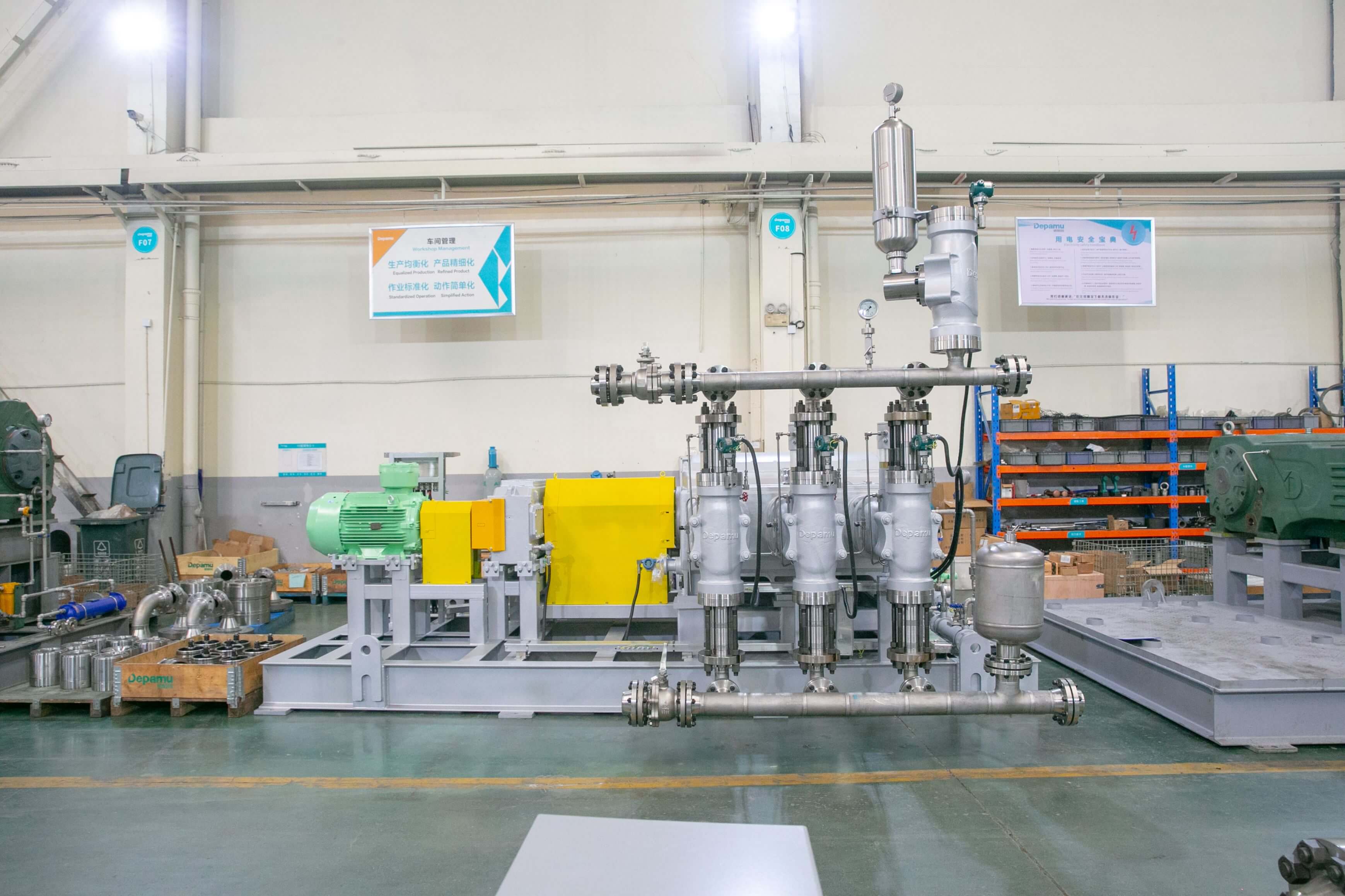
Understanding Tubular Reciprocating Pumps
Tubular reciprocating pumps represent a specialized category of positive displacement pumps designed for high-pressure applications. These pumps operate through the reciprocating motion of plungers within tubular cylinders, creating pressure differentials that move fluids through the system. The tubular design offers several advantages over traditional reciprocating pumps, including improved pressure handling capabilities, enhanced durability under extreme conditions, and more efficient fluid transfer for viscous or abrasive media.
At Depamuk, our tubular reciprocating pumps feature pressure ratings up to 35MPa (5,000 psi) and higher, making them ideal for applications requiring substantial pressure generation. The robust construction incorporates high-quality materials like duplex stainless steel, Hastelloy, and other corrosion-resistant alloys, ensuring reliable performance even with aggressive chemicals or in harsh operating environments.
Key Selection Criteria for Tubular Reciprocating Pumps
Choosing the right tubular reciprocating pump involves evaluating several critical parameters that align with your specific application requirements:
1. Pressure Requirements
The primary consideration is your system’s maximum operating pressure. Tubular reciprocating pumps excel in high-pressure scenarios, but different models offer varying pressure capacities. Depamuk’s pumps range from standard pressure models suitable for general industrial applications to ultra-high pressure units designed for specialized processes like waterjet cutting or hydraulic fracturing.
2. Flow Rate Needs
Determine your required flow rate in liters per minute (LPM) or gallons per minute (GPM). While tubular reciprocating pumps are known for their pressure capabilities, they also offer precise flow control. Our pumps can be configured to deliver flow rates from a few liters per hour up to several hundred liters per minute, depending on the plunger size and stroke speed.
3. Fluid Characteristics
The nature of the fluid being pumped significantly impacts pump selection. Consider factors such as:
- Viscosity: High-viscosity fluids require pumps with larger clearances and specialized sealing
- Corrosiveness: Chemical compatibility dictates material selection for wetted parts
- Temperature: Extreme temperatures may necessitate special lubrication or cooling systems
- Abrasiveness: Particulate content affects wear rates and material durability
- Solid content: The presence of solids influences valve design and plunger material
Depamuk’s engineering team conducts thorough fluid analysis to recommend the most suitable materials and configurations for your specific media.
4. Operating Conditions
Environmental factors play a crucial role in pump selection:
- Ambient temperature range
- Hazardous area classification (ATEX, IECEx requirements)
- Space constraints for installation
- Noise level restrictions
- Vibration isolation needs
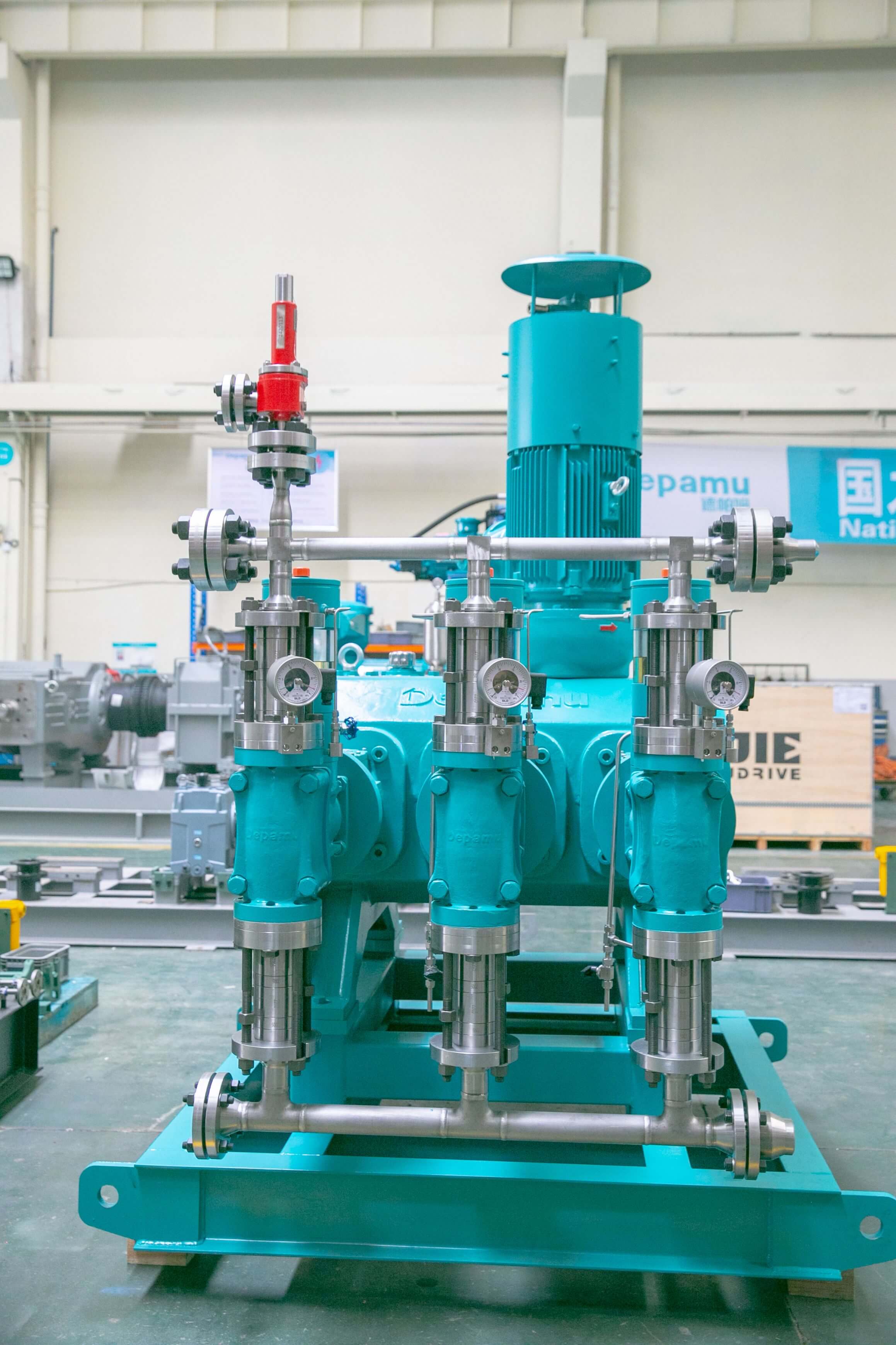
Our tubular reciprocating pumps can be customized with explosion-proof motors, weatherproof enclosures, and other modifications to meet specific operating conditions.
5. Power Source Availability
Consider your available power sources when selecting a pump. Depamuk offers tubular reciprocating pumps driven by:
- Electric motors (standard or explosion-proof)
- Pneumatic actuators for hazardous environments
- Hydraulic drives for high-force applications
- Manual operation for portable or emergency use
6. Control Requirements
Modern industrial processes often demand precise control over pump operation. Our tubular reciprocating pumps can be equipped with:
- Variable speed drives for flow modulation
- PLC-based control systems for automation
- Remote monitoring capabilities
- Batch control functionality for chemical dosing
- Fail-safe mechanisms for critical applications
Depamuk’s Tubular Reciprocating Pump Solutions
As a leading manufacturer with 400+ employees and a 35,000m² production facility, Depamuk offers a comprehensive range of tubular reciprocating pumps tailored to diverse industrial needs. Our product portfolio includes:
Standard Tubular Reciprocating Pumps
Our standard models provide reliable performance for common high-pressure applications. These pumps feature:
- Pressure ratings from 10MPa to 35MPa (1,450 to 5,075 psi)
- Flow rates from 5 L/h to 500 L/min
- Multiple plunger sizes (25mm to 150mm diameter)
- Standard materials: 304/316 stainless steel, cast iron
- Optional materials: Duplex stainless steel, Hastelloy, titanium
Heavy-Duty Tubular Pumps
For the most demanding applications, our heavy-duty models offer enhanced durability and performance:
- Pressure ratings up to 70MPa (10,150 psi)
- Flow rates up to 1,000 L/min
- Specialized valve designs for high-viscosity fluids
- Reinforced construction for continuous operation
- Customizable for extreme temperatures (-40°C to +200°C)
Custom Tubular Pump Solutions
When standard models don’t meet your exact requirements, our engineering team collaborates with you to design custom tubular reciprocating pumps. This process involves:
- Detailed analysis of your process parameters
- 3D modeling and simulation of pump performance
- Material selection based on fluid compatibility
- Prototyping and testing under actual operating conditions
- Comprehensive documentation and user training
Our custom solutions have successfully addressed unique challenges in nuclear power plants, offshore oil platforms, and specialized chemical processing facilities worldwide.
| Feature | Standard Model | Heavy-Duty Model | Custom Solution |
|---|---|---|---|
| Max Pressure | 35MPa | 70MPa | Up to 100MPa |
| Flow Range | 5-500 L/min | 50-1,000 L/min | Customized |
| Material Options | SS304, SS316 | Duplex SS, Hastelloy | Any corrosion-resistant alloy |
| Temperature Range | -20°C to +120°C | -40°C to +200°C | Customized |
| Lead Time | 4-6 weeks | 6-8 weeks | 8-16 weeks |
Industry Applications of Tubular Reciprocating Pumps
Depamuk’s tubular reciprocating pumps serve diverse industries with their robust construction and precise control capabilities. Key application areas include:
1. Oil and Gas Industry
In upstream operations, our pumps handle cementing, fracturing, and acidizing applications with pressures exceeding 10,000 psi. Downstream, they support refinery processes including hydrogen sulfide removal, amine treating, and catalyst injection.
2. Chemical Processing
The chemical industry relies on our pumps for precise metering of catalysts, reagents, and additives in polymerization, neutralization, and other critical processes. The hermetic design prevents contamination and ensures process purity.
3. Power Generation
For nuclear power plants, our tubular pumps provide reliable cooling water circulation and boric acid injection. In conventional power stations, they support boiler feedwater treatment and SO2 scrubbing systems.
4. Water Treatment
Municipal and industrial water treatment facilities use our pumps for chemical dosing in coagulation, flocculation, disinfection, and pH adjustment processes. The precise flow control ensures optimal treatment efficiency.
5. Food and Beverage
Our hygienic tubular pumps meet stringent sanitary requirements for ingredient transfer, flavor injection, and CIP (Clean-in-Place) systems in food processing plants. The smooth internal surfaces prevent product contamination.
FAQ
What makes tubular reciprocating pumps different from other reciprocating pumps?
Tubular reciprocating pumps feature a tubular cylinder design that offers several advantages over traditional reciprocating pumps with cylindrical chambers. The tubular construction provides better pressure containment, improved heat dissipation, and easier maintenance access. These pumps also typically have fewer moving parts, reducing potential points of failure and increasing reliability in high-pressure applications.
How do I determine the right plunger size for my application?
Plunger size selection depends on your required flow rate and pressure. Larger plungers can move more fluid per stroke but require more force to achieve high pressures. Our engineers use a formula that considers your desired flow rate (Q), stroke length (S), and operating speed (N) to calculate the optimal plunger diameter (D): D = √(4Q / (π × S × N)). We then verify this calculation against your pressure requirements and material limitations.
What maintenance is required for tubular reciprocating pumps?
Regular maintenance includes checking and replacing packing or mechanical seals, inspecting valves for wear, monitoring lubrication levels, and verifying plunger alignment. Depamuk’s pumps are designed for easy maintenance with quick-access covers and modular components. We recommend establishing a preventive maintenance schedule based on your operating hours and process severity, typically ranging from every 500 to 2,000 operating hours.
Can tubular reciprocating pumps handle abrasive fluids?
Yes, with proper material selection and design modifications. For abrasive applications, we recommend hardened plungers and cylinders made from materials like tungsten carbide or ceramic-coated stainless steel. We also incorporate specialized valve designs with hardened seats and discs to withstand abrasive wear. Our engineering team can analyze your specific fluid composition to recommend the most durable solution.
What safety features should I look for in a high-pressure pump?
Essential safety features include pressure relief valves to prevent overpressure situations, burst discs as secondary protection, and leak detection systems for hazardous fluids. For ATEX or IECEx zones, explosion-proof motors and non-sparking materials are crucial. Depamuk’s pumps incorporate these features and comply with international safety standards like API 674 for reciprocating pumps. We also offer remote monitoring options for enhanced operational safety.
Summary
Selecting the optimal high-pressure tubular reciprocating pump requires careful evaluation of your specific process requirements, fluid characteristics, and operating conditions. As a global leader in fluid equipment manufacturing with over two decades of experience, Depamuk offers a comprehensive range of standard and custom tubular reciprocating pumps designed to meet the most demanding industrial applications. Our engineering expertise, advanced manufacturing capabilities, and commitment to quality ensure that you receive a reliable, efficient pumping solution tailored to your unique needs. Whether you require a standard model for common high-pressure tasks or a fully customized solution for specialized processes, Depamuk has the resources and experience to deliver exceptional performance and value.