
Selecting the right process diaphragm reciprocating pump for industrial applications requires careful consideration of multiple factors including pressure requirements, media characteristics, and system integration needs. As a specialized manufacturer with over 20 years of experience in high-pressure fluid handling systems, Depamp (Hangzhou) Pump Technology Co., Ltd. has developed comprehensive solutions for demanding industrial environments. This guide provides essential insights for engineers and procurement professionals looking to implement reliable high-pressure pumping systems.
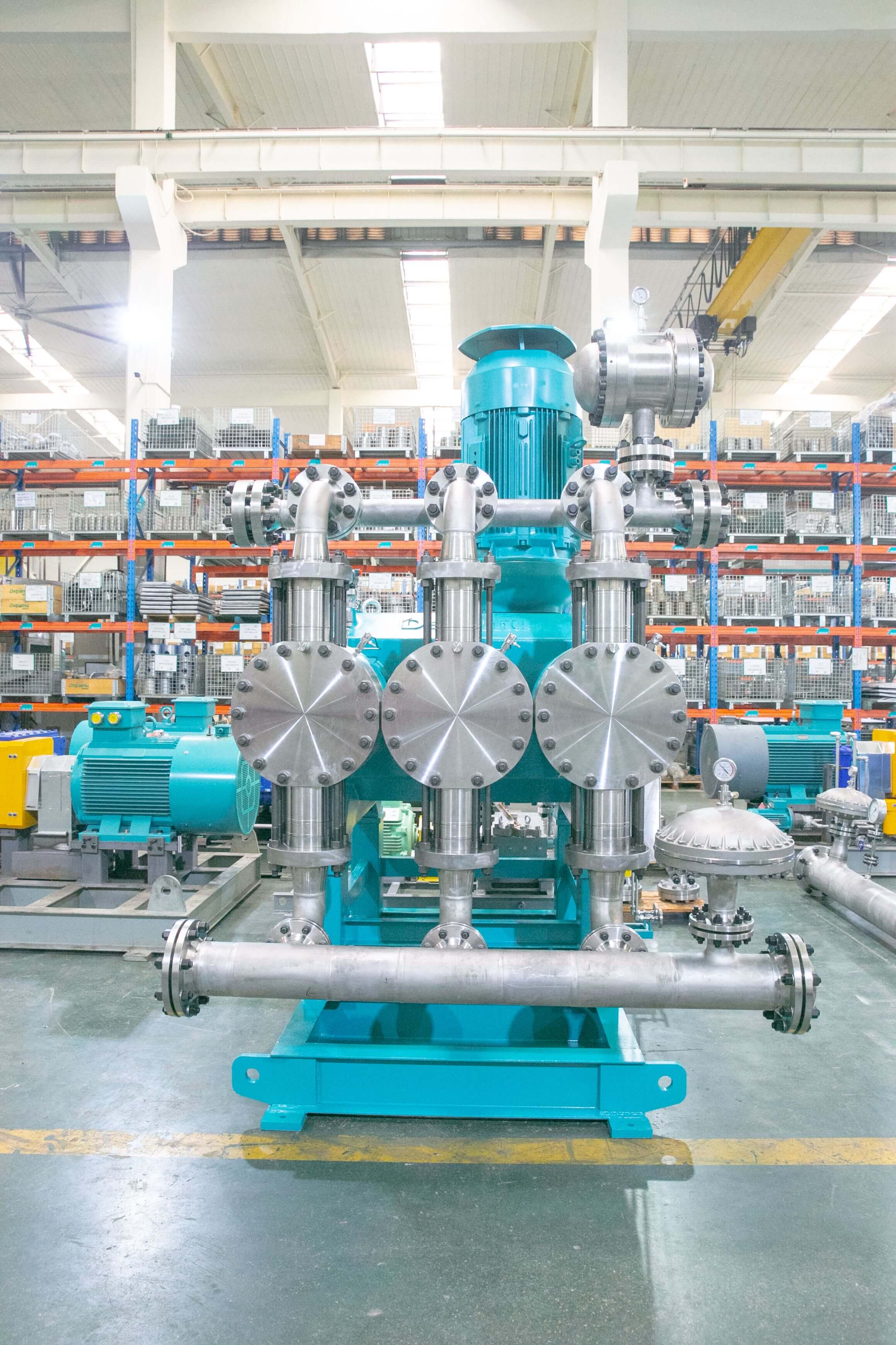
Understanding Process Diaphragm Reciprocating Pumps
Process diaphragm reciprocating pumps represent the pinnacle of precision fluid handling technology for industrial applications. These pumps utilize a reciprocating motion mechanism combined with a diaphragm separation system to deliver precise, pulse-free flow while maintaining complete isolation between the process fluid and pump components. The diaphragm acts as a dynamic barrier that prevents contamination and leakage, making these pumps ideal for handling hazardous, corrosive, or valuable media.
The core operating principle involves a reciprocating piston that creates pressure variations in the hydraulic chamber, causing the diaphragm to flex and displace the process fluid. This design offers several advantages over traditional reciprocating pumps: zero leakage through mechanical seals, resistance to diaphragm rupture through pressure relief systems, and the ability to handle viscous fluids with minimal degradation. The pumps can achieve pressures up to 35MPa (5,000 psi) with flow rates ranging from 0.1 L/h to 50,000 L/h depending on the configuration.
Key Selection Criteria for High Pressure Applications
When evaluating process diaphragm reciprocating pumps for high-pressure industrial applications, several critical parameters must be considered to ensure optimal performance and reliability:
- Pressure Rating: The pump’s maximum working pressure should exceed the system’s peak requirements by at least 20% to accommodate pressure surges and ensure long-term reliability. For petrochemical applications, select pumps rated for 35MPa or higher.
- Material Compatibility: The diaphragm and wetted parts must be constructed from materials compatible with the process fluid. Common options include PTFE, PFA, Hastelloy, and duplex stainless steel for corrosive environments.
- Flow Accuracy: For chemical dosing applications, select pumps with ±1% or better flow accuracy. This requires precise control of stroke length and frequency through servo-controlled drive systems.
- Diaphragm Monitoring: Advanced pumps incorporate diaphragm failure detection systems that immediately shut down operation if rupture occurs, preventing cross-contamination.
- Energy Efficiency: Variable frequency drives and intelligent control systems can reduce energy consumption by up to 30% compared to fixed-speed operation.
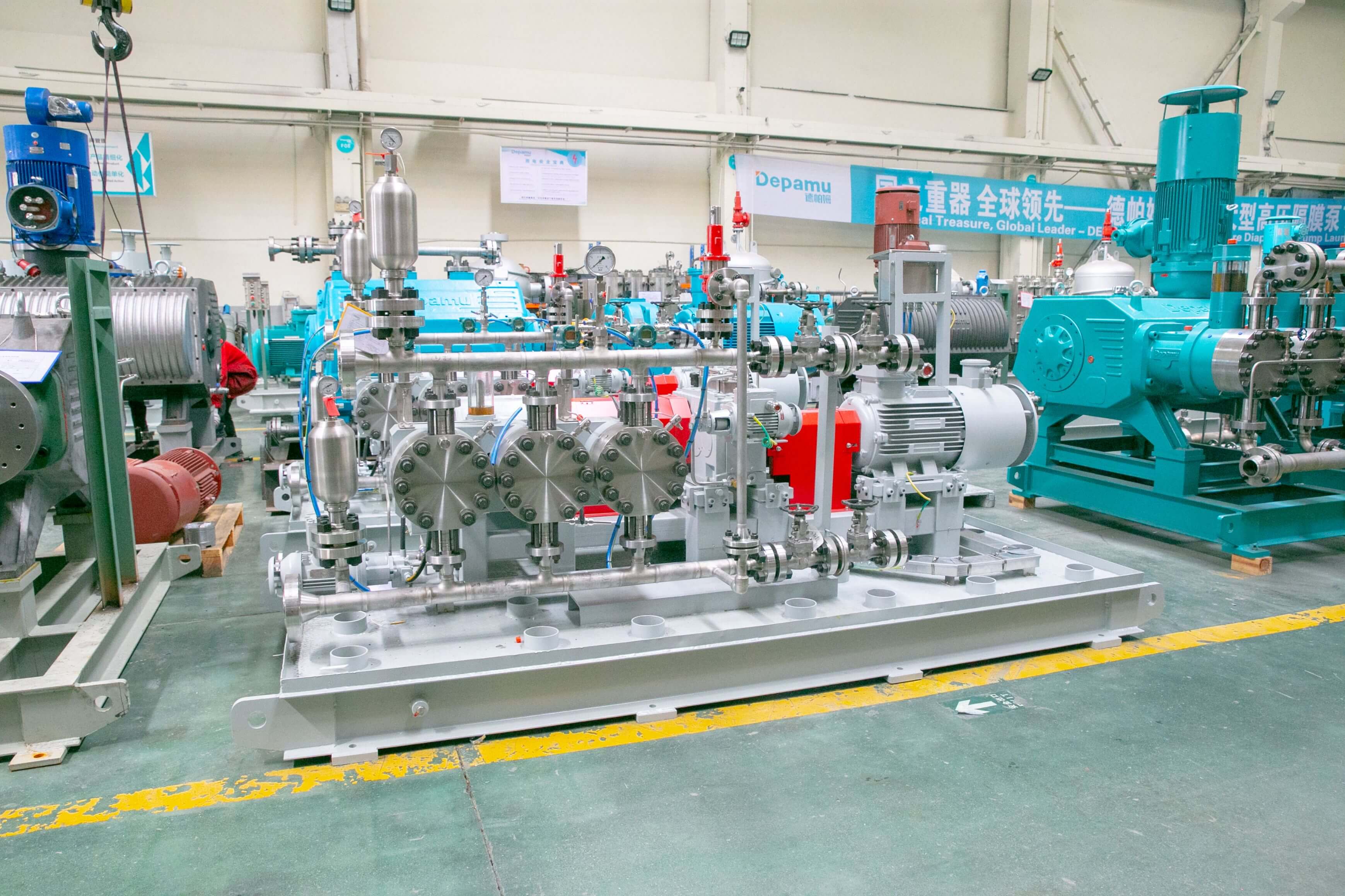
Depamp’s Technical Advantages
As a specialized manufacturer, Depamp has developed proprietary technologies that enhance pump performance in demanding industrial environments. Our hydraulic diaphragm design achieves 99.8% volumetric efficiency through optimized hydraulic chamber geometry and precision-machined components. The patented diaphragm positioning system maintains consistent tension throughout the stroke cycle, eliminating flow pulsation even at low speeds.
For corrosive applications, we offer dual diaphragm configurations with intermediate pressure monitoring. This design provides early warning of diaphragm wear while maintaining process integrity through the secondary barrier. Our materials engineering team has developed specialized coatings that extend diaphragm life by 3-5 times compared to standard PTFE formulations when handling aggressive chemicals.
Industry-Specific Application Solutions
Process diaphragm reciprocating pumps serve critical functions across multiple industrial sectors, each with unique requirements:
| Industry | Application | Special Requirements |
|---|---|---|
| Petrochemical | Catalyst injection | 316SS construction, API 675 compliance |
| Water Treatment | Chlorine dioxide dosing | PVDF wetted parts, leak detection |
| Power Generation | Boiler water treatment | High temperature seals, ATEX certification |
| Pharmaceutical | API manufacturing | 316L sanitary construction, CIP capability |
In the petrochemical industry, our pumps handle catalyst injection with micron-level precision, maintaining consistent reaction conditions while withstanding temperatures up to 200°C. For water treatment applications, we offer specialized configurations for chlorine dioxide dosing that prevent gas locking and ensure continuous operation. Our power generation solutions incorporate explosion-proof motors and high-temperature seals for boiler water treatment systems operating at 180°C.
Customization Capabilities for Complex Projects
Understanding that no two industrial processes are identical, Depamp maintains complete in-house capabilities for custom pump development. Our engineering team works closely with clients to analyze process parameters including fluid viscosity, vapor pressure, and system backpressure to design optimal solutions. Recent custom projects include:
- A triplex pump system for offshore platform chemical injection with integrated pressure relief and flow compensation
- A skid-mounted dosing system for solar panel manufacturing with automatic pH control and remote monitoring
- A high-temperature pump for geothermal power generation handling 250°C brine with special elastomer seals
Our modular design approach allows for rapid prototyping and testing in our dedicated R&D center. With 3D printing capabilities for rapid component iteration and a comprehensive material testing lab, we can validate designs against specific process conditions before full-scale production. This capability reduces development lead times by 40% compared to traditional methods.
FAQ
What makes process diaphragm pumps suitable for corrosive applications?
The diaphragm completely isolates the process fluid from all moving parts and hydraulic oil, preventing contamination and corrosion of critical components. Depamp’s pumps use advanced materials like PFA-lined stainless steel and Hastelloy construction for maximum chemical resistance.
How do you ensure flow accuracy in high pressure systems?
Our pumps incorporate servo-controlled drive systems that maintain precise stroke length and frequency. The hydraulic design eliminates backflow and slip, achieving ±0.5% flow accuracy even at variable pressures. For critical applications, we add flow meters with PID control loops.
What maintenance is required for diaphragm pumps?
Regular maintenance includes diaphragm condition checks (monthly for aggressive media), lubrication of drive components, and seal inspection. Depamp’s pumps feature quick-access designs that allow diaphragm replacement in under 2 hours without special tools.
Can you provide complete pump systems with installation?
Yes, we offer turnkey solutions including pump skids with all ancillary equipment (tanks, valves, instrumentation), pre-piped and wired for easy installation. Our engineers provide on-site commissioning and operator training to ensure smooth startup.
Summary
Selecting the right process diaphragm reciprocating pump requires balancing pressure requirements, media compatibility, and system integration needs. As a specialized manufacturer with complete in-house capabilities, Depamp (Hangzhou) Pump Technology offers optimized solutions for demanding industrial applications across petrochemical, water treatment, power generation, and other sectors. Our technical expertise in high-pressure fluid handling, combined with customization capabilities and comprehensive after-sales support, makes us an ideal partner for complex pumping projects requiring precision and reliability.