
Selecting the right high pressure reciprocating pump for industrial applications requires careful consideration of multiple factors including pressure requirements, fluid characteristics, and operational environment. As a leading manufacturer with over two decades of experience in fluid equipment, Depamp (Hangzhou) Pump Technology has developed specialized solutions for demanding industries including petrochemical, nuclear power, and metallurgy. This guide provides essential insights into pump selection criteria, application scenarios, and maintenance considerations to help you make informed decisions.
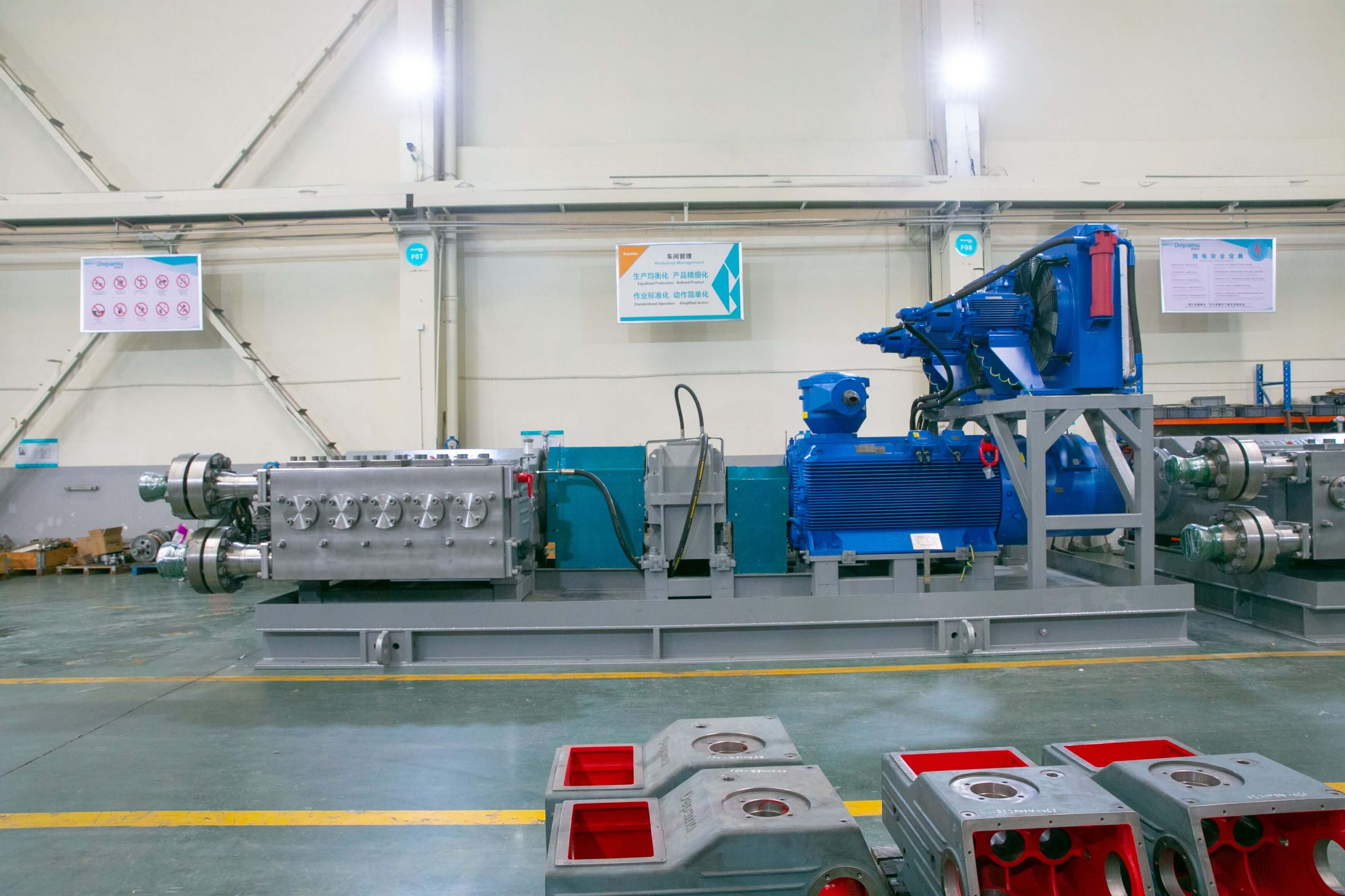
Understanding High Pressure Reciprocating Pump Fundamentals
High pressure reciprocating pumps operate through the reciprocating motion of pistons or plungers to move fluids. These pumps excel in applications requiring pressures exceeding 100 bar (1,450 psi), with some models capable of reaching 350 bar (5,075 psi) or higher. The core components include a power end (crankshaft, bearings, and connecting rods) and a fluid end (cylinders, plungers, and valves). Depamp’s proprietary hydraulic diaphragm design ensures zero leakage even when handling highly corrosive or toxic media.
The working principle involves converting rotational motion from the motor into linear motion through the crankshaft mechanism. This creates alternating suction and discharge strokes. During the suction stroke, fluid enters the pumping chamber through the inlet valve. The discharge stroke then forces the fluid out through the outlet valve at elevated pressure. This process enables precise metering capabilities essential for chemical dosing applications.
Compared to centrifugal pumps, reciprocating pumps offer distinct advantages in high pressure applications. They maintain consistent flow rates regardless of pressure variations, making them ideal for processes requiring precise volume control. The ability to handle viscous fluids (up to 10,000 cP) and fluids containing suspended solids (up to 30% by volume) further expands their application scope.
Key Selection Criteria for Industrial Applications
When evaluating high pressure reciprocating pumps, pressure rating stands as the most critical parameter. Depamp’s product range covers pressures from 10 bar to 350 bar, with custom solutions available for specialized requirements. The pressure rating must account for both operating pressure and potential pressure surges during system startup/shutdown.
Flow rate requirements determine the pump size and configuration. For continuous operations, select pumps with flow rates 10-15% higher than the nominal requirement to accommodate wear over time. Depamp offers standard models with flow rates from 0.5 L/h to 50,000 L/h, with multiple cylinder configurations available for precise capacity adjustment.
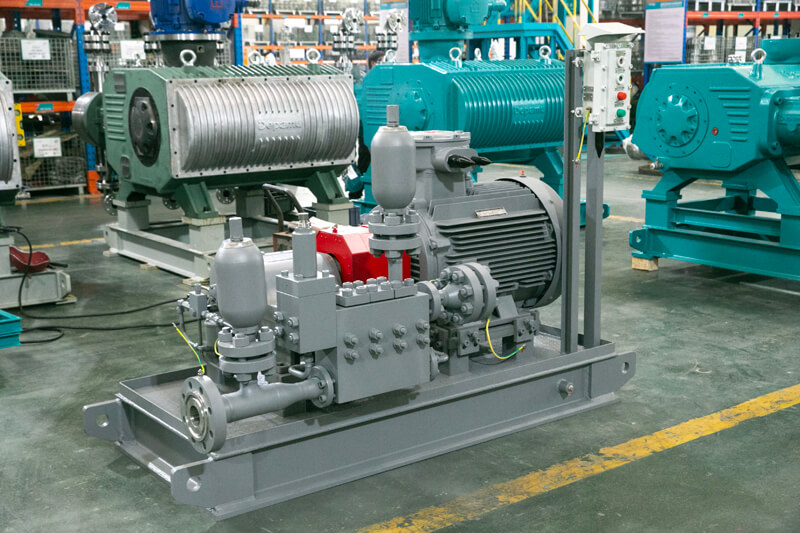
Material compatibility directly impacts pump longevity and reliability. Depamp’s pumps feature construction materials including 316L stainless steel, duplex stainless steel, Hastelloy, and PTFE-lined components to handle various corrosive media. For abrasive applications, specialized coatings and hardened components extend service life.
Temperature resistance capabilities range from -40°C to +200°C, accommodating both cryogenic and high-temperature processes. The thermal expansion characteristics of materials must be considered during design to prevent leakage or mechanical failure under extreme temperatures.
Application-Specific Considerations
In petrochemical applications, pumps must withstand hydrocarbon exposure while maintaining precise flow control for catalyst injection. Depamp’s hydraulic diaphragm metering pumps feature secondary containment systems to prevent environmental contamination in case of diaphragm rupture. The modular design allows easy replacement of wet ends for different media.
Nuclear power applications demand pumps meeting stringent safety standards. Depamp’s nuclear-grade pumps comply with RCC-M and ASME Section III requirements, featuring redundant sealing systems and radiation-resistant materials. These pumps handle boric acid solutions for reactor cooling systems with proven reliability.
For metallurgical processes, pumps must handle abrasive slurries containing metal oxides and scale. Depamp’s slurry pumps incorporate hardened alloy components and replaceable liners to minimize wear. The positive displacement design ensures consistent flow even with varying slurry concentrations.
| Parameter | Specification Range | Application Example |
|---|---|---|
| Pressure Rating | 10-350 bar | High-pressure water injection |
| Flow Rate | 0.5-50,000 L/h | Chemical dosing systems |
| Temperature Range | -40°C to +200°C | Hot oil circulation |
| Viscosity Handling | Up to 10,000 cP | Polymer injection |
| Solid Content | Up to 30% by volume | Mining slurry transfer |
Maintenance Best Practices for Extended Service Life
Regular maintenance schedules should be established based on operating hours and process severity. For continuous operations, Depamp recommends monthly inspections of key components including valves, seals, and lubrication systems. Quarterly maintenance should include plunger packing adjustment and cylinder inspection.
Common failure modes include valve leakage, plunger packing wear, and diaphragm rupture. Depamp’s pumps incorporate early warning systems such as pressure decay monitoring and vibration analysis to detect issues before catastrophic failure occurs. The modular design allows quick replacement of wear parts without extensive disassembly.
Spare parts management is critical for minimizing downtime. Depamp maintains a comprehensive inventory of critical components including valves, seals, and diaphragms for immediate shipment. The company’s global distribution network ensures timely delivery to major industrial hubs worldwide.
FAQ
What makes Depamp’s reciprocating pumps suitable for nuclear applications?
Our nuclear-grade pumps comply with RCC-M and ASME Section III standards, featuring redundant sealing systems, radiation-resistant materials, and 100% helium leak testing. The modular design allows easy maintenance under radiation protection protocols.
How does Depamp ensure material compatibility with corrosive media?
We maintain an extensive material database covering over 200 chemicals and mixtures. Our engineers select materials based on pH, temperature, and concentration parameters, with options including Hastelloy, PTFE, and PVDF for extreme corrosion resistance.
What advantages do hydraulic diaphragm pumps offer over mechanical diaphragm designs?
Hydraulic diaphragm pumps provide smoother flow with less pulsation, higher pressure capabilities (up to 350 bar), and longer diaphragm life. The hydraulic system also enables remote diaphragm monitoring and automatic pressure compensation.
How does Depamp handle custom requirements for non-standard applications?
Our R&D team works closely with customers to develop tailored solutions. Recent projects include a -40°C cryogenic pump for LNG applications and a 350°C high-temperature pump for polymer processing, both featuring specialized materials and sealing systems.
Summary
Selecting the optimal high pressure reciprocating pump requires comprehensive evaluation of process parameters, material compatibility, and operational requirements. Depamp (Hangzhou) Pump Technology offers a complete range of standardized and customized solutions backed by 20+ years of industry experience. Our vertically integrated manufacturing capabilities ensure strict quality control from material selection to final assembly, while our global service network provides prompt technical support and spare parts delivery. For demanding applications in petrochemical, nuclear power, and metallurgical industries, Depamp’s pumps deliver proven reliability and precision performance.