
Choosing the right centrifugal pump manufacturer is not simply a purchasing decision. In continuous industrial processes, the pump is the component that keeps chemicals moving, maintains pipeline pressure, and protects downstream equipment from fluctuations. A pump that is undersized, poorly matched to the medium, or supported by a supplier without engineering depth will eventually show up as downtime, seal failures, and unpredictable maintenance costs.
This guide is written from the perspective of Depamu (Hangzhou) Pump Industry Technology Co., Ltd., a Chinese pump manufacturer founded in 2003 that has spent more than two decades in high-end volumetric pumps and fluid equipment. Our core strength lies in metering pumps, high-pressure process reciprocating pumps, and complete chemical dosing systems, and our portfolio also includes special centrifugal pumps, screw pumps, rotor pumps, gear pumps, pneumatic pumps, electric pumps, and water-steam sampling equipment. That combination matters: many industrial fluid systems need more than one pump technology, and working with a single industrial centrifugal pump supplier that understands the whole process reduces interface risk.
What a Centrifugal Pump Manufacturer Should Deliver Beyond the Hardware
A centrifugal pump transfers energy to a liquid through a rotating impeller, converting rotational speed into flow and pressure. This makes it well suited to clean or low-viscosity liquids, high flow rates, and moderate heads. But the pump itself is only one part of what a serious manufacturer provides. Engineering review, hydraulic selection, material choice, mechanical seal configuration, motor and control integration, factory testing, documentation, and after-sales support all determine whether the unit performs reliably on site.
When buyers evaluate a centrifugal pump factory, they should look at whether the supplier can answer specific process questions: What is the fluid? What is the operating temperature? Is the liquid abrasive, corrosive, flammable, or shear-sensitive? What is the required flow at duty point, and what is the maximum pressure? Is the pump part of a dosing package, a transfer skid, or a high-pressure injection line? A manufacturer that only quotes a model number without asking these questions is unlikely to deliver a robust solution.
Depamu’s engineering approach starts from the process, not from a catalog page. With 400-plus employees and a plant area of approximately 35,000 square meters, the company combines design, manufacturing, assembly, testing, and turnkey delivery in one organization. This structure allows standard products to be produced efficiently while non-standard and customized fluid solutions are developed around a customer’s medium characteristics, flow, pressure, temperature, and site process requirements.
| Company Fact | Details |
|---|---|
| Founded | 2003 |
| Employees | More than 400 |
| Plant Area | Approximately 35,000 square meters |
| Registered Capital | RMB 54 million |
| Annual Output Value | Approximately RMB 500 million |
| Sales Performance | About RMB 450 million in 2023, RMB 510 million in 2024, RMB 560 million in 2025 |
| Core Product Lines | Metering pumps, high-pressure process reciprocating pumps, pneumatic and electric pumps, chemical dosing packages, water-steam sampling systems, water treatment equipment, screw pumps, rotor pumps, gear pumps, special centrifugal pumps |
Centrifugal Pumps vs Positive Displacement Pumps: Matching the Technology to the Duty
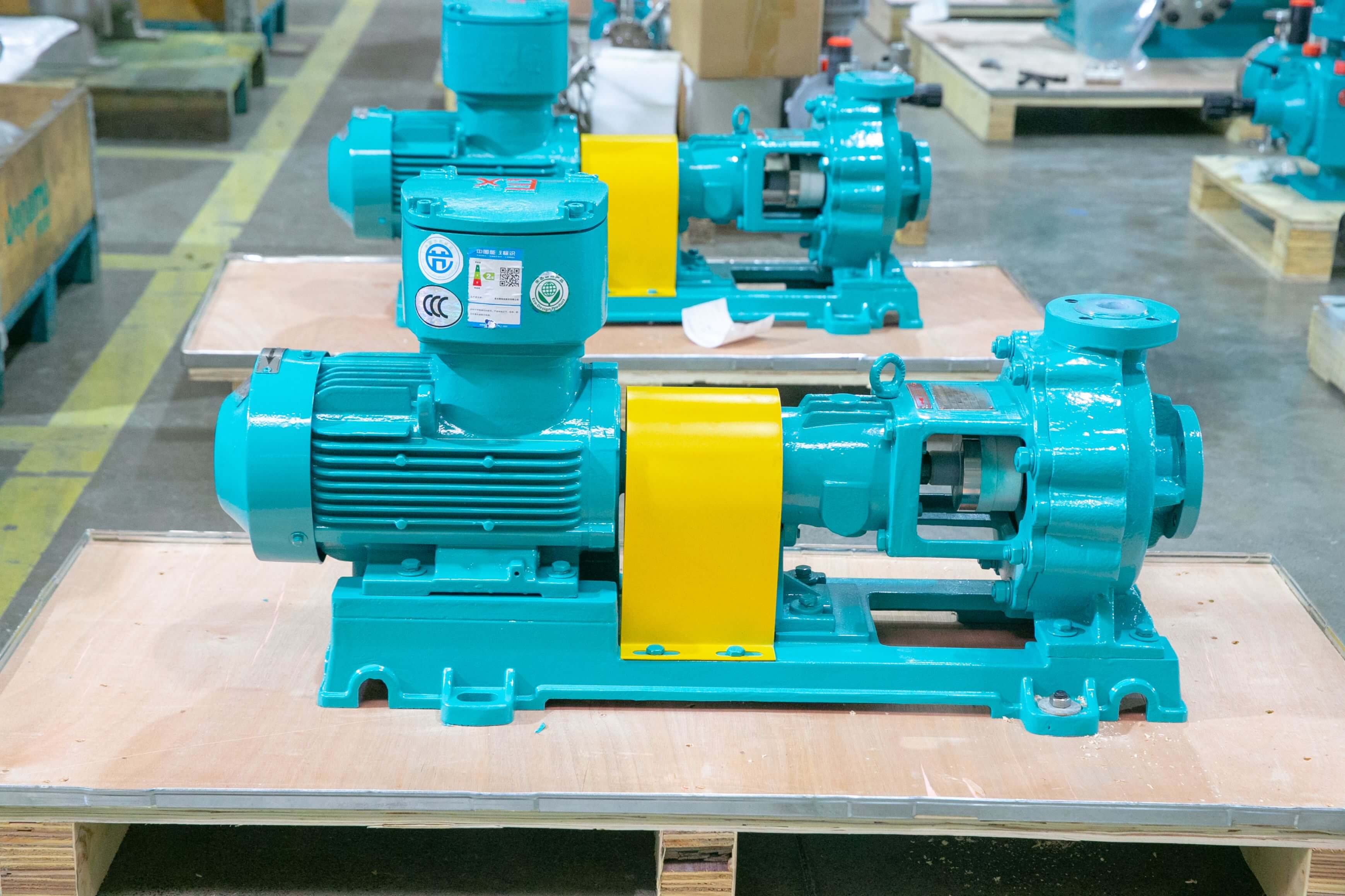
One of the most useful discussions a buyer can have with a centrifugal pump manufacturer is whether a centrifugal design is actually the right choice. Centrifugal pumps are generally the most economical option for high-flow, low-to-medium-viscosity service with moderate pressure requirements. They produce smooth, continuous flow and are compact relative to their capacity. However, their flow varies with system head, they are sensitive to changes in discharge pressure, and they are not ideal for high-viscosity liquids, precise dosing, or shear-sensitive media.
Positive displacement pumps work on a different principle. A fixed volume of liquid is trapped and pushed forward with each cycle, so flow remains nearly constant regardless of discharge pressure. This is why metering pumps and high-pressure reciprocating pumps are preferred for chemical injection, accurate dosing, and high-pressure process service. In many plants the correct answer is a combination: a centrifugal pump for bulk transfer and a metering pump for precise additive dosing.
Depamu’s product strategy reflects this reality. Our primary focus is volumetric pump technology, including hydraulic diaphragm metering pumps that provide leak-free, high-accuracy chemical injection, and high-pressure process reciprocating pumps that can reach pressures above 35 MPa for pipeline boosting, water injection, and high-pressure process transfer. Centrifugal and other rotodynamic units are supplied where the duty calls for high flow and lower viscosity, allowing customers to source multiple technologies from one qualified supplier.
| Selection Factor | Centrifugal Pump | Positive Displacement Pump |
|---|---|---|
| Flow behavior | Flow follows the pump curve and changes with system head | Nearly constant flow independent of discharge pressure |
| Best suited media | Clean, low-viscosity liquids | Viscous, abrasive, high-pressure, or shear-sensitive liquids |
| Typical duty | Bulk transfer, circulation, cooling water, general process service | Chemical dosing, high-pressure injection, pipeline boosting, metering |
| Dosing accuracy | Limited; not intended for precise additive control | High; adjustable by stroke length and running frequency |
| Sealing and leakage risk | Depends on mechanical seal selection and flush plan | Diaphragm designs can be fully leak-free |
Applications: Where Centrifugal and Volumetric Pumps Work Together
Depamu equipment is used across petroleum refining and petrochemicals, oil and gas fields, nuclear power, power generation, metallurgy, new energy, environmental water treatment, new materials, and food processing. The approximate business mix illustrates where the technology is concentrated: petroleum refining and chemicals account for about 41 percent of sales, oil and gas fields about 23 percent, nuclear power, power generation, metallurgy, and new energy together about 15 percent, environmental water treatment about 13 percent, new materials and food about 3 percent, and other industries about 5 percent.
In refining and chemical plants, pumps handle circulating water, cooling water, transfer duties, and chemical injection. A centrifugal pump may handle bulk circulation while a hydraulic diaphragm metering pump injects corrosion inhibitors, antiscalants, or other additives with high repeatability. In water treatment, centrifugal units support raw water intake and backwash service, while automatic chemical dosing packages prepare and feed coagulants, disinfectants, and pH adjustment chemicals.
Typical Industrial Duties
- Water treatment and environmental protection: raw water transfer, filtration service, backwash, and coordinated chemical dosing for coagulation, disinfection, and pH control.
- Petroleum refining and chemicals: process circulation, product transfer, and accurate injection of additives and treatment chemicals.
- Oil and gas fields: water injection, pipeline pressure boosting, and high-pressure transfer of complex media.
- Power generation and nuclear industry: water-steam sampling, boiler water treatment, and auxiliary fluid service where reliability and documentation are critical.
- New materials and food: transfer and metering duties where hygiene, material compatibility, and repeatability must be controlled.
How to Evaluate a Centrifugal Pump Manufacturer Before You Buy
Price and lead time matter, but they should not be the first filter. A structured evaluation protects the buyer from hidden costs later. Start with the technical questionnaire: medium composition, concentration, density, viscosity, temperature, required flow range, discharge pressure, suction conditions, available utilities, control philosophy, and the environment in which the pump will operate. A capable centrifugal pump brand or supplier will use this data to propose a hydraulic selection and a compatible material combination rather than a generic model.
Next, review manufacturing and quality processes. Ask how castings, shafts, impellers, and seals are sourced and inspected, how balancing and hydrostatic testing are performed, and what documentation accompanies each unit. Ask for the test report format, material certificates, dimensional drawings, and operation and maintenance manuals. For projects involving hazardous media, confirm how the supplier handles sealing, ventilation, and secondary containment.
Finally, evaluate the commercial and service side. Response time for technical questions, spare parts availability, warranty terms, commissioning support, and the ability to provide training all influence total cost of ownership. A supplier that can support both a single pump and a complete skid-mounted system is usually better positioned to solve interface problems during installation and start-up.
Practical Evaluation Checklist
- Confirmed duty point and a pump curve issued for the actual operating conditions
- Material compatibility review for wetted parts, seals, and gaskets
- Clear definition of testing scope and acceptance criteria before shipment
- Documentation package covering drawings, test reports, and maintenance instructions
- Spare parts list with recommended first-year consumables
- Delivery schedule, packing method, and export experience for overseas destinations
- After-sales contact path and response commitment
Custom Engineering and Turnkey Fluid Solutions
Standard pumps cover a large share of industrial needs, but many projects require non-standard configurations. Depamu provides standard, non-standard, and fully customized fluid solutions based on medium characteristics, flow, pressure, temperature, and site process requirements. The company operates three brands serving different market segments, and its capabilities extend from product research and design to manufacturing and complete system delivery.
A strong example is the automatic chemical dosing package. Instead of delivering separate pumps, tanks, and controls, the system integrates chemical storage, dissolving, mixing, metering, and automatic control into a skid-mounted unit. With a metering pump at its core, together with a dissolving tank, agitator, and intelligent control system, the package supports dry powder or liquid chemical feeding, multi-point dosing, and automatic interlock control. Units are assembled and tested before shipment, so site work is limited to piping and electrical connection.
This approach also applies to water-steam sampling systems, supercritical extraction equipment, and high-pressure process packages. For buyers comparing a centrifugal pump supplier with a full-scope fluid equipment company, the deciding factor is often whether the supplier can take responsibility for the complete fluid train rather than a single component.
Installation, Operation, and Maintenance Best Practices
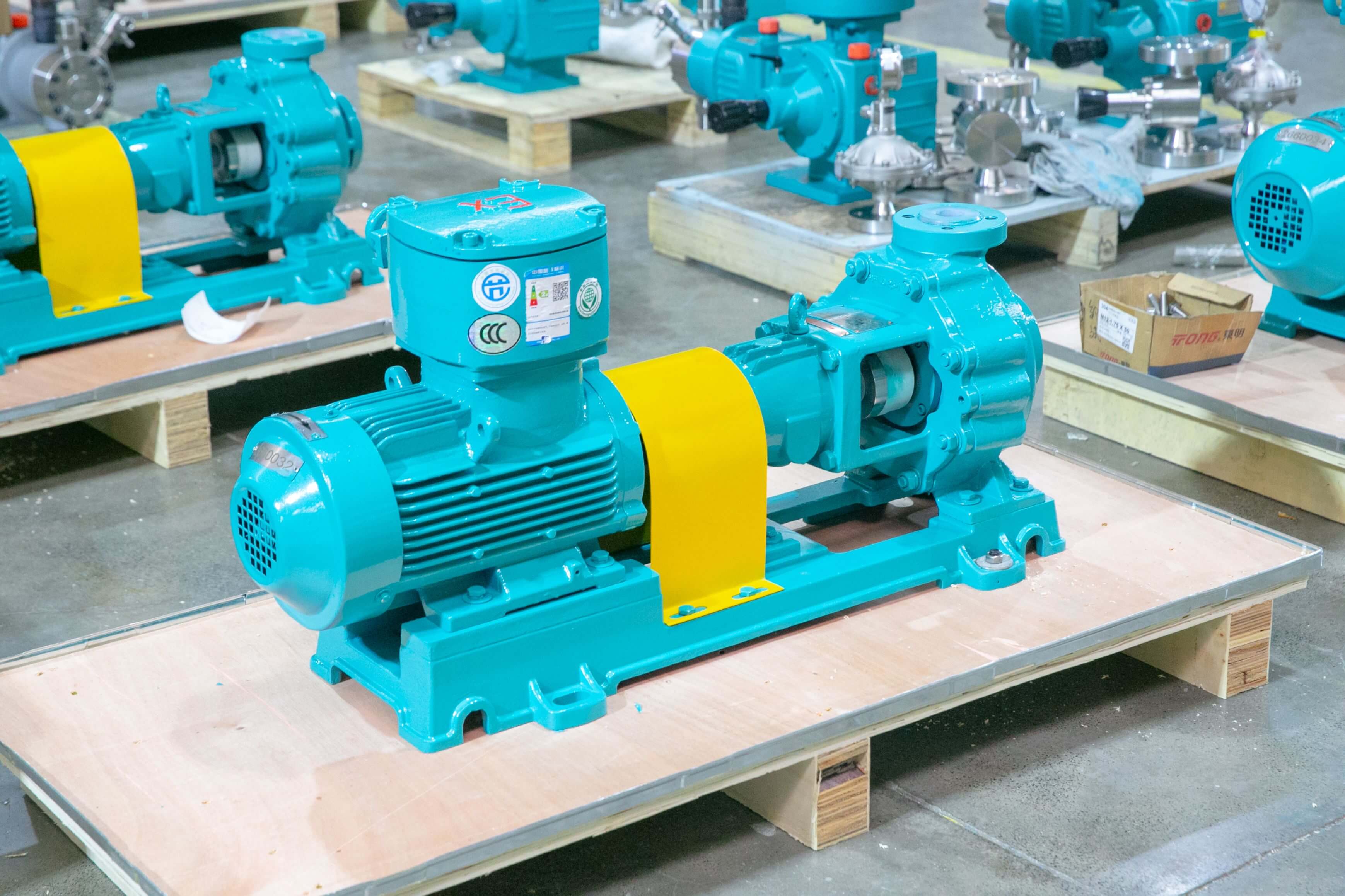
Correct installation prevents many premature failures. Ensure that suction piping is adequately sized, short, and free of air pockets. Verify that the pump is aligned with its driver, that foundation bolts are properly torqued, and that pipe loads are not transferred to the pump casing. For centrifugal units, confirm the minimum stable flow and provide a recirculation line if the process can run at low demand. For positive displacement units, install a relief valve on the discharge side and use pulsation dampeners where smooth flow is required.
During commissioning, record baseline data: suction and discharge pressure, flow, power consumption, vibration, and bearing temperature. These values become the reference for condition monitoring. Operators should be trained on startup and shutdown sequences, dry-run protection, seal flush requirements, and what to do if pressure or flow deviates from the design point.
Maintenance should be planned rather than reactive. Inspect seals and diaphragms on a schedule, check lubrication levels, verify alignment after any piping modification, and keep a critical spare parts stock for pumps in continuous duty. In dosing systems, regularly calibrate the pump against a measured volume and clean strainers and injection points to prevent blockage. For high-pressure reciprocating pumps handling abrasive or viscous media, monitor valve and plunger wear and replace consumables before performance degrades.
FAQ
What is the difference between a centrifugal pump and a metering pump?
A centrifugal pump uses a rotating impeller to generate flow and is generally used for bulk transfer of low-viscosity liquids at moderate pressure. A metering pump is a positive displacement machine that injects a precise, adjustable volume of chemical into a process. Depamu manufactures hydraulic diaphragm metering pumps for accurate, leak-free dosing, and supplies special centrifugal pumps where high flow and lower viscosity make centrifugal technology the better choice.
Can Depamu provide a centrifugal pump built for a specific medium and duty point?
Yes. Depamu accepts standard, non-standard, and customized requests based on medium characteristics, flow, pressure, temperature, and site process requirements. Customers should provide fluid composition, concentration, density, viscosity, temperature, required flow range, discharge pressure, and suction conditions so that the engineering team can propose an appropriate configuration and material selection.
Which industries are the main users of your pumps and fluid systems?
Depamu products serve petroleum refining and petrochemicals, oil and gas fields, nuclear power, power generation, metallurgy, new energy, environmental water treatment, new materials, and food processing. Petroleum refining and chemicals represent about 41 percent of sales, oil and gas fields about 23 percent, nuclear, power, metallurgy, and new energy about 15 percent, and environmental water treatment about 13 percent.
What information is needed to receive an accurate quotation?
To prepare a reliable quotation, the supplier needs the medium and its concentration, density, viscosity, and temperature; the required flow and discharge pressure; suction conditions; the control and interlock philosophy; the installation environment; and any material or documentation standards that apply. Providing a process diagram or data sheet speeds up the engineering review and reduces the risk of later changes.
Do you supply complete dosing systems rather than only pumps?
Yes. Depamu supplies fully automatic chemical dosing packages that integrate chemical storage, dissolving, mixing, metering, and automatic control in a skid-mounted system. These units support dry powder or liquid chemical feeding, multi-point dosing, and automatic interlock control, and they are assembled and tested before shipment so that site work is limited to piping and electrical connections.
How should a buyer assess the reliability of an overseas pump manufacturer?
Review the supplier’s engineering process, factory testing scope, documentation package, spare parts support, and export experience. Ask for the pump curve issued for the actual duty point, material certificates, test reports, and maintenance manuals. A supplier with in-house design, manufacturing, assembly, and testing capability, such as Depamu with more than 400 employees and a 35,000 square meter facility, is better positioned to control quality and respond to technical questions after delivery.
Summary
Selecting a centrifugal pump manufacturer is ultimately a decision about process reliability. The right supplier understands that centrifugal pumps, metering pumps, and high-pressure reciprocating pumps solve different problems, and can recommend the technology that matches the medium, flow, pressure, and control requirements instead of simply filling an order. Buyers should evaluate engineering depth, manufacturing capability, testing and documentation, customization options, and after-sales support before comparing prices.
Founded in 2003 and headquartered in Hangzhou, Depamu (Hangzhou) Pump Industry Technology Co., Ltd. has grown into a fluid equipment company with more than 400 employees, a 35,000 square meter plant, and annual output of approximately RMB 500 million. Its core strength in volumetric pumps, metering systems, high-pressure process pumps, and complete dosing packages is complemented by special centrifugal pumps and other fluid equipment, allowing customers to source a coordinated solution from one organization. For projects that require accurate dosing, high-pressure transfer, or a turnkey fluid system, working with a manufacturer that can engineer the whole process is the most practical route to lower downtime and predictable operating costs.