
Chemical injection is one of the most important controlled processes in oil refining, petrochemicals, oil and gas production, power generation, water treatment, and new material manufacturing. A chemical injection skid packages chemical storage, mixing, metering, piping, and control into a single skid-mounted unit. Because the skid directly affects dosing accuracy, operator safety, and chemical consumption, choosing the right chemical injection skid manufacturer is a procurement decision that deserves careful technical review.
This guide explains how chemical injection skids work, what to evaluate in a supplier, and how DEPAM (Hangzhou) Pump Industry Technology Co., Ltd. approaches standard, non-standard, and custom fluid equipment for industrial projects. It is written for engineers, EPC contractors, and purchasing teams comparing chemical injection skid suppliers.
What Is a Chemical Injection Skid and Why Does Manufacturer Selection Matter?
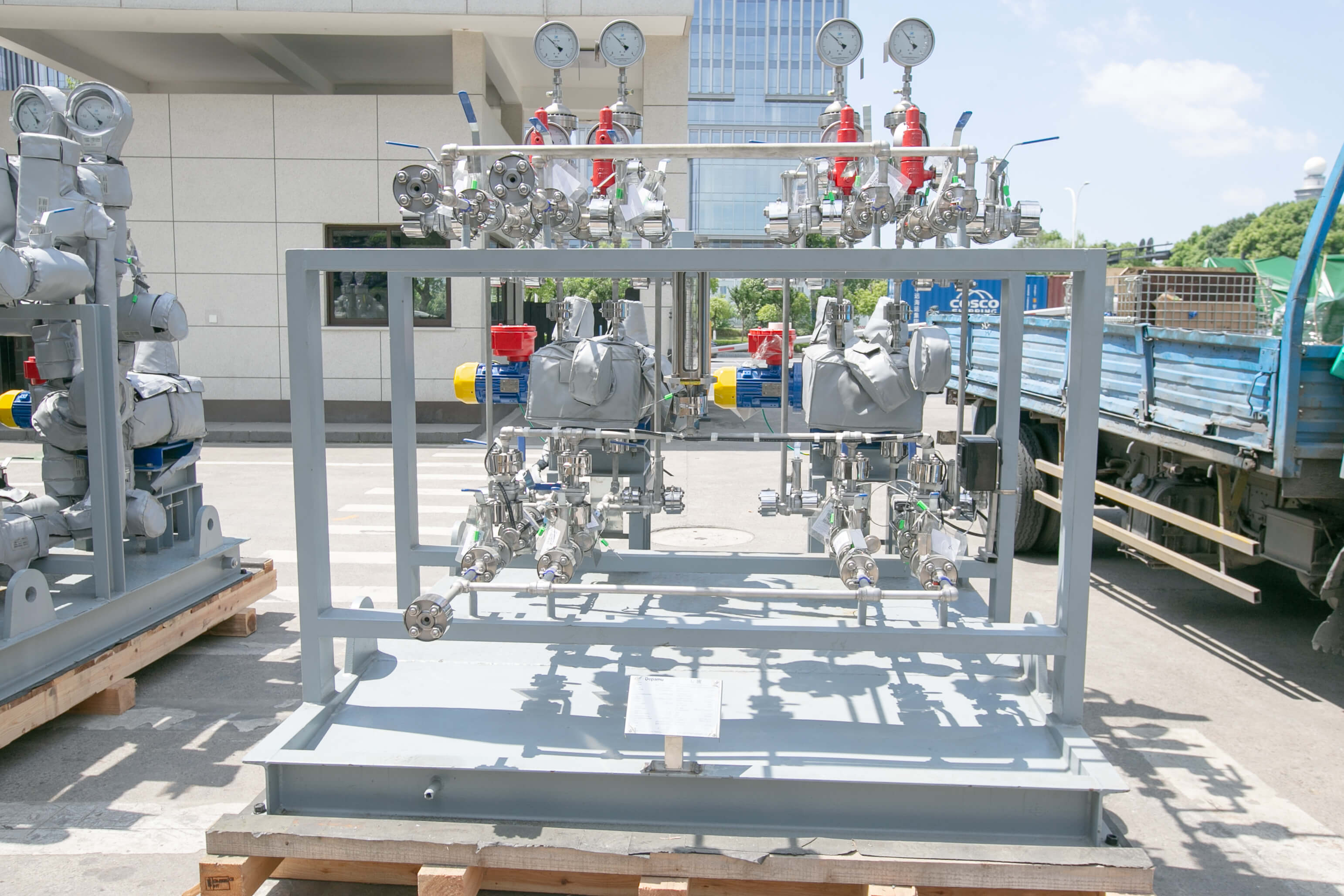
A chemical injection skid — also described as a chemical dosing skid, chemical metering pump skid, or chemical injection package — combines a chemical tank, mixing and dosing equipment, a metering pump, valves, piping, instruments, and a control panel on a common base. The skid receives a chemical from storage, meters it at the required flow rate, and injects it into a process line, tank, wellhead, or water system. The central component is usually a metering pump that can adjust stroke length and operating frequency to maintain a precise dose.
The skid is more than a pump on a frame. It must handle the chemical’s corrosion behavior, viscosity, volatility, and toxicity; it must fit the site’s flow, pressure, temperature, and footprint requirements; and it must provide reliable control and safe maintenance access. A capable chemical injection skid manufacturer therefore needs pump engineering, system design, fabrication, assembly, testing, and documentation capabilities — not only a catalog of pumps.
For buyers, manufacturer selection affects total cost of ownership. A well-designed skid reduces chemical waste, avoids over-dosing or under-dosing, protects pumps from dry running or overpressure, and simplifies operation. A poorly integrated package can create leaks, calibration problems, and frequent downtime. That is why procurement teams increasingly evaluate a chemical dosing skid factory on its ability to understand the process, not only on unit price.
Inside DEPAM’s Manufacturing Capability for Chemical Injection Skids
DEPAM (Hangzhou) Pump Industry Technology Co., Ltd. was founded in 2003 and focuses on high-end positive displacement pumps and fluid equipment. The company has more than 400 employees, a factory area of approximately 35,000 square meters, registered capital of RMB 54 million, and an annual output value of approximately RMB 500 million. Its sales performance has continued to grow, with reported sales of approximately RMB 450 million in 2023, RMB 510 million in 2024, and RMB 560 million in 2025.
The company operates three brands — DEPAM, Kenirova, and Dailepu — and states that it introduced advanced German technology and continues to innovate. As a high-tech enterprise, DEPAM combines research and development, design, manufacturing, and packaged delivery. Its product range includes metering pumps, high-pressure process reciprocating pumps, pneumatic pumps, electric pumps, automatic chemical dosing systems, water and steam sampling equipment, water treatment equipment, screw pumps, rotary lobe pumps, gear pumps, emulsion pumps, and special centrifugal pumps.
For chemical injection projects, this breadth matters. A skid may need a hydraulic diaphragm metering pump for precise, leak-free dosing, a high-pressure reciprocating pump for process boosting, or another pump type for a viscous or particle-containing medium. DEPAM’s ability to provide standard products, non-standard products, and customized fluid solutions means the skid can be configured around the customer’s medium characteristics, flow, pressure, temperature, and site process requirements.
DEPAM’s products are used in petroleum refining and chemicals (about 41% of sales), oil and gas fields (about 23%), nuclear, power, metallurgy, and new energy (about 15%), environmental water treatment (about 13%), new materials and food (about 3%), and other industries (about 5%). This industry mix gives the company experience with both continuous process plants and packaged water treatment systems. For a buyer comparing a chemical injection skid supplier, that application range is relevant because dosing requirements differ greatly between a refinery additive package and an industrial water treatment skid.
Key Components and Design Features of a Custom Chemical Injection Skid
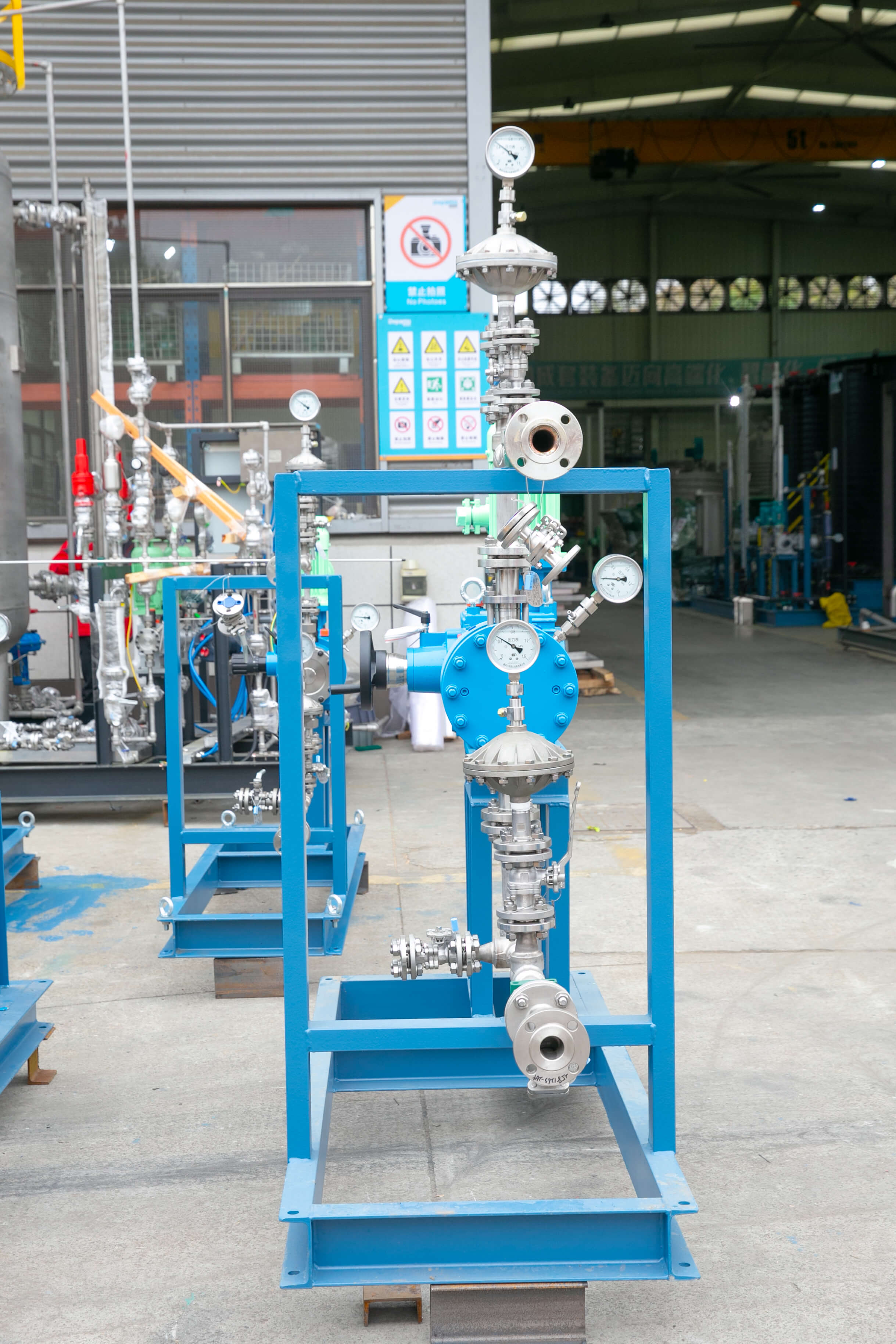
A custom chemical injection skid is configured from proven modules rather than assembled from unrelated parts. A typical package includes a chemical storage tank, a dissolving or mixing tank when dry powder is used, a mixer, a metering pump, calibration and drain facilities, suction and discharge piping, valves, pressure gauges, a safety relief arrangement, a flow path for flushing, and a local control panel. Depending on the project, it may also include level instruments, flow meters, pressure transmitters, alarms, and communication interfaces.
The metering pump is the heart of the system. DEPAM’s hydraulic diaphragm metering pumps are designed for precise dosing through stroke length and operating frequency adjustment. The hydraulic diaphragm design provides a sealed pumping chamber, so the chemical is separated from the hydraulic oil and external leakage is avoided. This is particularly important for corrosive, volatile, or high-pressure chemicals. For oil and gas chemical injection packages, the ability to maintain stable dosing under changing line pressure is a key selection point.
- Chemical compatibility review for wetted materials and elastomers.
- Flow and pressure sizing based on normal, minimum, and maximum operating cases.
- Pump control mode: manual, automatic, proportional, or linked to a process signal.
- Single-point or multi-point injection with independent dosing control.
- Dry powder or liquid chemical preparation, with mixing and dissolution as required.
- Skid layout that provides safe access for calibration, maintenance, and sample collection.
DEPAM’s automatic chemical dosing system integrates chemical storage, dissolution, mixing, metering, and automatic control in one skid. It supports dry powder or liquid dosing, multi-point injection, and automatic interlock control. The system is assembled and tested before delivery, so site work is mainly piping connection, power connection, and commissioning. That factory-tested approach reduces field integration risk and shortens startup time.
| Engineering input | Why it matters | Typical review action |
|---|---|---|
| Chemical properties | Corrosion, viscosity, volatility, toxicity, and solids content affect pump and material selection. | Confirm wetted materials, diaphragm, seals, and piping compatibility. |
| Dosing flow and pressure | The skid must cover minimum and maximum turndown without losing accuracy. | Size the metering pump and relief system against the process envelope. |
| Temperature and environment | Site temperature and chemical temperature influence component selection and enclosure design. | Review heating, cooling, ventilation, and outdoor installation needs. |
| Control philosophy | Manual, automatic, or PLC-linked control determines instrumentation and panel scope. | Define signals, alarms, interlocks, and communication requirements. |
| Layout and footprint | Available space affects tank size, maintenance access, and lifting points. | Confirm skid dimensions, lifting arrangement, and pipe routing. |
Chemical Injection Skid Applications Across Industries
The same chemical injection skid concept serves very different duties across industries. In petroleum refining and chemicals, skids are used for controlled addition of process chemicals, inhibitors, and additives. In oil and gas fields, chemical injection packages support production and processing operations where accurate, continuous injection is required. In power, nuclear, metallurgy, and new energy projects, dosing systems support water chemistry and process treatment. In environmental water treatment, skids handle coagulants, disinfectants, pH adjustment chemicals, and other treatment agents.
Because DEPAM’s sales are distributed across these sectors, the company’s product teams are accustomed to reviewing media, flow, pressure, temperature, and site process requirements together. For a dosing skid for water treatment, the design may emphasize corrosion-resistant materials, smooth turndown, and simple operator control. For a chemical injection package for oil and gas, the review may focus on high pressure, remote control, and stable performance under variable line conditions.
New materials and food applications represent a smaller share of the company’s business, but they demand careful attention to material compatibility, cleanliness, and dosing repeatability. The common requirement across all sectors is that the skid must be designed around the chemical and the process — not selected only from a standard catalog. That principle guides DEPAM’s approach to standard, non-standard, and custom fluid equipment.
How to Choose a Reliable Chemical Injection Skid Manufacturer
Choosing a chemical injection skid manufacturer should begin with a clear process datasheet. Provide the chemical name and concentration, required dose, minimum and maximum flow, discharge pressure, temperature, available utilities, control interface, installation environment, and any site standards. A reliable supplier will ask clarifying questions and will not quote a skid based only on a pump model number.
Technical evaluation should cover pump type, materials, control architecture, safety features, and maintainability. Ask the supplier to explain how dosing accuracy is maintained across the turndown range, how overpressure is protected, how the pump is calibrated, and how the skid will be tested before shipment. Also review the drawing package, bill of materials, utility requirements, and recommended spare parts.
- Process understanding: the supplier can explain the dosing duty and the chemical’s behavior.
- Pump technology: metering pump type, diaphragm or plunger design, and control method are suitable for the duty.
- Material compatibility: wetted parts, seals, and piping are selected for the chemical.
- System integration: tank, mixer, instruments, valves, and control panel are designed as one package.
- Factory testing: assembly, calibration, and functional checks are completed before delivery.
- Customization: standard, non-standard, and fully customized options are available.
- Documentation and support: drawings, manuals, commissioning guidance, and spare parts support are clear.
- Delivery and service: lead time, packing, transport, and after-sales response are defined.
Buyers comparing a chemical dosing skid factory should also request references appropriate to the application and a clear scope of supply. Avoid assumptions about interface responsibility. Clarify who supplies the chemical tank, who programs the control system, who performs site calibration, and what performance tests will be witnessed. These details prevent gaps between the skid supplier, the EPC contractor, and the end user.
| Configuration option | Best for | Key considerations |
|---|---|---|
| Standard chemical injection skid | Well-defined dosing duties with common chemicals and site requirements | Confirm capacity range, materials, control scope, and delivery schedule. |
| Non-standard or custom skid | Corrosive media, high pressure, multi-point injection, or tight footprint | Provide complete process data and allow time for engineering review and testing. |
| Automatic chemical dosing system | Plants requiring integrated preparation, dosing, and automatic control | Define dry powder or liquid preparation, interlocks, and remote communication. |
DEPAM’s role as a chemical injection skid manufacturer is supported by its in-house pump engineering and packaged equipment capability. The company can select from metering pumps, high-pressure process reciprocating pumps, screw pumps, rotary lobe pumps, gear pumps, pneumatic pumps, electric pumps, and other equipment, then integrate the selected technology into a skid that matches the customer’s process requirements. This is especially useful when a project involves more than one dosing point or more than one chemical.
Installation, Commissioning, and Maintenance Best Practices
Proper installation begins with a level foundation, adequate access, and correct piping support. Suction piping should be short and free of unnecessary fittings, and discharge piping should be arranged to avoid strain on the pump. Electrical connections, control signals, and grounding must follow the project’s site standards. Before commissioning, check that the tank is clean, the suction line is primed, the relief path is clear, and the pump stroke and frequency settings match the commissioning plan.
Commissioning should include calibration of the dosing pump, verification of alarm and interlock functions, and confirmation of the injection point. If the skid is part of an automatic chemical dosing system, test the automatic mode with simulated or actual process signals. Record the calibration results and baseline operating parameters so that future maintenance can detect drift.
Routine maintenance should cover diaphragm condition, check valves, seals, lubricant condition, filter cleaning, and instrument calibration. Keep recommended spare parts on hand, especially diaphragms, valve balls, seats, and gaskets. Operators should be trained to recognize abnormal noise, vibration, pressure fluctuation, and leakage. A preventive maintenance schedule based on the chemical and operating hours is more reliable than waiting for a failure.
Safety deserves equal attention. Provide chemical-resistant personal protective equipment, eyewash facilities, ventilation, and secondary containment where required. Label piping and valves clearly. Lock out and tag out the skid before maintenance. Because the hydraulic diaphragm metering pump separates the chemical from the hydraulic system, it supports safer handling of aggressive media, but the entire skid must still be designed and operated with the chemical’s hazards in mind.
FAQ
What is a chemical injection skid used for?
A chemical injection skid is used to store, prepare, meter, and inject chemicals into a process at a controlled rate. It is common in oil refining, petrochemicals, oil and gas production, power generation, water treatment, and other industrial processes where accurate dosing of additives, inhibitors, treatment chemicals, or process agents is required.
How do I choose a reliable chemical injection skid manufacturer?
Start with a complete process datasheet and evaluate the manufacturer’s pump engineering, material selection, control capability, factory testing, and customization experience. Ask for a clear scope of supply, drawings, calibration and test records, spare parts recommendations, and after-sales support. A strong chemical injection skid supplier will ask detailed questions about the chemical and the process before proposing a solution.
Can a chemical injection skid be customized for corrosive or high-pressure media?
Yes. A custom chemical injection skid can be configured with chemically compatible wetted materials, a hydraulic diaphragm metering pump for leak-free dosing, appropriate relief protection, and high-pressure piping and fittings. The design should be based on the specific chemical, concentration, temperature, flow, and discharge pressure. DEPAM provides standard, non-standard, and customized fluid solutions based on these parameters.
Which industries use chemical injection skids and dosing packages?
Chemical injection skids are used in petroleum refining, chemicals, oil and gas fields, nuclear, power, metallurgy, new energy, environmental water treatment, new materials, and food applications. The dosing duty, materials, control philosophy, and skid layout differ by industry, so the package should be engineered for the site rather than selected as a generic unit.
How can I maintain dosing accuracy in a chemical dosing skid?
Maintain dosing accuracy by calibrating the metering pump regularly, checking suction and discharge conditions, replacing worn diaphragms and valves, keeping the chemical supply clean, and verifying instrument readings. Automatic chemical dosing systems should also be tested in both manual and automatic modes. Record baseline settings and investigate drift promptly.
Summary
Selecting a chemical injection skid manufacturer is a technical decision that affects dosing accuracy, safety, chemical consumption, and maintenance cost. The right supplier combines pump technology, material compatibility, system integration, control engineering, factory testing, and support. DEPAM (Hangzhou) Pump Industry Technology Co., Ltd. has focused on high-end positive displacement pumps and fluid equipment since 2003, with more than 400 employees, a 35,000-square-meter factory, three brands, and broad experience across petroleum refining, chemicals, oil and gas, power, water treatment, new materials, and food applications. Buyers who need a standard, non-standard, or custom chemical injection skid can use the evaluation criteria in this guide to compare suppliers and request a clear, process-based quotation.