
Precise chemical injection is one of the least visible yet most critical functions in any process plant. A dosing error of a few percent can mean off-spec product, fouled membranes, corroded pipework, or a compliance failure at the discharge point. That is why more engineering teams are moving away from catalogue-only purchases and working directly with a custom hydraulic diaphragm metering pump manufacturer who can match pump geometry, materials and control philosophy to the actual process conditions.
This guide explains how hydraulic diaphragm metering pumps work, what to prepare before requesting a quotation, which customization levers genuinely affect performance, and how to evaluate a supplier. It is written for EPC contractors, plant maintenance engineers, procurement managers and system integrators who need a dependable hydraulic diaphragm dosing pump rather than a generic off-the-shelf unit.
What a Hydraulic Diaphragm Metering Pump Does and Why Precision Matters
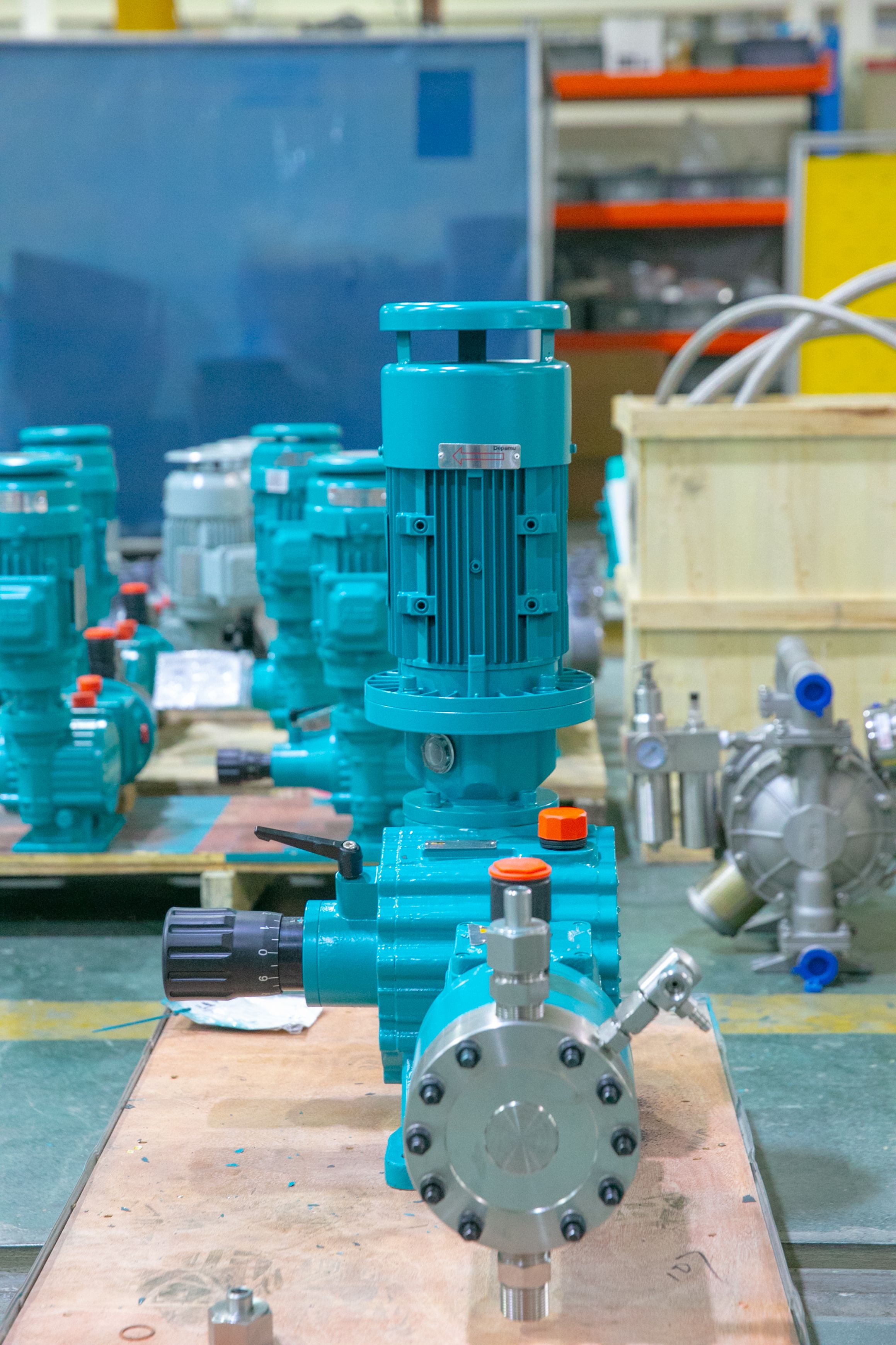
A hydraulic diaphragm metering pump is a positive displacement device that uses hydraulic oil to deflect a flexible diaphragm, which in turn pushes the process liquid through the pump head. Because the diaphragm physically separates the hydraulic circuit from the pumped medium, there is no packing, no plunger seal and no path for leakage to atmosphere. The result is a leak-free diaphragm metering pump that can handle aggressive acids, caustics, solvents, slurries and other difficult media without compromising operator safety or environmental compliance.
Flow is adjusted by changing stroke length, stroke frequency, or both. Modern drives combined with a calibrated hydraulic circuit typically deliver repeatable accuracy in the range of ±1% of setpoint across the working stroke, which is essential where dose rate is tied to a quality specification, a reaction stoichiometry or a discharge permit limit.
Precision is not only about the number on the datasheet. It is about holding that number while suction pressure fluctuates, while the medium viscosity changes with temperature, and while the pump runs continuously for months. A properly engineered hydraulic diaphragm pump maintains volumetric efficiency because the hydraulic system automatically compensates for diaphragm deflection and valve losses, rather than relying on a mechanical linkage that wears over time.
Why Source From a Custom Hydraulic Diaphragm Metering Pump Manufacturer
Standard pump ranges cover a great deal of ground, but real projects frequently fall outside them. Perhaps the discharge pressure is higher than the standard casting allows, or the medium attacks the default elastomer, or the available footprint cannot accommodate a stock unit, or the plant SCADA system requires a specific signal interface. In these cases a custom hydraulic diaphragm metering pump manufacturer can adjust wetted materials, head design, diaphragm construction, motor and control options before the order is released, rather than forcing the process to adapt to a catalogue item.
Deyapump (Hangzhou) Pump Industry Technology Co., Ltd. is one such manufacturer. Founded in 2003 and operating a plant of approximately 35,000 square meters with more than 400 employees, the company has spent over two decades focused on high-end positive displacement pumps and fluid handling equipment. Its portfolio covers metering pumps, high-pressure process reciprocating pumps, pneumatic and electric pumps, automatic chemical dosing systems, water and steam sampling equipment, water treatment equipment, screw pumps, rotary lobe pumps and gear pumps, marketed under the Deyapump, Keniluowa and Dailepu brands.
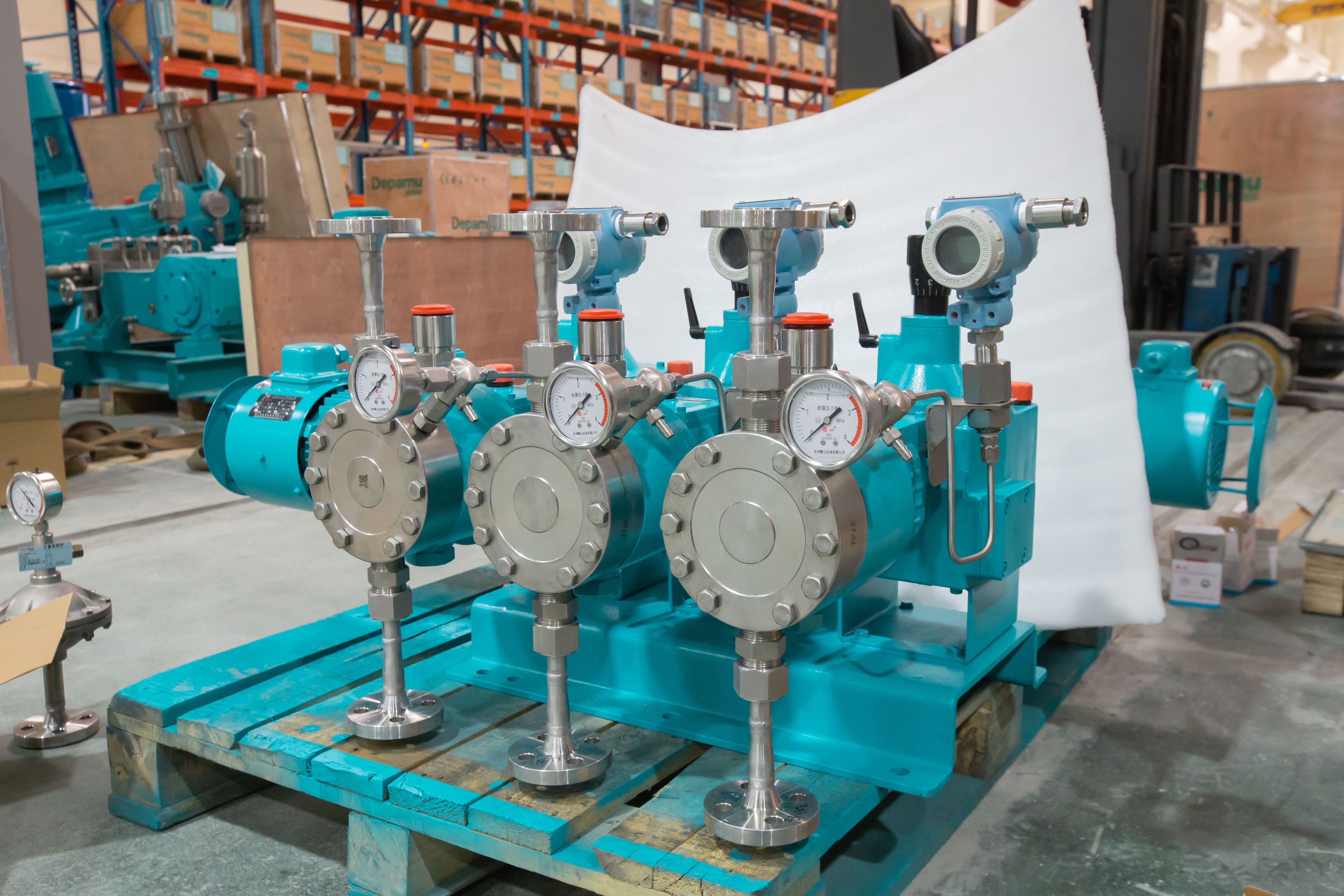
Because engineering, machining, assembly and testing sit inside one organisation, customization is handled as an engineering task rather than a commercial exception. Pump heads, diaphragm assemblies, hydraulic systems and control cabinets can be configured against a customer’s medium data sheet, and complete dosing skids can be assembled and tested before shipment.
Key Specifications to Define Before Requesting a Custom Pump
The quality of a custom quotation depends almost entirely on the quality of the process data supplied. A manufacturer can only select diaphragm material, valve type, head geometry and hydraulic pressure rating when the medium and duty point are clearly defined. Vague enquiries such as “a small dosing pump for acid” inevitably produce either an over-engineered and over-priced offer, or an under-specified pump that fails in service.
The table below summarises the minimum information a reputable supplier will ask for. Preparing this data in advance shortens the quotation cycle considerably and reduces the risk of a technical mismatch later.
| Parameter | What to Provide | Why It Affects the Design |
|---|---|---|
| Medium | Chemical name, concentration, pH, chloride content | Determines head material, diaphragm and valve elastomer selection |
| Flow rate | Normal and maximum dosing rate, turndown range | Sets plunger or diaphragm diameter and stroke frequency range |
| Discharge pressure | Operating pressure plus any surge or dead-head condition | Defines hydraulic circuit rating and motor power |
| Temperature | Suction temperature and ambient conditions | Influences diaphragm life and hydraulic oil viscosity |
| Viscosity and solids | Viscosity at pumping temperature, particle size and content | Affects valve porting, suction design and NPSH requirements |
| Control interface | Manual, 4–20 mA, pulse, Modbus, Profibus, DCS interlocks | Determines drive electronics and cabinet configuration |
| Area classification | Ex-protection requirements, IP rating, outdoor installation | Specifies motor type, enclosure and cable entry design |
Customization Levers That Genuinely Change Performance
Not every customization is worth the extra engineering effort. Experienced buyers focus on the parameters that determine service life and dosing stability, and accept standard construction where it is already adequate. For a hydraulic diaphragm metering pump, the highest-value customization areas are the wetted materials, the hydraulic system configuration, and the control and integration package.
Wetted materials and diaphragm construction
Pump heads are typically supplied in stainless steel, alloy or non-metallic construction depending on the medium. Seawater and high-chloride duties favour duplex or super duplex grades, while hydrochloric acid and hypochlorite call for PTFE-lined or non-metallic heads. Diaphragm material selection follows a similar logic: PTFE-faced diaphragms suit aggressive chemical duty, while elastomeric diaphragms are often the better choice for clean, non-aggressive media where flex life is the dominant concern.
Hydraulic system and pressure rating
The hydraulic circuit is what distinguishes a true hydraulic diaphragm pump from a simple mechanical diaphragm pump. An internal relief valve, oil make-up system and air venting arrangement protect the pump against over-pressure and lost stroke. For high-pressure duties, heavier hydraulic blocks and reinforced diaphragm support plates are specified so that the pump can operate continuously without diaphragm fatigue.
Control, automation and skid integration
Increasingly, the pump itself is only one element of a precision chemical metering pump solution. Buyers request variable-frequency drives, Profibus or Modbus communication, flow feedback from a mass flow meter, and automatic stroke adjustment. Where several pumps dose into the same process, complete automatic chemical dosing systems combining storage tanks, dissolvers, agitators, metering pumps and a control cabinet can be supplied as a pre-assembled and factory-tested skid, reducing site installation time to connecting pipes and power.
Application Scenarios Across Process Industries
Hydraulic diaphragm metering pumps appear wherever a small, accurate volume of liquid must be introduced into a larger process stream under pressure. In the petrochemical and refining sector, they inject corrosion inhibitors, anti-foulants, neutralising amines and catalyst additives into reactors, columns and product pipelines. Because the diaphragm isolates the hydraulic side from the process, the pump can be used on hydrogen-rich, toxic or odorous streams without any emission path.
In oil and gas fields, metering pumps dose methanol, demulsifiers, scale inhibitors and biocides at wellheads and gathering stations, often in remote locations where reliability and minimal maintenance matter more than initial cost. In power generation, they handle boiler water treatment chemicals, hydrazine and phosphate dosing, and sampling system reagents. In nuclear, metallurgical and new energy facilities they support reagent preparation and high-purity chemical transfer. Municipal and industrial water treatment remains one of the largest application areas, covering coagulation, disinfection, pH correction and membrane antiscalant dosing.
Deyapump’s own shipment history illustrates this spread: petrochemical and chemical processing account for roughly 41% of sales, oil and gas fields around 23%, nuclear, power, metallurgy and new energy around 15%, environmental water treatment around 13%, and new materials and food around 3%, with the remainder distributed across other industries. That distribution is a useful indicator for buyers, because it means the engineering team has solved dosing problems across a wide range of media and duty conditions rather than in a single vertical.
How to Evaluate a Hydraulic Diaphragm Metering Pump Supplier
Supplier selection should go beyond the quotation total. A metering pump is a long-life asset, and the cost of a wrong selection is measured in downtime, replacement diaphragms, off-spec batches and Compliance findings, not in the purchase price difference. The following checklist reflects what experienced procurement teams assess during a factory visit or technical bid evaluation.
- Engineering response quality: Does the supplier ask for medium data, pressure and control details before quoting, or simply send a catalogue page?
- In-house manufacturing depth: Machining, diaphragm assembly, hydraulic block production and testing under one roof usually means faster customization and clearer accountability.
- Test capability: Performance testing with water or surrogate fluid, pressure holding tests, and factory acceptance testing records for complete skids.
- Material traceability: Certificates for wetted parts, diaphragm batches and elastomer compounds, especially for nuclear, power and high-purity duties.
- Documentation package: Operation and maintenance manuals, spare parts lists, curve data and wiring diagrams issued in the project language.
- After-sales structure: Spare diaphragm and valve kits held in stock, response times for technical support, and availability of commissioning assistance.
- Reference footprint: Comparable installations in the same industry and similar duty point, with contactable references where confidentiality allows.
Financial stability also matters for long-lead projects. A manufacturer with consistent growth is more likely to maintain spare parts availability a decade after delivery. Deyapump’s reported sales of approximately RMB 450 million in 2023, RMB 510 million in 2024 and RMB 560 million in 2025, alongside a registered capital of RMB 54 million and an annual output value around RMB 500 million, indicate an organisation with the working capital to support large frame orders and long-term service obligations.
Installation, Operation and Maintenance Best Practices
Most field problems with metering pumps originate in installation rather than in the pump itself. A hydraulic diaphragm pump needs a properly sized suction line, ideally with a strainer, a pulsation dampener on the discharge side, and a relief valve protecting the discharge line against a blocked valve or closed isolation. Suction piping should be short and free of high points where gas can accumulate, and the pump should be mounted so that the suction port is flooded wherever the medium allows.
During commissioning, stroke length and frequency should be set to the duty point and verified against a calibration cylinder or flow meter. Where the medium is hazardous, a double-diaphragm configuration with a rupture detection sensor provides an early warning before any process fluid reaches the hydraulic side.
Routine maintenance is modest but should not be skipped. Hydraulic oil level and condition should be checked on a scheduled basis; contaminated or aerated oil is the most common cause of erratic dosing and reduced diaphragm life. Valves and seats should be inspected for wear or solids build-up, and diaphragms replaced on a preventive schedule derived from operating hours and medium aggressiveness rather than only after failure. Keeping a small stock of diaphragms, valve balls, seats and O-rings on site converts a potential week-long shutdown into a two-hour maintenance task.
Cost, Lead Time and Procurement Considerations
Price for a hydraulic diaphragm metering pump is driven by four factors: head material, pressure rating, drive and control complexity, and whether the unit is a stand-alone pump or part of an integrated dosing skid. A CPI-grade stainless steel unit with a simple manual stroke adjuster sits at one end of the range; a super duplex, high-pressure, explosion-proof unit with closed-loop flow control and full documentation sits at the other.
Lead time is similarly variable. Standard configurations can often be assembled and tested within a few weeks, while fully customized units and multi-pump skids require engineering, procurement of special materials, assembly and factory acceptance testing, which naturally extends the schedule. The practical advice is to involve the manufacturer early in the project definition phase: a technical clarification meeting before the enquiry is issued frequently eliminates a later change order and protects the overall project timeline.
For buyers comparing offers, the most useful discipline is to normalise every quotation against the same specification: identical materials, identical control interface, identical documentation and identical spare parts scope. Once normalised, differences in price usually reflect genuine differences in construction and support rather than commercial luck.
FAQ
What is the difference between a hydraulic diaphragm metering pump and a plunger metering pump?
A plunger metering pump uses a reciprocating piston with a mechanical seal or packing, which requires a controlled leakage path for lubrication and offers easy access for seal replacement. A hydraulic diaphragm pump uses hydraulic oil to move a diaphragm that fully separates the process liquid from the mechanism, so there is no dynamic seal exposed to the medium and no leakage to atmosphere. Diaphragm pumps are generally preferred for toxic, corrosive, volatile or high-purity media, while plunger pumps are often chosen for very high pressures or where slight leakage is acceptable.
Can a custom hydraulic diaphragm metering pump be built for high discharge pressure?
Yes. High-pressure process reciprocating pumps from the same manufacturing family achieve discharge pressures above 35 MPa, and metering pump hydraulic blocks can be reinforced to suit specific duty points. The limiting factors are the pressure rating of the head and diaphragm assembly, so accurate pressure data, including surge and dead-head conditions, must be supplied at the enquiry stage.
How do I request a quotation for a customized metering pump?
Prepare a short process data sheet covering medium name and concentration, required flow rate and turndown, discharge pressure, temperature, viscosity and solids content, control signal type, area classification and installation environment. With that information a manufacturer can propose a specific configuration, material set and control option, and provide a firm price and delivery estimate rather than a generic indicative figure.
Which industries use hydraulic diaphragm metering pumps most widely?
The largest users are petrochemical and chemical processing, oil and gas production, power generation and water treatment. They are also used in nuclear, metallurgical, new energy, new material and food applications where accurate, contamination-free dosing of additives, reagents or treatment chemicals is required.
How often should the diaphragm be replaced?
Replacement intervals depend on medium aggressiveness, operating pressure, temperature and stroke frequency, so no single figure applies to every installation. Most plants adopt a preventive schedule based on operating hours and inspect the diaphragm at each major overhaul. Where the medium is hazardous, a double-diaphragm arrangement with rupture detection allows replacement to be planned without process risk.
Can the pump be integrated into an automatic chemical dosing skid?
Yes. Metering pumps are commonly supplied as part of a packaged dosing system that includes storage and dissolver tanks, agitators, piping, valves, instrumentation and a control cabinet. Such skids are assembled and tested at the factory, so on-site work is limited to connecting utilities and process lines.
Summary
Selecting a custom hydraulic diaphragm metering pump manufacturer is fundamentally a specification exercise followed by a supplier evaluation. The specification must capture medium, flow, pressure, temperature, viscosity, control interface and area classification precisely enough for the manufacturer to select materials and hydraulic configuration with confidence. The supplier evaluation must then look beyond price to engineering responsiveness, in-house manufacturing depth, test capability, documentation quality and spare parts support.
For projects in petrochemical, oil and gas, power, water treatment, nuclear or new energy duty, a manufacturer with broad cross-industry experience is better placed to anticipate the failure modes that a single-application supplier may not have encountered. Deyapump (Hangzhou) Pump Industry Technology Co., Ltd., with more than two decades of positive displacement pump experience, a 35,000 square meter production base, over 400 employees and a product range spanning metering pumps, high-pressure reciprocating pumps, dosing systems and complementary fluid equipment, supports customers from initial process review through to factory acceptance testing and after-sales service. Engaging such a partner early in the design phase is the most reliable way to secure accurate, leak-free dosing for the full life of the plant.