
Choosing a gear pump manufacturer is rarely a simple purchasing decision. A gear pump sits at a critical point in a process line: it meters additives, transfers viscous intermediates, circulates lubricants, or feeds a downstream reactor. When the pump performs well, nobody notices. When it fails, the entire line stops, seals leak, and maintenance costs climb. This is why experienced procurement and engineering teams evaluate a gear pump factory on far more than the unit price.
This guide explains how industrial buyers should assess a gear pump manufacturer, what a modern gear pump manufacturing plant should be able to demonstrate, which media and industries gear pumps serve best, and how to obtain a meaningful gear pump quotation from an industrial gear pump supplier without over- or under-specifying the equipment. It is written from the perspective of a manufacturer that also builds metering pumps, high-pressure reciprocating pumps, screw pumps, rotary lobe pumps and complete dosing skids — which means we regularly explain not only when a gear pump is the right answer, but also when it is not.
What Should a Reliable Gear Pump Manufacturer Be Able to Prove?
Gear pumps are mechanically simple: two meshing gears rotate inside a close-tolerance housing and carry fluid from the suction side to the discharge side. Because the working principle is straightforward, many workshops can assemble a pump that turns. The real difference between suppliers is in tolerance control, material selection, seal design and repeatability across hundreds of units.
A credible gear pump manufacturer should be able to document how gear tooth profiles, clearances and housing materials are selected for a specific fluid. Viscosity, lubricity, temperature, chemical aggressiveness and the presence of solids all influence those decisions. A supplier that quotes the same standard configuration for every inquiry is a supplier that will eventually deliver a pump with excessive slip, accelerated wear, or seal failure.
Equally important is engineering responsiveness. Ask whether the supplier can review your process data sheet, propose a configuration, and explain the reasoning. A manufacturer with in-house design capability will discuss clearance selection for low-viscosity fluids, heating jackets for media that solidify at ambient temperature, and drive arrangements for variable-speed operation. A trading company will usually forward your inquiry to a third party and return with a price — and no engineering rationale.
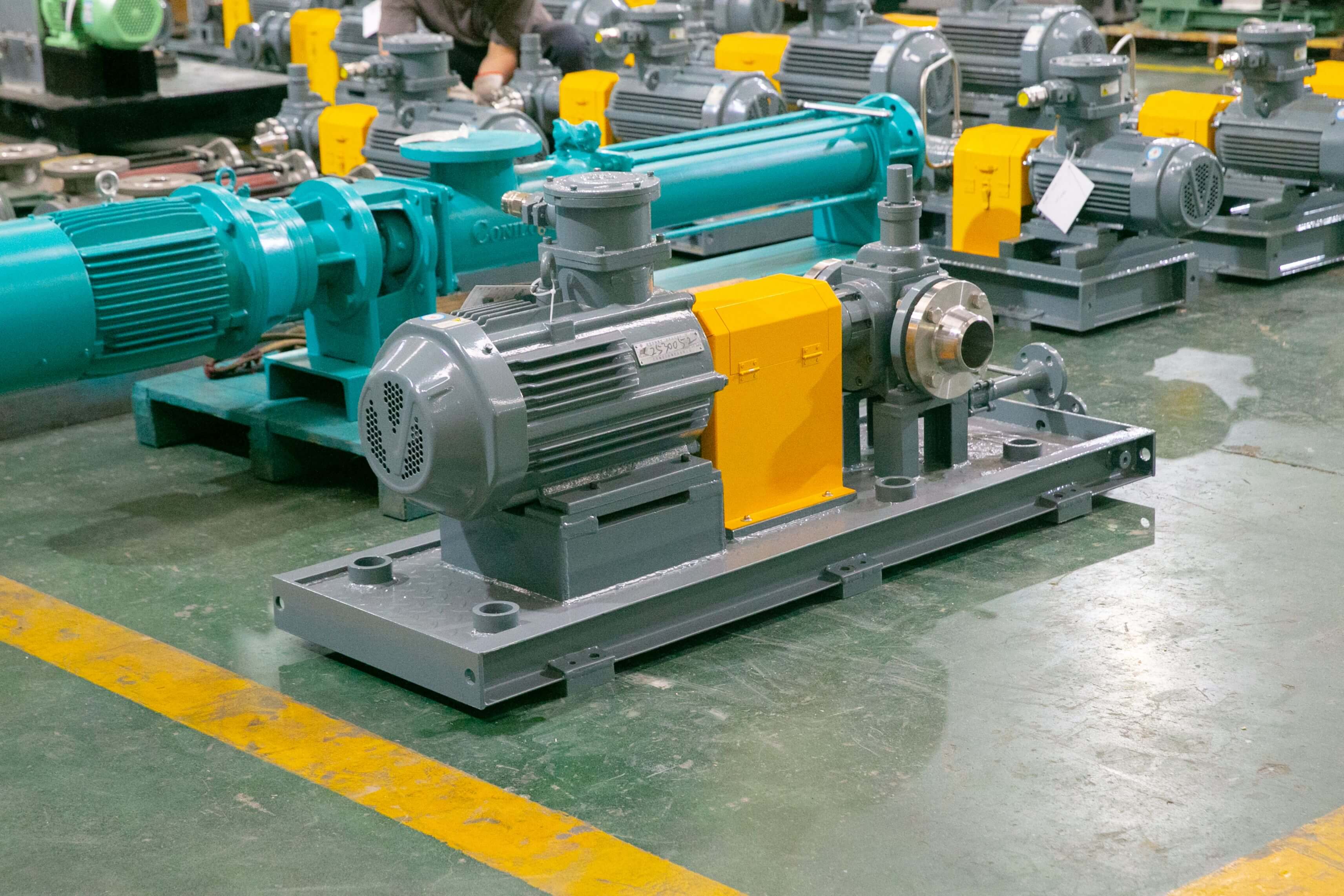
Inside a Gear Pump Factory: What to Audit Before You Order
Factory audits are most useful when they focus on process control rather than showroom impressions. A gear pump manufacturing plant producing industrial-grade equipment should show a clear flow from incoming material inspection through machining, assembly and performance testing. If any of those stages is outsourced without traceability, quality will vary between batches.
Design and Engineering Capability
Confirm that the manufacturer maintains drawings, bill of materials and configuration records for each order. Ask how non-standard requirements — special port orientations, alternative elastomers, jacketed casings, magnetic or mechanical seal options — are handled. The answer tells you whether customization is a genuine engineering process or a manual modification performed at the assembly bench.
Machining and Assembly Control
Gear pumps depend on tight running clearances. Ask how bore dimensions, gear end clearance and shaft alignment are measured and recorded. Assembly should take place in a controlled environment with documented torque values, cleanliness checks and seal installation procedures. For food, pharmaceutical or high-purity applications, material certificates and surface finish controls become part of the requirement.
Testing Before Shipment
Every unit should be pressure-tested and run-tested before dispatch. A performance test record typically includes flow rate at defined speed, discharge pressure, power consumption, noise and vibration observations, and leak checks at the seals. Requesting a sample test report during the evaluation stage is a fast way to separate a serious gear pump manufacturer from an assembler.
| Evaluation Area | What to Ask the Supplier | Why It Matters |
|---|---|---|
| Engineering scope | In-house design, drawings, selection calculations | Confirms the pump is configured for your fluid, not guessed |
| Material and seal options | Casing, gear and seal material choices with certificates | Determines corrosion resistance and service life |
| Test records | Pressure test and run test report per unit | Verifies flow and leak integrity before shipment |
| Customization process | How non-standard ports, drives and controls are engineered | Prevents field modifications and schedule delays |
| Documentation package | Manuals, spare parts list, recommended spares | Reduces downtime and simplifies maintenance planning |
Gear Pump Applications: Where These Pumps Perform Best
Gear pumps excel at transferring clean, lubricating or moderately viscous liquids at steady flow rates. Because displacement is fixed per revolution, flow is proportional to speed, which makes gear pumps predictable in dosing and circulation duties. Their self-priming behavior and compact footprint make them popular in transfer skids and packaged systems.
In chemical processing, gear pumps handle resins, solvents, monomers, heat-transfer oils and polymer melts where a smooth, pulse-free discharge is required. In oil and gas operations they circulate lube oil, feed additives and transfer hydrocarbon streams. In food and materials processing they move syrups, fats, chocolate and viscous intermediates — usually with food-grade materials and hygienic seals. In water treatment and general industry they dose or circulate coagulants, flocculants and chemical additives where a metering pump is not required.
Where Gear Pumps Are Not the Right Choice
It is equally important to recognize the limits. Standard gear pumps are generally not the best selection for fluids containing hard abrasive solids, for very high differential pressures in continuous duty, or for shear-sensitive media that degrade when passing through narrow clearances. In those situations an experienced industrial gear pump supplier should recommend alternatives rather than force a gear pump into an unsuitable duty.
| Process Condition | Typical Pump Consideration | Notes for Buyers |
|---|---|---|
| Clean, lubricating, viscous fluid | Gear pump | Fixed displacement gives predictable flow versus speed |
| Precise chemical dosing at low flow | Metering pump, diaphragm type | Adjustable stroke allows accurate dose control |
| High-viscosity or shear-sensitive media | Screw pump or rotary lobe pump | Gentler handling of product structure and solids |
| Very high discharge pressure | High-pressure reciprocating pump | Designed for continuous high-pressure duty |
| Chemical preparation and dosing in one system | Packaged chemical dosing skid | Integrates tanks, mixers, pumps and controls |
Standard, Non-Standard and Custom Gear Pump Solutions
Most projects start from a standard model, then adjust one or two variables. A pump handling ambient-temperature lube oil may need nothing more than a standard configuration. A pump handling a viscous resin that solidifies below a certain temperature may need a jacketed casing, heated seals and a reduced-speed drive.
When evaluating custom gear pump solutions, ask the manufacturer to describe the boundaries of what they can modify. Typical adjustments include port size and orientation, casing and gear materials, seal type, heating or cooling arrangements, mounting frames, coupling guards, and motor or gearbox selection for variable-speed operation. For larger projects, an OEM gear pump manufacturer may also provide private labeling, dedicated documentation, and serialized production records for the buyer’s service network.
A word of caution: customization should be engineered, not improvised. If a supplier proposes drilling additional ports on a standard casting without re-evaluating wall thickness and pressure rating, the resulting pump may pass a quick test but fail in service. Reliable customization always begins with an updated drawing and an updated performance calculation.
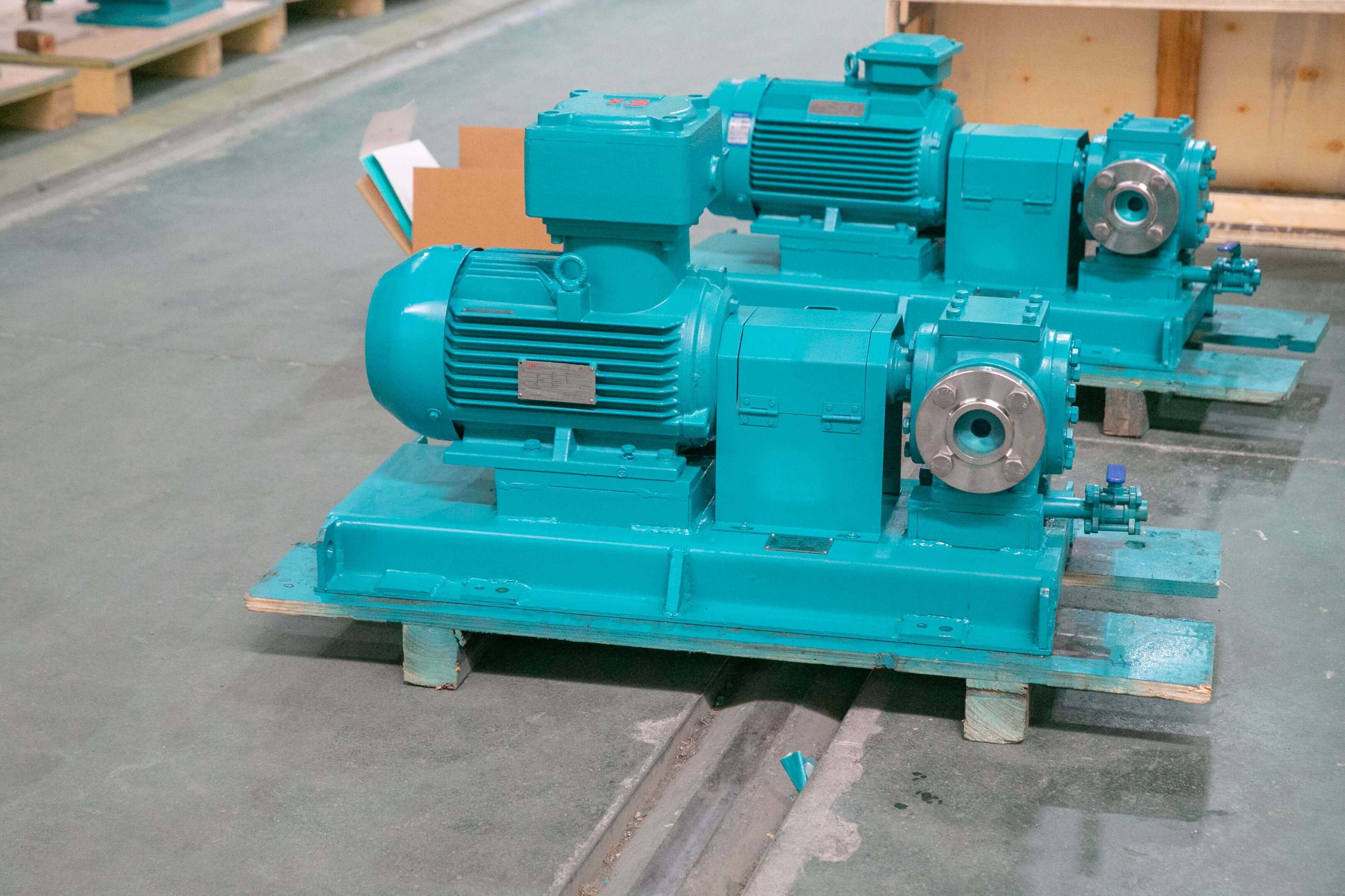
How Depamu Approaches Gear Pump Manufacturing
Depamu (Hangzhou) Pump Industry Technology Co., Ltd. was founded in 2003 and has spent more than two decades focused on high-end positive displacement pumps and fluid equipment. The company employs over 400 people across a production site of approximately 35,000 square meters, with registered capital of RMB 54 million and annual output value of around RMB 500 million. Sales have grown steadily in recent years, from roughly RMB 450 million in 2023 to approximately RMB 510 million in 2024 and RMB 560 million in 2025.
Gear pumps sit within a broader product portfolio that includes metering pumps, high-pressure process reciprocating pumps, pneumatic and electric pumps, chemical dosing packages, water and steam sampling systems, water treatment equipment, screw pumps and rotary lobe pumps. This breadth matters to buyers: when a gear pump is not the optimal solution for a given duty, the same engineering team can propose a metering pump for accurate dosing, a screw pump for high-viscosity media, or a complete dosing skid for integrated chemical preparation.
The company operates multiple brands, including Depamu, and supplies both standard and non-standard products along with customized fluid solutions. Engineering input is based on the customer’s medium characteristics, flow rate, pressure, temperature and on-site process requirements. Products are used across petroleum refining and chemicals, oil and gas fields, nuclear power, power generation, metallurgy, new energy, environmental water treatment, new materials and food processing — which means the application knowledge behind a gear pump recommendation is grounded in real process conditions rather than catalog page numbers.
How to Request a Gear Pump Quotation That You Can Compare
Comparing gear pump quotation documents from several suppliers is only meaningful if each quotation is based on the same process data. Vague inquiries produce vague offers, and the lowest price often reflects a smaller pump, thinner castings, or a seal that will not survive the fluid. Provide complete information in the first request and you will receive offers you can actually evaluate side by side.
- Fluid data: name, concentration, viscosity at operating temperature, density, lubricity, and whether solids or entrained gas are present.
- Duty point: required flow rate, suction and discharge pressure, continuous or intermittent operation.
- Temperature: normal and maximum operating temperature, plus any heating or cooling requirement.
- Materials: preferred casing, gear and seal materials, or the corrosive components that must be resisted.
- Drive and control: fixed speed or variable speed, motor voltage and frequency, hazardous area classification if applicable.
- Connections and footprint: flange standard, port orientation, available space, and mounting constraints.
- Documentation and spares: test reports, material certificates, manuals, and recommended spare parts for the first year.
With this information, a competent gear pump manufacturer can propose a configuration, explain the selection logic, and state clearly which parameters are assumptions requiring confirmation. That transparency is worth more than a fast price.
FAQ
What should I check before choosing a gear pump manufacturer?
Look beyond the price list. Confirm that the manufacturer has in-house design capability, documented machining and assembly controls, and unit-level pressure and run test records. Ask how the pump configuration is selected for your specific fluid, viscosity and temperature. A supplier who can explain the reasoning behind clearances, materials and seal choice is generally a safer long-term partner than one who only sends a catalog page.
Can a gear pump manufacturer supply custom or OEM gear pumps?
Yes, many industrial manufacturers can. Typical customizations include alternative port sizes and orientations, different casing and gear materials, special seal arrangements, heating jackets, and variable-speed drive packages. OEM arrangements may also cover private labeling, dedicated documentation and serialized production records. The key requirement is that customization is supported by updated drawings and performance calculations rather than improvised modification of a standard unit.
What information do I need to provide to get an accurate gear pump quotation?
Provide the fluid name and concentration, viscosity at operating temperature, density, whether solids or gas are present, required flow rate, suction and discharge pressure, operating temperature range, preferred materials, drive and control requirements, connection standards, and documentation needs. Complete data allows the supplier to size the pump correctly and makes competing quotations genuinely comparable.
Which fluids are not suitable for gear pumps, and what are the alternatives?
Standard gear pumps are generally not the best choice for fluids with hard abrasive solids, for very high differential pressure in continuous duty, or for shear-sensitive media that degrade in narrow clearances. In these cases screw pumps, rotary lobe pumps, metering pumps or high-pressure reciprocating pumps are often more appropriate. A manufacturer with a broad product range can recommend the correct pump type instead of forcing a gear pump into an unsuitable duty.
How do I compare gear pump prices from different suppliers fairly?
Compare quotations only after confirming that each supplier received identical process data. Check the proposed materials, seal type, motor and drive specification, test scope, documentation package and spare parts list. A lower price that omits a suitable seal material or a proper test report usually converts into higher maintenance cost later. Total cost of ownership, not unit price alone, is the correct comparison basis.
What support should a gear pump factory provide after delivery?
The supplier should provide an operation and maintenance manual, a spare parts list, recommended first-year spares, and clear guidance on seal replacement and clearance checks. Responsive technical support for installation questions, commissioning checks and troubleshooting is also important. Confirm the support channel and response process during the evaluation stage, not after the pump is installed.
Summary
Selecting a gear pump manufacturer is a technical evaluation, not a price comparison exercise. The right partner can demonstrate in-house design capability, controlled machining and assembly, documented testing, and a clear process for custom and OEM requirements. They will also tell you honestly when a gear pump is not the best fit and propose an alternative from their wider product range.
Depamu has focused on high-end positive displacement pumps and fluid equipment since 2003, combining gear pumps with metering pumps, high-pressure reciprocating pumps, screw pumps, rotary lobe pumps and complete dosing systems. For buyers evaluating an industrial gear pump supplier, the practical next step is straightforward: prepare a complete process data sheet, request a configuration proposal alongside the price, and ask for test records and documentation details. That approach turns a gear pump quotation into a decision you can defend to your engineering and maintenance teams for years of operation.