
Selecting a high pressure plunger reciprocating pump manufacturer is not simply a purchasing decision. In oil and gas field injection, chemical processing, pipeline boosting, power generation, and water treatment, the pump becomes part of a continuous process where pressure stability, media compatibility, and long-term serviceability directly affect production reliability. A pump that looks suitable on a datasheet may still fail to match the real operating envelope if flow, pressure, temperature, viscosity, and solids content are not evaluated together.
This guide explains what B2B buyers should examine when sourcing from a high pressure plunger reciprocating pump factory, how to match a high pressure process reciprocating pump to demanding duty, and which technical and commercial questions should be asked before requesting a quotation. It also outlines the capabilities of Depamu (Hangzhou) Pump Technology Co., Ltd., a manufacturer focused on high-end volumetric pumps and fluid equipment since 2003.
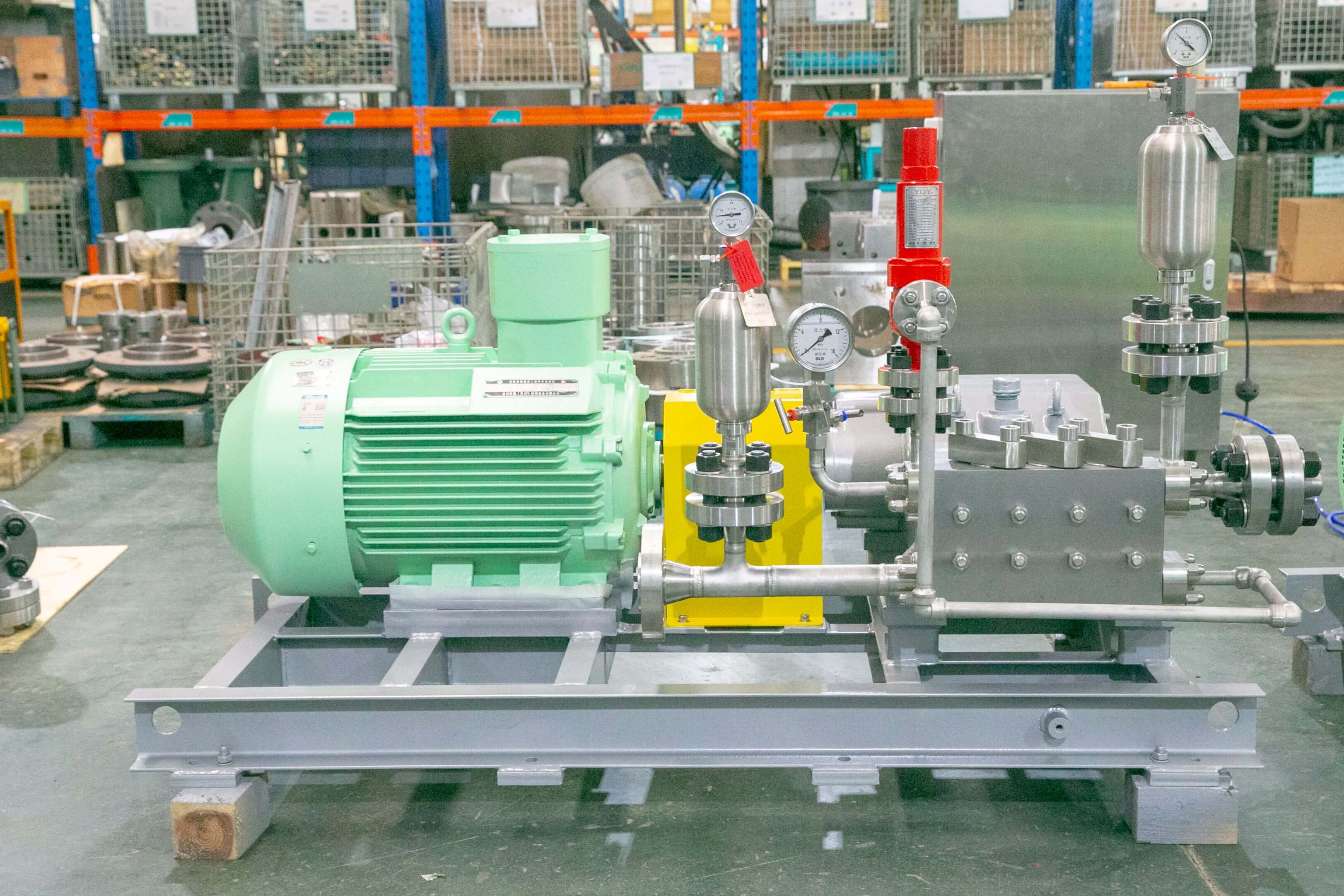
Why High Pressure Plunger Reciprocating Pumps Are Critical in Demanding Processes
A high pressure plunger reciprocating pump is a positive displacement pump that uses a plunger moving back and forth inside a cylinder to push liquid through check valves. Unlike centrifugal pumps, which rely on impeller speed to generate pressure, a reciprocating plunger pump generates pressure through volumetric displacement. This makes it suitable for high-pressure injection, stable low-to-medium flow delivery, and processes where the pump must overcome significant system resistance.
In industrial service, the value of a high pressure plunger reciprocating pump is most visible when the process cannot tolerate unstable pressure. For example, oil and gas field injection requires controlled pressure to move fluids into a reservoir or pipeline. Chemical processing may require a fixed flow against high reactor or line pressure. Pipeline boosting often demands continuous operation with predictable discharge pressure. In each case, the pump must be selected around the actual process conditions rather than a single pressure rating.
Plunger pumps are also valued for their ability to handle difficult media. High viscosity liquids, high temperatures, and fluids containing fine solids can challenge many pump types. A properly configured high pressure plunger reciprocating pump can be built with suitable materials, sealing arrangements, and flow paths to manage these conditions. However, the key phrase is “properly configured.” The manufacturer’s application engineering capability is therefore just as important as the pump model itself.
What a High Pressure Plunger Reciprocating Pump Manufacturer Should Deliver
A capable high pressure plunger reciprocating pump manufacturer should provide more than a catalog. The supplier should be able to review the process data, identify the correct pump configuration, propose materials of construction, define the auxiliary systems, and support commissioning and after-sales service. For B2B buyers, this application support often determines whether the pump meets production targets or becomes a maintenance burden.
Manufacturing depth matters as well. A high pressure plunger reciprocating pump factory should control key production steps, including machining, assembly, testing, and documentation. When the manufacturer also produces metering pumps, chemical dosing systems, and other fluid equipment, it can often provide a more integrated solution for projects that require several pump types on the same skid or process area.
- Application review based on medium, flow, pressure, temperature, and site process requirements
- Material selection for corrosive, abrasive, high-temperature, or high-viscosity media
- Mechanical design that supports stable flow and continuous operation
- Factory assembly and testing before shipment
- Customized pump packages, skid systems, and non-standard configurations
- Spare parts planning and technical support after delivery
Depamu (Hangzhou) Pump Technology Co., Ltd. was founded in 2003 and operates as a manufacturer with more than 400 employees and a factory area of approximately 35,000 square meters. The company’s product range includes metering pumps, high pressure process reciprocating pumps, pneumatic pumps, electric pumps, chemical dosing skids, water and steam sampling systems, water treatment equipment, screw pumps, rotor pumps, and gear pumps. This breadth allows the company to support standard products, non-standard products, and customized fluid solutions.
Core Performance Advantages of a Well-Selected Plunger Pump
The first advantage buyers look for is pressure capability. High pressure process reciprocating pumps can deliver pressures up to 35 MPa or more, depending on the model and configuration. This makes them suitable for high-pressure injection, process boosting, and long-distance pipeline transfer where low-pressure pumps cannot meet system requirements. Buyers should confirm the required discharge pressure under actual operating conditions, not only at the pump outlet.
The second advantage is stable flow. Because the plunger displaces a fixed volume per stroke, flow can be controlled through stroke length and operating frequency. In applications that require continuous delivery, the pump and pulsation control equipment must be matched to the system. Stable flow does not mean identical instantaneous flow; it means the average flow remains predictable and the piping system is designed to accommodate normal pressure pulsation.
The third advantage is media flexibility. Plunger pumps can be configured for high-viscosity liquids, high temperatures, and media containing solid particles. Material selection for the plunger, cylinder, valves, seals, and wetted parts is critical. A pump that handles clean water well may not be suitable for a corrosive chemical or an abrasive slurry without appropriate changes to materials and sealing design.
Where High Pressure Plunger Reciprocating Pumps Are Used
High pressure plunger reciprocating pumps are used across industries where pressure, flow stability, and media handling are central to the process. In oil and gas fields, they support injection and pressure boosting duties. In petroleum refining and chemical processing, they serve process transfer, high-pressure injection, and other demanding fluid handling tasks. In power generation, they can support high-pressure process needs and water-related systems.
Other applications include metallurgy, new energy, environmental water treatment, new materials, and food processing. Each industry brings different expectations. A chemical plant may prioritize corrosion resistance and leak containment. An oil and gas operator may prioritize continuous operation and remote site serviceability. A water treatment project may prioritize dosing accuracy and integration with automatic control. The pump selection process should reflect these differences.
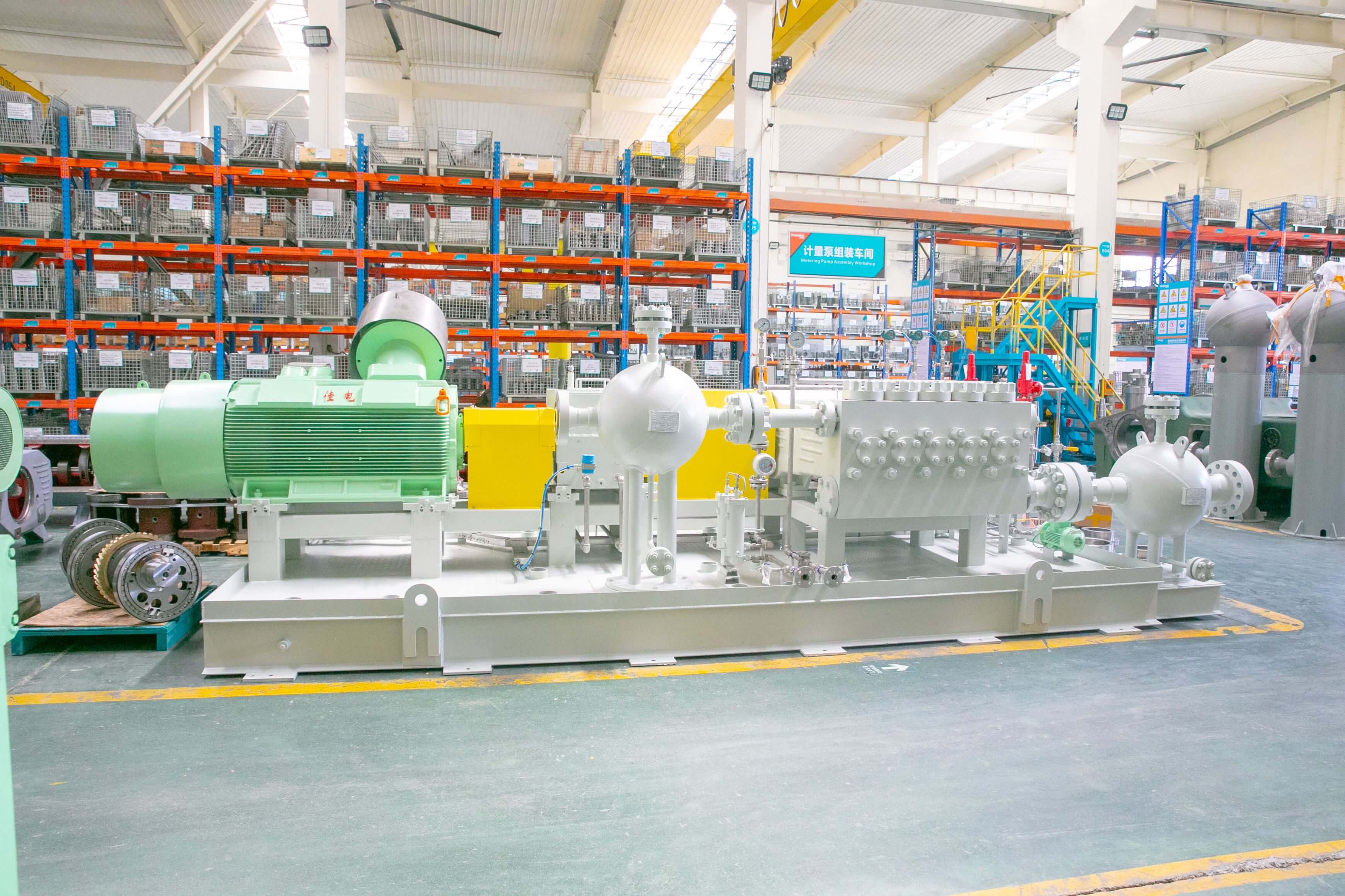
Depamu’s products have been applied in petroleum refining and chemical processing, oil and gas fields, nuclear industry, power, metallurgy, new energy, environmental water treatment, new materials, and food. According to the company’s business distribution, petroleum refining and chemical processing account for approximately 41% of sales, oil and gas fields approximately 23%, nuclear industry, power, metallurgy, and new energy approximately 15%, environmental water treatment approximately 13%, and new materials and food approximately 3%, with other industries making up the remainder. These figures show a strong concentration in process industries where pump reliability is essential.
Selection Guide: Matching the Pump to Your Process
Choosing a high pressure plunger reciprocating pump supplier begins with a clear process datasheet. The manufacturer needs enough information to calculate the pump duty and select materials, valves, seals, and accessories. Missing information often leads to oversized or undersized equipment, unexpected maintenance, or poor integration with the surrounding system.
| Selection Input | Why It Matters | Information to Provide |
|---|---|---|
| Medium | Determines wetted materials, sealing, and valve design | Chemical composition, concentration, viscosity, solids content, corrosivity, toxicity |
| Flow rate | Defines pump size and controllability | Normal, minimum, and maximum flow; batch or continuous operation |
| Pressure | Affects plunger load, drive power, and pressure-containing parts | Suction pressure, discharge pressure, pressure variation, pipeline losses |
| Temperature | Influences materials, clearances, and seal life | Minimum, normal, and maximum operating temperature |
| Site conditions | Affects drive selection, enclosure, controls, and maintenance access | Indoor or outdoor installation, ambient conditions, power supply, control integration |
After the process data is clear, the buyer should ask the manufacturer to explain the proposed configuration. Why was a particular plunger diameter selected? What is the expected volumetric efficiency? How is pulsation managed? What materials are proposed for valves and seals? What is the maintenance interval for wearable parts? These questions help separate a datasheet-based quotation from a genuine engineering review.
For customized projects, the manufacturer should also clarify scope boundaries. A pump-only supply is different from a skid-mounted package that includes piping, valves, instrumentation, controls, and a base frame. Clear scope definition prevents gaps during installation and commissioning.
Customization and Integrated Fluid Solutions
Many industrial projects cannot use a standard pump without modification. A high pressure plunger reciprocating pump manufacturer should offer customization based on medium characteristics, flow, pressure, temperature, and site process requirements. Customization may involve wetted materials, sealing arrangements, valve design, connection standards, base frame layout, control philosophy, and documentation requirements.
Beyond the pump itself, integrated fluid solutions can reduce project complexity. Chemical dosing systems, for example, combine chemical storage, mixing, metering, and automatic control in a packaged system. Water and steam sampling systems, water treatment equipment, and other packaged solutions can be assembled and tested before delivery. For buyers managing multiple process packages, working with a supplier that understands both individual pumps and complete systems can simplify coordination.
Depamu provides standard products, non-standard products, and customized fluid solutions. Its product portfolio includes metering pumps, high pressure process reciprocating pumps, pneumatic pumps, electric pumps, chemical dosing skids, water and steam sampling systems, water treatment equipment, screw pumps, rotor pumps, gear pumps, emulsifying pumps, special centrifugal pumps, and supercritical extraction equipment. The company’s stated capability covers product development, design, manufacturing, and packaged delivery.
Maintenance and Operational Best Practices
Even a well-selected high pressure plunger reciprocating pump requires a maintenance plan. Wear parts such as valves, seals, plungers, and packing components operate under pressure and may need periodic inspection. The maintenance interval depends on the medium, operating pressure, temperature, cleanliness, and running hours. A pump handling clean fluid at moderate pressure will usually have a different service profile from one handling abrasive solids at high pressure.
- Record suction and discharge pressure, flow, temperature, and power consumption daily
- Inspect for leaks, abnormal noise, vibration, and pulsation changes
- Check valve performance and replace worn parts according to the maintenance schedule
- Verify lubricant condition and drive system alignment
- Keep spare parts for critical wear items, especially in remote or continuous-duty sites
- Review operating data regularly to identify drift before it becomes a failure
Operators should also follow correct start-up and shutdown procedures. Running a reciprocating pump against a closed discharge valve without proper protection can cause rapid pressure buildup. Suction conditions must be adequate to avoid cavitation. Piping layout should account for pulsation and vibration. These details are often addressed during engineering review, but they must be maintained in daily operation.
Supplier Evaluation Checklist for B2B Procurement
When comparing a high pressure plunger reciprocating pump supplier, buyers should look beyond initial price. The lowest quotation may not represent the lowest lifecycle cost if the pump requires frequent downtime, expensive spare parts, or repeated engineering changes. A structured evaluation helps procurement and technical teams make a balanced decision.
- Does the manufacturer have experience with your medium and operating conditions?
- Can the factory provide a clear technical proposal with materials, dimensions, and performance basis?
- Is the pump assembled and tested before shipment?
- Are spare parts and service support available for the expected service life?
- Can the supplier document the scope of supply and interface responsibilities?
- Does the company offer standard, non-standard, and customized solutions?
- Are references or application experience available in your industry without disclosing confidential client information?
Depamu reports continuous sales growth, with sales of approximately RMB 450 million in 2023, RMB 510 million in 2024, and RMB 560 million in 2025. The company has a registered capital of RMB 54 million and an annual output value of approximately RMB 500 million. These figures are not a substitute for technical evaluation, but they provide context for the manufacturer’s scale and production capacity.
FAQ
What should I check before requesting a high pressure plunger reciprocating pump quotation?
Prepare a process datasheet that includes medium composition, concentration, viscosity, solids content, required flow range, suction pressure, discharge pressure, temperature range, installation environment, and control requirements. Also clarify whether you need a pump only or a skid-mounted package. The more complete the data, the more accurate the quotation and configuration.
Can a high pressure plunger reciprocating pump handle corrosive or abrasive media?
It can be configured for corrosive or abrasive media when the wetted materials, valves, seals, and plunger design are selected correctly. The buyer should provide detailed medium information so the manufacturer can evaluate material compatibility. For abrasive media, wear rates and maintenance intervals should be discussed during selection.
How do I choose between a high pressure plunger reciprocating pump and a hydraulic diaphragm metering pump?
The choice depends on pressure, flow accuracy, medium, and leak-control requirements. Hydraulic diaphragm metering pumps are often used for precise chemical dosing and leak-free containment. High pressure plunger reciprocating pumps are often used for high-pressure process transfer, injection, and boosting. A manufacturer should compare both options against the actual process data.
What customization options are available from a high pressure plunger reciprocating pump factory?
Customization can include wetted materials, valve and seal design, connection standards, base frame layout, drive configuration, instrumentation, control integration, and packaged skid design. Non-standard configurations are possible when the customer provides medium, flow, pressure, temperature, and site process requirements. Final scope should be confirmed in the technical proposal.
How often does a high pressure plunger reciprocating pump need maintenance?
Maintenance intervals depend on the medium, pressure, temperature, running hours, and wear-part design. Daily checks should cover pressure, flow, leaks, noise, and vibration. Wear parts such as valves, seals, and plungers should be inspected according to the manufacturer’s schedule and replaced before performance degrades.
Which industries commonly use high pressure plunger reciprocating pumps?
Common industries include petroleum refining, chemical processing, oil and gas fields, power generation, metallurgy, new energy, environmental water treatment, new materials, and food processing. The pump configuration and materials must be matched to the specific process conditions in each industry.
Summary
Choosing a high pressure plunger reciprocating pump manufacturer requires a combination of technical review and commercial due diligence. The right supplier should understand the process, recommend a suitable configuration, control manufacturing quality, and support maintenance after delivery. Buyers should evaluate the factory’s application experience, customization capability, testing process, and spare parts support rather than relying only on price or a single pressure rating.
Depamu (Hangzhou) Pump Technology Co., Ltd. is a Hangzhou-based manufacturer founded in 2003, with more than 400 employees, a factory area of approximately 35,000 square meters, and experience in high-end volumetric pumps and fluid equipment. Its product range covers metering pumps, high pressure process reciprocating pumps, chemical dosing systems, water and steam sampling systems, water treatment equipment, screw pumps, rotor pumps, and gear pumps. For projects requiring high-pressure injection, stable flow, difficult media handling, or customized fluid packages, a detailed technical review with the manufacturer is the practical first step toward a reliable solution.