
Selecting a high pressure process tubular pump manufacturer is a decision that affects safety, uptime, and operating cost for years. High pressure process tubular pumps are used where fluids must be delivered at consistently high pressure, in continuous duty, and often under difficult conditions such as corrosive media, high viscosity, elevated temperature, or the presence of solid particles. For procurement teams, EPC contractors, and plant engineers, the challenge is not simply finding a supplier that lists a pump on a catalog page. It is finding a manufacturer with the engineering depth, manufacturing control, testing capability, and service support to deliver a pump that performs reliably in the actual process environment.
This guide explains what a high pressure process tubular pump is, where it is used, which performance factors matter most, and how to evaluate a factory, brand, or supplier before placing an order. It also covers customization, installation, maintenance, and total cost of ownership so that buyers can make a well-informed decision rather than comparing headline prices alone.
What Is a High Pressure Process Tubular Pump?
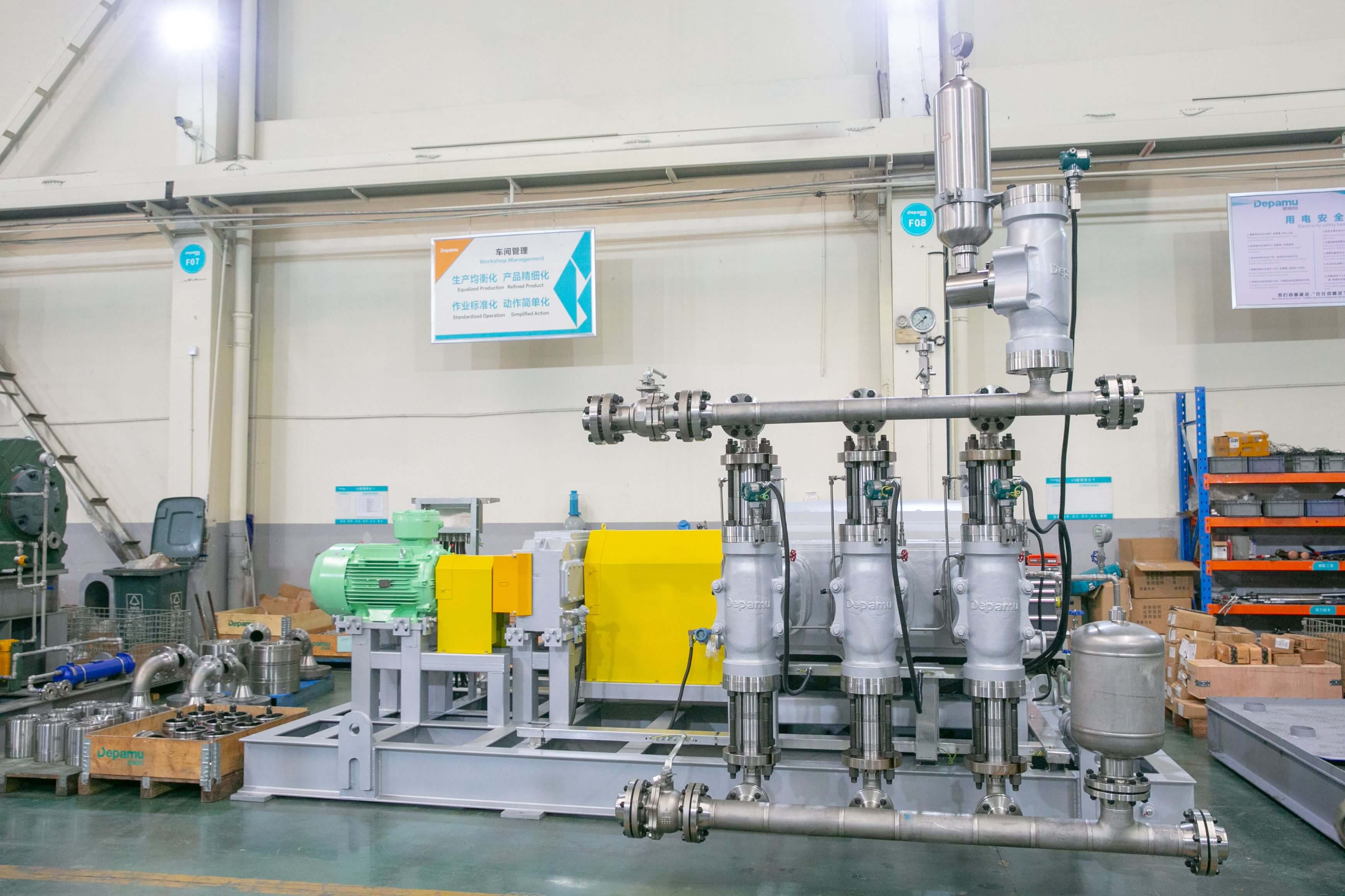
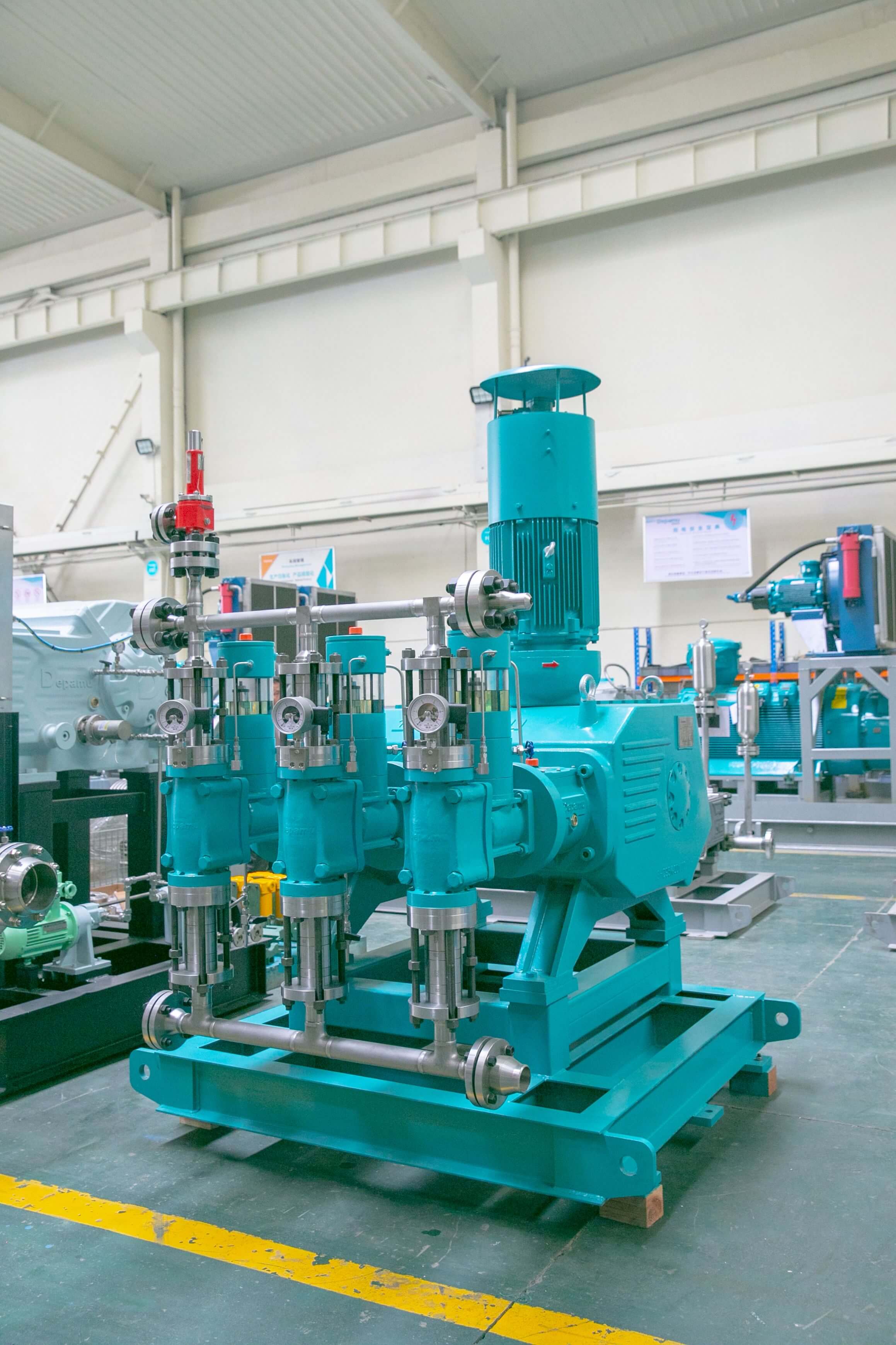
A high pressure process tubular pump is a positive displacement reciprocating pump designed around a tubular plunger and a heavy-duty fluid end. Instead of relying on centrifugal force, it moves fluid by the reciprocating motion of a plunger inside a tubular cylinder. Each stroke displaces a fixed volume of liquid, which allows the pump to generate very high discharge pressure while maintaining a stable and predictable flow rate. This operating principle makes the tubular pump well suited to process duties where pressure must be held steady and flow must not fluctuate with system resistance.
The machine typically consists of a power end, a fluid end, suction and discharge valves, a sealing and packing arrangement, and a lubrication or cooling system. The power end converts motor rotation into linear reciprocating motion through a crankshaft, crosshead, and connecting rod assembly. The fluid end contains the tubular plunger, the cylinder, and the check valves that control the direction of flow. Because the fluid end is exposed to the process medium, its material selection, surface finish, and sealing design are decisive factors in pump life and leak-free operation.
In demanding process plants, high pressure process tubular pumps may be specified for discharge pressures above 35 MPa, depending on the model, plunger diameter, and application. Flow rate is adjusted by changing the stroke length, the running speed, or the plunger diameter, which gives operators a practical way to match the pump to changing process requirements without replacing the entire unit. This combination of high pressure, controllable flow, and robust construction is why tubular plunger pumps remain a standard choice for injection, boosting, and transfer duties in heavy industry.
Where High Pressure Process Tubular Pumps Are Used
High pressure process tubular pumps appear across a wide range of industries, but they are most valuable in processes that combine high pressure with continuous operation and difficult media. The sections below summarize the main application areas and the process requirements that typically drive pump selection.
Oil and Gas Field Injection and Transfer
In oil and gas fields, tubular pumps are commonly used for water injection, chemical injection, pipeline boosting, and high pressure transfer of wellstream fluids. Injection duties require stable pressure over long periods, because even small pressure fluctuations can affect reservoir performance and surface equipment. Tubular plunger pumps handle these duties well because their displacement is mechanically fixed and their discharge pressure can be controlled precisely. They are also used to inject corrosion inhibitors, scale inhibitors, and other treatment chemicals at metered rates.
Petrochemical and Chemical Processing
Petrochemical and chemical plants use high pressure process tubular pumps for reactor feed, high pressure washing, catalyst injection, and transfer of aggressive or viscous process streams. The fluid end must be matched to the chemistry of the medium, with appropriate materials for wetted parts and a sealing arrangement that prevents leakage of hazardous liquids. Where flow must be proportional to a process signal, variable speed drives or stroke adjustment mechanisms allow the pump output to follow the plant control system.
Power, Nuclear, and New Energy
In power generation and nuclear facilities, high pressure pumps support boiler feed treatment, sampling systems, and auxiliary process circuits where reliability and documentation are critical. New energy processes, including certain battery material and hydrogen-related production routes, also require accurate high pressure dosing and transfer. In these environments, manufacturers must be able to supply traceable materials, clear test records, and stable spare parts support over the life of the plant.
Water Treatment and Environmental Protection
Municipal and industrial water treatment plants use high pressure process pumps for chemical dosing, membrane feed, and sludge or slurry transfer. Dosing accuracy is especially important because overdosing or underdosing affects water quality, chemical consumption, and operating cost. A well-selected tubular or metering pump, combined with a properly designed chemical dosing skid, gives operators repeatable results and easier compliance reporting.
Key Performance Factors When Comparing Tubular Pump Models
Two pumps may look similar on a specification sheet but perform very differently in the field. Buyers should compare models across several dimensions, not just maximum pressure and flow. The table below summarizes the factors that most often determine whether a high pressure process tubular pump will meet expectations in a real plant.
| Selection Factor | Why It Matters | What to Check with the Supplier |
|---|---|---|
| Discharge pressure | Determines the pump frame, plunger size, and fluid end design | Rated pressure, pressure margin, relief valve setting, hydrostatic test record |
| Flow rate and turndown | Defines process control range and dosing accuracy | Flow at rated pressure, minimum stable flow, stroke adjustment method |
| Fluid characteristics | Corrosion, viscosity, temperature, and solids affect materials and seals | Wetted material options, packing or diaphragm sealing, strainer requirements |
| Duty cycle | Continuous high pressure duty demands stronger bearings and lubrication | Continuous duty rating, lubrication method, cooling arrangement |
| Control and automation | Affects integration with plant DCS and dosing accuracy | Analog and digital signals, VFD compatibility, flow feedback options |
| Maintenance access | Influences downtime and spare parts consumption | Valve and packing replacement time, tooling, service manuals |
Pressure and Flow Relationship
For a reciprocating tubular pump, flow and pressure are linked through the hydraulic power requirement. A pump rated for high pressure at a given plunger diameter will deliver a lower flow at that pressure, and increasing flow usually requires a larger plunger or higher stroke speed. Buyers should confirm that the quoted performance point is the actual operating point, not an intermittent maximum. It is also important to ask how the pump behaves at low flow, because many processes require reduced output during startup, cleaning, or turndown conditions.
Fluid Compatibility and Sealing
The fluid end should be selected according to the medium, not according to general industry practice alone. Corrosive chemicals may require duplex stainless steel or other corrosion-resistant materials. Viscous fluids affect valve timing and suction conditions. High temperature reduces seal life and may require cooling or special packing. Fluids containing solids require careful strainer design and may need a different pump type altogether. A capable high pressure process tubular pump manufacturer will ask for a detailed fluid data sheet before recommending a configuration.
Reliability and Continuous Duty
In refineries, chemical plants, and oil fields, pumps often run continuously for months. Bearings, crossheads, crankshafts, and lubrication systems must be sized for that duty. Buyers should look for a manufacturer with a documented design approach, controlled machining tolerances, and a factory test procedure that includes running the pump at rated pressure before shipment. A short factory test is not a substitute for good design, but it does reveal assembly problems and seal issues that would otherwise appear during commissioning.
How to Choose a Reliable High Pressure Process Tubular Pump Manufacturer
The supplier behind the pump matters as much as the pump itself. A low purchase price can become expensive if spare parts are unavailable, technical support is slow, or the pump requires repeated repairs. The following checklist helps procurement teams evaluate a high pressure process tubular pump factory or brand in a structured way.
- Engineering capability: Can the manufacturer review fluid data, calculate hydraulic and mechanical loads, and propose a suitable pump configuration rather than only quoting from a catalog?
- Manufacturing control: Are critical components machined in-house or under qualified subcontractors, and are tolerances and material certificates traceable?
- Testing: Does the factory perform hydrostatic testing, performance testing, and running tests, and can it provide test reports with the shipment?
- Customization experience: Has the manufacturer delivered non-standard pumps for high pressure, corrosive, viscous, or high temperature service?
- Packaging and integration: Can the supplier deliver a complete skid with baseplate, motor, couplings, instrumentation, control panel, and piping?
- Documentation: Are drawings, operating manuals, spare parts lists, and material certificates available in the required language?
- After-sales support: Are spare parts stocked, and is remote or on-site service available during commissioning and warranty?
- Business stability: Does the company have a long operating history, a substantial manufacturing base, and consistent production capacity?
Founded in 2003, DEPAMU (Hangzhou) Pump Industry Technology Co., Ltd. is a high-tech enterprise specializing in high-end positive displacement pumps and fluid equipment. The company has more than 400 employees, a production area of approximately 35,000 square meters, registered capital of RMB 54 million, and annual output value of around RMB 500 million. Its product range includes metering pumps, high pressure process reciprocating pumps, pneumatic and electric pumps, automatic chemical dosing systems, water and steam sampling devices, water treatment equipment, screw pumps, rotor pumps, and gear pumps. This breadth allows the company to support both standalone pump requirements and complete fluid systems from a single engineering and supply point.
Custom Engineered and OEM Tubular Pump Solutions
Many high pressure process duties cannot be met with a standard catalog pump. The fluid may be unusually corrosive, the available space may be restricted, or the pump may need to integrate with an existing control system. In these cases, a manufacturer with custom engineering capability is essential. Custom work typically begins with a detailed review of medium composition, flow range, pressure, temperature, ambient conditions, utility availability, and site safety requirements. From that review, the manufacturer defines the pump frame size, plunger diameter, fluid end materials, sealing method, drive arrangement, and control philosophy.
For projects that include chemical injection or dosing, the pump is often supplied as part of a packaged system. A typical automatic chemical dosing skid integrates a storage tank, mixing and stirring equipment, metering pumps, piping, valves, instrumentation, and a control cabinet. The system is assembled and tested before shipment, which reduces site installation work and shortens commissioning time. This approach is widely used in boiler water treatment, cooling water treatment, wastewater treatment, and petrochemical processes where multiple chemicals must be dosed at different points.
OEM and private-label arrangements are also available for distributors and equipment integrators that need a stable manufacturing partner. In an OEM project, the manufacturer produces pumps or skids according to the buyer’s drawings, branding, and documentation requirements, while maintaining control over critical machining and assembly processes. For buyers, the key questions are whether the factory has the engineering resources to support design changes, whether it can maintain consistent quality across repeat orders, and whether it can protect the buyer’s technical information.
Installation, Operation, and Maintenance Best Practices
Even a well-built high pressure process tubular pump will underperform if it is installed or maintained incorrectly. Proper foundation design, alignment, piping support, and suction conditions are essential. The pump should be mounted on a rigid base that absorbs vibration, and the coupling should be aligned according to the manufacturer’s tolerances after the base is grouted. Suction piping should be short, straight, and adequately sized to avoid cavitation, especially when the pumped fluid is hot or volatile.
A relief valve or other pressure protection device must be installed on the discharge side to protect the pump and piping from overpressure. Instrumentation should include suction and discharge pressure gauges, and where dosing accuracy is critical, a flow meter or calibration column. Before startup, operators should confirm rotation direction, lubrication level, valve condition, and the tightness of all connections.
During operation, the most useful maintenance practice is regular condition monitoring. Operators should record discharge pressure, flow, motor current, vibration, and temperature at consistent intervals. A gradual rise in vibration or a change in valve sound often indicates worn valves, packing, or plunger seals before a failure occurs. Packing should be adjusted rather than over-tightened, because excessive packing pressure increases friction and shortens plunger life. Lubrication oil should be changed according to the manufacturer’s schedule, and suction strainers should be cleaned regularly.
Spare parts planning is another important element. Valves, seats, packing, plunger seals, and gaskets are consumable items, and their replacement interval depends on the fluid, pressure, and duty cycle. Buyers should ask the manufacturer for a recommended spare parts list for the first year of operation and for long-term availability commitments. Keeping critical spares on site reduces downtime and protects production schedules.
Total Cost of Ownership and Procurement Tips
Purchase price is only one part of the cost of a high pressure process tubular pump. Energy consumption, maintenance labor, spare parts, downtime, and documentation effort all contribute to total cost of ownership. A pump that is slightly more expensive but has better hydraulic efficiency, longer seal life, and readily available spare parts can be far cheaper over a ten-year operating period.
When requesting quotations from a high pressure process tubular pump supplier, buyers should provide complete process data rather than a simple flow and pressure figure. Include fluid name, concentration, viscosity, temperature, vapor pressure, solids content, required flow range, discharge pressure, duty cycle, utility conditions, area classification, and any applicable standards or documentation requirements. A supplier that asks detailed questions is usually more capable than one that quotes immediately without clarification.
It is also useful to compare quotations on a like-for-like basis. Check whether the price includes the motor, baseplate, coupling guard, relief valve, instrumentation, control panel, factory testing, paint system, documentation, and packing. Ask about lead time, warranty terms, commissioning support, and spare parts pricing. For overseas projects, confirm the Incoterms, export packing, and shipping documentation early so that logistics do not delay installation.
FAQ
What is the difference between a high pressure process tubular pump and a centrifugal pump?
A centrifugal pump generates pressure through a rotating impeller and is generally better suited to high flow at moderate pressure. A high pressure process tubular pump is a positive displacement machine that moves a fixed volume of fluid with each stroke, so it can generate very high pressure at a stable, controllable flow. Tubular pumps are preferred for high pressure injection, dosing, and viscous or particle-laden fluids, while centrifugal pumps are often used for large volume transfer at lower pressure.
What pressure and flow ranges can a high pressure process tubular pump handle?
The achievable range depends on the pump frame, plunger diameter, stroke speed, and fluid end design. High pressure process reciprocating pumps from established manufacturers can reach discharge pressures above 35 MPa, with flow rates selected according to the process requirement. Because flow and pressure are related, buyers should always confirm the exact operating point rather than relying on a maximum rating. The manufacturer should provide a performance curve for the proposed configuration.
Can a tubular pump handle corrosive, viscous, or particle-laden fluids?
Yes, but the configuration must be matched to the fluid. Corrosive media require appropriate wetted materials and sealing arrangements. Viscous fluids affect suction conditions and valve response, so larger passages and careful piping design may be needed. Fluids containing solids require strainers and may need special valve designs or a different pump type. Buyers should provide a complete fluid data sheet so the manufacturer can recommend a suitable fluid end and seal system.
How do I choose a reliable high pressure process tubular pump manufacturer?
Evaluate the manufacturer’s engineering capability, in-house machining and assembly control, factory testing procedures, customization experience, documentation, spare parts availability, and after-sales support. A long operating history, a substantial manufacturing facility, and a broad product range are useful indicators of stability. It is also worth asking for reference projects in similar industries and for a clear technical proposal rather than a simple price quotation.
What maintenance is required for high pressure process tubular pumps?
Routine maintenance includes checking lubrication oil, monitoring vibration and temperature, inspecting packing and plunger seals, cleaning suction strainers, and verifying relief valve operation. Valves, seats, packing, and seals are consumable parts and should be replaced according to the manufacturer’s recommendations or when performance changes. Keeping a recommended spare parts set on site helps reduce downtime when wear parts reach the end of their service life.
Can tubular pumps be supplied as a complete skid or packaged system?
Yes. Many projects require a packaged solution rather than a bare pump. A complete skid may include the pump, motor, baseplate, coupling, relief valve, piping, instrumentation, control panel, and, for dosing applications, a storage tank and mixing system. Factory assembly and testing before shipment reduce site work and shorten commissioning time. Buyers should confirm the scope of supply, utility requirements, and control interface during the quotation stage.
Summary
Choosing a high pressure process tubular pump manufacturer is a technical procurement decision, not a simple price comparison. The right pump must match the process pressure, flow, fluid characteristics, duty cycle, and control requirements, and it must be supported by a manufacturer with the engineering, manufacturing, testing, and service capability to stand behind it. Buyers who provide complete process data, compare quotations on a like-for-like basis, and evaluate the supplier’s customization and spare parts support will make better decisions and avoid costly downtime later.
DEPAMU (Hangzhou) Pump Industry Technology Co., Ltd. has focused on high-end positive displacement pumps and fluid equipment since 2003. With more than 400 employees, a 35,000 square meter production base, three brands, and a product range covering metering pumps, high pressure process reciprocating pumps, automatic chemical dosing systems, water and steam sampling devices, screw pumps, rotor pumps, gear pumps, and related fluid equipment, the company supports standard, non-standard, and custom fluid solutions for oil refining, petrochemical, oil and gas field, nuclear, power, metallurgy, new energy, environmental water treatment, new materials, and food applications. For buyers seeking a long-term high pressure process tubular pump supplier or OEM partner, a structured technical evaluation and an open discussion of process conditions remain the most reliable path to a successful project.