
Selecting the right dosing pump manufacturer is one of the most important decisions in any industrial fluid process. A dosing pump does far more than move liquid from one point to another. It controls the exact volume of chemicals injected into a process, protects expensive equipment from corrosion and scale, and helps maintain consistent product quality. When the pump is undersized, poorly matched to the medium, or sourced from a supplier without real engineering capability, the consequences can include inaccurate dosing, premature diaphragm failure, unplanned downtime, and safety risks.
This guide explains how to evaluate a dosing pump factory, what technical questions to ask before placing an order, and how different pump technologies compare for common industrial duties. It also draws on the experience of Depamu (Hangzhou) Pump Industry Technology Co., Ltd., a manufacturer founded in 2003 that specializes in high-end positive displacement pumps and complete fluid systems for petroleum refining, chemical processing, oil and gas fields, nuclear power, power generation, metallurgy, new energy, environmental water treatment, new materials, and food applications.
What Does a Dosing Pump Manufacturer Actually Do?
A dosing pump manufacturer designs and builds equipment that delivers a precisely controlled volume of liquid over a defined period. Unlike a general-purpose transfer pump, a dosing pump must hold its accuracy across changing pressure, temperature, and viscosity conditions. The manufacturer therefore has to understand the process, not just the pump. Flow rate, discharge pressure, chemical compatibility, suction conditions, turndown ratio, and control method all influence the final configuration.
The best manufacturers combine mechanical design, hydraulic engineering, materials selection, and control system integration. They can advise on diaphragm or piston technology, select the right wetted materials for aggressive chemicals, and supply a complete package that includes the pump, piping, valves, instrumentation, and control panel. This is particularly important for chemical dosing applications, where a small error in concentration can affect an entire production batch or wastewater discharge result.
A real dosing pump factory also provides repeatable testing before shipment. Each unit should be checked for flow accuracy, pressure holding, leak-tightness, and control response. Documentation covering materials, performance data, and installation requirements should be available so that plant engineers can integrate the equipment without guesswork.
Why Work With a Specialized Dosing Pump Factory Instead of a Trading Company
Trading companies can offer competitive prices and fast quotations, but they rarely control the manufacturing process. When a project requires a non-standard material, a special connection, or a customized control philosophy, the trading company must go back to the factory, and communication can become slow and imprecise. A specialized dosing pump manufacturer, by contrast, can review the process data directly and make engineering decisions during the quotation stage.
Working directly with a factory also improves long-term support. Spare parts such as diaphragms, valves, seals, and check balls are easier to trace when the original manufacturer understands the pump’s configuration. Maintenance intervals can be planned around real wear characteristics rather than generic recommendations. For plants that operate continuously, this difference in support quality often matters more than the initial purchase price.
Another advantage is customization. Industrial processes rarely fit a catalog page exactly. A dosing pump factory can modify stroke length, plunger diameter, diaphragm material, motor type, control protocol, and skid layout to match the site. This reduces the need for adapters and field modifications, which are common sources of leaks and dosing errors.
Key Dosing Pump Technologies and How They Compare
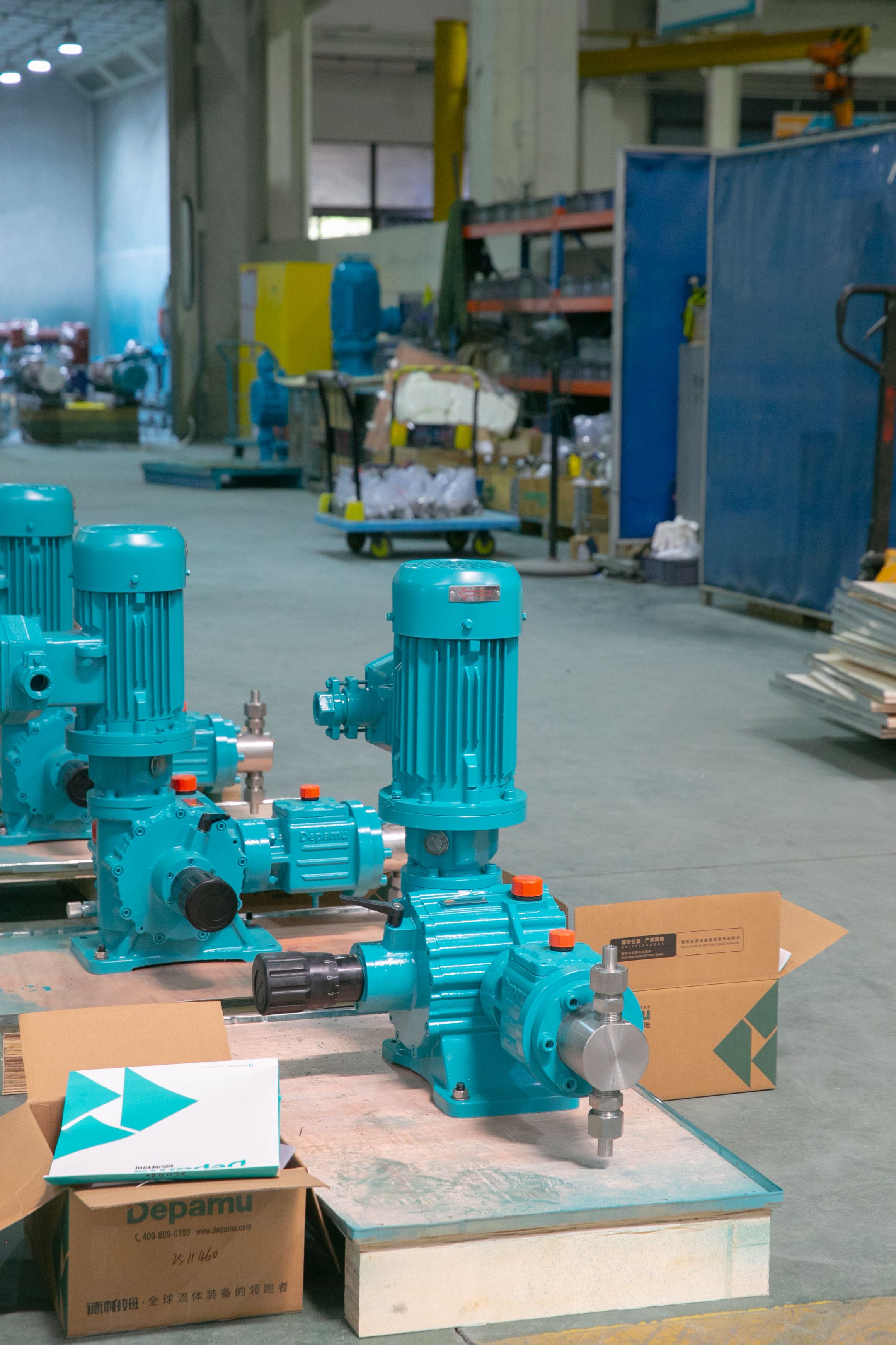
Different dosing duties call for different pump principles. A manufacturer with a broad portfolio can recommend the most economical and reliable option instead of forcing every application into a single product type. The three most relevant categories for industrial chemical dosing are hydraulic diaphragm metering pumps, high-pressure process reciprocating pumps, and fully automatic chemical dosing systems.
Hydraulic Diaphragm Metering Pumps
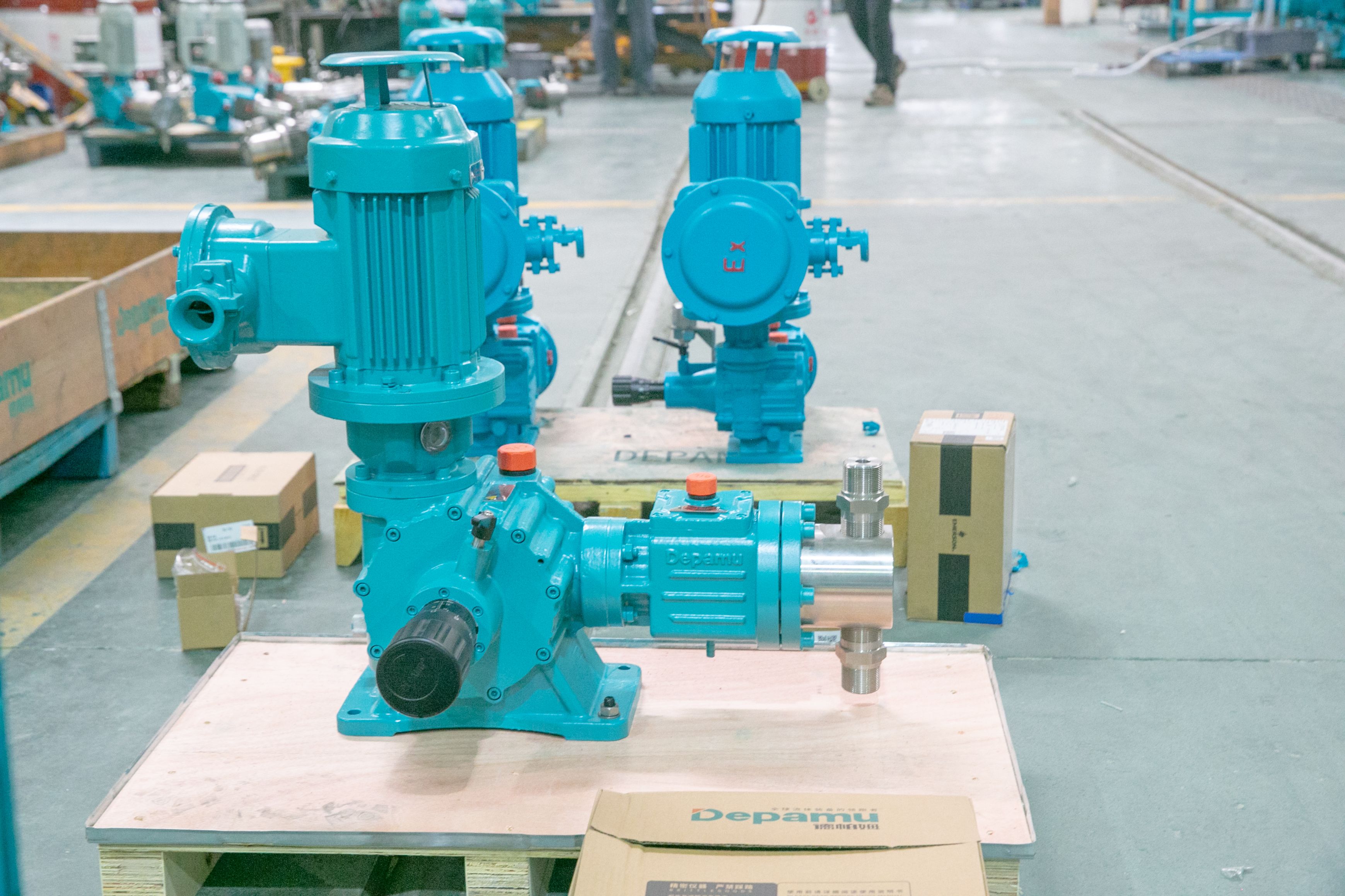
Hydraulic diaphragm metering pumps use hydraulic oil to move a diaphragm, which in turn displaces the process liquid. Because the diaphragm separates the hydraulic end from the process end, there is no packing or plunger seal in contact with the chemical. This design provides leak-free operation and is well suited to corrosive, toxic, volatile, or high-pressure media.
Flow is adjusted by changing the stroke length and operating frequency, allowing high precision dosing across a wide turndown range. Hydraulic diaphragm metering pumps are widely used in petroleum and petrochemical plants, environmental water treatment, pharmaceutical production, food processing, and new energy processes where accurate chemical injection is essential.
High-Pressure Process Reciprocating Pumps
High-pressure process reciprocating pumps use a plunger or piston to push liquid into a pressurized line. They are designed for stable flow at high discharge pressure and can operate continuously in demanding service. Depending on the configuration, they can handle high-viscosity liquids, elevated temperatures, and media containing solid particles.
These pumps are commonly used for oil and gas field water injection, petrochemical process transfer, pipeline pressure boosting, and high-pressure chemical injection. A capable manufacturer will match plunger material, valve design, and sealing arrangements to the specific medium rather than relying on a standard configuration.
Fully Automatic Chemical Dosing Systems
A fully automatic chemical dosing system integrates chemical storage, dissolution, mixing, metering, and automatic control into a single skid. The metering pump is the core component, supported by dissolution tanks, agitators, piping, valves, instruments, and a control system. The package can handle powder or liquid chemicals, single-point or multi-point dosing, and automatic interlocking with plant signals.
Because the system is assembled and tested before delivery, site work is limited to connecting utilities and process lines. This reduces installation time and improves consistency. Automatic chemical dosing systems are widely used in boiler water treatment, circulating water treatment, wastewater treatment, and petrochemical processes.
| Pump Technology | Typical Strength | Common Applications |
|---|---|---|
| Hydraulic diaphragm metering pump | Leak-free dosing, high accuracy, corrosive and toxic media | Chemical injection, water treatment, petrochemical dosing |
| High-pressure process reciprocating pump | High discharge pressure, stable flow, continuous duty | Oil and gas water injection, pipeline boosting, process transfer |
| Automatic chemical dosing system | Integrated preparation, dosing, and automatic control | Boiler water treatment, circulating water, wastewater treatment |
| Screw, rotary lobe, and gear pumps | Gentle handling of viscous or shear-sensitive fluids | Chemical transfer, food processing, new materials |
Industrial Applications of Dosing Pump Systems
Dosing pumps appear in almost every process industry, but the technical requirements vary significantly. In petroleum refining and chemical processing, which represent a large share of industrial dosing demand, pumps must handle aggressive chemicals, high pressures, and continuous operation. In oil and gas fields, high-pressure reciprocating pumps are used for water injection and chemical injection to support production and maintain reservoir pressure.
Environmental water treatment is another major application. Municipal and industrial wastewater plants rely on metering pumps to dose coagulants, flocculants, disinfectants, pH adjustment chemicals, and antifoaming agents. Boiler and circulating water systems use automatic chemical dosing systems to control scale, corrosion, and biological growth. Nuclear power, conventional power generation, metallurgy, and new energy facilities also require precise chemical addition for water chemistry control and process stability.
New materials and food processing present different challenges. Here, the pump must protect product purity, avoid contamination, and handle viscous or shear-sensitive liquids. A manufacturer with experience across these sectors can recommend the right combination of wetted materials, cleaning procedures, and control logic.
Depamu’s product applications reflect this diversity. Petroleum refining and chemical processing account for approximately 41% of sales, oil and gas fields approximately 23%, nuclear power, power generation, metallurgy, and new energy approximately 15%, environmental water treatment approximately 13%, new materials and food approximately 3%, and other industries approximately 5%. This broad application base helps the company translate process requirements into practical pump configurations.
How to Select the Right Dosing Pump Manufacturer: A Practical Checklist
Buyers often compare quotations on price and delivery time alone. That approach can overlook the engineering support that determines whether a pump performs reliably for the next ten years. A more effective evaluation starts with the process data and then checks whether the manufacturer can demonstrate relevant experience.
Begin with the medium: chemical name, concentration, viscosity, temperature, vapor pressure, and whether solids are present. Then define the required flow rate, discharge pressure, dosing accuracy, turndown ratio, and control signal. These parameters determine the pump type, wetted materials, and motor selection. A competent dosing pump manufacturer will ask for this information before proposing a model.
- Engineering capability: Can the manufacturer review process data, select materials, and provide calculations rather than simply quoting a catalog number?
- Product range: Does the factory offer metering pumps, high-pressure reciprocating pumps, and complete dosing skids, or only one narrow product line?
- Customization: Can the manufacturer modify connections, materials, controls, and skid layout for the project?
- Testing: Are flow accuracy, pressure, and leak-tightness verified before shipment?
- Documentation: Are drawings, material certificates, operating manuals, and maintenance instructions provided?
- Spare parts: Are diaphragms, valves, seals, and other wear parts readily available?
- After-sales support: Can the manufacturer support installation, commissioning, troubleshooting, and operator training?
It is also useful to ask how the manufacturer handles changes during project execution. Revising a pump configuration late in the project is expensive, but ignoring a process change can be worse. A factory with in-house design and assembly teams can usually respond faster than a supplier that outsources production.
Customization and Turnkey Dosing Solutions
Many industrial dosing projects require more than a standalone pump. The chemical may need to be dissolved, diluted, mixed, filtered, or distributed to multiple injection points. The control system may need to communicate with a plant DCS or PLC, adjust dosing based on flow or pH signals, and log operating data. In these cases, a turnkey dosing solution is more efficient than assembling components from several suppliers.
Depamu provides standard products, non-standard products, and customized fluid solutions based on medium characteristics, flow rate, pressure, temperature, and site process requirements. The company’s portfolio includes metering pumps, high-pressure process reciprocating pumps, pneumatic and electric pumps, chemical dosing systems, water and steam sampling devices, water treatment equipment, screw pumps, rotary lobe pumps, gear pumps, emulsifying pumps, special centrifugal pumps, and supercritical extraction devices.
A customized package typically follows a clear sequence: process review, preliminary selection, engineering design, component procurement, assembly, factory testing, delivery, installation support, and commissioning. Keeping these steps under one manufacturer reduces interface risk and makes responsibility clear if performance does not match expectations.
Manufacturing Capability and Long-Term Reliability
Dosing pump reliability is built long before the pump reaches the site. It depends on stable manufacturing processes, trained assembly staff, controlled tolerances, and consistent component quality. Depamu was founded in 2003 and has grown into a high-tech enterprise with more than 400 employees and a factory area of approximately 35,000 square meters. The company’s annual output value is approximately RMB 500 million, supported by continuous investment in research, production, and complete system delivery.
Sales performance reflects steady market acceptance. The company’s sales were approximately RMB 450 million in 2023, RMB 510 million in 2024, and RMB 560 million in 2025. Growth of this kind in industrial pump markets usually comes from repeat business, referrals, and the ability to handle increasingly complex projects rather than from one-off transactions.
For buyers, manufacturing capability should be verified through factory audits, product testing records, and discussions with the engineering team. A manufacturer that can explain why a particular diaphragm material is selected, how hydraulic performance changes at high pressure, and what maintenance interval is realistic is usually better prepared to support the equipment over its full service life.
Installation, Operation, and Maintenance Best Practices
Correct installation is essential for dosing accuracy. The pump should be mounted on a rigid base, with suction piping kept short and free of unnecessary bends. Suction lift should be minimized, and a properly sized suction strainer or filter should be installed where the chemical quality requires it. Discharge piping should include a pulsation dampener when smooth flow is important, and a relief valve or back-pressure valve should protect the pump from overpressure.
During commissioning, stroke length, frequency, and calibration should be checked against the required dose. Operators should be trained to recognize abnormal noise, vibration, diaphragm leakage, and changes in discharge pressure. Routine maintenance usually includes checking hydraulic oil level where applicable, inspecting valves and seals, cleaning strainers, and replacing wear parts according to the manufacturer’s schedule.
Keeping a small stock of critical spare parts is good practice for continuous processes. Diaphragms, check valves, and seal kits are the most common wear items. Recording operating hours and dosing conditions helps maintenance teams replace parts before failure rather than after a process interruption.
FAQ
What should I look for in a dosing pump manufacturer?
Look for engineering capability, a broad product range, customization experience, factory testing, clear documentation, and reliable spare parts support. A good manufacturer will ask detailed questions about the medium, flow rate, pressure, temperature, and control requirements before recommending a pump.
Can a dosing pump manufacturer customize equipment for corrosive or high-pressure media?
Yes. Experienced manufacturers can select diaphragm materials, wetted materials, valve designs, and sealing arrangements to suit corrosive chemicals, high pressures, and other demanding conditions. Customization may also include special connections, control signals, and skid-mounted layouts.
What is the difference between a metering pump and a dosing pump?
The terms are often used interchangeably in industrial applications. Both refer to pumps designed to deliver a precise, controllable volume of liquid. The most important consideration is whether the selected pump technology matches the required accuracy, pressure, and chemical compatibility.
How do I choose between a hydraulic diaphragm metering pump and a high-pressure reciprocating pump?
Hydraulic diaphragm metering pumps are generally preferred for accurate chemical injection where leak-free operation and corrosion resistance are critical. High-pressure process reciprocating pumps are better suited to high discharge pressures, continuous process transfer, and duties involving viscous or particle-laden media. The final choice depends on the process data.
Which industries use automatic chemical dosing systems?
Automatic chemical dosing systems are widely used in boiler water treatment, circulating water treatment, wastewater treatment, and petrochemical plants. They are also used in other processes that require consistent preparation and dosing of chemicals.
What maintenance do industrial dosing pumps require?
Maintenance typically includes checking hydraulic oil, inspecting diaphragms and valves, cleaning strainers, verifying calibration, and replacing wear parts according to the manufacturer’s recommendations. Recording operating conditions helps predict when service is needed.
Summary
Choosing a dosing pump manufacturer is not simply a purchasing decision. It is a decision about process reliability, safety, and long-term operating cost. A manufacturer that understands the chemical, the process, and the control requirements can recommend the right pump technology and support the equipment throughout its service life. Reviewing engineering capability, product range, customization options, testing procedures, documentation, and spare parts support gives buyers a practical basis for comparison.
Depamu (Hangzhou) Pump Industry Technology Co., Ltd. has focused on high-end positive displacement pumps and fluid systems since 2003. With more than 400 employees, a factory area of approximately 35,000 square meters, and applications across petroleum refining, chemical processing, oil and gas, nuclear power, power generation, metallurgy, new energy, environmental water treatment, new materials, and food, the company offers standard products, non-standard products, and customized fluid solutions. For projects involving precise chemical dosing, high-pressure injection, or complete dosing skids, working with a specialized dosing pump factory is the most reliable route to consistent performance.