
Polyacrylamide (PAM) is one of the most widely used flocculants in water treatment, sludge dewatering, mining, paper making, and oilfield operations. It is also one of the most difficult fluids to dose accurately. A prepared PAM solution is viscous, shear-sensitive, and prone to stringing, which means a standard transfer pump will quickly fail to deliver a stable, repeatable dose. Choosing the right PAM dosing pump manufacturer is therefore not a simple price comparison — it is a decision that determines whether a treatment plant runs smoothly for the next ten years or struggles with clogged lines, broken polymer chains, and unstable effluent quality.
This guide explains what a PAM dosing pump actually does, how a professional PAM dosing pump factory approaches polymer dosing, which technical parameters matter during selection, and how to evaluate suppliers of complete polymer preparation and dosing systems. It is written for plant engineers, EPC contractors, and procurement teams who need practical, engineering-grade information rather than marketing claims.
What Is a PAM Dosing Pump and Why Accuracy Matters
A PAM dosing pump is a positive-displacement pump used to inject a prepared polyacrylamide solution into a process stream at a controlled, continuous rate. Unlike water or thin chemical reagents, a PAM solution at a typical working concentration of 0.1% to 0.5% behaves like a non-Newtonian fluid. Its viscosity rises sharply with concentration, and it loses flocculation performance if it is subjected to excessive shear inside a pump head.
This is why the pump type matters as much as the pump size. A centrifugal pump will shear the polymer chain and generate foam, reducing flocculation efficiency and increasing chemical consumption. A correctly specified high viscosity metering pump or a low-shear screw pump, by contrast, moves the polymer gently and delivers a stable volumetric flow that tracks the plant’s flow signal.
In a typical sludge dewatering line, dosing accuracy directly controls polymer cost. Over-dosing wastes reagent; under-dosing produces wet cake, poor capture rates, and higher transport costs. Because PAM is usually the single most expensive consumable in a dewatering plant, a pump that holds ±1% repeatability at low flow rates often pays for itself within a single operating season.
Inside a PAM Dosing Pump Factory: The DEPAM Manufacturing Approach
DEPAM (Deppam Hangzhou Pump Industry Technology Co., Ltd.) was founded in 2003 and has spent more than two decades focused on high-end positive displacement pumps and fluid equipment. The company employs over 400 people and operates a plant of roughly 35,000 square meters, with registered capital of RMB 54 million and an annual output value of approximately RMB 500 million. Its sales have grown steadily, from about RMB 450 million in 2023 to approximately RMB 510 million in 2024 and RMB 560 million in 2025.
The product range is unusually broad for a single PAM dosing pump manufacturer: metering pumps (including hydraulic diaphragm metering pumps), high-pressure process reciprocating pumps, pneumatic and electric pumps, screw pumps, rotary lobe pumps, gear pumps, emulsifying pumps, special centrifugal pumps, water and steam sampling devices, supercritical extraction devices, and complete automatic chemical dosing packages. This breadth matters because polymer dosing rarely involves one pump in isolation — it involves storage, preparation, transfer, metering, dilution, and control.
DEPAM’s engineering capability covers the full path from product design and manufacturing to packaged system delivery. Standard products, non-standard designs, and fully customized fluid solutions can all be developed around a customer’s medium characteristics, flow rate, pressure, temperature, and site process requirements. Three in-house brands are operated to serve different market segments, and the company is registered as a high-tech enterprise.
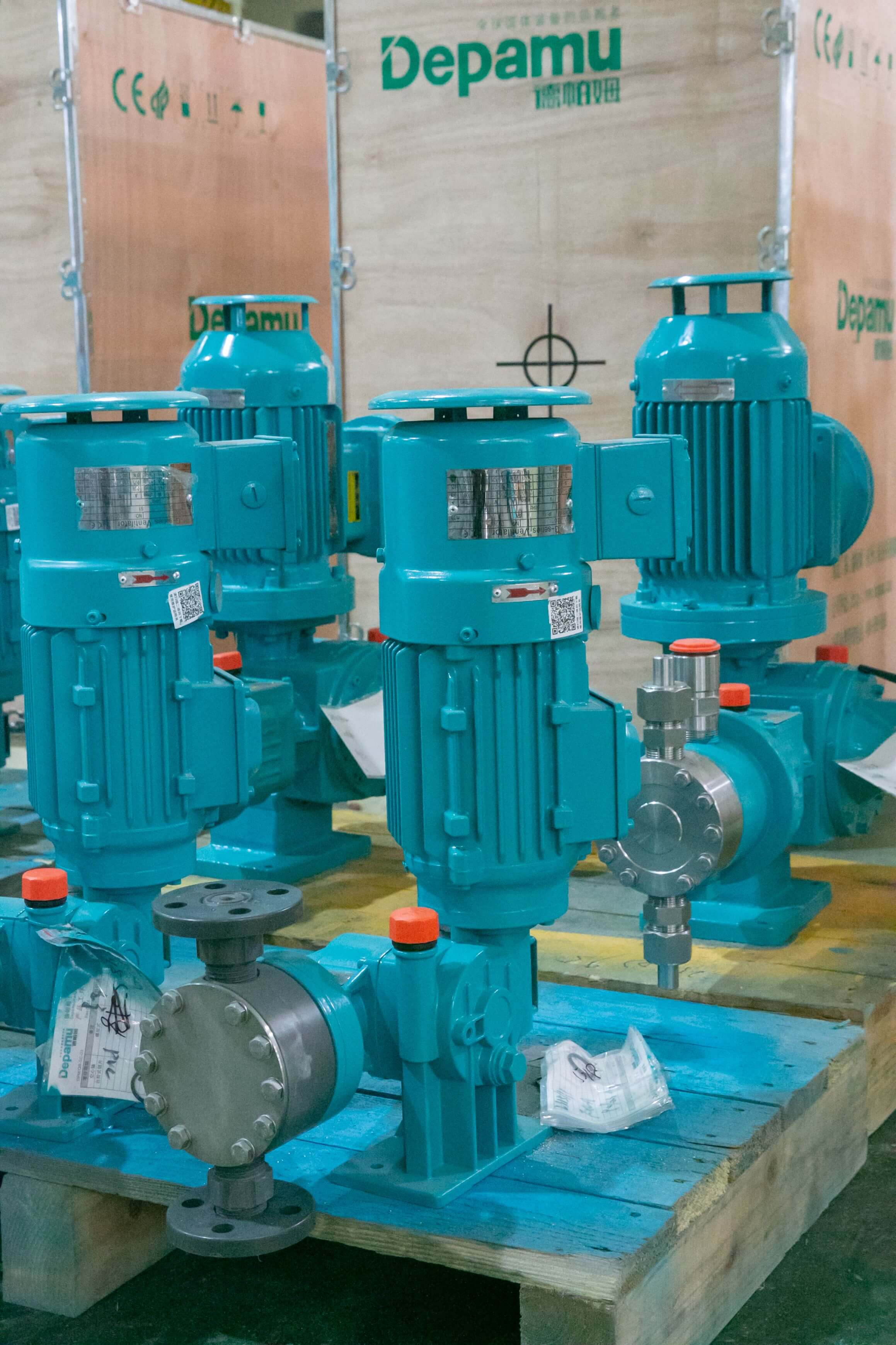
Key Selection Criteria for PAM Dosing Pumps
Selection begins with the polymer itself. Before a pump can be sized, the engineer needs the prepared solution concentration, viscosity, temperature, solids content, and the required dosing range. The table below summarizes the parameters that a competent PAM dosing pump supplier will ask about before issuing a quotation.
| Parameter | Typical Consideration | Practical Guidance |
|---|---|---|
| Solution concentration | Usually 0.1%–0.5% PAM | Higher concentration means higher viscosity and more difficult suction conditions; dilute to the lowest effective concentration. |
| Flow rate and turndown | Dosing flow often 0.5–5 m³/h, sometimes lower | Specify the minimum as well as the maximum flow; turndown ratio determines whether stroke or frequency adjustment is needed. |
| Discharge pressure | Low for gravity injection, higher for in-line injection | Add a margin for line losses, valves, and static head; high-pressure process pumps are available for demanding injection points. |
| Viscosity and shear sensitivity | Non-Newtonian, shear-degradable | Favor low-shear positive displacement designs; avoid high-speed centrifugal impellers on neat polymer. |
| Wetted materials | Stainless steel, PTFE diaphragms, compatible elastomers | Confirm compatibility across the whole system, including suction piping, valves, and static mixers. |
| Control interface | Manual, 4–20 mA, pulse, or flow-paced | Flow-proportional control is standard for plants with variable influent; confirm the interface with the plant DCS or PLC. |
Flow Rate, Turndown, and Dosing Philosophy
PAM dosing is often a low-flow duty with a wide adjustable range. A pump sized only for the maximum design flow may run at 10% of its capacity during normal operation, which compromises repeatability. Experienced buyers therefore specify the normal operating point and ask for the turndown capability at that point. Metering pumps with adjustable stroke length and variable frequency drive offer a broad, controllable range; for very low flows, a smaller pump head is often a better choice than a large pump throttled down.
Low-Shear Handling of Polymer Solutions
Polymer chains break under mechanical shear. Every valve, elbow, and pump head in the dosing line is a potential degradation point. A polyacrylamide dosing pump should be selected for gentle handling: large-bore suction valves, slow stroke speeds, generous suction piping, and short discharge runs. Where the neat polymer must be transferred from the preparation tank to the dosing point, a low-speed screw pump is frequently the better transfer choice, with a metering pump handling the final precise injection after dilution.
Materials and Corrosion Resistance
Although PAM solutions are not strongly corrosive, they are frequently dosed alongside coagulants and pH adjusters. Wetted parts should be selected for the complete chemical environment, not just the polymer. Hydraulic diaphragm metering pumps eliminate packing leakage entirely, which is a significant advantage when handling aggressive auxiliary chemicals or when the dosing area must remain clean and free of drips.
Where PAM Dosing Systems Are Used
DEPAM’s product applications reflect the wider market: petrochemical refining and chemical processing account for roughly 41% of sales, oil and gas fields about 23%, nuclear power, power generation, metallurgy, and new energy about 15%, environmental water treatment about 13%, new materials and food around 3%, and other industries the remaining 5%.
In PAM dosing systems for wastewater treatment, the pump is central to sludge thickening and dewatering, where polymer is added before centrifuges, belt presses, or filter presses. Municipal plants, industrial effluent plants, and mining tailings operations all depend on continuous, accurate polymer dosing to achieve dry solids targets and reduce sludge volume.
In oil and gas fields, polymer dosing supports water injection and produced-water treatment, where reliability under continuous duty is essential. In petrochemical and chemical plants, polymer is used for wastewater pre-treatment and for process separation steps. In power generation, dosing systems serve water treatment and boiler water conditioning, complementing water and steam sampling equipment. In food and new materials production, low-shear dosing protects product quality where the flocculant contacts the process stream directly.
Automatic PAM Preparation and Dosing Skids: A Complete Solution
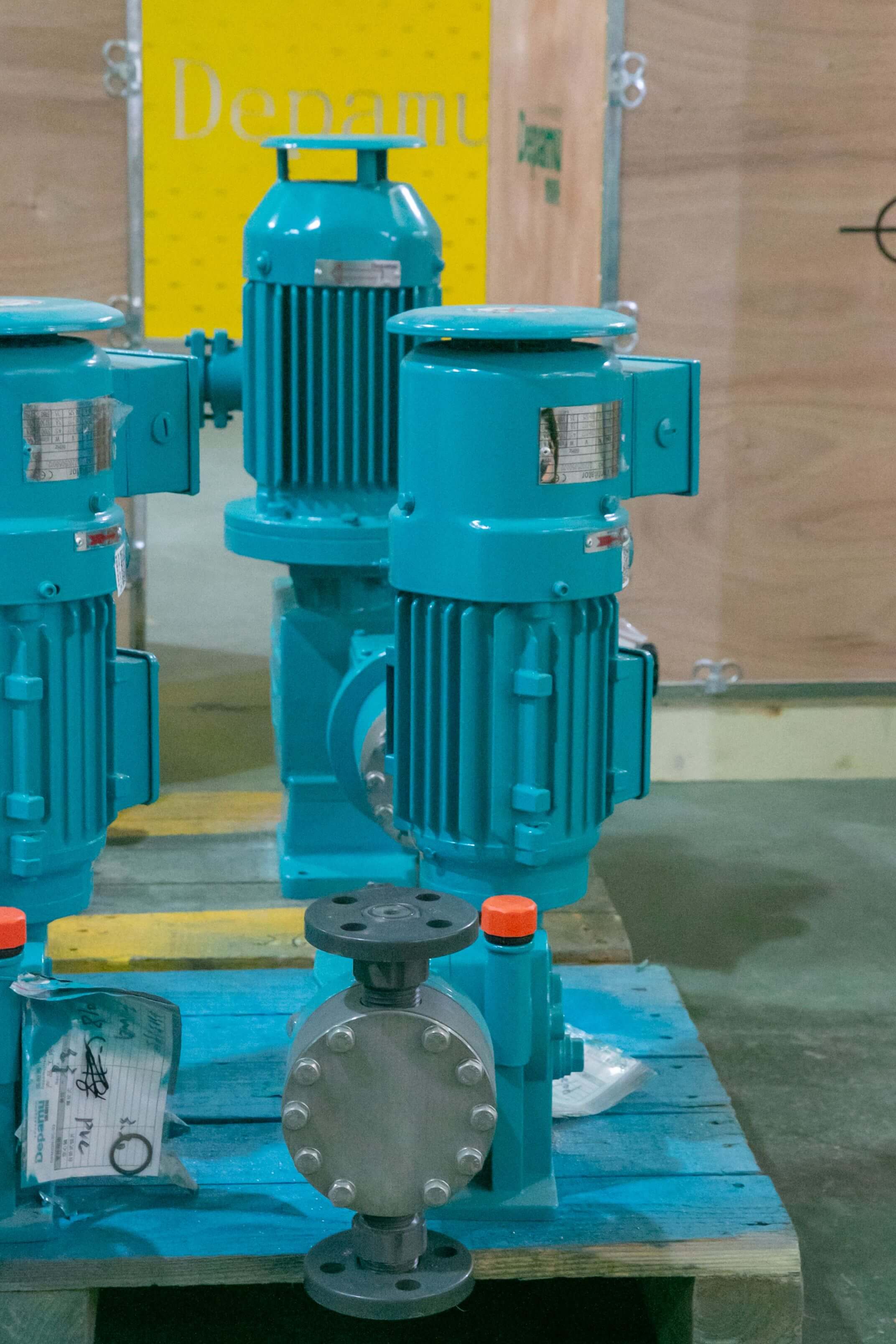
Buying a pump is only part of the job. Polymer must first be wetted, dissolved, aged, and diluted before it reaches the dosing point, and each of these steps influences final performance. An automatic chemical dosing package integrates reagent storage, dissolution, mixing, metering, and automatic control into a single skid, functioning as a self-contained preparation and dosing station.
DEPAM builds these packages around its own metering pumps, combined with dissolution tanks, agitators, and intelligent control systems. The system can handle dry powder or liquid polymer feed, multi-point dosing, and automatic interlocking with plant signals. Because the skid is assembled and tested in the factory before shipment, site work is limited to connecting piping and power — a major advantage for projects with tight commissioning schedules and limited local labor.
A well-designed package also protects the pump. Correct wetting and adequate aging time prevent partially dissolved polymer from reaching the pump head, which is one of the most common causes of blocked valves and unstable dosing in the field.
Installation, Commissioning, and Maintenance Recommendations
- Size the suction line generously. Short, large-diameter suction piping with minimal fittings reduces the risk of cavitation and polymer stringing at the pump inlet.
- Keep the dosing point close. Long discharge lines increase pressure loss and residence time; where distance is unavoidable, consider dilution at the point of use.
- Provide a water flush. A simple flush connection allows the pump head and piping to be rinsed before shutdowns and prevents polymer from drying inside valves.
- Calibrate in the field. Verify actual delivered volume against a measuring vessel at the normal operating stroke and frequency, then record the calibration curve for operators.
- Inspect valves and diaphragms on a schedule. Wear parts in a polymer duty should be checked at fixed intervals rather than after a failure; keeping a small spares kit on site avoids long downtime.
- Train operators on turndown limits. Operators should know the minimum stable flow of the pump so that the system is not run below its controllable range.
How to Evaluate a PAM Dosing Pump Supplier
For international buyers, supplier evaluation should go beyond the pump datasheet. A credible PAM dosing pump factory should be able to describe the polymer chain, not just the hardware: how the solution is prepared, how shear is minimized, how the dosing rate follows plant flow, and how the system is commissioned. Ask for the recommended pump type and control philosophy in writing, and compare the answers from different suppliers.
Second, confirm manufacturing scope. A supplier that builds metering pumps, screw pumps, and complete dosing skids in-house can take responsibility for the whole system rather than dividing it among three vendors. DEPAM’s 35,000 square meter facility, 400-plus workforce, and in-house design-to-package capability support this single-source model, including standard, non-standard, and fully customized solutions.
Third, discuss total cost of ownership rather than unit price. The purchase price of a PAM dosing pump is a small fraction of the polymer consumed over its service life. A pump with better repeatability, lower shear, and easier maintenance usually delivers a lower cost per cubic meter of treated sludge. Finally, clarify documentation, spare parts availability, and technical support arrangements before placing an order, since these determine how quickly a plant can recover from an unexpected stoppage.
FAQ
What type of pump is best for dosing PAM solution?
Because PAM solutions are viscous and shear-sensitive, low-shear positive displacement pumps are the usual choice. Hydraulic diaphragm metering pumps provide leak-free, highly repeatable dosing with adjustable stroke and frequency, while low-speed screw pumps are often used for transferring neat polymer from the preparation tank. Centrifugal pumps are generally avoided on neat polymer because they degrade the polymer chain and generate foam.
How do I calculate the required PAM dosing pump flow rate?
Start from the dry solids load and the target dose determined by jar testing, then convert to prepared solution volume using the solution concentration. Always specify both the maximum and the normal operating flow, plus a turndown ratio that keeps the pump within its controllable range. A manufacturer can help convert your treatment parameters into a pump size and control philosophy.
Can one supplier provide both the metering pump and the complete dosing skid?
Yes. DEPAM manufactures metering pumps and also builds complete automatic chemical dosing packages that integrate storage, dissolution, agitation, metering, and control on a single skid. Factory assembly and testing mean that on-site work is limited to piping and electrical connections, which shortens commissioning and reduces interface risk between vendors.
What maintenance does a PAM dosing pump need?
Typical maintenance includes regular flushing of the pump head and piping to prevent polymer drying, scheduled inspection of valves, diaphragms, and seals, periodic field calibration of delivered volume, and keeping a spare parts kit on site. Because polymer duty is demanding on valves, inspection intervals should be fixed rather than reactive.
Can dosing systems be customized for different polymer concentrations and site conditions?
Yes. DEPAM develops standard, non-standard, and fully customized fluid solutions based on medium characteristics, flow rate, pressure, temperature, and site process requirements. Materials, pump type, control interface, and skid layout can all be adapted to the project, including multi-point dosing and automatic interlocking with plant control systems.
Summary
Selecting a PAM dosing pump manufacturer is really a question of system understanding. The pump must handle a viscous, shear-sensitive fluid at low flow with high repeatability, and it must work as part of a preparation, dilution, and control chain. Getting this right reduces polymer consumption, stabilizes effluent and cake quality, and cuts maintenance downtime.
DEPAM has focused on high-end positive displacement pumps and fluid equipment since 2003, with a 35,000 square meter plant, more than 400 employees, and an annual output value of approximately RMB 500 million. Its portfolio — metering pumps, high-pressure process reciprocating pumps, screw and rotary lobe pumps, and automatic chemical dosing packages — covers the full polymer dosing chain, supported by in-house design, manufacturing, and packaged system delivery. For buyers comparing suppliers, the practical checklist remains the same: verify the engineering logic, confirm the manufacturing scope, and evaluate cost per treated volume rather than unit price alone.