
Sludge is one of the most difficult media in any industrial plant. It can be thick, abrasive, variable in solids content, and prone to settling when flow stops. For engineers and procurement teams, choosing the right equipment is not simply a matter of matching a pipe diameter to a pump inlet. The decisions made during supplier selection affect uptime, maintenance cost, operator safety, and the long-term reliability of the entire sludge handling line.
This guide explains what to look for in a sludge rotary lobe pump manufacturer, how rotary lobe pumps behave in sludge service, which parameters should be confirmed before ordering, and how a capable industrial sludge transfer pump supplier can support standard, non-standard, and customized projects. It is written for plant owners, EPC contractors, OEM buyers, and maintenance teams evaluating rotary lobe pump for wastewater and process sludge applications.
Why Sludge Handling Demands a Purpose-Built Rotary Lobe Pump
Sludge is not a single, consistent fluid. Primary sludge, secondary sludge, digested sludge, thickened sludge, and dewatered cake all behave differently. Solids content, particle size, viscosity, temperature, pH, and the presence of grit or fibrous material can change from one process stage to another. A pump that performs well on clean water may suffer rapid wear, clogging, or loss of capacity when the same duty involves sludge.
Rotary lobe pumps are positive displacement pumps. Two synchronized lobes rotate inside the pump casing and create moving cavities that transfer the medium without the high shear associated with many centrifugal designs. This operating principle makes them well suited to viscous, shear-sensitive, and solids-laden media when the pump is correctly sized and configured. For sludge transfer, the ability to handle gentle product movement, maintain flow at varying back pressures, and accommodate wear-resistant construction are important advantages.
The key phrase is “correctly sized and configured.” A high solids sludge pump must be selected around the actual operating envelope rather than a nominal duty point. If the pump is oversized, the sludge may move too slowly and settle in the line. If it is undersized, the pump may run outside its efficient range, accelerate wear, or fail to deliver the required pressure. This is why a sludge pump selection guide should begin with a detailed review of the medium and the process, not with a generic catalog number.
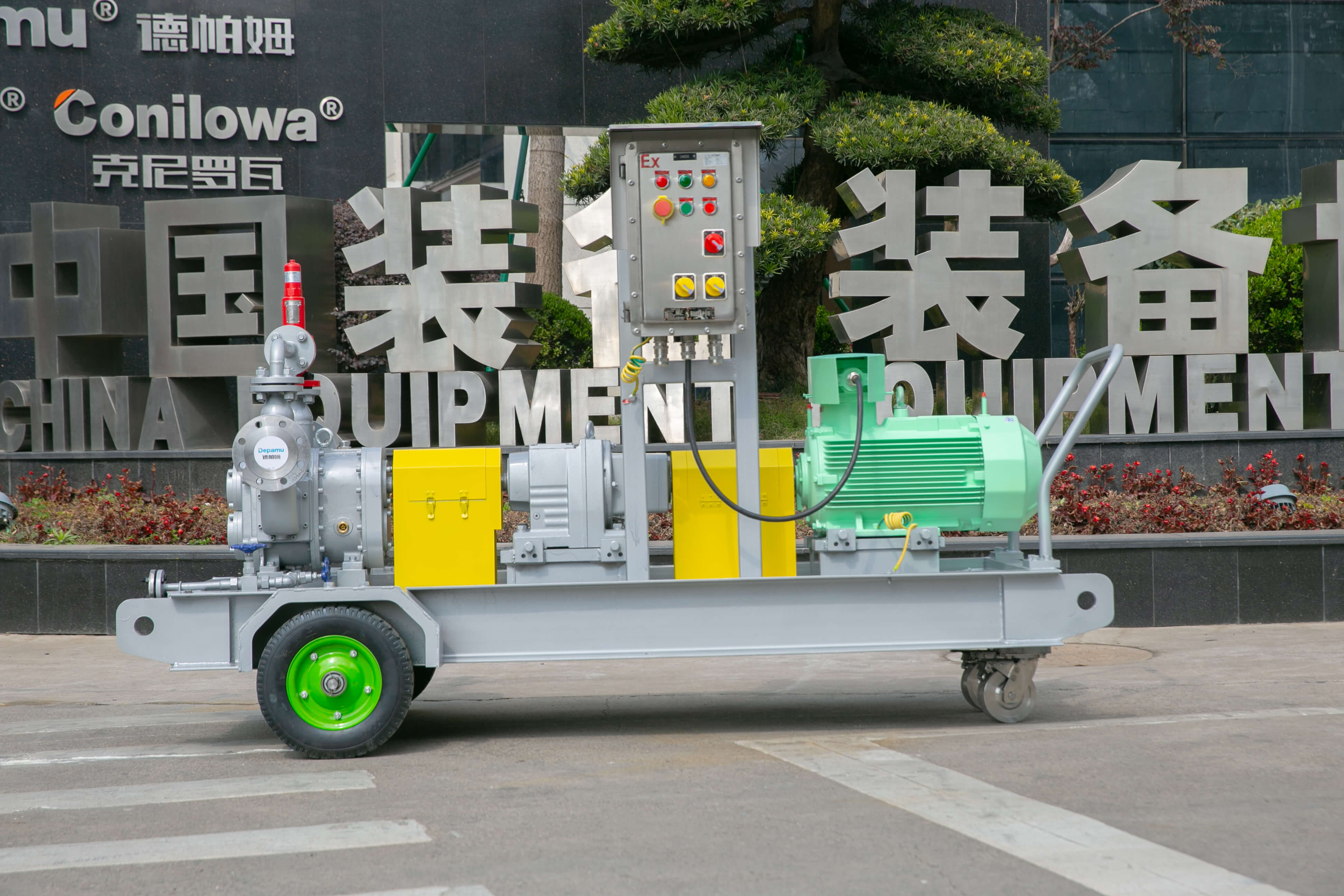
What a Sludge Rotary Lobe Pump Manufacturer Should Deliver
A capable sludge rotary lobe pump manufacturer should offer more than a product list. It should be able to translate process data into a practical pump configuration, explain the limitations of each option, and support the project from inquiry through commissioning. This is especially important when the duty involves abrasive sludge, frequent start-stop operation, high discharge pressure, or a combination of sludge with chemical additives.
Technical support starts with the medium. The manufacturer should ask for solids content, particle size and shape, viscosity, temperature, pH, density, flow rate, discharge pressure, suction conditions, and the expected operating pattern. These inputs determine the lobe geometry, casing material, shaft sealing arrangement, drive selection, and speed range. A supplier that offers only a fixed catalog model without asking these questions may leave the buyer to solve avoidable problems later.
Engineering and customization capability
Sludge systems rarely fit a purely standard specification. Space constraints, existing pipework, control philosophy, material compatibility, and maintenance access all influence the final design. A custom sludge pump solution may include modified ports, special materials, heating or cooling arrangements, wear protection, a specific sealing system, or integration with a larger skid. The manufacturer’s engineering team should be able to document these choices clearly and confirm them before production.
For OEM buyers, the ability to support OEM sludge rotary lobe pump requirements is also valuable. This can include agreed interface dimensions, private-label arrangements, documentation packages, and production consistency across repeat orders. The supplier should be transparent about what can be customized, what remains standard, and how changes affect lead time and cost.
Manufacturing and quality control
Buyers should look for a sludge rotary lobe pump factory with in-house capabilities that cover machining, assembly, testing, and inspection. In-house control of critical processes makes it easier to maintain dimensional consistency and respond to non-standard requirements. A factory that can assemble and test complete packages before shipment also reduces site work and helps identify integration issues early.
| Selection area | Why it matters in sludge service | What to confirm with the supplier |
|---|---|---|
| Medium data | Solids, viscosity, and particle shape directly affect wear and flowability. | Required input data sheet and acceptable operating range. |
| Materials of construction | Abrasion and corrosion resistance determine service life. | Casing, lobe, shaft, and seal material options for the actual medium. |
| Sealing system | Leakage control and seal life depend on pressure, speed, and sludge characteristics. | Seal type, flush or barrier requirements, and maintenance access. |
| Drive and speed | Low-speed operation can reduce shear and wear in abrasive sludge. | Speed range, gearbox selection, and control method. |
| Testing and documentation | Verifies assembly quality and provides a baseline for maintenance. | Test records, inspection reports, drawings, and operating instructions. |
Inside Depamu’s Manufacturing and Engineering Capabilities
Depamu (Hangzhou) Pump Industry Technology Co., Ltd. was established in 2003 and has focused on high-end positive displacement pumps and fluid equipment for more than two decades. The company has approximately 400 employees, a factory area of about 35,000 square meters, registered capital of RMB 54 million, and annual output value of about RMB 500 million. Its product range includes metering pumps, high-pressure process reciprocating pumps, pneumatic and electric pumps, chemical dosing packages, water and steam sampling systems, water treatment equipment, screw pumps, rotary lobe pumps, and gear pumps.
This breadth is useful when a sludge handling project involves more than one duty. A plant may need a rotary lobe pump for sludge transfer, a metering pump for chemical conditioning, and a complete dosing package for downstream treatment. Working with a manufacturer that understands these adjacent processes can simplify interface management and reduce the number of suppliers involved in the project.
Depamu’s capabilities cover product development, design, manufacturing, and packaged delivery. The company can supply standard products, non-standard products, and customized fluid solutions based on medium characteristics, flow rate, pressure, temperature, and site process requirements. Its products are used in petroleum refining and chemicals, oil and gas fields, nuclear industry, power generation, metallurgy, new energy, environmental water treatment, new materials, and food applications. This application experience is relevant to sludge projects because the same engineering questions—wear, corrosion, viscosity, sealing, and reliable continuous operation—appear across many process industries.
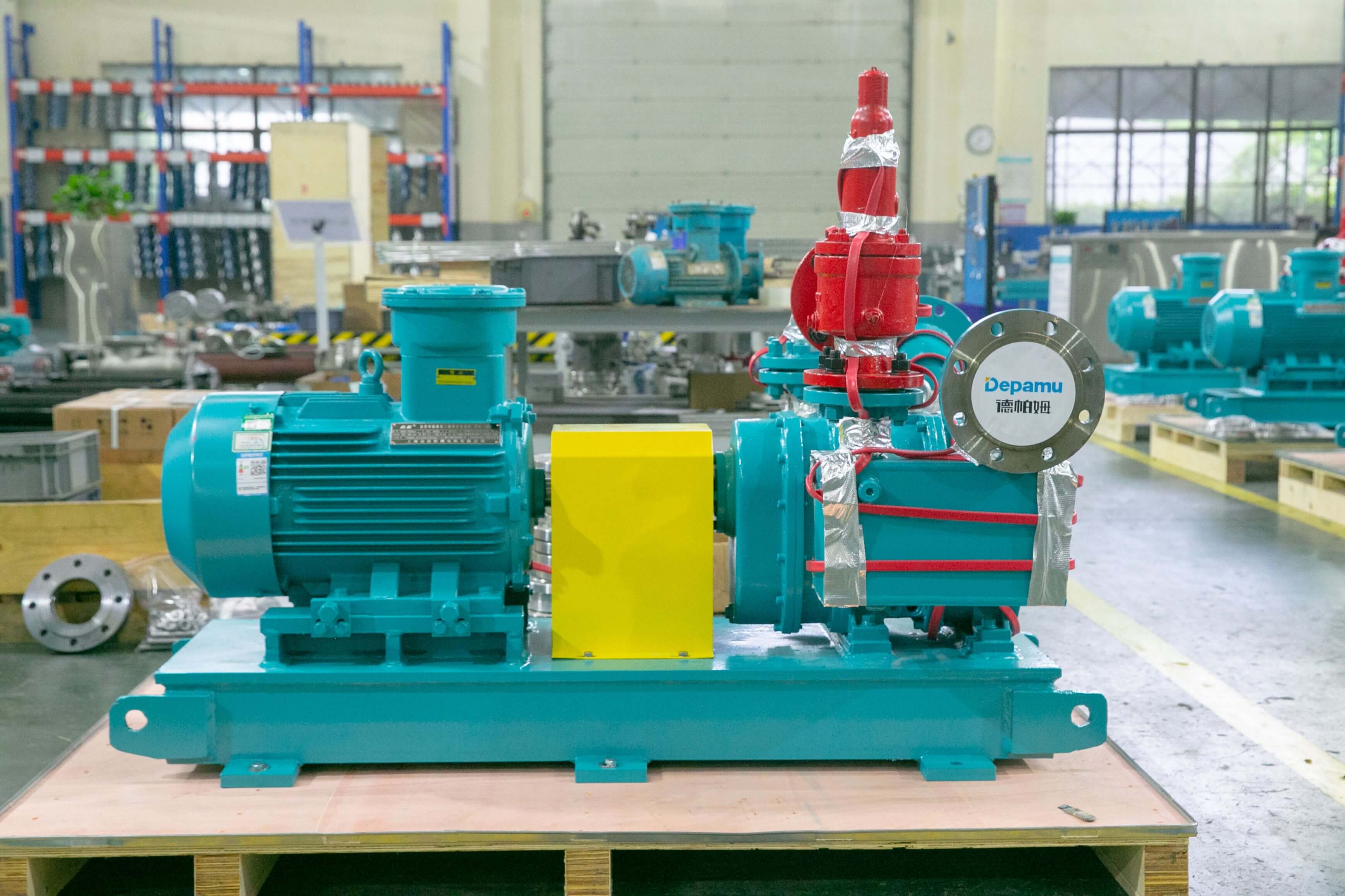
Typical Applications for Sludge Rotary Lobe Pumps
A rotary lobe pump for wastewater service is often found at points where sludge must be moved without excessive turbulence or where the flow must remain stable against changing pressure. Common duties include transferring primary or secondary sludge, feeding digesters, moving thickened sludge, transferring dewatered sludge, and dosing sludge or conditioning chemicals into a process line. The exact configuration depends on the solids content and the plant’s operating philosophy.
Wastewater treatment and environmental systems
In municipal and industrial wastewater plants, sludge transfer pump duties often involve variable solids content and intermittent operation. A positive displacement sludge pump can maintain flow as filter presses, thickeners, or digesters impose changing back pressure. Low-speed operation and appropriate wear-resistant materials help manage abrasive grit and fibrous material. A wastewater treatment pump supplier should be able to review the entire sludge path, not just the pump, because suction conditions and pipe layout can strongly influence performance.
Chemical, petrochemical, and oil and gas operations
Industrial sludge may contain oils, solvents, catalysts, or fine solids that require careful material selection and sealing. In these environments, the pump must be compatible with both the sludge and any cleaning or flushing media used during maintenance. Depamu’s experience in petroleum refining, chemicals, and oil and gas fields supports a specification process that considers corrosion, abrasion, and operational safety together.
Power, metallurgy, new energy, and general industry
Sludge and slurry duties also appear in power plants, metallurgical processes, new energy materials production, and general manufacturing. The common thread is the need for a reliable industrial sludge transfer pump that can handle difficult media without frequent intervention. For high-pressure process duties, other positive displacement pump types may be more appropriate; the supplier should be able to explain the boundary between rotary lobe, screw, gear, and reciprocating pump options.
Sludge Pump Selection Guide: Matching the Pump to the Medium
Selecting a rotary lobe pump for sludge begins with a clear definition of the duty. The following parameters should be documented and discussed with the manufacturer before a quotation is finalized. Where data is uncertain, provide a range and explain which operating condition is most representative.
| Parameter | Information to provide | Impact on pump selection |
|---|---|---|
| Flow rate | Minimum, normal, and maximum required flow; batch or continuous operation. | Determines displacement size and operating speed. |
| Solids content | Typical and maximum solids concentration; particle size and nature. | Influences lobe profile, clearance, materials, and speed limits. |
| Viscosity | Operating viscosity range and whether it changes with temperature. | Affects suction performance, power demand, and port sizing. |
| Pressure | Suction pressure, discharge pressure, and maximum possible surge. | Sets casing strength, shaft design, seal arrangement, and drive rating. |
| Temperature and chemistry | Operating temperature, pH, corrosive species, and cleaning method. | Guides material and seal selection. |
It is also important to define the control philosophy. Will the pump run at fixed speed, be controlled by a variable-frequency drive, or operate in automatic response to tank level or flow? A pump that is mechanically suitable but poorly matched to the control system can still deliver disappointing results. The supplier should confirm the relationship between speed, flow, pressure, and motor selection in writing.
Installation, Operation, and Maintenance Best Practices
Good installation practice protects both the pump and the process. Suction piping should be short, adequately sized, and arranged to avoid air pockets. Positive displacement pumps should not be operated against a closed discharge valve, so appropriate relief protection must be included in the system design. Flexible connections can help isolate vibration, while proper anchoring keeps pipe loads away from the pump casing.
During commissioning, verify rotation direction, motor current, discharge pressure, flow, and seal condition. Record baseline values so that future changes can be identified quickly. Operators should be trained to recognize the signs of dry running, cavitation, excessive vibration, abnormal noise, and seal leakage. In sludge service, a planned flush or cleaning routine can prevent material from hardening inside the pump and piping during shutdowns.
Maintenance should follow the manufacturer’s instructions and the actual duty severity. Regular checks typically include lubrication condition, seal performance, coupling alignment, fastener tightness, and wear-part inspection. Because sludge can be abrasive, the inspection interval for lobes, casing liners, and seals should be based on observed wear rather than a fixed calendar alone. Keeping spare parts and wear components available reduces downtime when the process cannot be interrupted for long.
How to Evaluate a Sludge Rotary Lobe Pump Supplier
Price is important, but the lowest quotation can become expensive if it leads to repeated repairs, production losses, or an undersized pump that cannot meet the process requirement. A structured evaluation helps compare suppliers on the factors that affect total cost of ownership.
Questions to ask before placing an order
- Can the supplier explain why the proposed rotary lobe pump configuration suits the stated sludge characteristics?
- Are the wetted materials and sealing system suitable for the medium, temperature, and cleaning regime?
- Does the quotation include performance data, drawings, utility requirements, and operating limits?
- Is the pump assembled and tested before shipment, and what documentation is provided?
- Can the supplier support non-standard dimensions, controls, or packaging for an EPC or OEM project?
- What spare parts and after-sales support are available for the expected service life?
Visiting a sludge rotary lobe pump factory or reviewing a documented manufacturing process can also provide useful evidence of capability. Look for a clear engineering workflow, traceable inspection records, and a team that communicates directly about technical details. For international buyers, responsiveness across time zones, export packaging, and documentation quality are practical considerations that influence project schedules.
Depamu operates three brands—Depamu, Knirova, and Delop—and supplies fluid equipment to customers across multiple process industries. Its sales performance has grown from approximately RMB 450 million in 2023 to RMB 510 million in 2024 and RMB 560 million in 2025. For buyers seeking a long-term sludge rotary lobe pump supplier, this continuity and application breadth can be relevant when assessing the ability to support repeat orders and future upgrades.
FAQ
What is a sludge rotary lobe pump used for?
A sludge rotary lobe pump is a positive displacement pump used to transfer sludge and similar viscous or solids-laden media. Typical duties include moving primary, secondary, thickened, or digested sludge in wastewater treatment, feeding process equipment, and transferring sludge between tanks or dewatering equipment. The pump is normally selected around the sludge’s solids content, viscosity, temperature, and the required flow and pressure.
How do I choose the right sludge rotary lobe pump for my process?
Start with the medium and the duty, not the pump model. Document flow rate, solids content, particle size, viscosity, temperature, pH, suction conditions, discharge pressure, and operating pattern. Then review materials, sealing, speed, and drive selection with the manufacturer. A pump that is correctly sized for the normal duty and has adequate margin for upset conditions will generally be more reliable than one chosen only from a nominal capacity table.
Can rotary lobe pumps handle high-solids or viscous sludge?
Rotary lobe pumps can be suitable for many high-solids and viscous sludge duties because they are positive displacement pumps and can be configured with wear-resistant materials and appropriate clearances. However, suitability depends on the actual particle size, solids concentration, viscosity, and pressure. The manufacturer should confirm acceptable limits and recommend the correct lobe profile, speed, and sealing arrangement for the specific application.
Does Depamu provide custom or OEM sludge pump solutions?
Yes. Depamu provides standard products, non-standard products, and customized fluid solutions based on medium characteristics, flow, pressure, temperature, and site process requirements. The company’s capabilities cover development, design, manufacturing, and packaged delivery. Buyers with OEM requirements should discuss interface dimensions, documentation, branding, and repeat-order consistency directly with the supplier.
What maintenance does a sludge rotary lobe pump require?
Maintenance typically includes checking lubrication, seals, coupling alignment, fasteners, vibration, and wear parts. In abrasive sludge service, lobes, casing liners, and seals should be inspected according to observed wear and the manufacturer’s recommendations. Establishing a baseline at commissioning and keeping suitable spare parts on hand helps reduce unplanned downtime. Cleaning or flushing routines should also be defined to prevent sludge from hardening during shutdowns.
How can I verify that a manufacturer is reliable?
Review the manufacturer’s engineering support, in-house manufacturing scope, testing and documentation practices, customization capability, and after-sales arrangements. Ask technical questions about the proposed configuration and confirm that the answers are specific to your medium and duty. A factory visit or a documented quality process can provide additional confidence, especially for non-standard or OEM projects.
Summary
Choosing a sludge rotary lobe pump manufacturer is a technical decision with commercial consequences. The right supplier will ask detailed questions about the sludge, explain the operating limits of the proposed configuration, and provide documentation that supports installation, operation, and maintenance. The wrong supplier may offer a pump that looks suitable on paper but performs poorly once the real medium and process conditions are applied.
Use the selection parameters in this guide to define the duty clearly, compare materials and sealing options, and confirm testing and support arrangements before placing an order. For projects requiring a custom sludge pump solution, involve the manufacturer’s engineering team early so that pipework, controls, and maintenance access are considered together. Depamu’s experience in positive displacement pumps, packaged fluid systems, and customized solutions provides a practical starting point for buyers evaluating sludge transfer equipment for wastewater, chemical, energy, and general industrial applications.