
Three screw pumps are among the most dependable solutions for moving viscous, sensitive and lubricating fluids in continuous industrial processes. From crude oil transfer and fuel oil boosting to chemical processing and wastewater sludge handling, the performance of a three screw pump depends heavily on how well it is designed, machined, assembled and tested. That is why choosing the right three screw pump manufacturer is a technical decision, not simply a purchasing decision. A capable three screw pump factory understands fluid behavior, matches materials and clearances to the duty point, and supports the pump through installation, commissioning and long-term maintenance.
This guide explains how three screw pump technology works, what to evaluate in a three screw pump production plant, which parameters matter during selection, and how industrial buyers can compare suppliers, request quotations and plan maintenance. It is written for procurement engineers, plant managers and technical consultants who need a practical framework rather than marketing claims.
Understanding Three Screw Pump Technology and Its Role in Fluid Transfer
A three screw pump uses one driven central screw and two idler screws that rotate inside a close-tolerance pump housing. As the screws turn, sealed cavities form and move continuously from the suction side to the discharge side, producing a smooth, almost pulsation-free flow. Because the fluid is transported axially rather than thrown by centrifugal force, the pump handles viscous media gently, with low shear and minimal emulsification. This makes the three screw pump design particularly suitable for lubricating oils, fuel oils, hydraulic fluids, crude oil, asphalt, resins, paints, food-grade oils and other viscous or shear-sensitive liquids.
The hydraulic performance of a three screw pump is influenced by screw geometry, pitch, clearance, housing material and surface finish. A well-engineered pump maintains volumetric efficiency across a wide viscosity range while keeping noise and vibration low. Unlike centrifugal pumps, which lose efficiency when viscosity rises, a three screw pump can deliver stable flow at higher viscosities and at relatively high discharge pressures. Compared with external gear pumps, three screw pumps typically offer smoother flow, lower pulsation and better performance in continuous duty applications.
Because the screws and housing form the sealing elements, manufacturing accuracy directly affects performance. Clearances that are too large reduce volumetric efficiency, while clearances that are too tight increase the risk of galling when the pump runs dry or handles poorly lubricating fluids. A professional three screw pump manufacturer controls these tolerances through precision machining, inspection and performance testing before shipment.
What a Reliable Three Screw Pump Factory Should Offer
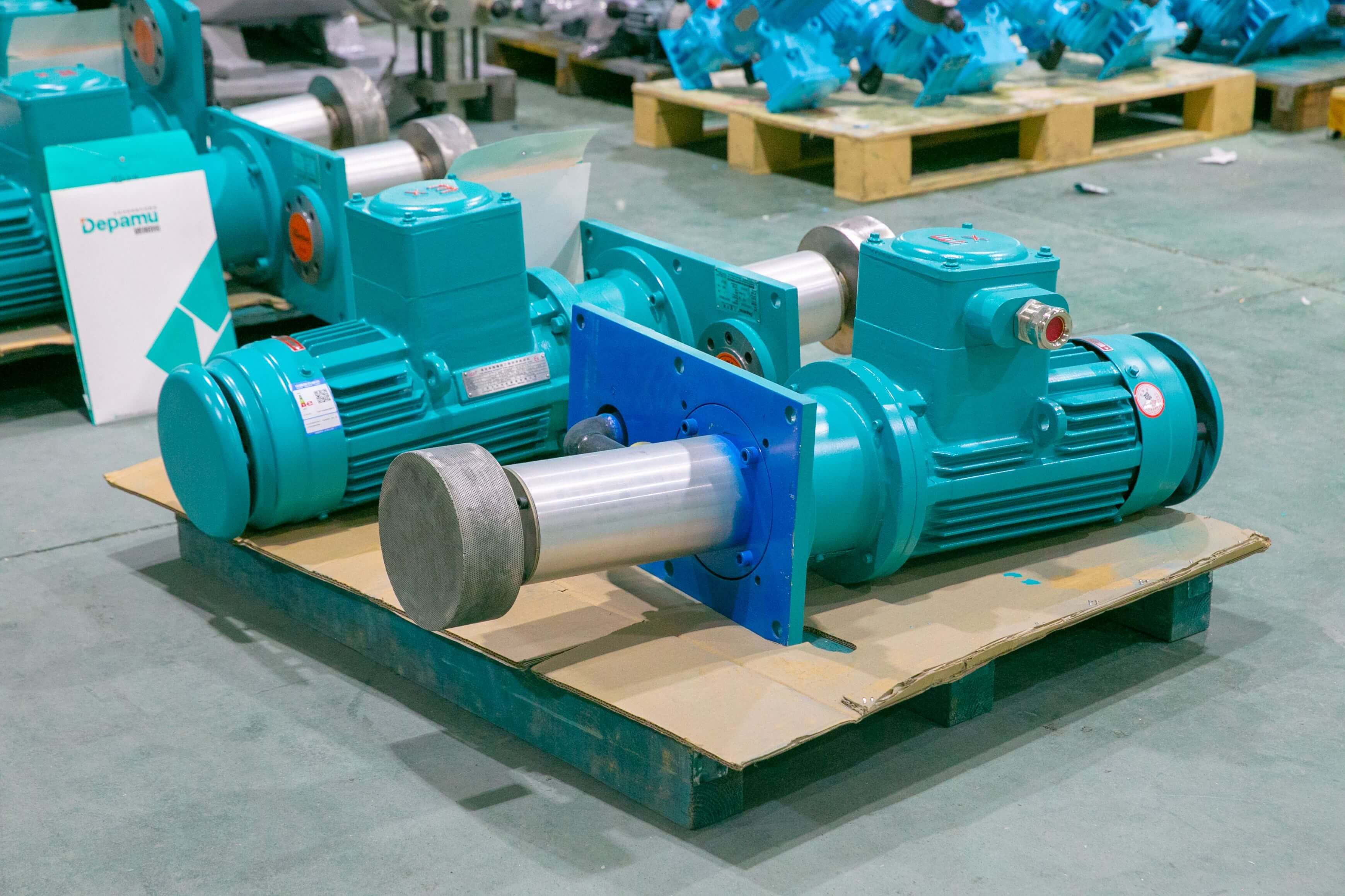
Evaluating a three screw pump factory requires looking beyond catalog specifications. A capable manufacturer combines engineering, machining, assembly, testing and after-sales support under one quality system. Buyers should ask how the factory controls screw profile accuracy, how it verifies housing alignment, what testing is performed on every unit, and how non-standard requirements are handled. A factory that only assembles purchased components will struggle to solve application problems, while a manufacturer with in-house design and manufacturing capability can adjust materials, clearances, seals and connections to match the process.
Scale and experience matter as well. A production plant with a large workforce, substantial floor space and a long operating history is more likely to have stable processes, experienced engineers and a broad reference base across industries. Companies such as Depamu (Hangzhou) Pump Technology Co., Ltd., founded in 2003, operate a factory of approximately 35,000 square meters with more than 400 employees and an annual output value of around RMB 500 million. Its product range covers metering pumps, high-pressure reciprocating process pumps, pneumatic and electric pumps, chemical dosing skids, water sampling devices, water treatment equipment, screw pumps, rotary lobe pumps and gear pumps. This breadth allows the manufacturer to recommend the most suitable pump type rather than forcing a single technology into every application.
Brand structure and product documentation also matter. A manufacturer operating multiple brands, such as Depamu, Kenirova and Delipu, usually serves different market segments and configurations, which can be useful when a project requires a specific combination of performance, documentation and budget. Buyers should request dimensional drawings, material certificates, performance curves, operating manuals and spare-parts lists before finalizing an order.
Three Screw Pump Manufacturer Selection Criteria: A Practical Checklist
Selecting a three screw pump manufacturer starts with a clear definition of the duty point. Flow rate, discharge pressure, suction conditions, viscosity, temperature, density, lubricity, solids content and chemical compatibility all influence the pump configuration. A supplier that asks detailed questions before quoting is usually more reliable than one that immediately offers a standard model. The table below summarizes the main parameters that should be reviewed with the manufacturer.
| Selection Parameter | Why It Matters | Information to Provide |
|---|---|---|
| Medium viscosity | Determines screw pitch, clearance and allowable speed | Operating viscosity range in cSt, including start-up condition |
| Flow rate | Defines pump size and drive power | Rated flow, minimum and maximum flow, control method |
| Discharge pressure | Affects bearing selection, shaft strength and seal design | Normal and maximum pressure, pipe losses, elevation difference |
| Temperature | Influences thermal expansion, material choice and seal type | Operating and maximum temperature, heating or cooling requirements |
| Lubricity and solids | Affects allowable dry-running time and wear resistance | Media composition, particle size, concentration, abrasiveness |
| Material and seals | Ensures chemical compatibility and leakage control | Corrosion data, required sealing standard, connection standard |
| Installation and drive | Defines footprint, alignment and control integration | Horizontal or vertical layout, motor, gearbox, VFD, skid scope |
Beyond technical parameters, buyers should evaluate the manufacturer’s engineering response time, documentation quality, willingness to share test reports and ability to support spare parts over the pump lifecycle. A three screw pump supplier that can explain why a specific clearance or material is recommended is more valuable than one that simply lists model numbers. It is also wise to request references from similar applications, while respecting confidentiality, and to clarify warranty terms, inspection requirements and delivery milestones in the purchase agreement.
Applications: Where Three Screw Pumps Deliver Value
Three screw pumps are widely used in oil and gas, petroleum refining, chemical processing, power generation, environmental protection and food industries. In oilfield applications, they transfer crude oil, produced water mixtures and heavy oils, and support pipeline boosting where stable flow and high pressure are required. In refineries and petrochemical plants, they handle fuel oil, lubricating oil, asphalt and viscous intermediates. Because the flow is smooth and low in shear, the pump minimizes foam and emulsion formation, which is important for downstream separation and product quality.
In chemical plants, three screw pumps are selected for resins, adhesives, paints, solvents and other viscous media, often with special materials and mechanical seals. In power plants, they support fuel oil forwarding and lubricating oil circulation. In environmental applications, they transfer sludge, oily wastewater and thickened slurries where gentle handling and reliable suction are needed. Food processors use them for edible oils, syrups and other shear-sensitive liquids when hygienic materials and cleanable designs are specified.
The same factory may also supply metering pumps, high-pressure reciprocating pumps, dosing skids and water treatment equipment, which allows the manufacturer to integrate a three screw pump into a complete fluid handling system. This is particularly useful when a project requires coordinated flow control, chemical injection and pressure boosting on one skid.
Customization and OEM Support from a Three Screw Pump Production Plant
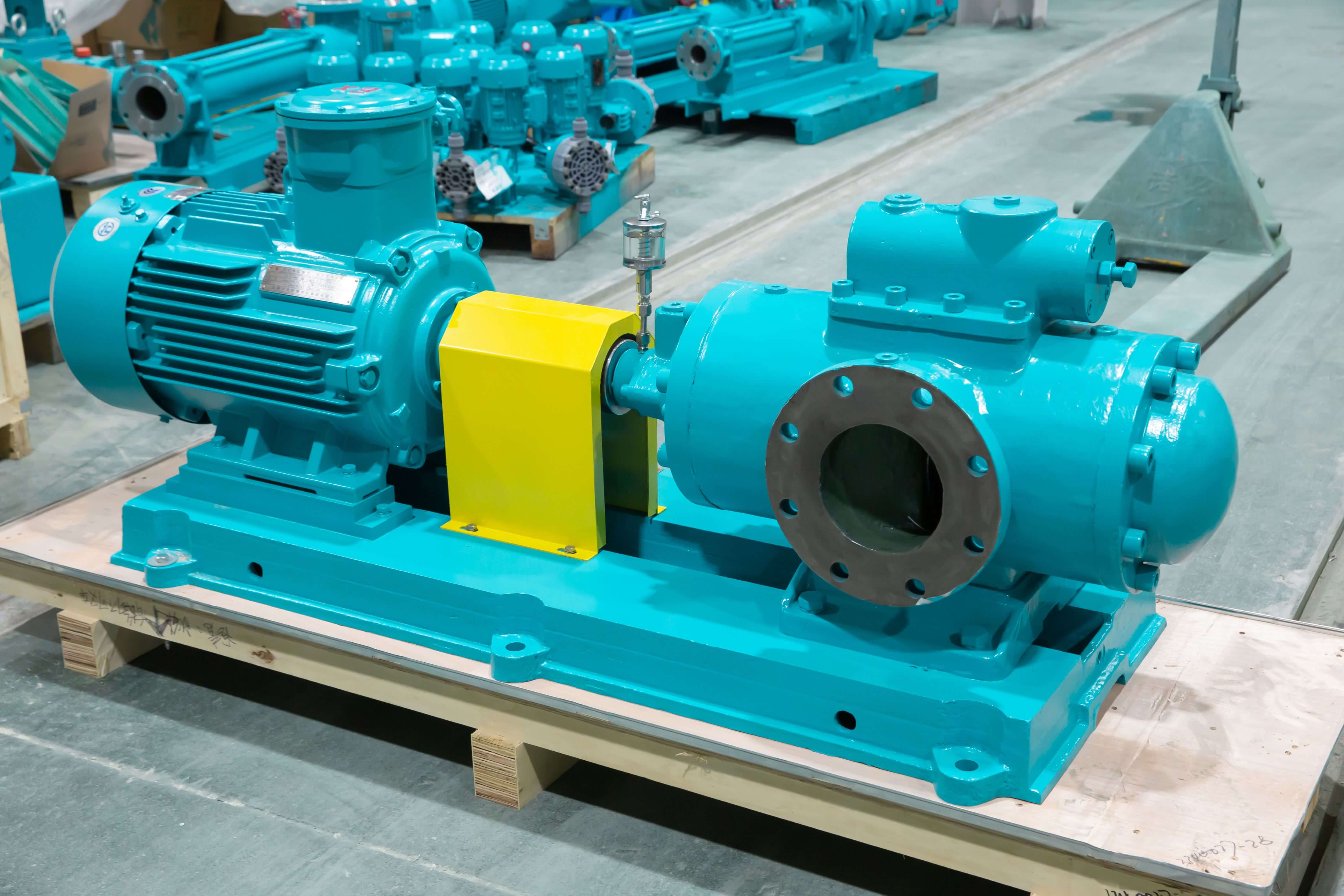
Many industrial projects cannot be served by a catalog pump. Space constraints, unusual pipe layouts, aggressive media, high-temperature service and integration with existing control systems all require customization. A capable three screw pump production plant offers options for screw geometry, housing materials, shaft sealing, bearings, heating jackets, flanges, baseplates, couplings, motors, gearboxes and variable-frequency drives. The manufacturer should be able to provide both standard and non-standard configurations and to document the differences clearly.
OEM cooperation is another important consideration for distributors, engineering companies and system integrators. An experienced three screw pump brand can support private labeling, customized nameplates, project-specific documentation, packaging requirements and spare-parts kits. Buyers should confirm the scope of OEM support, minimum order quantities, drawing approval procedures and intellectual property arrangements before committing to a long-term supply agreement.
For skid-based projects, the manufacturer should also be able to integrate the pump with piping, valves, instruments, control panels and safety devices. Factory assembly and testing before shipment reduce site work, shorten commissioning time and lower the risk of interface errors. This systems approach is especially valuable in remote locations where engineering support on site is limited.
Installation, Operation and Maintenance Best Practices
Correct installation is essential for long service life. The pump and motor should be mounted on a rigid baseplate, aligned with care and connected to piping without imposing strain on the pump casing. Suction piping should be short, straight and adequately sized to avoid cavitation, and a suction strainer should be used during commissioning to protect the screws from debris. For high-viscosity media, suction conditions and pipe heating must be reviewed carefully because poor inlet conditions are a common cause of noise, vibration and reduced capacity.
During operation, the pump should not run dry for extended periods unless a specific dry-running design has been supplied. Lubrication, seal flush and cooling arrangements should follow the manufacturer’s instructions. Operators should monitor discharge pressure, flow, motor current, vibration, noise and temperature, and investigate any deviation from the baseline. Regular maintenance typically includes checking shaft seals, inspecting couplings, verifying alignment, reviewing lubricant condition and maintaining spare parts inventory for critical items.
A manufacturer that provides clear manuals, maintenance schedules, troubleshooting guidance and responsive spare-parts support helps plants avoid unplanned downtime. Buyers should confirm how quickly the three screw pump supplier can deliver wear parts and whether remote technical support is available.
Procurement Guide: Price, Lead Time and Supplier Evaluation
Three screw pump price depends on size, pressure rating, materials, seal type, drive configuration and documentation requirements. A low initial price can be misleading if the pump delivers lower efficiency, requires frequent repairs or does not match the duty point. Buyers should compare total cost of ownership, including energy consumption, spare parts, maintenance labor and downtime risk. Requesting a detailed quotation with scope, exclusions, drawings, test plan and delivery schedule makes comparison between suppliers more meaningful.
Lead time should be discussed early, especially for custom pumps and skid systems. Standard models may ship from stock, while non-standard units require engineering review, material procurement, machining, assembly and testing. Clear milestones and progress reporting reduce project risk. It is also useful to confirm packing standards, shipping terms and required export documentation for international projects.
When evaluating a three screw pump manufacturer, consider technical responsiveness, manufacturing depth, testing capability, documentation, references, warranty and after-sales support. A supplier that can answer detailed technical questions, provide drawings and explain the selection rationale is likely to be a stronger long-term partner than one competing only on price.
FAQ
What should I check before choosing a three screw pump manufacturer?
Check the manufacturer’s engineering capability, in-house machining and assembly, testing procedures, material traceability, documentation and after-sales support. Ask for similar application references, performance curves, dimensional drawings and spare-parts availability. A factory that asks detailed questions about viscosity, pressure, temperature and media composition is more likely to provide a suitable pump.
Can a three screw pump handle high-viscosity and non-lubricating fluids?
Three screw pumps are well suited to high-viscosity fluids such as heavy oil, asphalt, resins and syrups. For non-lubricating or low-lubricity media, the manufacturer must adjust clearances, materials and operating speed, and may recommend a different pump type. Always provide the full viscosity range, including start-up conditions, so the pump can be configured correctly.
Do you provide OEM and customized three screw pump solutions?
Yes. An experienced three screw pump production plant can provide customized screw geometry, materials, seals, heating jackets, baseplates, drives and control integration. OEM support may include private labeling, customized documentation, packaging and spare-parts kits, subject to project scope and agreement.
What information is needed to get an accurate three screw pump quotation?
Provide the medium name and composition, viscosity range, density, temperature, flow rate, suction and discharge pressure, pipe layout, available utilities, motor or control requirements, installation environment and required standards. Drawings, site photos and process descriptions help the manufacturer propose the correct configuration and price.
How is a three screw pump installed and maintained?
The pump should be mounted on a rigid base, accurately aligned and connected to piping without strain. Suction conditions must be adequate, and a temporary strainer should be used during commissioning. Maintenance includes checking seals, couplings, alignment, lubricant and vibration, and replacing wear parts according to the manufacturer’s schedule.
What is the typical lead time for a custom three screw pump?
Lead time depends on pump size, materials, customization and testing requirements. Standard units may be available sooner, while custom pumps and skid systems require engineering, procurement, machining, assembly and factory testing. Confirm the schedule and milestones with the manufacturer before placing the order.
Summary
Choosing a three screw pump manufacturer is a matter of matching technology, manufacturing capability and support to the real duty point. Three screw pumps offer smooth, low-shear flow and strong performance with viscous and lubricating media, but those advantages depend on precise screw geometry, correct clearances, suitable materials and reliable assembly. Buyers should evaluate a three screw pump factory on engineering depth, machining and testing capability, documentation, customization options and after-sales support, not on price alone.
By preparing complete process data, comparing suppliers on total cost of ownership, confirming OEM and customization scope, and planning installation and maintenance in advance, industrial buyers can select a three screw pump brand that performs reliably over the full lifecycle. A manufacturer with broad fluid equipment experience, such as Depamu (Hangzhou) Pump Technology Co., Ltd., can support standard pumps, non-standard designs and integrated skid solutions for oil and gas, chemical, power, environmental and food applications.