
Fluid handling is one of the least visible but most critical parts of any process plant. When a production line depends on the continuous transfer of viscous, abrasive, shear-sensitive or high-pressure media, the choice of pump technology directly affects uptime, energy consumption, maintenance cost and product quality. Among positive displacement solutions, the twin screw pump has earned a strong position in petroleum refining, chemical processing, oil and gas field operations, environmental water treatment, and food and new material production.
This guide is written for engineers, procurement managers and project owners who are comparing suppliers and want a clearer picture of what a competent twin screw pump manufacturer should deliver. It covers the working principle of twin screw pumps, their advantages in demanding conditions, practical selection criteria, maintenance practices and a structured method for evaluating a twin screw pump factory before awarding a contract. It also explains how an experienced twin screw pump supplier such as DEPAM (Hangzhou) Pump Technology Co., Ltd. approaches customized fluid handling projects.
Why the Right Twin Screw Pump Manufacturer Matters
A twin screw pump is rarely a stand-alone purchase. It sits inside a process system together with piping, valves, filters, instrumentation and control logic. If the pump is selected without a clear understanding of the medium, the duty point and the operating profile, the consequences appear later as vibration, cavitation-like symptoms, seal wear, excessive power draw or unstable flow. Many of these problems originate not in the pump itself but in a mismatch between the application and the specification.
This is why the capability of the twin screw pump manufacturer matters as much as the product catalogue. A manufacturer that reviews medium properties, viscosity curves, temperature limits, suction conditions and site utilities before quoting will usually deliver a pump that runs quietly for years. A supplier that simply matches a model number to a flow rate may deliver equipment that technically works on paper but struggles in real operation.
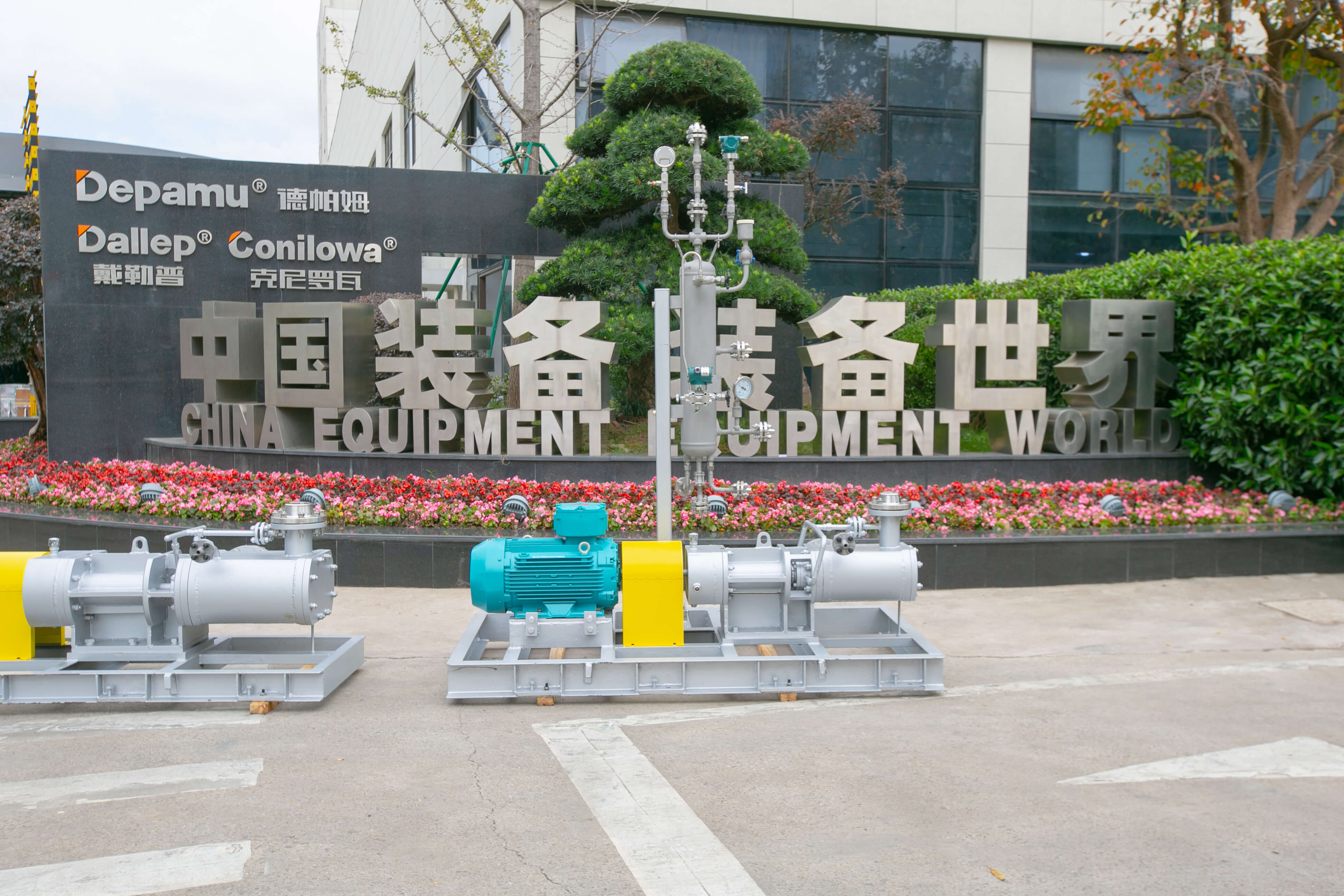
DEPAM was established in 2003 and has focused on high-end positive displacement pumps and fluid equipment for more than two decades. The company operates a factory of approximately 35,000 square meters with more than 400 employees, registered capital of RMB 54 million and an annual output value of around RMB 500 million. Its product range includes metering pumps, high-pressure reciprocating process pumps, pneumatic and electric pumps, chemical dosing packages, water and steam sampling systems, water treatment equipment, and screw pumps, rotary lobe pumps and gear pumps. This breadth allows the company to look at a fluid handling problem as a system rather than as a single component.
What Is a Twin Screw Pump and How Does It Work?
A twin screw pump is a rotary positive displacement pump built around two intermeshing screws that rotate inside a closely fitted casing. As the screws turn, the spaces between the screw flights and the casing move axially, trapping liquid at the suction end and transporting it steadily toward the discharge end. Because the conveying action is volumetric rather than centrifugal, the pump delivers a nearly constant flow rate that is largely independent of discharge pressure within its design range.
Internal Structure and Conveying Principle
The core components typically include the driving screw, the driven screw, the pump casing, the timing gears where applicable, the shaft sealing arrangement and the bearing assembly. In many designs the screws are synchronized by timing gears so that the metal surfaces do not contact each other, which reduces wear and allows the pump to handle media with limited lubricity. The screws may be designed with different profiles depending on whether the priority is gentle handling of shear-sensitive products, resistance to abrasive particles, or high volumetric efficiency at elevated pressure.
Because the liquid is transported in sealed cavities along the screw axis, the flow is smooth and pulseless compared with many other displacement technologies. This characteristic is valuable in processes where flow fluctuation would disturb mixing ratios, metering accuracy, heat transfer or downstream filtration performance.
What Makes Twin Screw Pumps Different from Other Rotary Pumps
Compared with single screw pumps, twin screw designs generally offer higher flow capacity within a compact footprint and better performance at elevated pressures. Compared with gear pumps, they can pass a limited amount of solid particles and handle higher viscosity ranges with less sensitivity to lubricity. Compared with centrifugal pumps, twin screw pumps maintain flow at high viscosity and at high discharge pressure without the efficiency collapse that centrifugal equipment experiences when the medium becomes thick.
These differences explain why twin screw pumps are frequently specified for crude oil transfer, heavy fuel oil handling, polymer solutions, sludge, syrups and other fluids that are difficult to move with conventional rotodynamic equipment.
Key Advantages of Twin Screw Pumps in Demanding Industrial Conditions
The main reason engineers choose twin screw technology is reliability across a wide operating envelope. A well-designed industrial twin screw pump can handle changes in viscosity, temperature and pressure without abrupt loss of performance, which is important in batch processes and in field operations where conditions vary from day to day.
- High viscosity capability: twin screw pumps can transfer thick media that would overload or cavitate a centrifugal pump.
- Stable, low-pulsation flow: the positive displacement action supports consistent flow rates, which improves dosing accuracy and process stability.
- Self-priming behaviour: many configurations can evacuate suction lines and handle air-liquid mixtures better than standard centrifugal designs.
- Gentle handling: non-contacting screw profiles reduce shear, which is beneficial for emulsions, polymers and food products.
- High pressure tolerance: positive displacement allows the pump to build pressure against long pipelines, filters and process equipment.
- Compact installation: high flow capacity in a relatively small footprint reduces civil works and piping complexity.
For applications where pressure must be raised significantly, DEPAM also supplies high-pressure reciprocating process pumps that can reach pressures above 35 MPa, and for precise chemical injection the company offers hydraulic diaphragm metering pumps. In practice, a system may combine several of these technologies, and a manufacturer with a broad portfolio can recommend the right combination rather than forcing a single product type into every duty.
Where Twin Screw Pumps Are Used: Industry Applications
DEPAM equipment is used across petroleum refining and chemicals (approximately 41% of sales), oil and gas fields (approximately 23%), nuclear, power, metallurgy and new energy (approximately 15%), environmental water treatment (approximately 13%), new materials and food (approximately 3%), and other industries (approximately 5%). Twin screw and screw-type pumps fit naturally into many of these sectors because they combine high viscosity handling with steady flow.
In petroleum refining and petrochemical plants, twin screw pumps are commonly found in crude and heavy oil transfer, residue handling, tank farm circulation and viscous feedstock supply. In oil and gas field operations they support produced fluid transfer, pipeline boosting and high-viscosity wellstream service. In chemical processing they move polymer solutions, resins, slurries and other media that are sensitive to shear or contain suspended solids.
| Industry | Typical Duty | Why Screw Technology Fits |
|---|---|---|
| Petroleum refining and chemicals | Heavy oil, residue, polymer and slurry transfer | Handles high viscosity and maintains steady flow under pressure |
| Oil and gas fields | Produced fluid transfer, pipeline boosting, injection support | Self-priming capability and tolerance of mixed media |
| Environmental water treatment | Sludge, chemical slurry and thickener feed | Can pass limited solids without clogging |
| Food and new materials | Syrups, emulsions, viscous intermediates | Low-shear conveying protects product structure |
| Power, metallurgy and new energy | Fuel oil, auxiliary fluid transfer, process dosing support | Continuous duty capability and compact installation |
Across these sectors, the same principle applies: the pump must be matched to the medium and to the system, not simply to a nominal flow rate. A twin screw pump for chemical processing may require different materials and sealing than a twin screw pump for oil and gas service, even when both are described as high-viscosity duties.
How to Select a Twin Screw Pump: A Practical Selection Guide
A sound selection process starts with data, not with model numbers. Before requesting a twin screw pump quotation, prepare a duty specification that describes the fluid, the process and the installation environment. The more complete the data, the more accurate the proposal and the lower the risk of rework after delivery.
Medium Properties
Viscosity is the single most important parameter for screw pump selection, but it must be provided across the full operating range, not only at the design point. Viscosity at the lowest and highest expected temperature determines the required screw geometry, clearance and drive power. Density, specific heat, vapour pressure, corrosivity, abrasiveness, solid content and particle size distribution also influence material selection and sealing design. For shear-sensitive products, the allowable shear rate should be stated clearly.
Flow Rate, Pressure and Temperature
Flow rate should be defined as a normal, minimum and maximum range, with an indication of whether the pump will be speed-controlled. Discharge pressure must account for static head, friction losses, control valve pressure drop and any downstream equipment. Suction conditions deserve equal attention: available net positive suction head, suction line length and the presence of dissolved or entrained gas all affect whether the pump will fill properly. Temperature limits influence casing material, seal choice and bearing cooling arrangements.
Installation, Drive and Control
Installation details such as horizontal or vertical orientation, available floor space, nozzle positions, baseplate requirements and access for maintenance should be confirmed early. Drive options include fixed-speed motors, variable frequency drives for flow adjustment, and gear reducers where low screw speeds are required. For automated plants, the pump may need to interface with a distributed control system, which means signal types, communication protocols and instrumentation scope must be agreed in advance.
| Selection Parameter | Information to Provide | Impact on the Pump Design |
|---|---|---|
| Viscosity range | Minimum and maximum values with corresponding temperatures | Screw profile, clearance, motor power |
| Flow rate | Normal, minimum and maximum duty points | Pump size, speed range, drive selection |
| Discharge pressure | System pressure including pipeline and filter losses | Casing strength, bearing selection, seal design |
| Temperature | Operating and design temperature | Materials, thermal expansion allowance, sealing |
| Corrosivity and solids | Chemical composition, particle size and concentration | Material grade, surface treatment, wear protection |
| Suction conditions | Available NPSH, line configuration, gas content | Inlet design, priming arrangement, speed limit |
| Control requirements | Manual, local or DCS-controlled operation | Instrumentation, VFD, control panel scope |
What a Capable Twin Screw Pump Factory Should Provide
Not every supplier that lists screw pumps in a catalogue is a true twin screw pump manufacturer. Some are trading companies that assemble or resell equipment. For critical process duty, the difference becomes visible in engineering support, material traceability, testing and after-sales response.
A capable twin screw pump factory should be able to review the process data, propose a pump configuration, explain the reasoning behind material and seal choices, confirm performance expectations and provide drawings for approval before manufacturing. It should also have the workshop capability to machine or source key components consistently, control tolerances, perform assembly and run testing, and document the results.
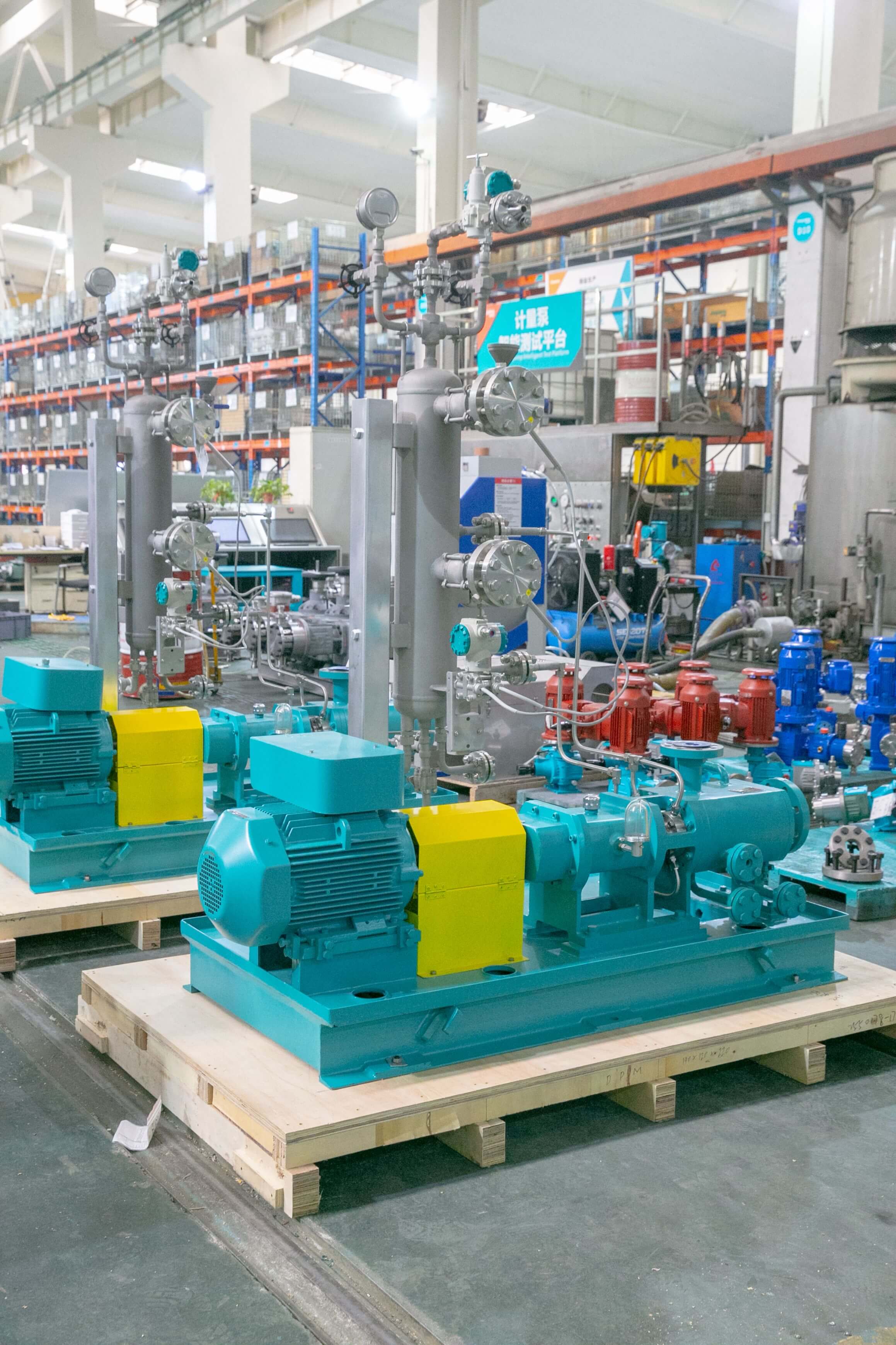
DEPAM combines research and development, design, manufacturing and packaged delivery in one organization. The company can supply standard products, non-standard products and customized fluid solutions based on medium characteristics, flow rate, pressure, temperature and site process requirements. Its portfolio covers high-pressure transfer, precise metering, chemical dosing, process boosting and complex media handling, which means a single supplier can coordinate multiple equipment items within a system.
For buyers comparing a twin screw pump brand, it is worth asking whether the manufacturer also produces related equipment such as metering pumps and dosing packages. A supplier that understands the whole fluid train can often identify interference problems, such as pulsation interacting with flow meters, or dosing points located where pressure varies, before they reach the site.
Installation, Operation and Maintenance Best Practices
Twin screw pumps are robust, but they reward good installation. The baseplate should be rigid and properly grouted, and the pump and driver should be aligned according to the manufacturer’s instructions. Suction piping should be short, adequately sized and free of unnecessary high points where gas can accumulate. A suction strainer is useful during commissioning, but it must be removed or cleaned before it becomes a flow restriction.
During operation, monitor discharge pressure, flow rate, power consumption, bearing temperature and vibration. A gradual rise in power draw at constant duty often signals increased clearance, wear or a change in medium viscosity. A drop in flow with stable pressure may indicate internal recirculation or gas ingress. Recording these values regularly makes it easier to distinguish normal variation from developing faults.
- Check shaft seal condition and any flush or quench supply at scheduled intervals.
- Verify coupling alignment after the first weeks of operation and after any pipe modification.
- Keep standby pumps on a rotation programme so that both units receive regular running time.
- Inspect timing gears and lubricant condition according to the maintenance schedule.
- Confirm that relief or bypass protection is functional and correctly set.
For media that solidify or crystallize at ambient temperature, establish a flushing procedure before shutdown. Many service issues in viscous duties come from fluid left in the pump during idle periods rather than from mechanical wear.
How to Evaluate a Twin Screw Pump Supplier Before Ordering
Procurement teams often receive several offers that look similar on paper. A structured evaluation helps separate genuine manufacturing capability from commercial intermediation. First, ask for the manufacturer’s scope: which components are produced in-house, which are subcontracted, and how incoming and final inspection are performed. Second, request a technical proposal that explains the selection basis rather than only listing a model.
Third, discuss references in comparable media. Even without naming customers, a credible twin screw pump supplier should be able to describe applications in similar viscosity, pressure and temperature ranges and explain what design features were used. Fourth, clarify documentation: material certificates, test reports, general arrangement drawings, operation and maintenance manuals, and spare parts lists. Fifth, confirm the after-sales path, including spare parts availability, technical support channels and warranty terms.
Finally, compare the total cost of ownership rather than the purchase price alone. A lower-priced unit that requires frequent seal replacement, delivers unstable flow or consumes more power will usually cost more over its service life. For a custom twin screw pump solution, the engineering effort invested before manufacturing often determines the long-term result.
FAQ
What should I check before choosing a twin screw pump manufacturer?
Verify the manufacturer’s actual production capability, engineering support and testing process. Ask how the pump will be matched to your medium, how materials and seals are selected, what documentation is provided, and how spare parts and technical support are handled after delivery. A manufacturer that asks detailed questions about viscosity, pressure, temperature and suction conditions is usually better prepared than one that quotes from a flow rate alone.
Can twin screw pumps handle high-viscosity and abrasive media?
Yes, twin screw pumps are particularly suited to high-viscosity liquids, and suitable designs can handle media containing limited amounts of solids. However, abrasiveness affects material selection, clearance and wear protection, so the particle size, concentration and chemical nature of the solids should be disclosed during selection. In strongly abrasive service, the pump configuration and maintenance interval must be planned accordingly.
What information is needed to get an accurate twin screw pump quotation?
Provide the medium name and composition, viscosity range with temperatures, density, flow rate range, discharge pressure, suction conditions, operating temperature, solid content, available utilities, control requirements and any installation constraints. Drawings or a process description are helpful. With complete data, a supplier can propose a configuration, materials, sealing arrangement, drive and accessories that fit the duty rather than approximating it.
How do twin screw pumps compare with centrifugal pumps for viscous fluids?
Centrifugal pumps lose efficiency quickly as viscosity rises, and their flow depends strongly on system pressure. Twin screw pumps are positive displacement machines, so they maintain flow at higher viscosity and can build pressure against long lines and filters. For low-viscosity, high-flow clean service, centrifugal pumps may still be the economical choice; for thick, shear-sensitive or high-pressure duties, screw pumps are often more appropriate.
What maintenance does an industrial twin screw pump require?
Routine maintenance typically includes monitoring pressure, flow, power and vibration, checking shaft seals, verifying alignment, inspecting lubricant in the timing gear or bearing areas where applicable, and confirming relief protection. A flushing procedure should be established for media that thicken or crystallize on cooling. Planned inspection intervals based on actual operating conditions are more effective than fixed schedules applied to every installation.
Can a twin screw pump be customized for a specific process?
Yes. Customization can cover materials, screw geometry, sealing arrangement, connections, baseplate layout, drive type, instrumentation and control integration. DEPAM provides standard, non-standard and customized fluid solutions based on medium characteristics, flow, pressure, temperature and site process requirements, and can deliver packaged systems where multiple equipment items need to be coordinated.
Summary
Selecting a twin screw pump manufacturer is a technical decision as much as a commercial one. The right partner understands how viscosity, pressure, temperature, solids content and suction conditions interact, and translates that understanding into a configuration that performs reliably over years of service. The wrong choice may appear cheaper at the quotation stage but often reveals itself later through unstable flow, premature wear and unplanned downtime.
DEPAM (Hangzhou) Pump Technology Co., Ltd. has focused on high-end positive displacement pumps and fluid equipment since 2003, with more than 400 employees, a 35,000 square meter factory and a product range that includes screw pumps, metering pumps, high-pressure reciprocating process pumps, dosing packages and water treatment equipment. Its experience across petroleum refining, chemicals, oil and gas fields, power, new energy and environmental water treatment provides a practical foundation for customized fluid handling projects.
For buyers preparing a project, the most useful next step is to assemble a complete duty specification and request a technical proposal. A twin screw pump factory that responds with clear questions, documented selection logic and a realistic delivery plan is usually the one worth shortlisting.